
There are lessons you read about in books. There are lessons you gain through formal training, through hours of study, or from long years of experience.
And then, there are the lessons that nature herself delivers — sudden, brutal, unforgettable. Some of them change you forever. Others leave physical or emotional scars that last a lifetime.
My name is Marcus Webb, and for more than fifteen years I’ve worked as a wilderness guide, wildlife photographer, and backcountry educator in the Pacific Northwest.
I’ve navigated trails that few people will ever set foot on, spent countless hours waiting for light to hit a ridge or a river just right, and led hikers safely through dense bear country, often teaching them about coexistence, wildlife behavior, and risk mitigation.
I thought I knew the rules of safety — the unwritten laws of the wilderness. Never approach wildlife. Never get between a mother and her young.
Give animals space. Avoid unnecessary risks. My training and experience had made me confident. Or so I thought.
The River That Changed Everything
It was a humid afternoon in late August. The kind of day where the forest feels like it’s breathing — moss glistening in the light that filters through dense evergreen canopies, and the air thick with the scent of pine and damp earth.
I had driven several hours north, deep into the backcountry, to photograph the annual salmon run.
The salmon run is one of nature’s most spectacular events: dozens, sometimes hundreds of salmon fighting against the current, leaping over rocks and rapids in their journey upstream to spawn.
Eagles circle above, crows squawk from tree limbs, and the riverbank is alive with motion and sound. It is the perfect place for a photographer, yet also a place where one’s attention can easily be split between the beauty of nature and the lurking presence of apex predators.
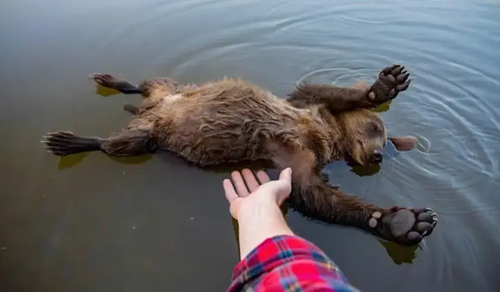
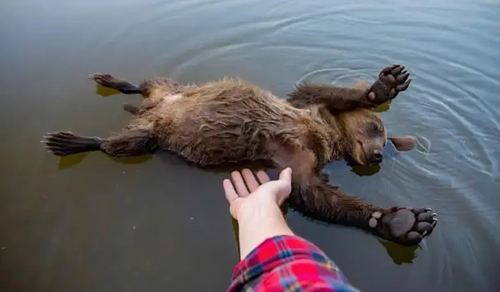
As I carefully walked along the riverbank, camera bag on my back, I noticed a small object floating in the water. My first instinct was simple: driftwood. But as I focused through my lens, the shape shifted. Limbs. Fur.
A bear cub.
It was dark, limp, and half-submerged, spinning slowly in the current. My first thought was practical — sometimes cubs don’t survive in nature. They get separated, trapped in the water, or succumb to predators. It is one of the harsh realities of life in the wild.
But then, an unexpected reaction arose: compassion. Empathy. I couldn’t just watch. Maybe I could help. Maybe I could save it.
⚠️ A Dangerous Decision
Without fully thinking, I made a decision that would haunt me for the rest of my life. I dropped my camera gear and stepped into the river.
The water was frigid, rushing with a force that tugged at my legs. Shallow near the edge, yes, but still treacherous. My boots slipped on slick rocks. My mind raced, trying to measure risk versus reward.
I reached the cub. It was heavier than it looked — soaked, trembling, unresponsive. My hands were shaking, not just from the cold but from anticipation and fear. Gently, I pulled it toward the bank. Then, something changed.
It twitched. A faint breath. It was alive. Relief surged through me, followed by a dangerous and false sense of pride. I had saved it, or so I thought.
And then the forest reminded me who was really in charge.
The Sound That Froze My Blood
From behind the brush, somewhere in the shadowed edge of the trees, came a sound that made every instinct in my body scream: a deep, guttural growl. Not distant, not faint — close. Too close.
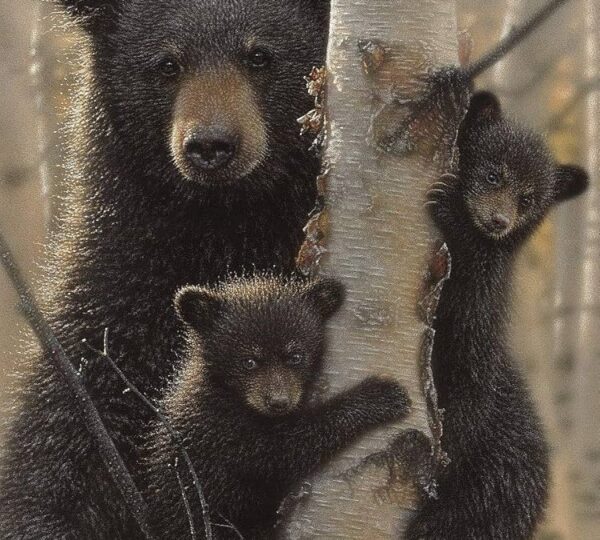
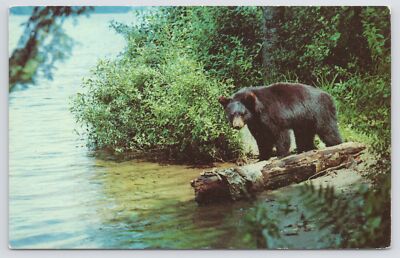
I turned slowly. About thirty feet away, a massive black bear emerged from the undergrowth. Her eyes were locked on me, or more precisely, on the cub I was holding.
The moment was surreal: sunlight glinting off her fur, the river rushing nearby, and her gaze unyielding, intense, and maternal.
I understood immediately. This was not an encounter with a wild animal I could reason with. This was a mother protecting her child.
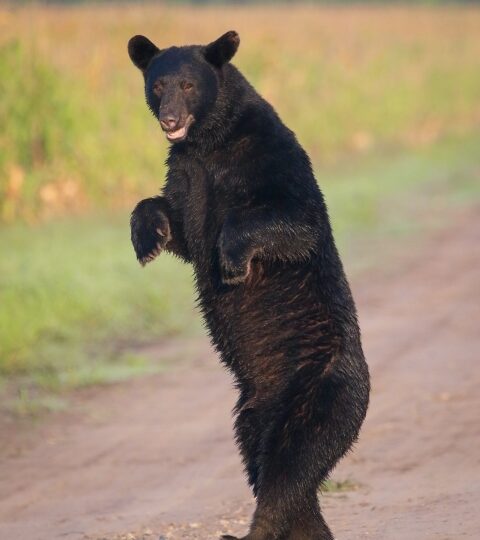
She rose onto her hind legs, towering nearly seven feet tall. Her roar was a sound I will never forget — primal, powerful, reverberating through the trees and over the water. My entire body froze, every nerve screaming that I had made a mistake.
⚡ Instinct vs. Reason
Panic surged. My training screamed at me to stand my ground, to stay calm, to slowly retreat sideways. But instinct took over. In a surge of fear, I tossed the cub gently back toward the riverbank and turned to run.
Branches tore at my skin as I sprinted, and every step felt like running through a storm. Behind me, the sound of her paws hitting the ground was thunderous.
I could hear her closing the distance, hear the rustle of leaves as she charged. The world narrowed to one singular thought: survival.
Then came the impact. Her claws tore through my back, ripping flesh and muscle. I crashed to the dirt, gasping for air, pain exploding in waves.
I rolled over and stared up at her face — mouth open, eyes wild, teeth bared. I understood, with crystal clarity, the power of an apex predator protecting its young.
And then, as suddenly as it began, it stopped.
A Choice Made in Trust
She let out a loud huff — a warning — and stepped back. My body, trembling and bloody, watched in disbelief. Slowly, deliberately, she returned to her cub. With careful nudges and gentle bites, she lifted the cub in her jaws, settled it safely, and walked away.
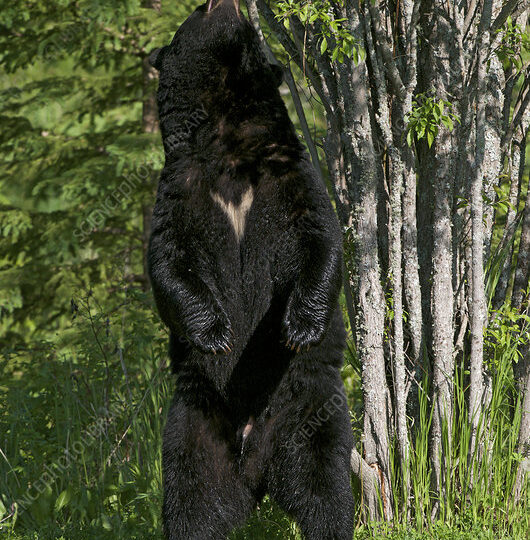
It was a humbling lesson: my intentions had created the danger, but her instincts, patience, and assessment had spared me.
The Aftermath
I stumbled back to my truck, bleeding and dazed, and called for help. Paramedics arrived quickly. I was fortunate: major arteries and nerves were untouched.
The wounds were deep, painful, and would leave permanent scars — a physical reminder of the day nature humbled me.
During my recovery, a wildlife officer visited me. He had reviewed the scene and said something I’ll never forget: “You made a mistake — a dangerous one. But when you gave her space, she made a choice. That’s what saved you.”
His words resonated. The bear’s actions were not malicious. She was a mother protecting her offspring. And when I respected her instinctive decision, she allowed me to live.
Lessons for Wilderness Travelers
Since that day, I have spoken to countless hikers, campers, and amateur photographers about what happened. The message is consistent, clear, and vital:
-
Never approach a bear cub. The mother is almost always nearby.
-
Don’t attempt rescue. Your presence alone can trigger a defensive, life-threatening reaction.
-
Respect instinct. Animals act according to their own survival logic, not human emotions.
-
Back away slowly if encountered. Give space, remain calm, and avoid sudden movements.
This story is not meant to scare, but to teach respect for wildlife, understanding their behaviors, and prioritizing safety over heroics.
Nature Is Not Ours to Rescue
That encounter changed the way I view my work and the wilderness. Photography and guiding are no longer just about capturing beauty or leading others safely — they are about understanding and honoring the lives that share the environment with us.
Every creature has instincts, families, and territory. Every choice we make in the wild has consequences.
The mother bear’s gaze is something I will never forget. It was not hatred. It was protection. Love. Survival. The same complex emotions that govern human behavior also govern the wild.
⏳ Reflection Years Later
I still return to that river every year. The salmon run continues. Eagles still circle overhead. I have never seen that mother or cub again, but I often imagine them thriving, independent, and free.
Every time I approach the river, I am reminded that my role in the wilderness is observer, not hero. That day, she could have ended my life.
But she didn’t. She gave me a chance, and in doing so, taught me a lesson more enduring than any I have learned from books, guides, or training:
Nature does not need rescuing. Nature demands respect.
Final Thoughts
Encounters like this one leave marks — not just on the body, but on the mind and spirit. They remind us of our place in the natural world: that humans are not the rulers of the wild, but participants.
That instincts, survival, and empathy exist across species. And that sometimes, the most profound lessons are the ones that come with danger, humility, and a touch of fear.
To anyone venturing into bear country or the backcountry wilderness:
-
Know the rules.
-
Respect wildlife.
-
Keep distance.
-
Honor the choices of creatures you encounter.
Because when you do, you don’t just survive — you gain understanding. And sometimes, survival itself is the ultimate lesson.
