I Raised My Disabled Nephew Alone After My Sister Left Him for a Better Life — Years Later, She Returned
Amy’s life story is one of extraordinary resilience, unconditional love, and the unplanned responsibilities that define true parenthood.
At 27, Amy found herself thrust into a role she had never imagined—raising her nephew, Evan, a spirited and determined boy born with a congenital leg condition.
Living in a tiny apartment in Queens and juggling two demanding jobs, Amy’s world was already full of struggle, exhaustion, and limited resources.
Yet, nothing could have prepared her for the night her sister Lila, Evan’s mother, left him at Amy’s doorstep, abandoning him in pursuit of her own freedom and a life without children.
That night marked the beginning of a journey that would stretch over a decade, challenging Amy’s physical, emotional, and financial limits.
Lila’s departure left Amy to navigate an unfamiliar and overwhelming reality: a small child with braces requiring physical therapy, medical care, and constant attention. Initially, she was overwhelmed, unsure how she could provide the stability, resources, and support Evan needed.
With only $43 in her account, mounting bills, and no immediate plan, Amy faced a daunting task.
But Evan’s trust, affection, and resilience ignited a fierce determination in her, transforming exhaustion into purpose.
The early months were grueling. Amy’s life became a relentless cycle of work, therapy appointments, and care for Evan.
She sold her car, relied on public transportation, and worked 16-hour days, yet she never wavered.
Her apartment, once modest and tidy, was transformed into a hub for therapy equipment, medical devices, and learning tools necessary to support Evan’s growth.
Despite the chaos, Evan’s optimism and determination never faltered, serving as a source of strength for Amy as she navigated this new life.
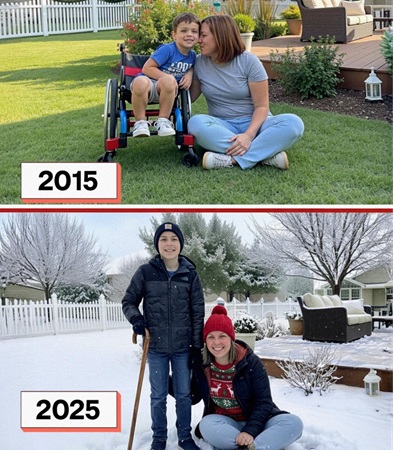
Evan’s progress was remarkable. Through consistent care, physical therapy, and Amy’s unwavering support, he began walking short distances with crutches, achieving milestones that many considered impossible.
His intelligence, curiosity, and kindness shone through, disproving assumptions and prejudices from teachers, peers, and strangers who underestimated him due to his condition.
By the age of ten, Evan was not only walking but thriving academically and socially, demonstrating a remarkable blend of determination and resilience.
Throughout the years, Amy balanced her responsibilities as a caregiver with her personal growth. She advanced professionally, eventually managing a small bookstore, and secured a stable home that accommodated Evan’s therapy and development needs.
She provided him with a nurturing environment, rich in educational resources, personal space, and emotional support.
Together, they created a home filled with love, structure, and hope—a stark contrast to the chaotic night when Lila abandoned him.
As Evan approached his teenage years, he became increasingly aware of his past, his challenges, and the sacrifices Amy made.
At 15, a decade after being left, Evan faced the unthinkable: Lila returned, accompanied by a lawyer, seeking to reclaim custody of the boy she had abandoned.
Her sudden reappearance was fueled by self-interest, as she sought to capitalize on Evan’s achievements and the image of resilience that had grown around him.
Amy confronted this new challenge with the same steadfastness that had guided her through the previous ten years.
She immediately engaged legal counsel, collected documentation from medical providers, educators, and neighbors, and prepared to defend the life she had built with Evan.
Through this legal battle, the true depth of Amy’s role in Evan’s life was highlighted.
She had been his parent in every meaningful sense—supporting him, nurturing him, advocating for him, and helping him overcome both physical and social obstacles.
The court proceedings revealed the stark contrast between Lila’s past abandonment and Amy’s decade of consistent care.
Despite Lila’s attempts to present herself as a reformed, caring mother, the evidence of her absence was undeniable.
Evan, too, played a critical role, testifying to the profound impact Amy had on his life, acknowledging her as the true parental figure who had been present through every trial, triumph, and milestone.
Ultimately, the court awarded Amy full and permanent custody, with no visitation rights granted to Lila. This legal resolution affirmed the decades of love, effort, and sacrifice that had defined Amy’s guardianship.
It also underscored the principle that parental rights cannot be retroactively claimed after years of neglect, abandonment, and indifference.

Following the resolution, Amy and Evan took steps to formalize their bond. Evan, now a young adult, expressed his desire for Amy to adopt him officially.
This legal adoption symbolized the culmination of a journey defined not by biology but by commitment, love, and shared experiences.
When the adoption was finalized, Amy and Evan celebrated a moment of profound joy and affirmation of the family they had created together.
Beyond the personal victory, Amy’s story reflects broader themes of resilience, sacrifice, and the transformative power of love.
Her ability to rise above financial hardship, emotional strain, and social judgment demonstrates the capacity for ordinary individuals to become extraordinary caregivers.
Evan’s growth, development, and achievements serve as testament to the potential unlocked when a child is nurtured in an environment of stability, encouragement, and unwavering support.
Amy’s journey also highlights the complex dynamics of family, responsibility, and accountability.
Lila’s abandonment and subsequent attempt to reclaim her role expose the moral and legal implications of parental rights, emphasizing that true parenthood is defined by consistent care and presence rather than mere biology or intent.
The story serves as a cautionary tale about the consequences of neglect and the ethical responsibilities inherent in raising a child.

Throughout this journey, Amy not only became a parent in the most profound sense but also exemplified qualities that transcend her personal story: courage, perseverance, empathy, and an unyielding commitment to another human being.
Her life illustrates that love is not defined by convenience or obligation but by sustained action, sacrifice, and emotional investment over time.
In conclusion, Amy and Evan’s story is a compelling narrative of love, resilience, and triumph over adversity.
It demonstrates the enduring power of dedication, the importance of nurturing relationships, and the profound impact a committed caregiver can have on a child’s life.
Their journey from abandonment to legal and emotional affirmation underscores the capacity of individuals to rise above circumstances, create meaningful change, and redefine the meaning of family.
Amy’s unwavering dedication and Evan’s perseverance highlight that the truest measure of parenthood lies not in the circumstances of birth but in the consistent, loving care that shapes a child’s future.
Amy’s life story is one of extraordinary resilience, unconditional love, and the unplanned responsibilities that define true parenthood.
At 27, Amy found herself thrust into a role she had never imagined—raising her nephew, Evan, a spirited and determined boy born with a congenital leg condition.
Living in a tiny apartment in Queens and juggling two demanding jobs, Amy’s world was already full of struggle, exhaustion, and limited resources.
Yet, nothing could have prepared her for the night her sister Lila, Evan’s mother, left him at Amy’s doorstep, abandoning him in pursuit of her own freedom and a life without children.
That night marked the beginning of a journey that would stretch over a decade, challenging Amy’s physical, emotional, and financial limits.
Lila’s departure left Amy to navigate an unfamiliar and overwhelming reality: a small child with braces requiring physical therapy, medical care, and constant attention. Initially, she was overwhelmed, unsure how she could provide the stability, resources, and support Evan needed.
With only $43 in her account, mounting bills, and no immediate plan, Amy faced a daunting task.
But Evan’s trust, affection, and resilience ignited a fierce determination in her, transforming exhaustion into purpose.
The early months were grueling. Amy’s life became a relentless cycle of work, therapy appointments, and care for Evan.
She sold her car, relied on public transportation, and worked 16-hour days, yet she never wavered.
Her apartment, once modest and tidy, was transformed into a hub for therapy equipment, medical devices, and learning tools necessary to support Evan’s growth.
Despite the chaos, Evan’s optimism and determination never faltered, serving as a source of strength for Amy as she navigated this new life.
Evan’s progress was remarkable. Through consistent care, physical therapy, and Amy’s unwavering support, he began walking short distances with crutches, achieving milestones that many considered impossible.
His intelligence, curiosity, and kindness shone through, disproving assumptions and prejudices from teachers, peers, and strangers who underestimated him due to his condition.
By the age of ten, Evan was not only walking but thriving academically and socially, demonstrating a remarkable blend of determination and resilience.
Throughout the years, Amy balanced her responsibilities as a caregiver with her personal growth. She advanced professionally, eventually managing a small bookstore, and secured a stable home that accommodated Evan’s therapy and development needs.
She provided him with a nurturing environment, rich in educational resources, personal space, and emotional support.
Together, they created a home filled with love, structure, and hope—a stark contrast to the chaotic night when Lila abandoned him.
As Evan approached his teenage years, he became increasingly aware of his past, his challenges, and the sacrifices Amy made.
At 15, a decade after being left, Evan faced the unthinkable: Lila returned, accompanied by a lawyer, seeking to reclaim custody of the boy she had abandoned.
Her sudden reappearance was fueled by self-interest, as she sought to capitalize on Evan’s achievements and the image of resilience that had grown around him.
Amy confronted this new challenge with the same steadfastness that had guided her through the previous ten years.
She immediately engaged legal counsel, collected documentation from medical providers, educators, and neighbors, and prepared to defend the life she had built with Evan.
Through this legal battle, the true depth of Amy’s role in Evan’s life was highlighted.
She had been his parent in every meaningful sense—supporting him, nurturing him, advocating for him, and helping him overcome both physical and social obstacles.
The court proceedings revealed the stark contrast between Lila’s past abandonment and Amy’s decade of consistent care.
Despite Lila’s attempts to present herself as a reformed, caring mother, the evidence of her absence was undeniable.
Evan, too, played a critical role, testifying to the profound impact Amy had on his life, acknowledging her as the true parental figure who had been present through every trial, triumph, and milestone.
Ultimately, the court awarded Amy full and permanent custody, with no visitation rights granted to Lila. This legal resolution affirmed the decades of love, effort, and sacrifice that had defined Amy’s guardianship.
It also underscored the principle that parental rights cannot be retroactively claimed after years of neglect, abandonment, and indifference.
Following the resolution, Amy and Evan took steps to formalize their bond. Evan, now a young adult, expressed his desire for Amy to adopt him officially.
This legal adoption symbolized the culmination of a journey defined not by biology but by commitment, love, and shared experiences.
When the adoption was finalized, Amy and Evan celebrated a moment of profound joy and affirmation of the family they had created together.
Beyond the personal victory, Amy’s story reflects broader themes of resilience, sacrifice, and the transformative power of love.
Her ability to rise above financial hardship, emotional strain, and social judgment demonstrates the capacity for ordinary individuals to become extraordinary caregivers.
Evan’s growth, development, and achievements serve as testament to the potential unlocked when a child is nurtured in an environment of stability, encouragement, and unwavering support.
Amy’s journey also highlights the complex dynamics of family, responsibility, and accountability.
Lila’s abandonment and subsequent attempt to reclaim her role expose the moral and legal implications of parental rights, emphasizing that true parenthood is defined by consistent care and presence rather than mere biology or intent.
The story serves as a cautionary tale about the consequences of neglect and the ethical responsibilities inherent in raising a child.
Throughout this journey, Amy not only became a parent in the most profound sense but also exemplified qualities that transcend her personal story: courage, perseverance, empathy, and an unyielding commitment to another human being.
Her life illustrates that love is not defined by convenience or obligation but by sustained action, sacrifice, and emotional investment over time.
In conclusion, Amy and Evan’s story is a compelling narrative of love, resilience, and triumph over adversity.
It demonstrates the enduring power of dedication, the importance of nurturing relationships, and the profound impact a committed caregiver can have on a child’s life.
Their journey from abandonment to legal and emotional affirmation underscores the capacity of individuals to rise above circumstances, create meaningful change, and redefine the meaning of family.
Amy’s unwavering dedication and Evan’s perseverance highlight that the truest measure of parenthood lies not in the circumstances of birth but in the consistent, loving care that shapes a child’s future.


