
While the global community continues to process the profound impacts of the COVID‑19 pandemic, a separate virus — Nipah virus (NiV) .
Has drawn renewed attention from health authorities around the world. Unlike the novel coronavirus, Nipah virus is not newly discovered; it has been known to science for decades.
But reports of recent infections in India’s West Bengal state have prompted public health responses that echo past epidemic preparedness efforts and underscore the ongoing threat posed by zoonotic diseases.
In this article, we explore what the Nipah virus is, why health officials are vigilant, what is known about recent cases, how the virus spreads, symptoms and complications, treatment limitations, and global responses aimed at preventing further spread.

What Is the Nipah Virus?
The Nipah virus is a zoonotic virus, meaning it normally circulates in animals and can spill over into humans under certain conditions. It belongs to the Henipavirus genus in the Paramyxoviridae family.
The first recognized outbreak occurred in 1998‑1999 in Malaysia and Singapore, where pigs infected by bats transmitted the virus to humans.
Fruit bats of the Pteropus genus — often called flying foxes — are considered the natural reservoir for Nipah virus. These bats can carry the virus without getting sick and can shed it through saliva, urine, or other body fluids.
Humans may become infected following direct contact with infected animals, contact with contaminated food or fruit, or close contact with infected people.
Human‑to‑human transmission, while not as efficient as with respiratory viruses like COVID‑19, has occurred and been documented in previous outbreaks.
Transmission has been most common among family members and caregivers with close physical contact with severely ill patients.
Recent Cases in West Bengal, India — Situation Overview
In late December 2025 and January 2026, Indian health authorities confirmed cases of Nipah virus infection in the eastern state of West Bengal.
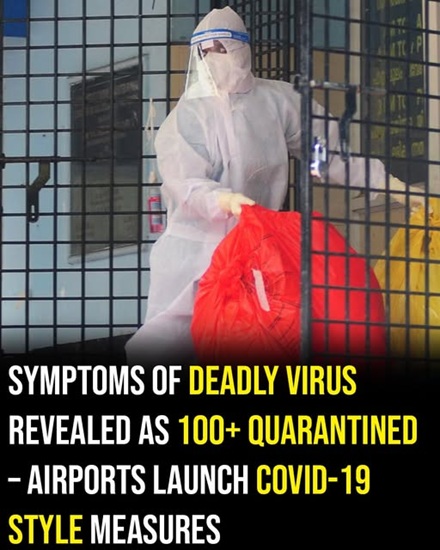
Initial reports noted several health workers — including nurses at a private hospital — had developed symptoms consistent with Nipah virus disease, and laboratory testing confirmed infection.
According to official data released by the National Centre for Disease Control (NCDC) and India’s Ministry of Health and Family Welfare, only two confirmed Nipah cases have been reported in West Bengal since December of the previous year, and all 196 traced contacts have tested negative and remained asymptomatic.
Authorities emphasized that the situation has been contained and remains under active monitoring by public health teams.
Earlier media reports cited up to five cases or multiple health workers becoming ill, but government releases clarified that only two confirmed patients have been identified since December, with the rest being suspected contacts who ultimately tested negative.
Although the number of confirmed cases is low, the serious nature of the virus’s potential effects has led to heightened alert and precautionary measures in nearby regions.
How the Virus Spreads
Nipah virus can spread through several routes:
Animal‑to‑human transmission: Direct contact with infected animals — particularly fruit bats or infected pigs — or exposure to foods contaminated with infected animal secretions (such as bat‑contaminated fruit or raw date palm sap).
Human‑to‑human transmission: Prolonged close contact with a symptomatic infected person, especially exposure to respiratory secretions, body fluids, or caregiving without protective measures.
Although the virus is not considered as easily transmissible as COVID‑19 or influenza, human‑to‑human transmission has been documented in several previous outbreaks, particularly in healthcare settings or among family caregivers.
Public health experts note that behaviors facilitating close contact without proper protective equipment — such as unprotected caregiving or handling of infectious bodily fluids — may increase the risk of person‑to‑person spread.
Symptoms and Progression
Infected individuals may experience a wide range of symptoms, from mild to very severe:
Early symptoms (flu‑like): Fever, headache, muscle pain, vomiting, sore throat, and general weakness.
Respiratory issues: Cough, difficulty breathing, and atypical pneumonia may occur.
Neurological complications: The most dangerous consequence is encephalitis (inflammation of the brain), which can lead to confusion, altered consciousness, seizures, and coma. This may develop days to weeks after initial symptoms.
According to the World Health Organization, the incubation period — the time between exposure to the virus and the onset of symptoms — is typically 4 to 14 days, though in rare cases it has been reported to extend up to about 45 days.
Severe Nipah infection can lead to rapid progression to life‑threatening complications such as encephalitis, respiratory distress, coma, or death.
Some individuals who survive may experience long‑term neurological effects, including seizure disorders or personality changes.
Fatality Rate and Severity
One of the defining characteristics of Nipah virus disease is its high fatality rate, which far exceeds that of most seasonal flu viruses and is significantly higher than the roughly ~3–4% average fatality of COVID‑19 observed globally during the pandemic.
The case fatality rate (CFR) for Nipah virus infections has been estimated at 40% to 75% in past outbreaks, depending on local healthcare quality, surveillance systems, and outbreak response efforts.
This rate varies from outbreak to outbreak, with some regions containing infections more effectively and others experiencing a higher proportion of severe outcomes.
However, even in areas with strong healthcare systems, Nipah virus infections have proven difficult to treat once symptoms progress.
Diagnosis and Clinical Management
Diagnosing Nipah virus can be challenging because early symptoms resemble those of many common illnesses. Laboratory testing — typically using real‑time polymerase chain reaction (RT‑PCR) to detect viral genetic material — is essential for confirmation.
There is currently no licensed vaccine or specific antiviral treatment for Nipah virus infection in humans or animals, meaning that medical care focuses on supportive treatment to manage symptoms and complications.
This includes respiratory support, hydration, and treatment of secondary infections or complications as they arise.
Because there is no direct antiviral therapy, health authorities emphasize early detection, isolation of cases, and rigorous infection control measures to prevent spread, especially in healthcare facilities.
Prevention and Public Health Measures
Given the absence of vaccines or approved therapeutic drugs, preventing Nipah virus transmission hinges on public health strategies and personal precautions:
Animal and food safety:
Avoid contact with bats and sick animals.
Avoid foods that may be contaminated with bat secretions, such as raw palm sap.
Thoroughly wash and peel fruits and vegetables.
Human‑to‑human transmission prevention:
Healthcare workers should use appropriate personal protective equipment (PPE) and adhere to infection control protocols.
People caring for sick individuals should avoid direct contact with bodily fluids and seek guidance from health professionals.
Public health agencies also conduct contact tracing and quarantine of individuals who were exposed to confirmed cases, aiming to quickly detect any new symptoms and prevent further transmission.
Global Monitoring and Response
Although the recent cases are concentrated in West Bengal, India, health authorities across Asia and beyond have taken precautionary measures to guard against potential spread.
Countries such as Thailand, Nepal, Taiwan, Singapore, Malaysia, and China have increased health screenings at airports, including temperature checks and health declarations, particularly for travelers arriving from affected regions.
These measures, similar in some respects to those seen during the COVID‑19 pandemic, aim to identify symptomatic travelers, accelerate testing, and ensure early isolation where necessary.
Health officials from several nations have made clear that there have been no confirmed Nipah cases outside India to date, and that these surveillance efforts are precautionary steps grounded in global public health best practices.
Current Outlook and What Comes Next
At present, Indian authorities assert that the outbreak is contained with only two confirmed cases since December and no additional infections detected among hundreds of traced contacts.
While the virus remains a severe health threat due to its high fatality rate and lack of vaccines or targeted treatments, experts do not view Nipah as likely to cause a widespread global pandemic akin to COVID‑19.
The virus does not spread as easily between people, and cases historically have been confined to specific regions with limited human‑to‑human transmission, especially when rigorous infection control practices are in place.
Researchers and international health agencies, including the World Health Organization (WHO), continue to prioritize the study of Nipah virus — both to improve understanding and to fast‑track the development of vaccines and treatments. The virus is listed on the WHO’s R&D Blueprint as a priority pathogen requiring accelerated research and global collaboration.
Conclusion
The recent Nipah virus cases in West Bengal serve as a reminder of how zoonotic diseases — those transmitted from animals to humans — continue to pose serious challenges for global public health.
Although the number of confirmed infections is limited and the situation is reported to be under control, the high fatality rate, absence of specific treatments, and potential for severe neurological effects mean that continued vigilance, surveillance, and preventive action remain essential.
For individuals, awareness of the virus’s symptoms, transmission routes, and precautions that minimize risk is key. For public health systems and international organizations, the event underscores the need for strong outbreak response capacities, cross‑border cooperation, and sustained research into vaccines and therapeutics.
As health authorities worldwide monitor developments, accurate information, responsible reporting, and evidence‑based public health measures will help guide communities and individuals through evolving disease threats — without panic, but with preparedness.
