
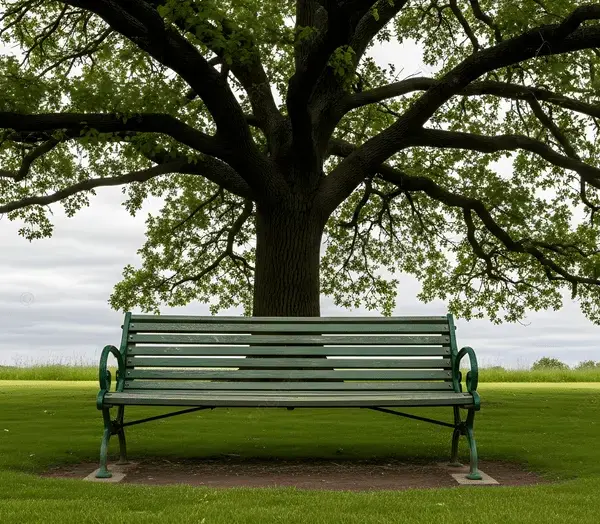
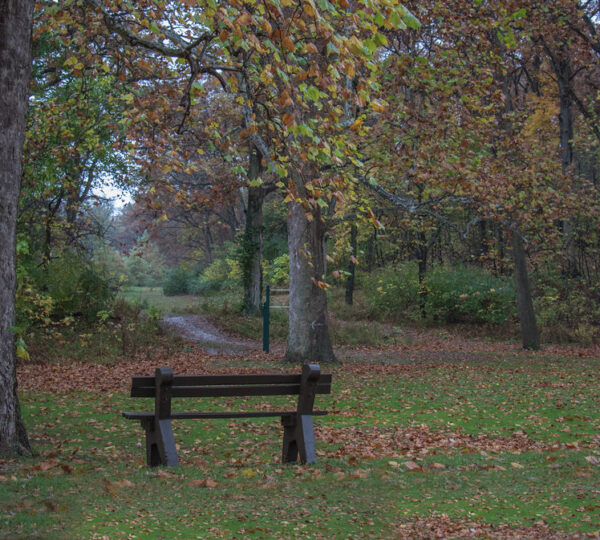
Every single day, for as many years as I can remember, I made my way to the same worn park bench at the edge of Maplewood Park.
The paint had long since peeled from its iron arms, and the wooden slats bore the smooth polish of decades of weather and weary visitors.
To anyone passing by, I was simply another elderly man keeping to himself — a quiet, predictable presence, as permanent as the oak trees that arched overhead or the lamppost that flickered to life at dusk. Children ran past me. Joggers traced the same looping paths. Dog walkers offered polite nods. I rarely spoke.
But that bench was never just a bench. It was a sanctuary. A monument. A place suspended between memory and hope.
It was where Clara and I had once sat side by side, so many years ago, when our lives were still unfolding and the future felt limitless.
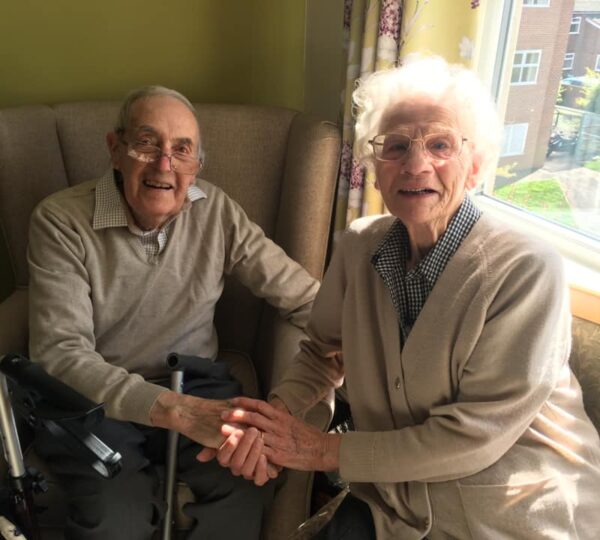
Back then, Maplewood Park was our refuge from the noise of the world. We were young, hopeful, and certain that love would be enough to anchor us through whatever storms might come. Clara used to bring a small thermos of coffee, always sweetened with too much sugar.
I would bring a newspaper, though we rarely read it. We would sit close, her hand tucked into mine, and talk about everything — the places we wanted to travel, the kind of home we hoped to build, the children we imagined raising.
She had a laugh that seemed to lift the very air around us. When she smiled, the world felt brighter, kinder, more forgiving.
Life in those days was a mosaic of simple joys. We didn’t have much money, but we had time, health, and an unshakable belief in each other.
We talked about painting the kitchen yellow in our future home. About planting tomatoes in the backyard. About naming our daughter after Clara’s grandmother.
But life does not always move according to the plans we sketch in youth.
Circumstances changed. Misunderstandings grew where clarity should have been. Words left unsaid became walls between us. And one day, without the closure either of us deserved, Clara was gone.
There was no dramatic farewell, no final embrace on the bench. Just absence. A silence that settled over my life like winter frost.
In the years that followed, I continued my routine as if routine alone could hold my world together. Every morning began the same way. I would wake before sunrise in the small apartment I had lived in for decades.
I would prepare my modest breakfast — oatmeal stirred slowly on the stove, mixed with shredded carrots the way Clara once insisted was healthier. I never quite liked it, but I never stopped making it that way either.
After breakfast, I would put on one of my old vinyl records. Frank Sinatra’s voice would drift through the apartment, warm and steady, filling the rooms with echoes of another era. Songs about love and longing felt less like music and more like memory.
Then I would button my coat, pick up my cane, and make the slow walk to Maplewood Park.
Some might have called it stubbornness. Others might have seen it as loneliness. But for me, it was faith. As long as I returned to that bench, some part of our story remained alive.
The bench became my anchor to a past I wasn’t ready to release. It was where I felt closest to Clara — as if time folded in on itself there, as if the years between then and now were thinner, almost transparent.
People assumed I was a widower. Some offered sympathetic smiles. A few even tried to start conversations. I answered politely, but I never explained why I came.
How could I explain that I was waiting for something I could not name?
Then came the morning that changed everything.
It was gray and heavy with rain, the kind of day when the sky feels low enough to touch. The park was nearly empty. Raindrops tapped softly against the hood of my coat as I sat hunched against the cold, hands trembling more than usual.
I should have stayed home that day. But habit, or hope, or perhaps something deeper, drew me there anyway.
That was when I saw her.
A little girl stood a few yards away, holding a small umbrella that seemed far too large for her. She couldn’t have been more than eight or nine. Her boots splashed lightly in the puddles as she approached. There was no fear in her expression, only quiet determination.
“You look cold,” she said gently.
Her voice was clear and steady, with a kindness that startled me.
Before I could protest, she slipped off her jacket and draped it carefully over my lap. The fabric was warm from her body heat, and the gesture was so natural, so instinctive, that it left me speechless.
“What’s your name?” I managed to ask.
“Leah,” she replied.
I thanked her, though my voice felt unsteady. It was then that my eyes fell to the inside of the jacket’s collar.
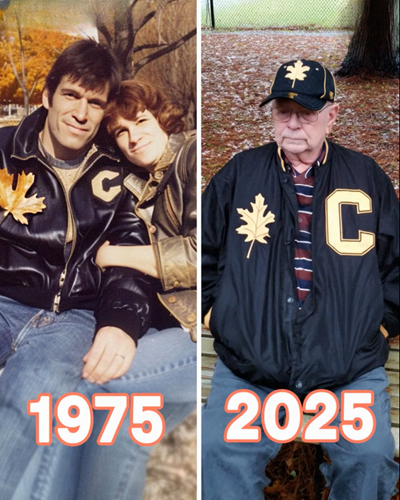
There, stitched delicately in gold thread, was the letter “C” beside a small oak leaf.
My breath caught in my throat.
Clara had owned a jacket like that. I remembered it clearly — forest green with a subtle sheen, the gold embroidery custom-stitched at a small boutique she adored. The oak leaf had been her favorite symbol, representing strength and endurance.
I traced the stitching with shaking fingers.
“Where did you get this jacket?” I asked, trying to keep my voice calm.
“It was my grandmother’s,” Leah said simply.
The world seemed to tilt.
I wanted to ask a thousand questions, but the rain began to fall harder, and she glanced toward the park entrance.
“I have to go,” she said. “Grandma will be worried.”
And just like that, she was gone.
I sat there long after the rain had soaked through my coat, the jacket still resting across my lap. My mind raced with possibilities I had buried years ago.
Could it be the same jacket? Was it merely coincidence? Or had fate, in its mysterious way, led this child to me?
The next morning, I arrived at the park earlier than usual. And the next. I watched every face that passed, searching for Leah.
It was three days later when I saw her again, this time walking toward a small community shelter near the park’s edge. The building was modest but well-kept, with flower boxes beneath its windows.
I followed at a respectful distance, heart pounding like it had decades earlier when I first took Clara’s hand.
Inside the shelter’s courtyard, I saw her.
Clara.
Older now. Her hair streaked with silver, her posture slightly stooped. Time had etched gentle lines into her face. But there was no mistaking her.
She turned, as if sensing my gaze.
For a moment, we simply stared at one another. Years of silence hung between us, fragile and heavy.
“Clara,” I whispered.
Her eyes widened, filling with emotion I could not yet read.
“I thought you left,” she said finally, her voice trembling. “I thought you didn’t want us.”
The words struck me like a physical blow.
“I never left,” I said. “I waited. Every day.”
Misunderstandings, miscommunications, and assumptions had torn us apart years ago. A letter lost in the mail. A message never delivered. Pride that kept us from seeking clarity. She had believed I chose another life. I had believed she had moved on.
And all the while, our daughter had grown up between those two broken narratives.
Leah was our granddaughter.
The revelation unfolded slowly, through tears and halting explanations. Clara had raised our daughter alone. Life had not been easy. After our daughter’s passing years later, Clara became Leah’s guardian.
When Leah offered me her jacket, she had unknowingly bridged decades of separation.
Reunion did not erase the pain of the past, but it transformed it. We began cautiously at first — shared conversations, careful apologies, long walks through the park where everything had begun.
Soon, the bench was no longer a place of solitary reflection. It became a gathering place once more.
Our mornings changed.
Instead of eating oatmeal alone, I found Clara standing in my kitchen, humming softly as she arranged fresh flowers in a jar. Leah’s laughter filled the apartment as she flipped through old photo albums.
We cooked together — simple meals of soup and bread that warmed both body and spirit. We read stories aloud. We talked not only about what we had lost, but about what we still had.
The bench remained, weathered and unchanged, but its meaning had shifted. Where it once symbolized longing, it now represented resilience.
Sometimes I reflect on those long years of waiting. Was it foolish to return to the same spot day after day? Perhaps. But I no longer see it that way.
Waiting was not wasted time.
It was an act of quiet faith.
Life does not always offer second chances. But sometimes, in the most unexpected ways, it offers reconciliation.
Clara’s return, Leah’s simple act of kindness, and the rediscovery of our shared history have given me something I thought was gone forever — not just love, but peace.
Now, when I sit on that same old bench, I do not wait for what was lost.
I sit beside Clara, her hand in mine, while Leah feeds crumbs to the birds nearby. The oak trees still sway overhead. The lamppost still glows at dusk.
But the air feels lighter.
The bench is no longer a monument to absence.
It is a testament to endurance — to the idea that love, even when separated by time and misunderstanding, can find its way home.
And for that, I am endlessly grateful.
