
Salena Webb, a mother and devoted Halloween enthusiast from Duncan, South Carolina, never expected her love for spooky decorations to place her at the center of a nationwide conversation about kindness, empathy, and community values.
Known locally for her creativity and enthusiasm for the Halloween season, Webb had spent years transforming her front yard into an elaborate and carefully designed haunted display that quickly became a neighborhood favorite.
Each October, her home stood out as a festive landmark. Passersby slowed their cars, families stopped for photos, and children eagerly pointed out the details scattered throughout her yard.
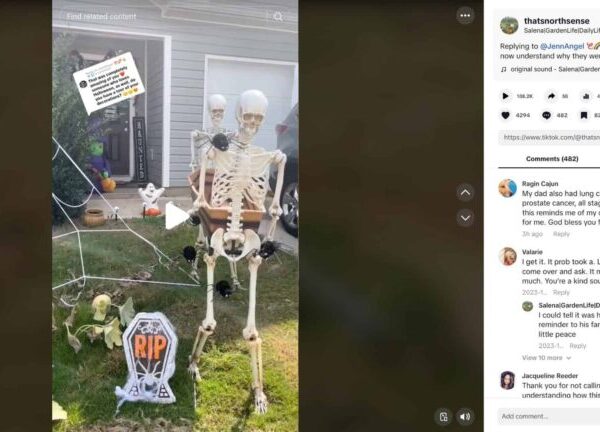
The display was immersive and thoughtfully arranged, featuring realistic tombstones, skeletons posed in dramatic scenes, faux coffins, thick cobwebs, atmospheric lighting, and other classic Halloween elements designed to evoke playful fright rather than fear.
For Webb, Halloween was never about shock value or controversy. It was about imagination, creativity, and bringing people together.
She viewed the holiday as a rare opportunity for neighbors to share a collective experience—one rooted in fun, artistry, and a touch of harmless spookiness.
However, what was intended as a joyful seasonal celebration unexpectedly became a sensitive issue for one nearby family, leading to a moment that would ultimately highlight the power of compassion over confrontation.
A Neighborhood Tradition Built on Creativity
Webb’s Halloween displays were not last-minute decorations hastily assembled. They were the result of weeks of planning, design, and careful execution. Each year, she refined her setup, adding new elements and reworking old ones to create a cohesive and engaging experience.
Her front yard graveyard theme was particularly admired. Skeletons were arranged in humorous yet eerie poses, some holding coffins, others appearing to emerge from the ground.
Tombstones bore fictional names and playful epitaphs. Soft fog effects and strategically placed lights enhanced the atmosphere after sunset, creating a display that was visually striking without being excessively frightening.
For many in the neighborhood, Webb’s decorations became part of their annual Halloween routine. Parents brought their children to see the display, couples strolled past in the evenings, and neighbors often stopped to chat and admire the effort she put into her home.
Webb saw these interactions as the heart of the holiday. Halloween, to her, was not just about costumes and candy—it was about shared moments and building positive connections within the community.
An Unexpected and Sensitive Request
That sense of celebration was unexpectedly interrupted when a neighbor approached Webb with a personal concern. The neighbor, an adult man living nearby, explained that his father had recently been diagnosed with cancer and was going through an emotionally and physically difficult time.
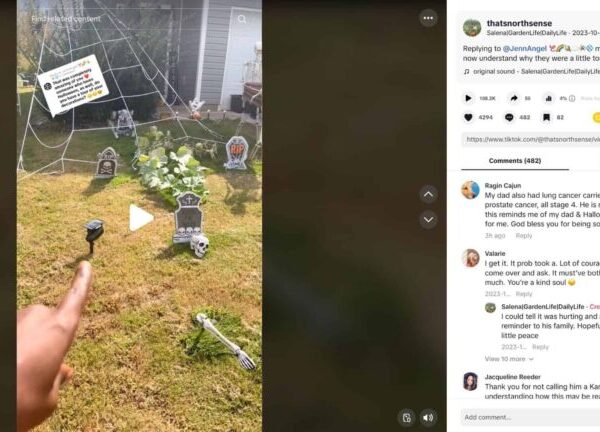
While the Halloween display was clearly meant for fun, the graveyard imagery—particularly the tombstones and skeletons—had unintentionally become distressing for his father.
The constant visual reminders of death and mortality were deeply unsettling given his current health struggles.
The request was delivered politely and respectfully. The neighbor did not demand that the decorations be removed, nor did he accuse Webb of wrongdoing. Instead, he asked whether she might consider modifying or removing the graveyard elements to help spare his father unnecessary emotional discomfort during an already challenging period.
For Webb, the request came as a surprise. She had never imagined that her decorations, which had brought so much joy to others, could cause pain to someone nearby.
Choosing Empathy Over Disappointment
Initially, Webb admits she felt disappointed. The graveyard display represented a significant investment of time, energy, and creativity. Dismantling it would mean undoing weeks of work and altering a tradition she deeply cherished.
Yet, after reflecting on the situation, Webb recognized that the issue was not about decorations—it was about people. Faced with a choice between preserving her display and easing the emotional burden of a neighbor’s family, she chose empathy.
Rather than making minimal adjustments, Webb decided to remove the graveyard portion of the display entirely. The coffin-holding skeletons, tombstones, and other morbid elements were carefully taken down.
Her decision was rooted in a simple belief: that kindness and compassion matter more than seasonal enjoyment. As she later explained, Halloween comes every year, but moments where we can genuinely support someone in need are far more meaningful.
Sharing the Story on TikTok
Webb chose to share her experience on TikTok, not to seek praise, but to explain her reasoning and encourage others to consider empathy in their own lives. In the video, she calmly described the neighbor’s request and her decision to comply.
She emphasized that acts of kindness do not require sacrifice in the grand sense. Sometimes, they involve small, thoughtful choices that prioritize human connection over personal preference.
“There’s always next year for me,” Webb said in the video, expressing her belief that holidays and decorations are temporary, but compassion leaves a lasting impact.
The video quickly gained attention, amassing more than 1.2 million views. Viewers from across the country resonated with her message, sharing their own experiences and praising her response.
A Wave of Positive Reactions
The response to Webb’s video was overwhelmingly supportive. Thousands of comments flooded in, applauding her maturity, empathy, and emotional intelligence.
Many viewers noted how rare it is to see such thoughtful behavior, especially in an era where disagreements—both online and offline—often escalate into conflict.
Others shared stories of similar situations, expressing gratitude for a reminder that compassion can resolve issues that might otherwise divide communities.
Comments ranged from heartfelt admiration to reflective observations about how small acts of kindness can have profound effects. For many, Webb’s decision served as a powerful reminder that consideration for others does not diminish personal joy—it enhances it.
Adapting, Not Abandoning, the Halloween Spirit
Despite removing the graveyard elements, Webb did not abandon her Halloween celebration. Instead, she adapted her display in a creative and lighthearted way.
Skeletons that once held coffins were repositioned to hold badminton rackets, creating a playful and humorous scene. Other decorations were rearranged to emphasize fun rather than fright. The result was a display that retained the festive spirit of Halloween without focusing on imagery that might evoke discomfort.
This creative adjustment demonstrated that empathy does not require giving up one’s passions entirely. Instead, it encourages flexibility and imagination.
By reimagining her decorations, Webb found a solution that respected her neighbor’s sensitivities while still allowing her to celebrate a holiday she loved.
Taking Kindness Beyond the Yard
Webb’s empathy extended beyond modifying her decorations. She visited the neighbor’s family in person, bringing balloons and a handwritten note to express her support.
The gesture was simple but deeply meaningful. The family expressed their appreciation, telling her, “You’re good people,” and thanking her for understanding their situation.
What could have become a source of tension instead became a moment of genuine human connection. The interaction strengthened neighborhood bonds and reinforced the idea that kindness can transform potentially difficult situations into positive experiences.
A Broader Lesson in Community and Compassion
Webb’s story resonates because it reflects a broader truth about community life. Neighborhoods are not just collections of houses; they are networks of individuals with diverse experiences, challenges, and sensitivities.
Holiday decorations, traditions, and personal expressions do not exist in isolation. They interact with the lives of others in ways that are not always predictable.
Webb’s response illustrates how empathy can bridge those differences. By listening, understanding, and adapting, she prevented conflict and fostered goodwill.
The Role of Social Media in Spreading Positivity
The viral nature of Webb’s story also highlights the role of social media in shaping cultural narratives. Platforms like TikTok are often criticized for promoting conflict or superficial content, yet they also provide a space for positive examples of human behavior to reach a wide audience.
By sharing her experience, Webb sparked conversations about empathy, neighborly consideration, and the importance of kindness in everyday life.
Her video encouraged viewers to reflect on their own actions and consider how small adjustments might make a meaningful difference for others.
Halloween Through a More Thoughtful Lens
Halloween is traditionally associated with playful fear, creativity, and elaborate displays. Webb’s story does not challenge those traditions but adds nuance to them.
It reminds us that celebration and sensitivity can coexist. Adjusting a decoration or rethinking a display does not diminish the holiday—it enhances it by making it more inclusive and considerate.
Her approach demonstrates that traditions can evolve without losing their essence.
Small Gestures, Lasting Impact
Perhaps the most powerful aspect of Webb’s story is how small the initial action was. Removing or modifying decorations might seem trivial, yet the impact was significant.
That single decision:
Eased emotional distress for a family in a difficult time
Strengthened neighborhood relationships
Inspired millions of viewers
Sparked conversations about empathy and kindness
It serves as a reminder that compassion is often found in everyday choices rather than grand gestures.
Conclusion: A Lasting Example of Kindness
Salena Webb’s Halloween display may have changed, but the legacy of her actions remains far more enduring. By choosing empathy over insistence, she transformed a potential disagreement into a powerful lesson in humanity.
Her story demonstrates that kindness is not about giving up what we love, but about understanding when flexibility matters more.
In a world where conflict often dominates headlines, Webb’s response offers a refreshing reminder that thoughtfulness and compassion still hold tremendous power.
As future Halloween seasons arrive, her example will continue to resonate—showing that even the simplest acts of consideration can leave a lasting impression and inspire others to act with empathy and grace.
