
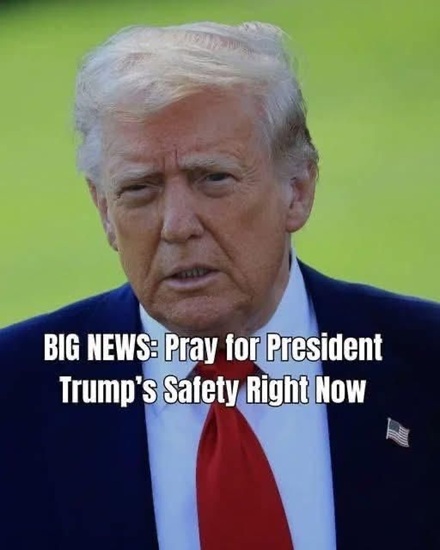
When a former Secret Service agent publicly voices concern regarding a former president’s safety, the implications demand careful attention.
Dan Bongino, a veteran with over a decade of protective experience, recently expressed growing unease regarding Donald Trump’s security environment.
His warning is grounded in professional expertise, not partisan commentary, highlighting that security risks can escalate rapidly under complex political conditions. Understanding such concerns requires examining both historical precedents and contemporary threats that could directly endanger a former president.
Bongino’s experience spans multiple administrations and numerous high-profile protective assignments, giving him a unique perspective on assessing threats.
Unlike public speculation or media sensationalism, his observations are based on real patterns of risk, intelligence analysis, and decades of operational knowledge.
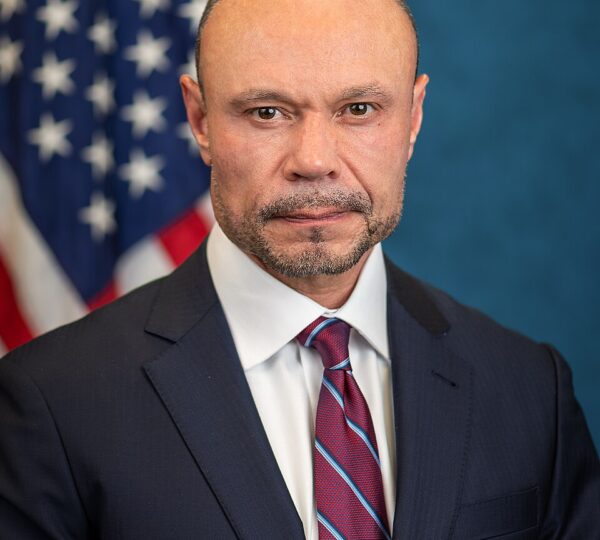
His assessment emphasizes that threats are rarely isolated; instead, they arise from the interaction of various hostile forces, both domestic and international, which can converge into particularly dangerous circumstances.
He identified four primary sources of risk currently facing Trump: hostile foreign actors with strategic motives, domestic extremists radicalized by rhetoric, institutional hostility within certain governmental agencies, and a security culture increasingly influenced by political optics.
Each factor individually could justify heightened vigilance. However, their simultaneous presence creates a security environment historically unprecedented for any former American president, demanding proactive and professional protective measures.
Foreign threats remain particularly pressing. Iran, deeply aggrieved by Trump’s 2020 drone strike that killed Qassem Soleimani, continues to monitor and target him using both direct intelligence operations and proxy networks.
Their capabilities, combined with global geopolitical friction, underscore that even highly controlled security environments remain vulnerable to sophisticated actors determined to exploit any lapse in protection measures.
China represents another external concern. Given Trump’s previous trade, technology, and decoupling policies, his potential return to office carries strategic implications.
Intelligence professionals note that adversarial states actively track former leaders with political influence, seeking opportunities to disrupt, intimidate, or otherwise compromise them.
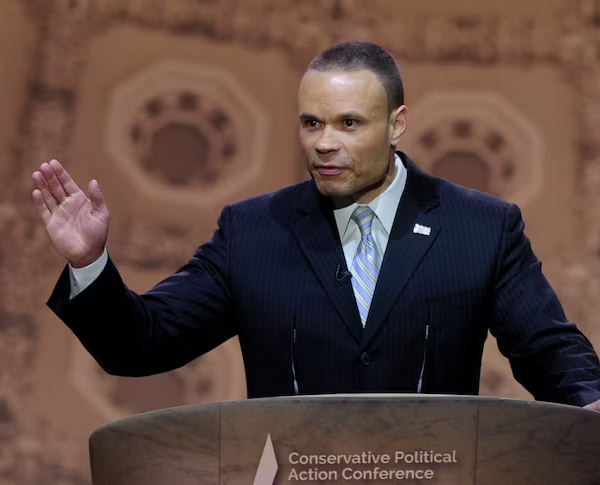
Such threats underscore the importance of maintaining vigilance even after a leader has left office, as influence on global policy remains significant.
Domestic risks are equally critical. Years of escalating dehumanization, public mock threats, and inflammatory political rhetoric have normalized extreme hostility toward Trump.
While most incidents are symbolic or non-violent, research on radicalization indicates that repeated exposure to cues suggesting moral permissibility can increase the likelihood of lone-wolf attacks or targeted acts of aggression by extremist individuals.
Bongino emphasizes that these domestic threats are exacerbated by legal and political conflicts currently surrounding Trump.
High-profile investigations, partisan debates, and media amplification intensify perceptions of vulnerability and can create heightened motivation for attackers.
Security professionals understand that periods of political tension often coincide with spikes in credible threats, making preventive measures particularly crucial during volatile moments.
Another serious concern involves the potential for politicized protection decisions. The Secret Service is mandated to prioritize objective, threat-based assessments rather than political considerations.
Bongino warns that if protective resources or visibility are influenced by partisan hostility, it could compromise effectiveness. Historical cases illustrate that misjudged risk, driven by political or bureaucratic pressure, has resulted in preventable tragedies.

The history of presidential threats demonstrates the consequences of inadequate attention. Abraham Lincoln, James Garfield, and John F. Kennedy all faced attacks that might have been mitigated by more proactive security measures.
Analysts consistently note that early identification and action based on credible intelligence can mean the difference between safety and catastrophe. Bongino’s caution aligns with these historical lessons.
Institutional integrity is central to maintaining security. Decisions regarding protection cannot be swayed by ideology, public opinion, or partisan pressure.
The Secret Service’s mandate is to evaluate credible threats, implement preventive strategies, and ensure the safety of leaders through objective analysis.
Compromising these principles risks not only individual safety but the broader credibility and reliability of federal protection programs.
Bongino stresses the need for nonpartisan vigilance, highlighting that the convergence of multiple threats—foreign, domestic, institutional, and cultural—requires a holistic approach.
Security teams must continually adapt to changing environments, integrating intelligence from diverse sources while resisting pressures that could distort or deprioritize legitimate risks.
Coordination across agencies is essential to counter both conventional and unconventional threats.
The potential consequences of failing to act responsibly are severe. Even a single determined actor exploiting minor lapses could have catastrophic results, demonstrating that threat assessment must be thorough, continuous, and free from political interference.
The broader public and political institutions share a responsibility to support nonpartisan security measures that protect leaders irrespective of party affiliation or policy disagreements.
Bongino’s perspective also underscores the psychological dimension of threat management. High-profile figures often face not only tangible physical risks but also symbolic threats that can embolden violent actors.
Perceived vulnerabilities, if publicized or politicized, can amplify the sense of opportunity for hostile individuals. Professionals advise mitigating such exposure while maintaining transparency and accountability.
Foreign intelligence agencies routinely analyze vulnerabilities in high-profile targets, including former presidents. Their strategies range from indirect influence and disinformation campaigns to monitoring movements and communications for potential exploitation.
In Trump’s case, both Iran and China represent actors with historical motivation and operational capacity to conduct actions that could compromise safety, highlighting the necessity of sustained security vigilance.
Domestically, extremist networks have evolved with technology, enabling rapid dissemination of threats, radicalization, and coordination.
Online platforms allow individuals to interpret political rhetoric as justification for violent actions, often with minimal oversight.

Bongino’s warning reflects the reality that domestic radicalization can manifest unpredictably and that protective measures must account for both physical and digital threat vectors simultaneously.
Legal and procedural developments further intensify security considerations. High-profile investigations, court cases, and media scrutiny generate unique stressors, affecting the risk environment.
Protective teams must anticipate potential consequences of publicized legal actions, including rallies, protests, or opportunistic attacks. Threat mitigation in such contexts is complex, requiring constant adjustment based on evolving intelligence.
Bongino also highlights the critical importance of resource allocation within protective agencies. Effective security depends on ensuring personnel, technology, and intelligence are deployed proportionally to identified risks.
Any diversion due to political influence or bureaucratic friction undermines preparedness. Historical precedents show that misallocation can have deadly consequences, emphasizing the need for impartial, evidence-driven decision-making.
Collaboration across federal, state, and local agencies strengthens the capacity to prevent incidents. Interagency communication allows for comprehensive monitoring of threats while integrating tactical responses.
Bongino’s advice implicitly calls for reinforcing these networks and ensuring that protective protocols remain standardized, coherent, and insulated from partisan considerations that could erode efficiency.
Cultural pressures and public sentiment influence perception of security risks. In environments saturated with polarized rhetoric, threats can be both amplified and misinterpreted.
Experienced security professionals like Bongino recognize that managing perception is critical; maintaining calm, discreet, and data-driven strategies reduces both real and perceived vulnerabilities, ensuring continuous safety without public alarm.
Ultimately, Bongino’s warning serves as a reminder of the broader stakes involved. Protection of high-profile leaders, past or present, is not merely about individual safety—it tests institutional resilience, adherence to constitutional principles, and the capacity to resist politicization in critical operational decisions.
The lessons of history, combined with contemporary threats, reinforce that vigilance must remain unwavering.
The convergence of foreign and domestic pressures illustrates the dynamic complexity of modern security. Unlike historical threats, which were often singular and predictable, today’s risks involve interlocking networks of actors, rapid technological changes, and politically charged environments.
Security teams must adopt adaptive strategies capable of responding in real time to evolving scenarios, ensuring that lapses are minimized.
Bongino’s professional insights stress continuity, preparedness, and neutrality. Protective measures must be consistently applied regardless of political affiliation or popular sentiment.
Any deviation driven by ideology or media pressure undermines institutional credibility. Maintaining objectivity ensures that protective services retain the trust and confidence necessary to operate effectively, safeguarding not only leaders but also the nation’s stability.
Finally, the broader public has a stake in supporting professional, nonpartisan protection. Awareness of credible threats, respect for procedural boundaries, and understanding the role of intelligence and operational discipline all contribute to a safer environment.
Bongino’s warning emphasizes that safety is a collective responsibility, where informed vigilance and respect for expertise prevent preventable tragedies.
