
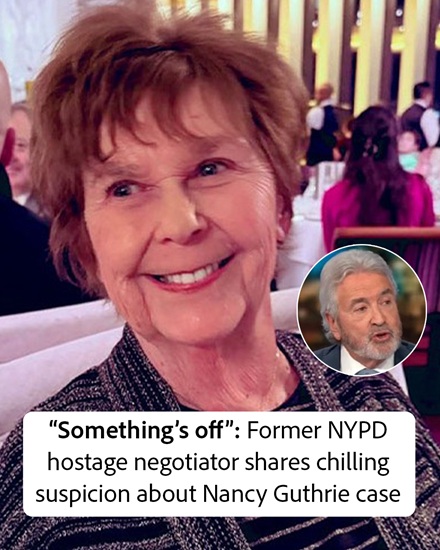
A quiet Tucson neighborhood has become the center of a gripping and unsettling investigation after the disappearance of 84-year-old Nancy Guthrie, the mother of NBC anchor Savannah Guthrie.
What initially appeared to be a routine missing-person case has escalated into a complex and high-stakes inquiry that is now drawing national attention, federal involvement, and an outpouring of public concern.
Adding to the urgency, a former New York Police Department hostage negotiator, Wallace Zeins, has publicly offered his professional assessment of the situation, raising alarming possibilities about the circumstances surrounding Nancy’s disappearance.
His perspective provides critical insight into how investigators are approaching the case and highlights the unique challenges posed when an elderly individual becomes a potential kidnapping victim.
Nancy Guthrie: Who She Is
Nancy Guthrie, aged 84, is well-known not only as the mother of Savannah Guthrie but also as a respected member of the Tucson community.
Friends and neighbors describe her as warm, independent, and mentally sharp, despite facing age-related health concerns. She relies on daily medications and has a pacemaker, which requires monitoring through her Apple Watch and compatible devices.
Family members stress that Nancy has no cognitive impairments and is fully capable of making her own decisions within the limits of her mobility.
She does not suffer from dementia, nor is she prone to wandering — a key factor investigators have emphasized in ruling out the possibility that she left her home voluntarily.
The Timeline: Last Known Movements
The events leading up to Nancy’s disappearance are being carefully reconstructed. According to family accounts and law enforcement sources:
Saturday evening, January 31, 2026: Nancy had dinner with her daughter Annie, Savannah’s sister. They spent the evening talking and enjoying each other’s company. Around 9:30 p.m., Annie dropped Nancy off at her home in the Catalina Foothills neighborhood of Tucson.

Late night, Saturday into early Sunday: Security and smart-device records indicate that Nancy’s Apple Watch and pacemaker were operating normally until approximately 2:00 a.m. Sunday.
Shortly thereafter, the pacemaker reportedly stopped syncing with her devices, suggesting a critical and concerning window during which her disappearance may have occurred.
Sunday morning, February 1, 2026: Nancy failed to attend her routine church service, a deviation from her usual schedule. Concerned family members checked on her, only to find that she was missing. By noon, law enforcement had been contacted, and a formal missing-person report was filed.
Immediate investigation: Pima County Sheriff Chris Nanos and his team began a thorough search of Nancy’s residence and the surrounding area. Evidence collected at the home included her Apple Watch and traces of blood near the entrance, although authorities have not publicly confirmed whether the DNA matches Nancy herself.
This roughly 14- to 16-hour gap between her last confirmed sighting and the time she was reported missing has become a central focus for investigators. Understanding what happened during this window is critical to solving the case.
A Chilling Professional Assessment
On February 3, Wallace Zeins, a former NYPD hostage negotiator with decades of experience in high-stakes abductions, weighed in on the case. Drawing from years of real-world experience negotiating with criminals, Zeins suggested that Nancy’s physical condition makes a solo abduction unlikely.

“She is 150 pounds, 5 feet 5, waking up in the middle of the night, not in the best health, cannot walk or run, so I would think there is more than one person involved in this particular crime,” Zeins told CNN.
Zeins emphasized that professional kidnappers often target victims who cannot resist effectively and that the elderly, especially those living alone, are uniquely vulnerable. He noted that multiple perpetrators would increase the chances of a successful abduction, given Nancy’s size, health limitations, and awareness.
Investigative Findings and Early Evidence
Law enforcement has been systematically piecing together information from several sources:
Home search: Deputies combed Nancy’s residence, documenting the scene meticulously. Fingerprints and DNA evidence were collected and sent to crime labs for analysis.
Technology records: Nancy’s Apple Watch and pacemaker provided crucial timestamps that may help reconstruct her final movements. The pacemaker’s syncing disruption around 2:00 a.m. suggests a potentially violent or disruptive event occurred at that time.
Security cameras: Investigators noted that one of the front-door cameras appears to be missing or tampered with, raising additional concerns about premeditation.
Blood traces: While authorities have not officially confirmed whether the blood belongs to Nancy, its presence near her home has intensified the urgency of the investigation.
Sheriff Nanos has repeatedly stated that Nancy is highly unlikely to have wandered off alone, reinforcing the theory of an abduction rather than a voluntary disappearance.

Ransom Notes and Digital Clues
The situation took an even more concerning turn when several media outlets, including TMZ and local Tucson affiliates KOLD and KGUN, reported receiving alleged ransom notes. The notes reportedly demanded millions in Bitcoin in exchange for Nancy’s safe return.
Some of the notes contained details that could only have been obtained from inside Nancy’s home. While Sheriff Nanos confirmed that the letters were shared with Savannah Guthrie, he has not disclosed whether the information matches verified evidence at the scene.
Wallace Zeins noted that the Bitcoin request suggests that the perpetrators are digitally savvy, potentially active on social media or online forums.
He explained that even handwritten notes could provide investigators with DNA evidence, while typed or digital communications could create a traceable electronic footprint, an area where federal authorities are highly skilled.
Expert Perspectives
Several criminal justice professionals have provided insight into the case:
FBI profiler Candice DeLong explained that elderly kidnapping victims are often targeted by people they know. “In the vast majority of cases, the offender is known to the victim,” she told CNN.
CNN correspondent Josh Campbell warned that high-profile cases like this one often result in a flood of public tips, not all of which are credible. “Authorities are often inundated with tips — some turn out to be credible, some not so credible, and some downright sinister,” Campbell said.
These expert opinions highlight the complexity of managing investigations involving elderly victims and high-profile public attention.
Search Efforts Intensify
Search operations have expanded significantly since Nancy was reported missing:
Aerial support: Police helicopters have been conducting systematic “grid searches” of the desert and wooded areas near Nancy’s residence. This method ensures that every section of terrain is examined thoroughly.
Ground teams: Deputies and volunteers have combed nearby neighborhoods, fields, and roadways. Investigators are attempting to determine whether Nancy was moved far from her home or taken in a nearby vehicle.
Federal assistance: The FBI has joined the investigation, focusing on digital forensics, lead analysis, and criminal profiling to narrow the list of suspects and trace potential ransom communications.
Former negotiator Zeins explained that these combined efforts are standard in cases involving potentially incapacitated elderly victims. The goal is to locate them quickly while preserving forensic evidence.
Political and Public Attention
The disappearance has drawn national and international scrutiny:
President Donald Trump reportedly spoke with Savannah Guthrie and promised that “all resources” would be deployed to ensure Nancy’s safe return.
Media coverage has been continuous, with news outlets across the country providing live updates and expert commentary.
The intense public attention adds both pressure and challenges for law enforcement, who must sift through a deluge of information while maintaining investigative integrity.
Savannah Guthrie’s Response
In response to her mother’s disappearance, Savannah Guthrie has stepped away from major professional commitments, including hosting duties at the 2026 Winter Olympics opening ceremony in Italy.
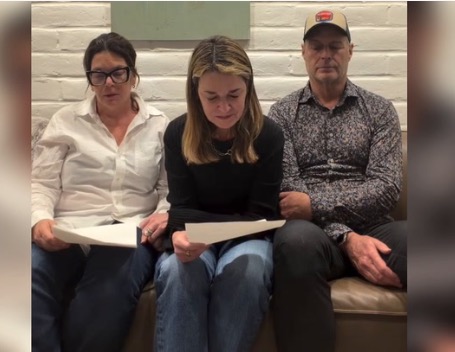
In an emotional video posted on Instagram, Savannah made a heartfelt plea: “We are ready to talk. Whoever has my mother, we need to know without a doubt that she is alive and that you have her.”
Savannah also addressed concerns about public misinformation, emphasizing that voices and images can be easily manipulated. Her message was clear: her family wants confirmation of Nancy’s safety before taking further action.
Community Reactions and Safety Concerns
Local residents have expressed shock and horror at the idea that an elderly woman could be targeted in such a violent way. Online discussions highlight a shared sentiment: “Targeting an elderly person like this is really sick.”
Community members are rallying around the Guthrie family, holding vigils and providing support while law enforcement continues its search.
Next Steps in the Investigation
Authorities are focusing on several critical questions:
Abduction method: Was Nancy taken by vehicle, carried, or forced to walk under duress?
Perpetrators: Were multiple individuals involved, as Zeins speculates?
Timing: Did the pacemaker disruption correspond with the actual abduction, and what does this reveal about the sequence of events?
Ransom letters: Are they credible, and what evidence can they yield in terms of DNA or digital trails?
Witnesses: Is there anyone who saw suspicious activity in the neighborhood during the overnight window?
Fingerprints and DNA collected from Nancy’s home are being analyzed, and investigators continue to review security footage from surrounding areas, including traffic cameras, private properties, and local businesses.
Public Safety and Involvement
Law enforcement urges anyone with information, no matter how minor it may seem, to come forward:
Pima County Sheriff’s Department: 520-351-4900
FBI tip line: Online form submissions and hotline calls are available.
The FBI has offered $2,500 for tips that provide actionable information in the case.
Conclusion
The disappearance of Nancy Guthrie has captured national attention, combining the elements of high-profile concern, the vulnerability of the elderly, and the professional insights of law enforcement experts.
Former NYPD hostage negotiator Wallace Zeins’ assessment — that the abduction likely involved multiple perpetrators — adds a chilling layer to the investigation.
With ransom letters, forensic analysis, and a meticulous search of the surrounding area, law enforcement is leaving no stone unturned.
Savannah Guthrie’s public plea underscores the emotional urgency, while experts caution about the complexities of such investigations, especially for elderly victims.
As the search continues, the hope remains that Nancy will be found safely and that justice will follow for whoever orchestrated this frightening event.
Meanwhile, the story serves as a sobering reminder of the importance of vigilance, rapid law enforcement response, and community solidarity in protecting vulnerable members of society.
Nancy Guthrie’s disappearance is not just a personal tragedy for her family — it is a stark example of the dangers that can befall elderly individuals and the extraordinary lengths to which professionals go to solve such crimes.
