
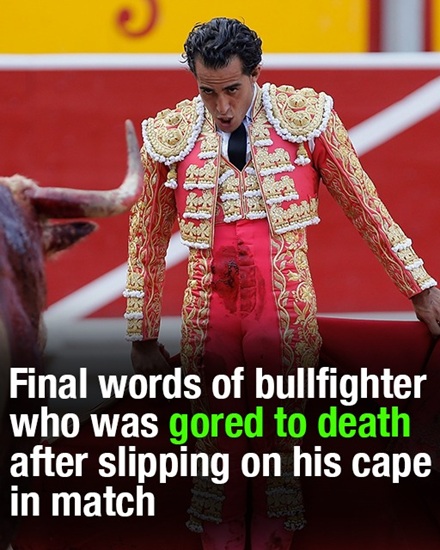
Renowned Spanish matador Iván Fandiño tragically died in 2017 after being fatally gored by a bull during a festival in southwest France, a moment that stunned aficionados and critics across the world.
The fatal incident unfolded at the traditional bullfighting event in Aire‑sur‑l’Adour, a town known for its deep roots in Occitan and Gascon culture, where crowds gather annually to witness bullfights and local pageantry.
Iván Fandiño was 36 years old at the time of his death, a seasoned matador who had risen to international prominence over more than a decade of professional competition and public admiration.
Born in Orduña, a small town in Spain’s Basque Country, Fandiño grew up immersed in the cultural traditions of northern Spain, where bullfighting is both celebrated as heritage and argued over as a contested practice.
From a young age, Fandiño showed an unusual aptitude for bullfighting, demonstrating discipline, courage, and technique that distinguished him from his peers as he progressed through training and early fights.
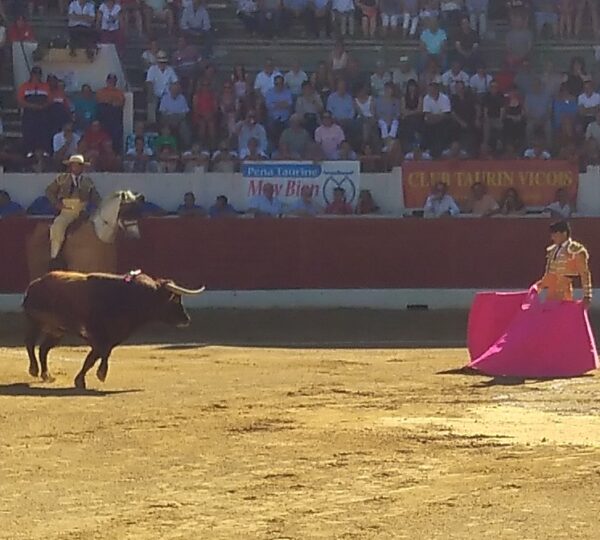 His professional debut came in his early twenties, and within a few years he earned recognition for facing bulls that many other matadors shunned because of their size, strength, or unpredictable behavior.
Fandiño’s rise was marked by a series of increasingly challenging bullrings across Spain, France, and Latin America, where audiences came to respect his precision, timing, and calm under pressure.
Throughout his career, Fandiño embraced the risks inherent in bullfighting, understanding that his work carried serious danger, a reality that defined both his reputation and the respect he commanded from colleagues.
Bullfighting itself is a centuries‑old spectacle that combines ritual, art, and athleticism, rooted in Iberian and Mediterranean traditions that have evolved over time but remain deeply controversial in modern discourse.
On the day of the tragic fight at Aire‑sur‑l’Adour, Fandiño had already completed one earlier bullfight that drew applause from fans and criticism from animal rights observers who opposed the event on ethical grounds.
As he stepped back into the sandy ring for his second fight of the day, the atmosphere was intense, with the crowd attending in large numbers to see one of Europe’s most respected matadors perform once again.
Fandiño had spent years honing his signature moves and the sequences of passes with the cape that define the matador’s interaction with the bull, a complex choreography requiring balance, timing, and nerves of steel.
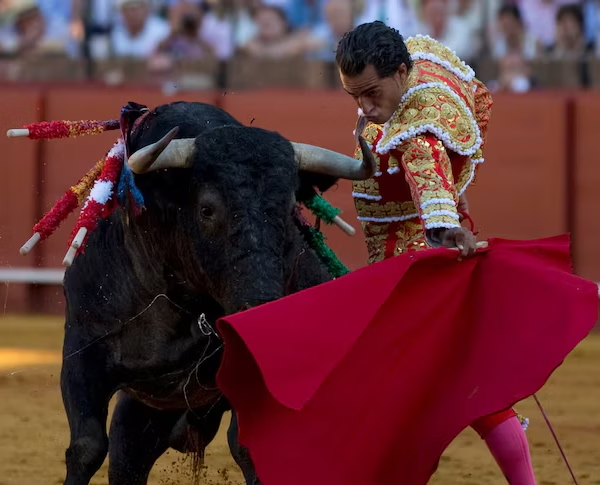
During this particular fight, his cape became entangled around his feet at a critical moment, causing him to lose balance and fall in the path of the charging bull, a sequence witnessed by attendees and later described in court records.
The bull, an animal selected for its strength and lineage, struck Fandiño in one of the most dangerous positions within the ring, causing life‑threatening injuries that required immediate medical attention.
Emergency responders quickly entered the arena, stabilizing him on a stretcher as the crowd watched with a mixture of horror, shock, and silence at the sudden turn of events that transformed celebration into tragedy.
Despite the severity of his condition, Fandiño remained conscious while being carried out of the arena, and his last reported words, “Hurry up, I’m dying,” were shared by multiple eyewitnesses and later documented in contemporary news accounts.
He was rushed toward the nearest medical facility, but the extent of his injuries ultimately proved fatal before surgical teams could intervene to save his life, causing an outpouring of grief in both bullfighting and broader cultural communities.
The matador Juan del Álamo, who was present at the event and later completed the ceremonial act with the bull, expressed disbelief at how quickly the incident transpired, describing it as sudden and devastating.
Del Álamo noted the speed of the animal’s movement and how rapidly circumstances changed from what he expected to be a routine continuation of the festival’s events into an unforgettable tragedy.
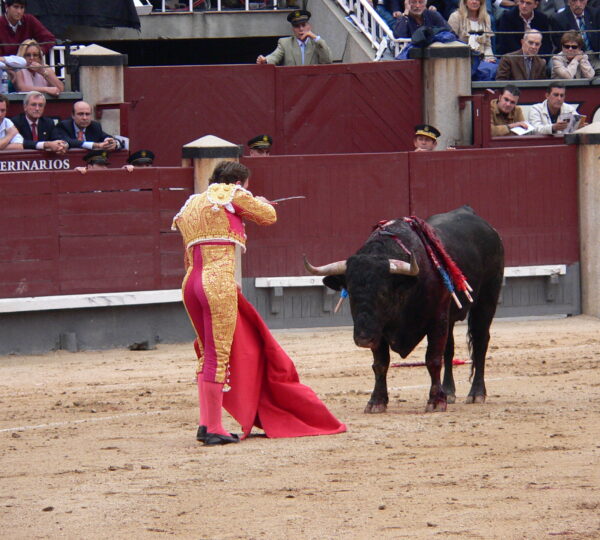
Fandiño had previously suffered serious injuries in the ring, including an incident in Bayonne, France in 2014 in which he was knocked unconscious, and another in Pamplona, Spain in 2015 when he was tossed into the air.
These earlier injuries, though severe, had not deterred him from continuing his career, a testament to his dedication, resilience, and belief in his role within the long‑standing tradition of bullfighting.
His death marked a historic moment for the sport in France, as it was the first time a matador had died there in almost a century, underscoring both the rarity and the danger of such events.
The last recorded matador fatality in France before Fandiño occurred in 1921, when Isidoro Mari Fernando lost his life in Béziers, documentation of which remains part of French bullfighting history.
News of Fandiño’s death spread rapidly across Spain, where bullfighting is woven into cultural identity for many, prompting an immediate outpouring of sorrow among fans, communities, and public figures alike.
King Felipe VI of Spain issued a statement honoring Fandiño as a “great figure in bullfighting” whose technical skill and daring had left a lasting imprint on the tradition and inspired both admirers and fellow matadors.
Then‑Prime Minister Mariano Rajoy also offered his respect and condolences, praising Fandiño’s bravery and acknowledging the impact of his loss on Spanish cultural life and on the many people who followed his career.
Tributes from former competitors, friends, and international spectators poured in from around the world, reflecting the global reach of bullfighting as both performance and tradition, as well as the admiration Fandiño had earned.
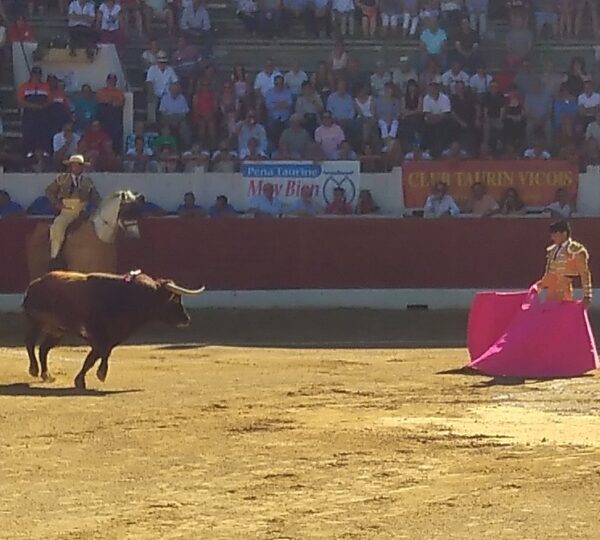
The news also drew renewed attention to bullfighting’s inherent risks, instigating debates in media outlets and academic forums about the ethics, safety, and future of the practice in 21st century society.
Less than a year before Fandiño’s death, Spanish matador Víctor Barrio had also been fatally injured in the ring, an event broadcast on national television that brought intense public awareness to the dangers faced by bullfighters.
Barrios’s death, the first in Spain in three decades, amplified ongoing discussions in Spain and elsewhere about animal welfare, rider safety, and whether traditional practices should be reconsidered or reformed.
Bullfighting remains legal in many parts of Spain and southern France, where courts and legislatures have, at times, affirmed its status as cultural heritage, even as bans and restrictions have been enacted in specific localities.
In 2012, French courts upheld the legality of bullfighting in regions where it is historically practiced, recognizing it as part of cultural patrimony, a decision that continues to fuel debate among legal scholars and activists.
Certain regions in Spain, such as Catalonia, have implemented bans on bullfighting, reflecting diverging regional attitudes toward the tradition and the influence of animal rights advocacy within local political landscapes.
Supporters of bullfighting argue that it is an art form rooted in centuries of history, combining athletic skill and aesthetic choreography in a way that connects people to heritage, ritual, and community identity.
Opponents, including many animal welfare organizations, maintain that the practice should be abolished entirely, citing concerns about animal suffering and calling for alternative cultural expressions that do not involve harm.
Public opinion polls in Spain and France show a complex picture, with many citizens appreciating bullfighting as tradition while simultaneously expressing discomfort with aspects of the spectacle that involve risk or perceived cruelty.
Fandiño’s career, marked by technical mastery and willingness to face powerful bulls, exemplified the balance between artistry and danger that defines the role of matador in traditional bullfighting culture.
He was widely respected by peers for his calm demeanor, precise technique, and commitment to the craft, attributes that earned him invitations to major bullrings and festivals across Europe and Latin America.
Fandiño often spoke about bullfighting not merely as sport but as a discipline that demands rigorous preparation, deep psychological focus, and connection to history, sense of place, and audience.
Throughout his life, he trained with mentors, studied animal behavior, and dedicated long hours to refining his footwork and timing, developing a reputation for confronting bulls that others found especially formidable.
His tragic final moments have continued to resonate within the bullfighting community, prompting reflection on the fragility of life, the risks professionals take, and the reality that experience does not eliminate danger.
For many fans, Fandiño’s legacy endures as a symbol of courage and dedication, a reminder of both the technical artistry and the human cost associated with bullfighting as cultural practice.
Memorials and tributes in bullrings across Spain and France mark his passing, reflecting the deep emotional connections that spectators and practitioners can forge with individuals who shape the tradition.
Academic and cultural commentators have cited Fandiño’s life and death in broader discussions about how societies navigate tradition and modern values, particularly when rituals involve risk or contested ethical considerations.
His story continues to be cited in debates about regulation, safety improvements, and how bullfighting might evolve or be reimagined in a world increasingly attentive to both cultural heritage and humane treatment of animals.
While China, North America, and other regions do not have widespread bullfighting traditions, Fandiño’s name reached international news outlets, highlighting global interest in the drama and controversy surrounding the practice.
Documentaries, articles, and books about bullfighting have since referenced Fandiño’s career, situating his life within a larger narrative of twentieth‑ and twenty‑first‑century matadors who shaped the art form.
For students of culture, history, and performance, his life offers a window into how individuals embody longstanding traditions while navigating contemporary conversations about ethics, identity, and national character.
In educational settings, his experiences are used to illustrate both personal dedication and the complex interplay between human performance, ritualized confrontation with nature, and societal change over time.
Fandiño’s legacy persists not only in memorials and media but also in the memories of those who witnessed his performances firsthand, recalling moments of brilliance and deep respect for his craft.
Recollections from fellow matadors emphasize his generosity, professionalism, and the respect he showed toward both colleagues and those who came to watch him in arenas filled with expectation.
Ultimately, Fandiño’s life and tragic death serve as a point of departure for ongoing discussion about how tradition, risk, artistry, and cultural identity intersect in dynamic and sometimes difficult ways.
Whether admired for his technique or debated for the tradition he upheld, Iván Fandiño remains a central figure in the story of modern bullfighting, remembered with complexity, respect, and reflection.
