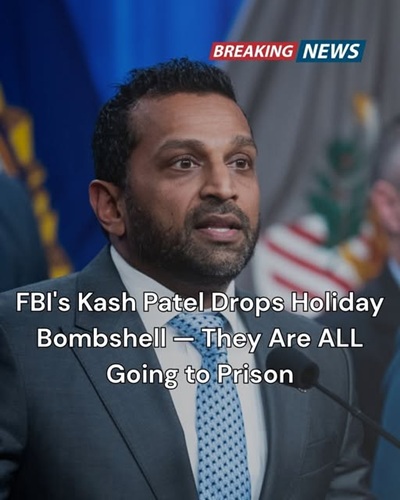
FBI Agents Receive Praise from Patel Amid Rising Arrest Numbers
In late 2025, two very different law‑enforcement efforts unfolded in the United States: Operation Safe Christmas in Illinois.
A high‑visibility roundup of criminal suspects, and a much quieter but consequential counterterrorism operation.
That disrupted an alleged extremist plot on New Year’s Eve in California and Louisiana. Taken together, these operations illustrate the complex and often unseen work that goes into preserving public safety — and how easily the balance between security and crisis can be upset.
Operation Safe Christmas: A Coordinated Sweep Through Illinois
In mid‑December 2025, federal, state, and local law enforcement announced the results of a weeklong operation aimed at disrupting criminal activity in Illinois and reassuring communities ahead of the holiday season.
What the Operation Did
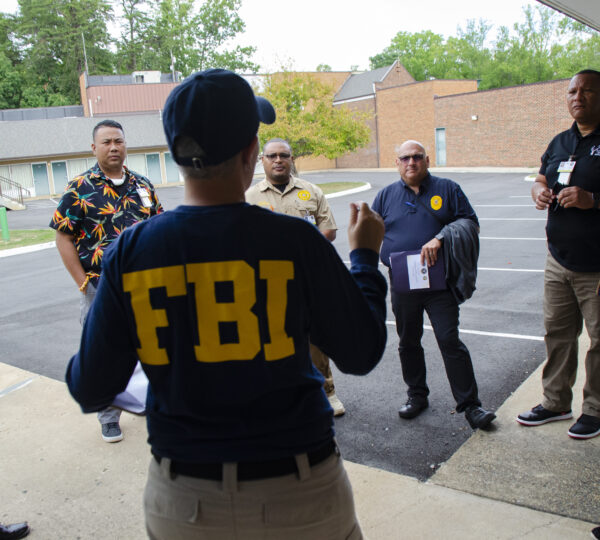
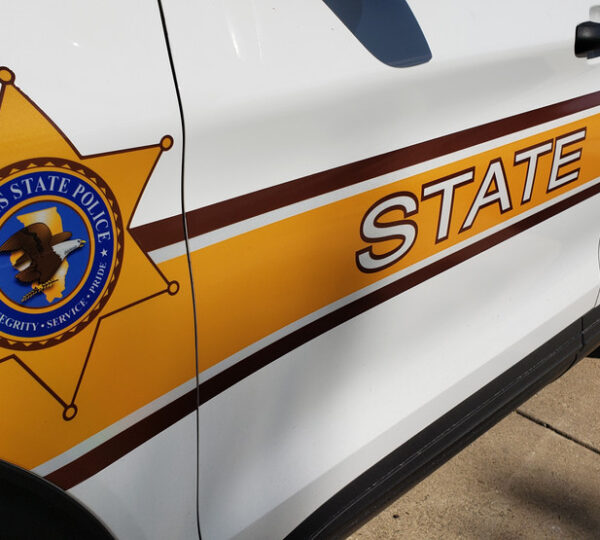
Dubbed Operation Safe Christmas, the effort brought together the U.S. Marshals Service for the Southern District of Illinois, the FBI Springfield field office, Illinois State Police, ATF Chicago, and DEA St. Louis under a coordinated fugitive apprehension and criminal enforcement strategy. Over the course of seven days, officials:
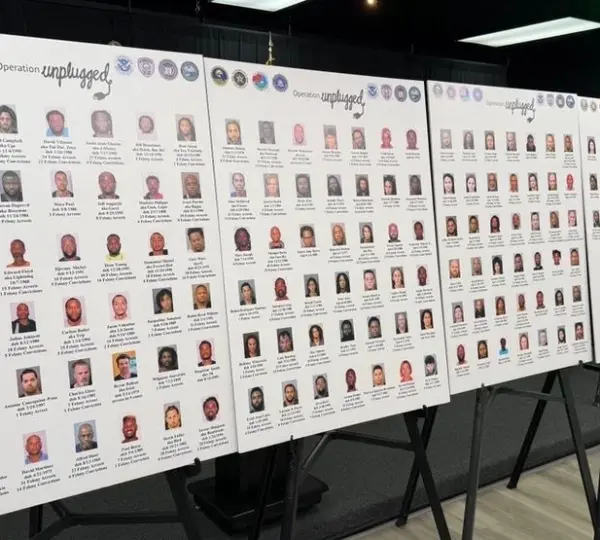
Arrested 63 suspects on various charges ranging from drug offenses to violent crime.
Seized approximately 2.5 pounds of suspected narcotics — including dangerous opioids and other controlled substances.
Confiscated around $15,000 in suspected illicit cash presumed to be proceeds of criminal activity.
Made arrests across multiple counties, including Bond, Effingham, Fayette, Madison and St. Clair in Illinois, and even into Atlanta, Georgia, reflecting the collaborative nature of the operation.
U.S. Attorney Steven D. Weinhoeft described the operation as the result of weeks of careful planning and cooperation among federal and local partners, emphasizing that the arrests removed individuals alleged to be violent offenders and drug traffickers from the streets.
Why It Got Attention
For people living in communities affected by crime, the announcement of dozens of arrests in a coordinated sweep was framed by officials as a visible success — one that showed federal, state, and local law‑enforcement agencies could work in lockstep to disrupt illegal activity before it leads to more severe violence or disorder.
The timing right before the holidays was also symbolic.
Officials and community leaders alike hoped that the public report of arrests and drug seizures would deliver reassurance at a time when many residents are particularly sensitive to concerns about safety and security outside the home.
How It Fits Into Broader Enforcement Trends
Operation Safe Christmas is part of a broader pattern of federal initiatives targeting violent crime, drug distribution networks, and fugitive suspects across the United States.
In recent years, Department of Justice efforts — including Project Safe Neighborhoods and similar programs — have focused resources on removing high‑risk individuals from the streets and coordinating investigations across jurisdictions.
However, it’s also clear from other law‑enforcement developments — from vigorous immigration enforcement in Chicago to debates over prosecution policies — that public safety strategies are increasingly multi‑layered and sometimes controversial.
A Foiled Bomb Plot: Extremism, Extremist Groups, and New Year’s Eve Targeting
While the Illinois operation made headlines and reassured many, another law‑enforcement effort unfolded more quietly but with much higher stakes.
Federal counterterrorism investigators disrupted an alleged extremist plot aimed at setting off improvised explosive devices (IEDs) in Southern California on New Year’s Eve.
What Federal Prosecutors Announced
On December 15, 2025, the U.S. Attorney’s Office for the Central District of California and the Department of Justice issued a press release detailing arrests of four individuals allegedly associated with a far‑left, anti‑government group called the Turtle Island Liberation Front (TILF).
According to the criminal complaint:
The defendants — identified as Audrey Illeene Carroll (30), Zachary Aaron Page (32), Dante Gaffield (24) and Tina Lai (41) — were arrested in the Mojave Desert on December 12 as they allegedly prepared to construct explosive devices.
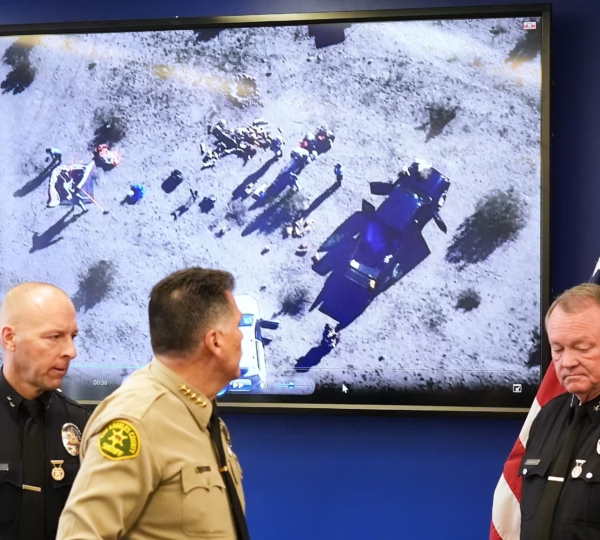
Investigators say the group had drafted plans to plant backpacks containing complex pipe bombs at multiple locations across the greater Los Angeles area at midnight on New Year’s Eve.
The devices were described in court filings as being assembled with bomb‑making materials such as PVC pipes, potassium nitrate, charcoal, and other precursors — and the suspects were charged with conspiracy and possession of an unregistered destructive device.
Planned Targets and Motives
Attorney General Pamela Bondi, in statements shared on social media, noted that the plot — if carried out — was intended to target not only private businesses but also agents and vehicles of U.S. Immigration and Customs Enforcement (ICE).
This detail highlights that investigators believed the alleged plot contained both violent tactics and politically motivated objectives, tying it to broader ideological grievances.
It’s important to stress that in the U.S. justice system, defendants are presumed innocent until proven guilty beyond a reasonable doubt in court — and charges reflect allegations at this stage.
Additional Arrest in Louisiana
A fifth individual was later arrested in New Iberia, Louisiana, and federal authorities linked this person to the same extremist group.
Although prosecutors have not publicly stated the exact details of where that suspect intended to carry out an attack, the arrest underscored that federal agents were following intelligence from multiple sources.
How the Plot Was Stopped
According to the criminal complaint, the alleged conspirators took tangible steps toward execution — procuring materials, traveling to a remote desert site, and even beginning to assemble device components — before the FBI and its partners intervened.
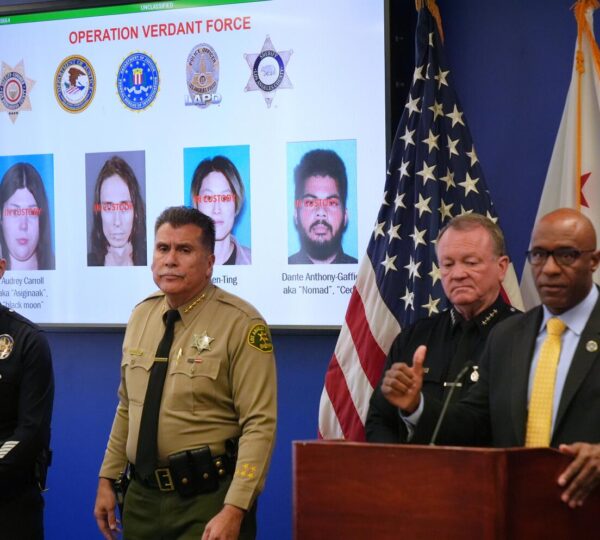
Federal agents reportedly used confidential informants, surveillance, and interagency cooperation to uncover and disrupt the plot before explosive devices were completed.
Why One Story Got Big Headlines and the Other Didn’t — But Both Matter
At first glance, Operation Safe Christmas and the foiled New Year’s Eve bomb plot may seem like two completely different law‑enforcement stories.
One is a publicized arrest operation targeting ordinary criminal offenders; the other, a largely unreported counterterrorism effort with implications for national security. But both share common themes worth unpacking.
1. Public Visibility vs. Operational Discretion
Law enforcement often makes strategic decisions about what to publicize and when.
Sweeps like Operation Safe Christmas are often announced publicly to maximize deterrence, reassure communities, and demonstrate coordination among agencies.
In contrast, counterterrorism investigations — especially those involving specific and imminent threats — are frequently kept under wraps until the threat is neutralized to protect ongoing operations and intelligence sources.
What the public sees (or doesn’t see) does not necessarily correspond to the level of danger or importance of the investigation.
In the case of the New Year’s Eve plot, the first public signal about the arrests came days after the suspects were taken into custody — underscoring that much of the work to prevent catastrophic attacks happens behind the scenes.
2. Different Types of Crime, Different Stakes
Operation Safe Christmas focused largely on traditional criminal activity — unlawful drug distribution, fugitive warrants, and related offenses that contribute to everyday violence in communities.
These kinds of operations are vital for reducing street crime and supporting local public safety.
The alleged bomb plot, by contrast, involved potential mass violence with political motivations, which falls into the realm of domestic terrorism or extremist targeting.
While fewer arrests were made publicly compared to Illinois, the potential consequences of such a plot — if unthwarted — could have been far more devastating.
3. Interagency Coordination Is Critical
Both operations required cooperation among multiple levels of law enforcement: federal, state, and local.
Operation Safe Christmas spanned various Illinois counties and agencies, while the bomb plot investigation drew in the FBI’s Joint Terrorism Task Force, as well as local police departments and federal prosecutors.
These collaborations are key not just for gathering evidence but for sharing intelligence, coordinating tactics, and ensuring that once suspects are identified, they are arrested safely and lawfully.
The Broader Safety Picture
These two stories are snapshots in the complex mosaic of modern public safety. They highlight that:
Visible enforcement actions can bring short‑term reassurance and remove criminal actors from communities.
Hidden investigations can prevent large‑scale violence without ever becoming public spectacles.
Public perception of safety may lag behind or misinterpret the reality of what law enforcement is doing every day.
What remains constant is that both types of operations — the overt and the covert — are part of a broad ecosystem aimed at making communities safer, whether that means disrupting a drug network or preventing a coordinated attack.
The public often only sees the “tip of the iceberg” report, while a far larger body of intelligence work continues below the surface.
Conclusion: Public Safety Works on Many Levels
When law enforcement announces dozens of arrests in an operation like Safe Christmas, it can feel tangible and immediate — especially in communities keenly aware of street‑level crime.
But when investigators quietly disrupt an extremist plot, the absence of headlines isn’t a sign that nothing serious was happening — it’s often a sign that something serious was stopped before it could happen.
These stories remind us that public safety is rarely simple. It is a mix of strategy, secrecy, coordination, and timing.
And while not every piece of that work is visible to the public, the impact often is.
Whether through large enforcement sweeps or silent counterterrorism successes, the goal remains the same: to protect residents, uphold the law, and prevent violence — in all its forms.
In late 2025, two very different law‑enforcement efforts unfolded in the United States: Operation Safe Christmas in Illinois.
A high‑visibility roundup of criminal suspects, and a much quieter but consequential counterterrorism operation.
That disrupted an alleged extremist plot on New Year’s Eve in California and Louisiana. Taken together, these operations illustrate the complex and often unseen work that goes into preserving public safety — and how easily the balance between security and crisis can be upset.
Operation Safe Christmas: A Coordinated Sweep Through Illinois
In mid‑December 2025, federal, state, and local law enforcement announced the results of a weeklong operation aimed at disrupting criminal activity in Illinois and reassuring communities ahead of the holiday season.
What the Operation Did
Dubbed Operation Safe Christmas, the effort brought together the U.S. Marshals Service for the Southern District of Illinois, the FBI Springfield field office, Illinois State Police, ATF Chicago, and DEA St. Louis under a coordinated fugitive apprehension and criminal enforcement strategy. Over the course of seven days, officials:
Arrested 63 suspects on various charges ranging from drug offenses to violent crime.
Seized approximately 2.5 pounds of suspected narcotics — including dangerous opioids and other controlled substances.
Confiscated around $15,000 in suspected illicit cash presumed to be proceeds of criminal activity.
Made arrests across multiple counties, including Bond, Effingham, Fayette, Madison and St. Clair in Illinois, and even into Atlanta, Georgia, reflecting the collaborative nature of the operation.
U.S. Attorney Steven D. Weinhoeft described the operation as the result of weeks of careful planning and cooperation among federal and local partners, emphasizing that the arrests removed individuals alleged to be violent offenders and drug traffickers from the streets.
Why It Got Attention
For people living in communities affected by crime, the announcement of dozens of arrests in a coordinated sweep was framed by officials as a visible success — one that showed federal, state, and local law‑enforcement agencies could work in lockstep to disrupt illegal activity before it leads to more severe violence or disorder.
The timing right before the holidays was also symbolic.
Officials and community leaders alike hoped that the public report of arrests and drug seizures would deliver reassurance at a time when many residents are particularly sensitive to concerns about safety and security outside the home.
How It Fits Into Broader Enforcement Trends
Operation Safe Christmas is part of a broader pattern of federal initiatives targeting violent crime, drug distribution networks, and fugitive suspects across the United States.
In recent years, Department of Justice efforts — including Project Safe Neighborhoods and similar programs — have focused resources on removing high‑risk individuals from the streets and coordinating investigations across jurisdictions.
However, it’s also clear from other law‑enforcement developments — from vigorous immigration enforcement in Chicago to debates over prosecution policies — that public safety strategies are increasingly multi‑layered and sometimes controversial.
A Foiled Bomb Plot: Extremism, Extremist Groups, and New Year’s Eve Targeting
While the Illinois operation made headlines and reassured many, another law‑enforcement effort unfolded more quietly but with much higher stakes.
Federal counterterrorism investigators disrupted an alleged extremist plot aimed at setting off improvised explosive devices (IEDs) in Southern California on New Year’s Eve.
What Federal Prosecutors Announced
On December 15, 2025, the U.S. Attorney’s Office for the Central District of California and the Department of Justice issued a press release detailing arrests of four individuals allegedly associated with a far‑left, anti‑government group called the Turtle Island Liberation Front (TILF).
According to the criminal complaint:
The defendants — identified as Audrey Illeene Carroll (30), Zachary Aaron Page (32), Dante Gaffield (24) and Tina Lai (41) — were arrested in the Mojave Desert on December 12 as they allegedly prepared to construct explosive devices.
Investigators say the group had drafted plans to plant backpacks containing complex pipe bombs at multiple locations across the greater Los Angeles area at midnight on New Year’s Eve.
The devices were described in court filings as being assembled with bomb‑making materials such as PVC pipes, potassium nitrate, charcoal, and other precursors — and the suspects were charged with conspiracy and possession of an unregistered destructive device.
Planned Targets and Motives
Attorney General Pamela Bondi, in statements shared on social media, noted that the plot — if carried out — was intended to target not only private businesses but also agents and vehicles of U.S. Immigration and Customs Enforcement (ICE).
This detail highlights that investigators believed the alleged plot contained both violent tactics and politically motivated objectives, tying it to broader ideological grievances.
It’s important to stress that in the U.S. justice system, defendants are presumed innocent until proven guilty beyond a reasonable doubt in court — and charges reflect allegations at this stage.
Additional Arrest in Louisiana
A fifth individual was later arrested in New Iberia, Louisiana, and federal authorities linked this person to the same extremist group.
Although prosecutors have not publicly stated the exact details of where that suspect intended to carry out an attack, the arrest underscored that federal agents were following intelligence from multiple sources.
How the Plot Was Stopped
According to the criminal complaint, the alleged conspirators took tangible steps toward execution — procuring materials, traveling to a remote desert site, and even beginning to assemble device components — before the FBI and its partners intervened.
Federal agents reportedly used confidential informants, surveillance, and interagency cooperation to uncover and disrupt the plot before explosive devices were completed.
Why One Story Got Big Headlines and the Other Didn’t — But Both Matter
At first glance, Operation Safe Christmas and the foiled New Year’s Eve bomb plot may seem like two completely different law‑enforcement stories.
One is a publicized arrest operation targeting ordinary criminal offenders; the other, a largely unreported counterterrorism effort with implications for national security. But both share common themes worth unpacking.
1. Public Visibility vs. Operational Discretion
Law enforcement often makes strategic decisions about what to publicize and when.
Sweeps like Operation Safe Christmas are often announced publicly to maximize deterrence, reassure communities, and demonstrate coordination among agencies.
In contrast, counterterrorism investigations — especially those involving specific and imminent threats — are frequently kept under wraps until the threat is neutralized to protect ongoing operations and intelligence sources.
What the public sees (or doesn’t see) does not necessarily correspond to the level of danger or importance of the investigation.
In the case of the New Year’s Eve plot, the first public signal about the arrests came days after the suspects were taken into custody — underscoring that much of the work to prevent catastrophic attacks happens behind the scenes.
2. Different Types of Crime, Different Stakes
Operation Safe Christmas focused largely on traditional criminal activity — unlawful drug distribution, fugitive warrants, and related offenses that contribute to everyday violence in communities.
These kinds of operations are vital for reducing street crime and supporting local public safety.
The alleged bomb plot, by contrast, involved potential mass violence with political motivations, which falls into the realm of domestic terrorism or extremist targeting.
While fewer arrests were made publicly compared to Illinois, the potential consequences of such a plot — if unthwarted — could have been far more devastating.
3. Interagency Coordination Is Critical
Both operations required cooperation among multiple levels of law enforcement: federal, state, and local.
Operation Safe Christmas spanned various Illinois counties and agencies, while the bomb plot investigation drew in the FBI’s Joint Terrorism Task Force, as well as local police departments and federal prosecutors.
These collaborations are key not just for gathering evidence but for sharing intelligence, coordinating tactics, and ensuring that once suspects are identified, they are arrested safely and lawfully.
The Broader Safety Picture
These two stories are snapshots in the complex mosaic of modern public safety. They highlight that:
Visible enforcement actions can bring short‑term reassurance and remove criminal actors from communities.
Hidden investigations can prevent large‑scale violence without ever becoming public spectacles.
Public perception of safety may lag behind or misinterpret the reality of what law enforcement is doing every day.
What remains constant is that both types of operations — the overt and the covert — are part of a broad ecosystem aimed at making communities safer, whether that means disrupting a drug network or preventing a coordinated attack.
The public often only sees the “tip of the iceberg” report, while a far larger body of intelligence work continues below the surface.
Conclusion: Public Safety Works on Many Levels
When law enforcement announces dozens of arrests in an operation like Safe Christmas, it can feel tangible and immediate — especially in communities keenly aware of street‑level crime.
But when investigators quietly disrupt an extremist plot, the absence of headlines isn’t a sign that nothing serious was happening — it’s often a sign that something serious was stopped before it could happen.
These stories remind us that public safety is rarely simple. It is a mix of strategy, secrecy, coordination, and timing.
And while not every piece of that work is visible to the public, the impact often is.
Whether through large enforcement sweeps or silent counterterrorism successes, the goal remains the same: to protect residents, uphold the law, and prevent violence — in all its forms.


