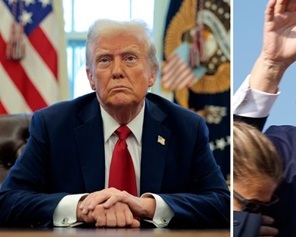
FBI Accused of Withholding Key Details About the Attempted Assassination of Donald Trump
In the summer of 2024, the United States experienced one of the most jarring political events in modern memory — an attempted attack on former President Donald Trump during a campaign rally in Butler, Pennsylvania.
What began as a routine campaign appearance quickly transformed into a moment that shook the nation, prompting immediate questions about security, intelligence gathering, and the systems meant to protect political leaders.
In the months that followed, Americans were told that the gunman, 20-year-old Thomas Matthew Crooks, had not been on law enforcement’s radar in any meaningful way.
He was portrayed as an individual with limited background indicators — someone who did not present an obvious threat prior to the tragic events of July 13, 2024.
But as newly disclosed details continue to surface, lawmakers, analysts, and citizens alike are asking a far more unsettling question:
How much did investigators really know about Crooks before theAttempt? And should these warning signs have been detected sooner?
What was once a closed chapter is now being reopened — slowly, piece by piece, with each new revelation raising more questions than answers.
The Day That Almost Changed History
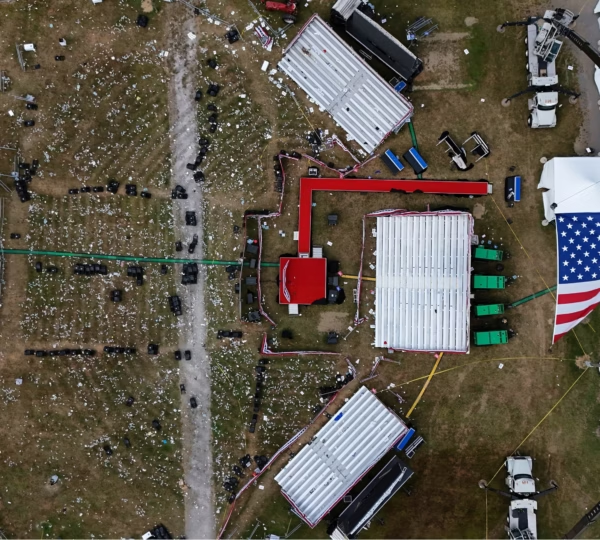
On July 13, 2024, the crowd gathered in Butler was enormous — a mass of supporters, families, volunteers, and local officials awaiting Trump’s remarks. The summer heat settled heavily over the rally grounds as music played, flags waved, and thousands waited for the former President to take the stage.
Just as he began speaking, a series of sharp, unmistakable sounds rang out — eight shots fired from an AR-15-style rifle positioned on a rooftop behind the main rally area.
Chaos erupted instantly.
People dropped to the ground.
Supporters shielded their loved ones.
Secret Service agents surged forward, forming a protective wall around Trump.
Two victims — a rally attendee and a local firefighter — lost their lives, and several more were injured. Trump himself suffered a wound to his upper right ear, a matter of inches preventing something far worse.
In the aftermath, the nation entered a period of collective shock. It was the kind of moment that reshapes political eras — a moment that historians will examine for decades to come.
But as the headlines faded, a new storyline quietly began to emerge.
Early FBI Statements: “We Didn’t Know Much About Him”
Initial FBI briefings portrayed Crooks as someone largely unknown — not on major watchlists, not affiliated with extremist organizations, and not identified as a high-risk individual by security agencies.
They stated that:
-
Crooks did not have an extensive criminal record
-
He had not been involved in prior violent incidents
-
His ideology or motive remained unclear
-
His online footprint was not flagged before the attack
This narrative held the public’s attention for months — until a series of briefings, interviews, and congressional comments began painting a different picture.
Enter Rep. Pat Fallon: “We Were Stonewalled”
Representative Pat Fallon, a Texas lawmaker who chaired the congressional task force created to review the attack, has recently alleged that investigators withheld significant information from his committee during their initial inquiry.
According to Fallon, certain details — especially those involving Crooks’ online activity — were either:
-
delivered in fragmented portions,
-
omitted entirely, or
-
presented in ways that downplayed their significance.
Fallon stated to The National News Desk:
“We definitely got stonewalled. When we finally got answers we believed were complete… now it appears they were not.”
The idea that federal investigators may not have fully cooperated with a congressional task force has reignited political tension and added new layers to an already complex story.
700 Online Comments: A Digital Trail That Raises More Questions
One of the most pressing revelations comes from a briefing delivered by former FBI Deputy Director Paul Abbate. According to Abbate, investigators identified over 700 online comments believed to be written by Crooks between 2019 and 2020 — years before the attack.
Some of these comments reportedly contained:
-
extremist rhetoric
-
hostile sentiments toward certain groups
-
politically charged language
-
indications of frustration or radicalization
And yet, Rep. Fallon claims his task force never received these posts.
Not in summaries.
Not in documents.
Not in private briefings.
This discrepancy has now become one of the central questions in the investigation:
Why were these online comments not disclosed earlier — and could they have been an early warning sign?
A Growing Chorus of Skepticism: Tucker Carlson’s Claims
The debate intensified further when political commentator Tucker Carlson suggested that government officials may be downplaying what they knew about Crooks.
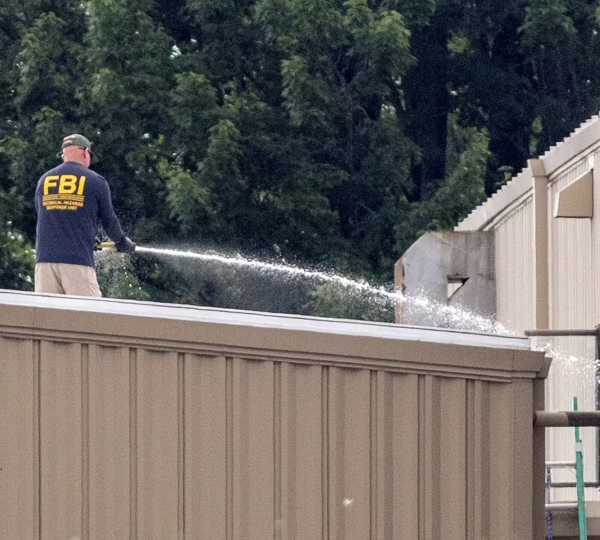
Carlson shared that he could “prove” the FBI misled the public regarding Crooks’ digital footprint. He argued that the online activity attributed to Crooks was substantial enough to spark concern long before July 13, 2024.
He specifically pointed to:
-
Crooks’ prior social media activity
-
archived comments linked to him
-
online history that appeared at odds with FBI statements
He also named several individuals — former FBI Director Christopher Wray, former Trump official Kash Patel, and former agent Dan Bongino — questioning their public explanations of the investigation.
Though Carlson’s statements are opinion-based, they added fuel to a national conversation already filled with concern.
The FBI Pushes Back: “We Left No Stone Unturned”
While commentators and lawmakers raise concerns, former officials like Kash Patel have defended the scope of the FBI’s work. According to Patel, the investigation into the attempted attack was massive in scale.
He cited:
-
1,000+ interviews
-
2,000+ public tips
-
13 seized electronic devices
-
500,000+ digital files reviewed
-
Hundreds of hours of video analyzed
-
10 financial accounts examined
-
Data from 25 online profiles studied
This, Patel argued, demonstrates a rigorous investigative process that thoroughly explored Crooks’ actions, background, and potential motives.
Still, the sheer volume of the investigation has raised another question:
How could an individual with such a visible digital presence remain unnoticed before attempting something so consequential?
Former FBI Special Agent Jody Weis: “I Can’t Understand Why”
Adding to the debate, former FBI Special Agent in Charge Jody Weis has openly questioned the narrative that Crooks appeared insignificant prior to the attack.
Weis stated:
“For them to say there wasn’t much there — that they could not identify a motive — I can’t understand why.”
To many, this comment reflects a broader concern within the law-enforcement community:
Should earlier intervention have been possible?
Weis suggested that even if Crooks had no criminal history, a digital footprint of more than 700 posts, combined with personal frustrations, should have raised investigative attention.
A Preventable Attack? The Task Force Says Yes
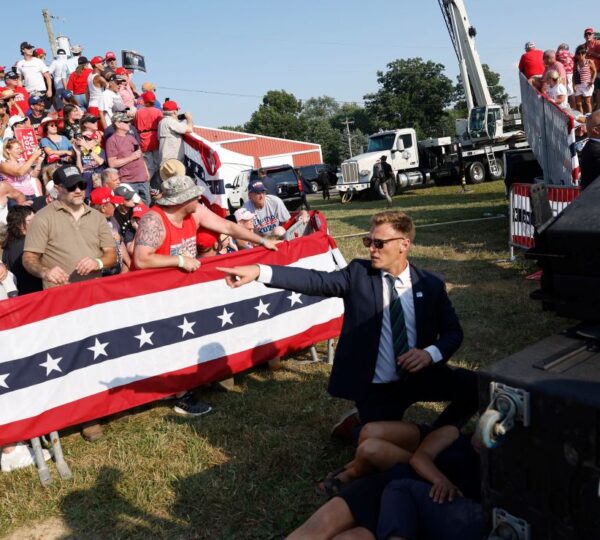
The congressional task force reviewing the events concluded that the attempted attack was preventable.
This conclusion is based on:
-
rooftop access that appeared insufficiently monitored
-
visible suspicious activity before shots were fired
-
potential gaps in protective intelligence
-
possible failures in communication between agencies
But the most troubling aspect — and the reason this story continues to grow — is the possibility that investigators may have possessed more information about Crooks than they initially acknowledged.
Why This Investigation Still Matters
Nearly every major security incident in modern U.S. history has led to sweeping review, policy adjustments, and long-term implications. This case is no different.
The core questions remain:
Did warning signs go unnoticed?
Were certain digital clues ignored due to overload or misinterpretation?
Did communication failures exist between agencies?
Was vital information unintentionally or intentionally withheld?
What reforms are needed to strengthen protective intelligence?
The stakes could not be higher. At the center of these questions lies not only the safety of political leaders, but the trust Americans place in institutions designed to keep them secure.
A National Conversation That Is Far From Over
The attempt on Trump’s life may be behind us chronologically, but it is far from behind us historically. The case continues to spark debate, hearings, commentary, and renewed pressure on federal agencies to provide transparency.
It represents one of the most significant security failures of the decade — and possibly one of the most important investigative challenges for lawmakers seeking accountability.
As Congress prepares to revisit testimony, and as additional documents slowly become public, one thing is clear:
This story has not reached its final chapter.
And for many in Washington, the search for answers is only just beginning.
In the hours after Crooks fired those eight shots, Americans watched in disbelief as footage replayed across screens worldwide.
A former president grazed by a bullet.
A crowd descending into chaos.
Secret Service agents rushing with an urgency that hinted at how severe the threat truly was.
In that split second — the moment when Trump instinctively reached for his ear — the nation collectively understood:
If Crooks’ aim had been slightly different, the United States might have woken up to an entirely different reality.
And that thought is what fuels the ongoing demand for answers.
Investigators Face New Pressure: “What Did You Know, and When?”
The more details emerge, the more pressure builds on the agencies responsible for protective intelligence, cybersecurity, and person-of-interest tracking.
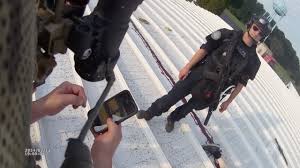
Even without confirmed extremist group affiliations, the existence of over 700 online comments, many with concerning tones, raises serious questions:
-
Why were these posts not flagged earlier?
-
Was Crooks ever reviewed by behavioral threat teams?
-
Were federal, state, and local agencies properly sharing information?
-
Did any algorithms or automated systems identify him as a potential risk?
-
If not, why did those systems fail?
Congressman Fallon’s assertion—that the task force was not fully informed—now suggests that the gaps may be larger than initially believed.
The Broader Debate: How Do We Detect Lone-Actor Threats?
Experts in security and counterterrorism often warn of a persistent challenge:
The lone-actor attacker is the hardest to detect.
Unlike organized groups, lone actors:
-
rarely communicate openly
-
often build grievances privately
-
may operate in digital spaces that evade monitoring
-
do not necessarily exhibit traditional warning signs
-
can move from thought to action very quickly
But the Crooks case complicates this narrative because:
-
he did leave a digital footprint
-
he did post concerning rhetoric
-
he did have a history that might have raised red flags
-
he did show years of ideological agitation
Experts are now asking:
Was this truly an “invisible threat,” or was the system simply not looking closely enough?
Internal Tensions Grow: Are Agencies Protecting Themselves?
Accusations of stonewalling do more than frustrate lawmakers — they erode public trust.
If certain data was withheld:
-
Was it due to bureaucratic caution?
-
Was it due to classification concerns?
-
Was it due to fears of exposing internal failures?
-
Or was it simply human error during a massive investigation?
Each possibility has far-reaching implications.
A congressional task force charged with reviewing a historic assassination attempt expects full cooperation. When it does not receive it, the public is left to wonder:
Is the system protecting national security, or protecting itself?
Political Repercussions: A Nation Already Divided Feels the Shockwaves
In an election year, every revelation becomes amplified.
Supporters of Trump argue that the attack — and the potential intelligence lapses — demonstrate a systemic failure to protect a former president and leading political figure. Some claim it reflects a broader pattern of institutional hostility or negligence toward Trump.
Critics of Trump, while condemning the violence, focus on the need for nonpartisan investigation and warn against framing the incident as politically motivated without hard evidence.
Meanwhile, moderates and independents feel something different:
A deep discomfort that such a catastrophic breach was even possible.
In a time when political tensions are already extreme, the attempted attack becomes more than an isolated event.
It becomes a symbol of institutional fragility.
Security Professionals Speak Out: “This Should Not Have Happened”
Former FBI Special Agent Jody Weis is not alone in his concerns. Other professionals in the field have echoed similar sentiments, noting that:
-
rooftop access appeared insufficiently guarded
-
vantage points near the rally were not fully secured
-
advance reconnaissance may have been incomplete
-
threat assessment teams may not have flagged early indicators
One retired Secret Service specialist commented anonymously in a major news outlet:
“Any rooftop within range of the stage should have been secured hours before the event. This is standard protocol. I am stunned this happened.”
Such statements underscore the perception that multiple layers of protection failed at once, creating a perfect storm of vulnerability.
The Question That Refuses to Go Away: Could This Attack Have Been Prevented?
Every piece of testimony, every interview, and every newly discovered detail circles back to one haunting question:
Was the attack preventable?
The official position of the congressional task force is:
Yes.
That conclusion is not merely procedural.
It is moral.
It is historical.
It is political.
It suggests that warning signs were present — perhaps not fully understood, perhaps ignored, perhaps underestimated — and that critical action that might have saved lives was not taken.
Reforming the System: What Must Change?
Experts and lawmakers have proposed several changes to prevent similar failures:
1. Stronger review of online activity
Algorithms must be updated to catch patterns of hostility, radicalization, or violent rhetoric — without trampling civil liberties.
2. Better inter-agency communication
Local law enforcement, FBI divisions, and task forces must share data seamlessly.
3. Tighter event-security protocols
Vantage points, rooftops, and public buildings must be checked thoroughly before high-risk events.
4. Improved behavioral-threat analysis
People who demonstrate concerning rhetoric or obsessive political focus should be reviewed by trained behavioral analysts.
5. Greater transparency with congressional oversight
Investigative agencies must disclose all relevant information to ensure full accountability.
Without such reforms, many fear the next attempt may not end with a near miss.
The Public’s Role: Why Vigilance Matters More Than Ever
One of the most important lessons from the Crooks case is the power — and necessity — of public vigilance.
Many attacks have been stopped because:
-
a neighbor reported suspicious behavior
-
a co-worker noticed sudden changes
-
a friend alerted authorities
-
online users flagged concerning posts
In a digital era filled with anonymity and fragmentation, community awareness remains one of the strongest tools against tragedy.
As one security expert said in a televised interview:
“Agencies cannot be everywhere. But people are.”
A Nation’s Reflection: The Fragility of Democracy and the Value of Preparedness
The attempted attack on Trump is more than a moment of violence.
It is a mirror held up to a nation.
It reveals:
-
how fragile democratic systems can be
-
how vulnerable public events remain
-
how quickly division can turn to danger
-
how important transparency is to trust
-
how essential strong security measures have become
And most importantly:
It shows that one individual — unnoticed, unmonitored, underestimated — can come dangerously close to changing the direction of an entire country.
Final Thoughts: The Story Is Not Over
This case is still evolving.
More documents will be released.
More hearings will be held.
More contradictions may emerge.
More debates will unfold.
The attack in Butler was not only a violent act — it was a test of America’s institutions.
A test of preparedness.
A test of communication.
A test of trust.
A test of transparency.
The full truth may take months or years to uncover. But one thing is certain:
The United States cannot afford to ignore the lessons from this near-fatal breach.
History rarely gives warnings.
In July 2024, it did — and the nation is still processing what it means.
In the summer of 2024, the United States experienced one of the most jarring political events in modern memory — an attempted attack on former President Donald Trump during a campaign rally in Butler, Pennsylvania.
What began as a routine campaign appearance quickly transformed into a moment that shook the nation, prompting immediate questions about security, intelligence gathering, and the systems meant to protect political leaders.
In the months that followed, Americans were told that the gunman, 20-year-old Thomas Matthew Crooks, had not been on law enforcement’s radar in any meaningful way.
He was portrayed as an individual with limited background indicators — someone who did not present an obvious threat prior to the tragic events of July 13, 2024.
But as newly disclosed details continue to surface, lawmakers, analysts, and citizens alike are asking a far more unsettling question:
How much did investigators really know about Crooks before theAttempt? And should these warning signs have been detected sooner?
What was once a closed chapter is now being reopened — slowly, piece by piece, with each new revelation raising more questions than answers.
The Day That Almost Changed History
On July 13, 2024, the crowd gathered in Butler was enormous — a mass of supporters, families, volunteers, and local officials awaiting Trump’s remarks. The summer heat settled heavily over the rally grounds as music played, flags waved, and thousands waited for the former President to take the stage.
Just as he began speaking, a series of sharp, unmistakable sounds rang out — eight shots fired from an AR-15-style rifle positioned on a rooftop behind the main rally area.
Chaos erupted instantly.
People dropped to the ground.
Supporters shielded their loved ones.
Secret Service agents surged forward, forming a protective wall around Trump.
Two victims — a rally attendee and a local firefighter — lost their lives, and several more were injured. Trump himself suffered a wound to his upper right ear, a matter of inches preventing something far worse.
In the aftermath, the nation entered a period of collective shock. It was the kind of moment that reshapes political eras — a moment that historians will examine for decades to come.
But as the headlines faded, a new storyline quietly began to emerge.
Early FBI Statements: “We Didn’t Know Much About Him”
Initial FBI briefings portrayed Crooks as someone largely unknown — not on major watchlists, not affiliated with extremist organizations, and not identified as a high-risk individual by security agencies.
They stated that:
-
Crooks did not have an extensive criminal record
-
He had not been involved in prior violent incidents
-
His ideology or motive remained unclear
-
His online footprint was not flagged before the attack
This narrative held the public’s attention for months — until a series of briefings, interviews, and congressional comments began painting a different picture.
Enter Rep. Pat Fallon: “We Were Stonewalled”
Representative Pat Fallon, a Texas lawmaker who chaired the congressional task force created to review the attack, has recently alleged that investigators withheld significant information from his committee during their initial inquiry.
According to Fallon, certain details — especially those involving Crooks’ online activity — were either:
-
delivered in fragmented portions,
-
omitted entirely, or
-
presented in ways that downplayed their significance.
Fallon stated to The National News Desk:
“We definitely got stonewalled. When we finally got answers we believed were complete… now it appears they were not.”
The idea that federal investigators may not have fully cooperated with a congressional task force has reignited political tension and added new layers to an already complex story.
700 Online Comments: A Digital Trail That Raises More Questions
One of the most pressing revelations comes from a briefing delivered by former FBI Deputy Director Paul Abbate. According to Abbate, investigators identified over 700 online comments believed to be written by Crooks between 2019 and 2020 — years before the attack.
Some of these comments reportedly contained:
-
extremist rhetoric
-
hostile sentiments toward certain groups
-
politically charged language
-
indications of frustration or radicalization
And yet, Rep. Fallon claims his task force never received these posts.
Not in summaries.
Not in documents.
Not in private briefings.
This discrepancy has now become one of the central questions in the investigation:
Why were these online comments not disclosed earlier — and could they have been an early warning sign?
A Growing Chorus of Skepticism: Tucker Carlson’s Claims
The debate intensified further when political commentator Tucker Carlson suggested that government officials may be downplaying what they knew about Crooks.
Carlson shared that he could “prove” the FBI misled the public regarding Crooks’ digital footprint. He argued that the online activity attributed to Crooks was substantial enough to spark concern long before July 13, 2024.
He specifically pointed to:
-
Crooks’ prior social media activity
-
archived comments linked to him
-
online history that appeared at odds with FBI statements
He also named several individuals — former FBI Director Christopher Wray, former Trump official Kash Patel, and former agent Dan Bongino — questioning their public explanations of the investigation.
Though Carlson’s statements are opinion-based, they added fuel to a national conversation already filled with concern.
The FBI Pushes Back: “We Left No Stone Unturned”
While commentators and lawmakers raise concerns, former officials like Kash Patel have defended the scope of the FBI’s work. According to Patel, the investigation into the attempted attack was massive in scale.
He cited:
-
1,000+ interviews
-
2,000+ public tips
-
13 seized electronic devices
-
500,000+ digital files reviewed
-
Hundreds of hours of video analyzed
-
10 financial accounts examined
-
Data from 25 online profiles studied
This, Patel argued, demonstrates a rigorous investigative process that thoroughly explored Crooks’ actions, background, and potential motives.
Still, the sheer volume of the investigation has raised another question:
How could an individual with such a visible digital presence remain unnoticed before attempting something so consequential?
Former FBI Special Agent Jody Weis: “I Can’t Understand Why”
Adding to the debate, former FBI Special Agent in Charge Jody Weis has openly questioned the narrative that Crooks appeared insignificant prior to the attack.
Weis stated:
“For them to say there wasn’t much there — that they could not identify a motive — I can’t understand why.”
To many, this comment reflects a broader concern within the law-enforcement community:
Should earlier intervention have been possible?
Weis suggested that even if Crooks had no criminal history, a digital footprint of more than 700 posts, combined with personal frustrations, should have raised investigative attention.
A Preventable Attack? The Task Force Says Yes
The congressional task force reviewing the events concluded that the attempted attack was preventable.
This conclusion is based on:
-
rooftop access that appeared insufficiently monitored
-
visible suspicious activity before shots were fired
-
potential gaps in protective intelligence
-
possible failures in communication between agencies
But the most troubling aspect — and the reason this story continues to grow — is the possibility that investigators may have possessed more information about Crooks than they initially acknowledged.
Why This Investigation Still Matters
Nearly every major security incident in modern U.S. history has led to sweeping review, policy adjustments, and long-term implications. This case is no different.
The core questions remain:
Did warning signs go unnoticed?
Were certain digital clues ignored due to overload or misinterpretation?
Did communication failures exist between agencies?
Was vital information unintentionally or intentionally withheld?
What reforms are needed to strengthen protective intelligence?
The stakes could not be higher. At the center of these questions lies not only the safety of political leaders, but the trust Americans place in institutions designed to keep them secure.
A National Conversation That Is Far From Over
The attempt on Trump’s life may be behind us chronologically, but it is far from behind us historically. The case continues to spark debate, hearings, commentary, and renewed pressure on federal agencies to provide transparency.
It represents one of the most significant security failures of the decade — and possibly one of the most important investigative challenges for lawmakers seeking accountability.
As Congress prepares to revisit testimony, and as additional documents slowly become public, one thing is clear:
This story has not reached its final chapter.
And for many in Washington, the search for answers is only just beginning.
In the hours after Crooks fired those eight shots, Americans watched in disbelief as footage replayed across screens worldwide.
A former president grazed by a bullet.
A crowd descending into chaos.
Secret Service agents rushing with an urgency that hinted at how severe the threat truly was.
In that split second — the moment when Trump instinctively reached for his ear — the nation collectively understood:
If Crooks’ aim had been slightly different, the United States might have woken up to an entirely different reality.
And that thought is what fuels the ongoing demand for answers.
Investigators Face New Pressure: “What Did You Know, and When?”
The more details emerge, the more pressure builds on the agencies responsible for protective intelligence, cybersecurity, and person-of-interest tracking.
Even without confirmed extremist group affiliations, the existence of over 700 online comments, many with concerning tones, raises serious questions:
-
Why were these posts not flagged earlier?
-
Was Crooks ever reviewed by behavioral threat teams?
-
Were federal, state, and local agencies properly sharing information?
-
Did any algorithms or automated systems identify him as a potential risk?
-
If not, why did those systems fail?
Congressman Fallon’s assertion—that the task force was not fully informed—now suggests that the gaps may be larger than initially believed.
The Broader Debate: How Do We Detect Lone-Actor Threats?
Experts in security and counterterrorism often warn of a persistent challenge:
The lone-actor attacker is the hardest to detect.
Unlike organized groups, lone actors:
-
rarely communicate openly
-
often build grievances privately
-
may operate in digital spaces that evade monitoring
-
do not necessarily exhibit traditional warning signs
-
can move from thought to action very quickly
But the Crooks case complicates this narrative because:
-
he did leave a digital footprint
-
he did post concerning rhetoric
-
he did have a history that might have raised red flags
-
he did show years of ideological agitation
Experts are now asking:
Was this truly an “invisible threat,” or was the system simply not looking closely enough?
Internal Tensions Grow: Are Agencies Protecting Themselves?
Accusations of stonewalling do more than frustrate lawmakers — they erode public trust.
If certain data was withheld:
-
Was it due to bureaucratic caution?
-
Was it due to classification concerns?
-
Was it due to fears of exposing internal failures?
-
Or was it simply human error during a massive investigation?
Each possibility has far-reaching implications.
A congressional task force charged with reviewing a historic assassination attempt expects full cooperation. When it does not receive it, the public is left to wonder:
Is the system protecting national security, or protecting itself?
Political Repercussions: A Nation Already Divided Feels the Shockwaves
In an election year, every revelation becomes amplified.
Supporters of Trump argue that the attack — and the potential intelligence lapses — demonstrate a systemic failure to protect a former president and leading political figure. Some claim it reflects a broader pattern of institutional hostility or negligence toward Trump.
Critics of Trump, while condemning the violence, focus on the need for nonpartisan investigation and warn against framing the incident as politically motivated without hard evidence.
Meanwhile, moderates and independents feel something different:
A deep discomfort that such a catastrophic breach was even possible.
In a time when political tensions are already extreme, the attempted attack becomes more than an isolated event.
It becomes a symbol of institutional fragility.
Security Professionals Speak Out: “This Should Not Have Happened”
Former FBI Special Agent Jody Weis is not alone in his concerns. Other professionals in the field have echoed similar sentiments, noting that:
-
rooftop access appeared insufficiently guarded
-
vantage points near the rally were not fully secured
-
advance reconnaissance may have been incomplete
-
threat assessment teams may not have flagged early indicators
One retired Secret Service specialist commented anonymously in a major news outlet:
“Any rooftop within range of the stage should have been secured hours before the event. This is standard protocol. I am stunned this happened.”
Such statements underscore the perception that multiple layers of protection failed at once, creating a perfect storm of vulnerability.
The Question That Refuses to Go Away: Could This Attack Have Been Prevented?
Every piece of testimony, every interview, and every newly discovered detail circles back to one haunting question:
Was the attack preventable?
The official position of the congressional task force is:
Yes.
That conclusion is not merely procedural.
It is moral.
It is historical.
It is political.
It suggests that warning signs were present — perhaps not fully understood, perhaps ignored, perhaps underestimated — and that critical action that might have saved lives was not taken.
Reforming the System: What Must Change?
Experts and lawmakers have proposed several changes to prevent similar failures:
1. Stronger review of online activity
Algorithms must be updated to catch patterns of hostility, radicalization, or violent rhetoric — without trampling civil liberties.
2. Better inter-agency communication
Local law enforcement, FBI divisions, and task forces must share data seamlessly.
3. Tighter event-security protocols
Vantage points, rooftops, and public buildings must be checked thoroughly before high-risk events.
4. Improved behavioral-threat analysis
People who demonstrate concerning rhetoric or obsessive political focus should be reviewed by trained behavioral analysts.
5. Greater transparency with congressional oversight
Investigative agencies must disclose all relevant information to ensure full accountability.
Without such reforms, many fear the next attempt may not end with a near miss.
The Public’s Role: Why Vigilance Matters More Than Ever
One of the most important lessons from the Crooks case is the power — and necessity — of public vigilance.
Many attacks have been stopped because:
-
a neighbor reported suspicious behavior
-
a co-worker noticed sudden changes
-
a friend alerted authorities
-
online users flagged concerning posts
In a digital era filled with anonymity and fragmentation, community awareness remains one of the strongest tools against tragedy.
As one security expert said in a televised interview:
“Agencies cannot be everywhere. But people are.”
A Nation’s Reflection: The Fragility of Democracy and the Value of Preparedness
The attempted attack on Trump is more than a moment of violence.
It is a mirror held up to a nation.
It reveals:
-
how fragile democratic systems can be
-
how vulnerable public events remain
-
how quickly division can turn to danger
-
how important transparency is to trust
-
how essential strong security measures have become
And most importantly:
It shows that one individual — unnoticed, unmonitored, underestimated — can come dangerously close to changing the direction of an entire country.
Final Thoughts: The Story Is Not Over
This case is still evolving.
More documents will be released.
More hearings will be held.
More contradictions may emerge.
More debates will unfold.
The attack in Butler was not only a violent act — it was a test of America’s institutions.
A test of preparedness.
A test of communication.
A test of trust.
A test of transparency.
The full truth may take months or years to uncover. But one thing is certain:
The United States cannot afford to ignore the lessons from this near-fatal breach.
History rarely gives warnings.
In July 2024, it did — and the nation is still processing what it means.


