

Ellen DeGeneres, the Emmy-winning comedian, former talk show host, and cultural icon, has recently opened up about her health struggles in her Netflix comedy special, For Your Approval, sharing candidly about multiple diagnoses.
The 68-year-old entertainer revealed that medical testing and therapy led to a surprising discovery: she has osteoporosis, obsessive-compulsive disorder (OCD), and attention-deficit/hyperactivity disorder (ADHD), conditions that affect both physical and mental wellbeing.
DeGeneres explained that osteoporosis came to light after a bone density scan. The condition weakens bones, leaving them prone to fractures, which she described humorously while sharing her experience with the audience.
“I don’t even know how I’m standing up right now,” Ellen joked. “I’m like a human sandcastle. I could disintegrate in the shower.” Her humor helped her confront the challenges of aging openly.

Osteoporosis, according to the Mayo Clinic, occurs when bone mineral density decreases, compromising structure and strength. It is particularly common in women over 50, though it can affect men and younger adults as well.
Ellen recalled experiencing intense pain one day and initially fearing she had torn a ligament. The pain was severe, making daily activities uncomfortable and alarming for someone normally energetic and active.
After an MRI, doctors initially suspected arthritis. The diagnosis illustrated how age-related conditions can overlap in symptoms, sometimes making it challenging for medical professionals and patients to identify the root cause immediately.
“Being honest about aging and still seeming cool is hard,” Ellen admitted, reflecting on the tension between public expectations of youthful energy and private struggles with the body’s natural changes over time.
Beyond physical health, Ellen explored mental health during the special. Therapy revealed she has OCD and ADHD, conditions that had gone unnoticed due to her upbringing and lack of prior diagnosis.
Ellen explained that growing up, she did not discuss health issues. Raised in Christian Science, a religion that traditionally does not acknowledge medical diseases or disorders, she had limited exposure to conversations about mental or physical health.
Her therapy revealed patterns in her behavior that aligned with obsessive-compulsive tendencies, often involving repetitive thoughts or meticulous habits that influenced her daily routines and decision-making.
Interestingly, she joked that OCD makes her hyper-focused on details, while ADHD causes difficulty concentrating, creating a paradoxical balance where neither condition fully dominates her daily life.

Reflecting on her childhood, Ellen recalled her father’s behaviors, which suggested hereditary OCD. He would repeatedly check doorknobs, faucets, and appliances before leaving the house, ensuring everything was secure from imagined dangers.
“He would check the doorknob 15 times, the faucet 15 times, and unplug all appliances before leaving,” Ellen explained. “They say OCD can be hereditary, so perhaps that influenced me more than I realized at the time.”
ADHD, a neurodevelopmental disorder, also affects Ellen’s ability to focus, control impulses, and manage hyperactivity. Despite the challenges, she approached the condition with humor, noting how it interacts with her OCD traits.
“So, I have ADD, I have OCD, and I’m losing my memory,” she said. “But somehow, I think I’m well-adjusted because I obsess on things, then quickly forget them, creating a strange equilibrium in my life.”
DeGeneres has used her platform to normalize discussions about both physical and mental health. By openly sharing her diagnoses, she encourages others to seek testing, therapy, and support without shame or embarrassment.
Her revelations also highlight the challenges of late diagnosis. Many adults live with ADHD or OCD for years without realizing it, attributing behaviors to personality rather than treatable conditions that can improve quality of life.
Ellen’s comedic approach allows difficult topics to reach a wide audience. Humor becomes a tool for both coping and educating, demonstrating that openness about health can be accessible, relatable, and non-threatening.
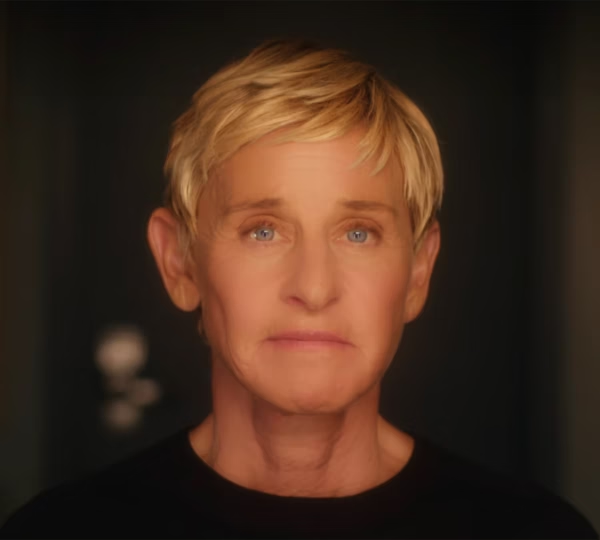
Osteoporosis, in particular, presents a silent risk. Many individuals remain unaware until a fracture occurs. By discussing her diagnosis publicly, Ellen underscores the importance of proactive health screening, particularly for aging adults.
DeGeneres also addressed the social stigma surrounding mental health, noting that therapy helped her identify patterns she had ignored for decades, fostering self-awareness and personal growth she previously lacked.
She emphasized that OCD manifests in ways beyond cleanliness or order, often appearing as persistent thought patterns that interfere with daily functioning and relationships if left unrecognized or untreated.
Similarly, ADHD can affect focus, memory, and organizational skills, challenging personal and professional tasks. Ellen’s humorous recounting illustrates how these conditions can coexist, sometimes creating unique coping mechanisms.
Despite these challenges, Ellen maintains an active lifestyle, continues creative work, and nurtures relationships, demonstrating that diagnoses need not define or limit a person’s life and potential.
Her transparency also challenges the stereotype that public figures must appear flawless, showing that vulnerability and authenticity can coexist with success and humor on a global platform.
The Netflix special, For Your Approval, combines comedy with candid storytelling, allowing viewers to understand the nuances of living with chronic conditions while laughing at the absurdities of human experience.
Ellen joked about daily life adjustments, acknowledging small adaptations she has made to accommodate her health conditions, such as careful attention to nutrition, exercise, and mindfulness practices.
By addressing osteoporosis alongside OCD and ADHD, she provides a holistic view of health, emphasizing that physical and mental well-being are interconnected, affecting how one approaches life, work, and relationships.
Her humor also serves as a coping mechanism, illustrating resilience. Laughter becomes both medicine and commentary, turning personal challenges into opportunities for connection and learning with her audience.
Ellen’s reflections on her upbringing highlight how family, culture, and religion influence health awareness. Lack of early education about conditions like OCD or ADHD can delay recognition and appropriate intervention.
She also noted the importance of therapy in adult life, explaining that professional guidance allowed her to understand behaviors, patterns, and inherited tendencies that had remained invisible for decades.
Her discussion about ADHD sheds light on adult manifestations of the condition, which often include distractibility, forgetfulness, and difficulty completing tasks, distinct from the hyperactive symptoms commonly associated with children.
Ellen balanced humor and vulnerability, making her revelations approachable while retaining dignity, authenticity, and relatability for millions of viewers worldwide who may share similar struggles.
Her story also inspires advocacy, encouraging audiences to seek medical guidance, challenge stigma, and discuss mental health openly within families and communities without fear or shame.
Throughout the special, Ellen emphasized self-acceptance, showing that acknowledging health challenges can coexist with laughter, joy, and personal fulfillment, challenging traditional perceptions of aging and wellness.
By addressing multiple diagnoses simultaneously, she conveys the complexity of human health, emphasizing that many individuals navigate overlapping physical, emotional, and neurological challenges daily.
Ellen’s experience underscores the importance of comprehensive medical evaluation, particularly when symptoms seem inconsistent or difficult to explain, highlighting the value of persistence and curiosity in personal healthcare.
Her candid storytelling helps destigmatize adult ADHD and OCD, illustrating that these conditions are manageable and that awareness is a crucial step toward effective coping strategies and meaningful life improvements.
DeGeneres’ openness provides representation, showing that highly successful, intelligent, and creative individuals can live fulfilling lives while managing complex health conditions with humor and resilience.
The Netflix special also fosters community by allowing viewers to relate, laugh, and reflect, emphasizing that shared experiences in health struggles create empathy and connection across diverse audiences.
Ellen’s reflection on osteoporosis highlights the often-overlooked risks of aging, advocating for preventive measures, exercise, proper nutrition, and regular medical checkups to maintain bone strength and reduce fracture risk.
Her discussions about OCD illuminate the subtle yet profound ways mental health conditions shape daily habits, priorities, and interpersonal relationships, even when outward appearances suggest normalcy or control.
By integrating ADHD into the conversation, she educates audiences about executive function challenges, reinforcing the need for patience, understanding, and personalized coping mechanisms in work and personal life.
Ellen’s narrative also explores inherited tendencies, demonstrating how family history, upbringing, and environmental factors interact with genetics to influence the emergence of conditions like OCD or ADHD.
Through humor, transparency, and vulnerability, DeGeneres turns personal health challenges into teachable moments, blending education, empathy, and entertainment for a broad audience.
Her journey emphasizes resilience, adaptability, and self-compassion, illustrating that humor and candidness are powerful tools for navigating the complexities of aging, neurological differences, and chronic conditions.
Even with multiple diagnoses, Ellen demonstrates that meaningful, joyful, and impactful lives are possible, highlighting the interplay between medical awareness, mental health care, and emotional well-being.
Ultimately, Ellen DeGeneres’ revelations serve as a reminder that health encompasses more than appearance. Awareness, education, and humor can transform challenges into opportunities for growth, connection, and personal fulfillment.
By combining comedy with candid health discussion, she encourages audiences to confront their own conditions with courage, self-reflection, and levity, promoting a balanced approach to physical and mental wellness.
Her story reinforces that seeking therapy, pursuing proper medical evaluation, and embracing vulnerability are vital components of living fully and authentically, regardless of public scrutiny or societal expectations.
Ellen’s ability to balance disclosure with laughter highlights the unique power of comedy to educate, normalize, and humanize complex medical and psychological experiences for global audiences.
Through her Netflix special, she demonstrates that challenges like osteoporosis, OCD, and ADHD are not barriers to creativity, success, or joy, but opportunities for deeper understanding and meaningful engagement with life.
By framing her diagnoses with humor and insight, Ellen encourages conversations about health, aging, and mental wellness, fostering empathy, self-care, and proactive approaches to medical and psychological challenges.
In sharing her journey, DeGeneres not only entertains but also empowers viewers to seek knowledge, accept vulnerability, and appreciate the complexities of human health with compassion and courage.
