

Civil rights legend Rev. Jesse Louis Jackson Sr. — a towering voice for justice, equality, and human dignity — died early Tuesday, February 17, 2026, at the age of 84.
His passing marks the end of an era in American civil rights leadership and has prompted an outpouring of tributes from world leaders, activists, and ordinary citizens whose lives were touched by his commitment to building a fairer society.
Jackson’s family confirmed the news in a statement, noting that he “died peacefully” surrounded by loved ones and urging people to honor his memory by continuing the struggle for the values he championed throughout his life.
A Life Dedicated to Justice
Jesse Jackson’s journey from a segregated childhood in Greenville, South Carolina, to becoming one of the most influential civil rights leaders of his generation is a story of courage, resilience, and unwavering moral purpose.

Born on October 8, 1941, Jackson rose to prominence during the 1960s as a young activist working alongside Rev. Martin Luther King Jr. in the Southern Christian Leadership Conference (SCLC), where his organizing and leadership helped amplify the demands for racial, social, and economic justice in America.
His early activism included participation with the influential Greenville Eight, a group of young Black men who challenged segregation in public spaces, and later work in Chicago where he helped lead Operation Breadbasket, focusing on economic opportunities for Black communities.
Following King’s assassination in 1968, Jackson became a central figure in the civil rights movement, carrying forward his mentor’s vision while addressing the deep economic inequalities that persisted in American society.
Rainbow PUSH Coalition and Broad Advocacy
In 1971, Jackson founded Operation PUSH (People United to Save Humanity), a civil rights organization dedicated to combating economic discrimination, expanding voter registration, and advancing corporate accountability.
This group later merged with the Rainbow Coalition — a multiracial political alliance of labor, faith, and community activists — to form the Rainbow PUSH Coalition, which became a powerful voice for social change both in the U.S. and around the world.
Through this platform, Jackson fought for greater access to education, healthcare, employment, and political representation for marginalized Americans, challenging institutions and corporations to live up to the ideals enshrined in the nation’s founding documents.
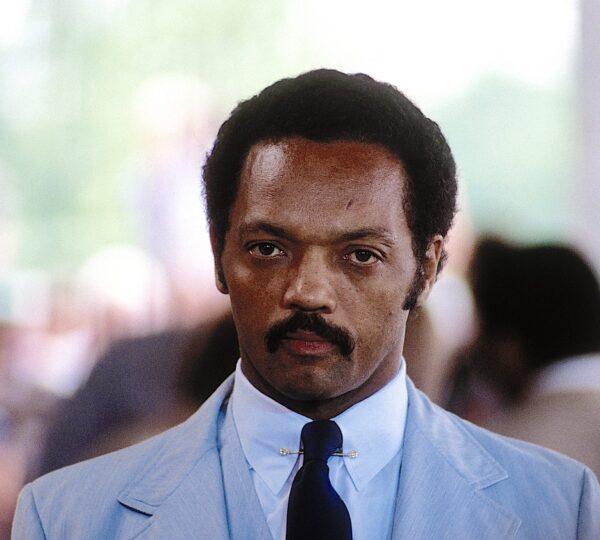
Presidential Campaigns and Political Influence
Jackson also made history within the Democratic Party. In 1984 and 1988, he ran for the party’s presidential nomination, breaking racial barriers and energizing previously disengaged voters across the country.
Though he did not secure the nomination, his campaigns — particularly the 1988 run — were widely credited with expanding the political conversation about race, economic justice, and political inclusion.
His 1984 and 1988 bids helped pave the way for future generations of leaders and were viewed by political analysts as an important precursor to the election of Barack Obama in 2008.
Jackson’s own political voice was influential in broadening the Democratic electorate, particularly among Black, Latino, and working‑class voters.
Health Struggles and Final Years
In recent years, Jackson faced significant health challenges. In November 2025, it was confirmed that he had been hospitalized in Chicago and was under observation for progressive supranuclear palsy (PSP), a rare and debilitating neurological condition affecting balance, movement, and coordination.
His struggle with neurodegenerative illness was ongoing for more than a decade, after initially being diagnosed with Parkinson’s disease years earlier.
Despite these limitations, Jackson remained engaged with important causes and continued to inspire activists worldwide until his final days.
Family Statement and Call to Action
In their announcement, the Jackson family celebrated the breadth of Jackson’s life and urged the world not only to mourn his passing but to carry on his legacy of service.
They described him as “a servant leader — not only to our family, but to the oppressed, the voiceless, and the overlooked around the world.”
“We shared him with the world, and in return, the world became part of our extended family,” the family said. “His unwavering belief in justice, equality, and love uplifted millions, and we ask you to honor his memory by continuing the fight for the values he lived by.”
Jackson is survived by his wife, Jacqueline, their six children — Santita, Jesse Jr., Jonathan, Yusef, Jacqueline, and Ashley — and numerous grandchildren and great‑grandchildren.
A Nation Reacts: Tributes Pour In
The news of Jackson’s death prompted a wave of tributes from political leaders, civil rights figures, and global voices of influence.
Former presidents, contemporary activists, and local community leaders alike used social media and official statements to reflect on his immense impact.
Presidential Response and Controversy
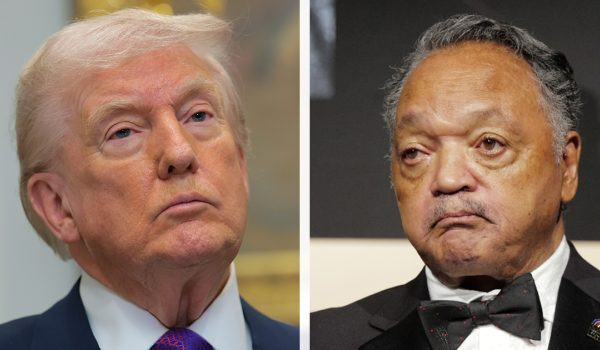
One of the more notable tributes came from President Donald Trump, who posted a message on Truth Social — the platform he frequently uses for public communication.
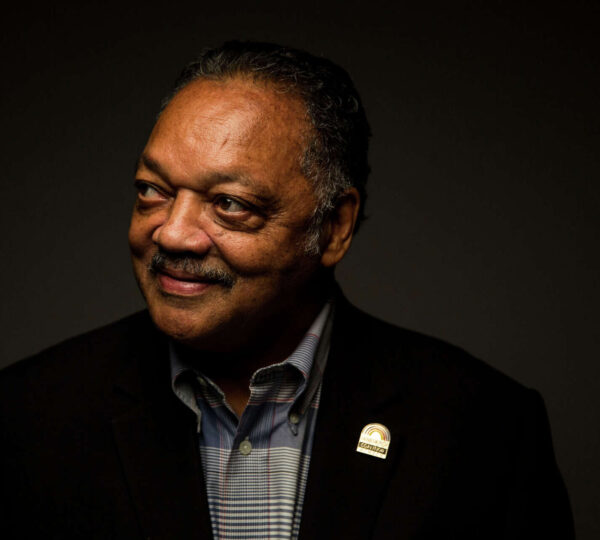
In his tribute, Trump described Jackson as a “good man, with lots of personality, grit, and ‘street smarts,’” and noted aspects of his work that he claimed to have supported, including funding for Historically Black Colleges and Universities and criminal justice reform efforts.
However, Trump’s statement sparked controversy because he also asserted that Jackson “had much to do with the Election” and claimed he “could not stand” Barack Obama — a characterization unrelated to Jackson’s documented public positions and one that has not been confirmed by Jackson’s family or other close associates.
Neither Barack Obama nor the Jackson family responded directly to Trump’s specific claim about Jackson’s view of Obama.
What is clear from archival records is that Jackson had a long, nuanced relationship with presidents of both parties, marked by mutual respect on some issues and vigorous disagreement on others.
Civil Rights Allies and Leaders Speak
Leaders who knew Jackson personally or drew inspiration from his work reacted with deep emotion and respect.
-
Rev. Al Sharpton, a veteran civil rights activist and longtime colleague, called Jackson “a consequential and transformative leader who changed this nation and the world.”
-
Martin Luther King III and his wife, Andrea, noted Jackson’s courage and tireless advocacy for marginalized communities, calling his life “a testament to the power of faith in action.”
-
Bernice King, daughter of Martin Luther King Jr., honored the shared history between her family and Jackson, emphasizing his role in lifting voices and opening doors for others.
At the state level, leaders like Illinois Governor JB Pritzker ordered flags flown at half‑mast and described Jackson as “a giant of the civil rights movement” whose life had “broken down barriers and inspired generations.”
Organizations such as the NAACP paid tribute on social media, calling Jackson a voice of courage whose work reshaped American society.
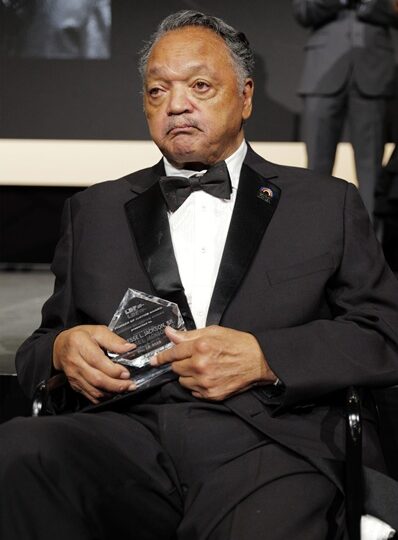
Legacy of Justice, Service, and Hope
Jackson’s influence extended far beyond marches and speeches. He was an architect of strategies that advanced voter registration — particularly among Black and young voters — and he pressed corporations to embrace fair hiring practices and economic inclusion.
He also worked on international issues, advocating for sanctions against apartheid South Africa and negotiating diplomatic concerns around the world.
One of his most enduring legacies is his signature rallying cry: “Keep hope alive.” This phrase did more than encapsulate a philosophy — it became a motivational mantra for activists, politicians, and everyday people fighting for a better future.
Critically, Jackson helped expand the landscape of American politics, creating space for voices that had traditionally been excluded from power.
His presidential campaigns in the 1980s motivated millions to participate in the democratic process, and his Rainbow PUSH Coalition continued to organize communities long after his bids for national office concluded.
Remembering a Life Well Lived
As tributes continue and memorial events begin to take shape — particularly in Chicago, where Jackson lived and served for much of his life — Americans and the world are reflecting on what his passing means for the future of civil rights advocacy.
Jackson’s death arrives at a time when the issues he devoted his life to remain deeply relevant: racial equity, economic justice, voter rights, educational access, and the belief that every individual’s dignity deserves protection.
The movement he helped sustain continues in organizations, policies, and people who were inspired by his leadership.
In remembering Jesse Jackson, the world honors a life of relentless dedication to justice and a steadfast belief that progress — while never easy — is always worth pursuing.
His vision and voice will continue to echo wherever people seek equality, challenge injustice, and demand that America live up to its promises of liberty and opportunity for all.
