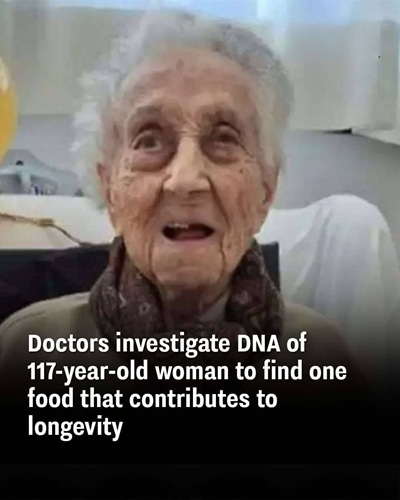
Maria Branyas Morera lived an extraordinary life that spanned more than a century and bridged eras most people today can only imagine.
Born on March 4, 1907, in San Francisco, California, Branyas moved with her Catalan family to Catalonia, Spain when she was just a young girl in 1915.
There, she would spend the rest of her remarkable life, witnessing the seismic shifts of the 20th and early 21st centuries — from global conflicts to medical revolutions and technological transformations that reshaped how we live, work, and age.
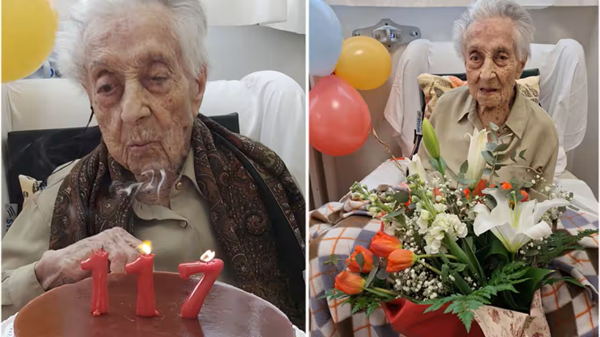
When she died on August 19, 2024, at the age of 117 years and 168 days, Maria Branyas Morera held the distinction of being the world’s oldest verified living person, recognized by the Gerontology Research Group and Guinness World Records.

She also became one of the longest‑lived humans in documented history, placing her among an elite group of supercentenarians whose lives defy typical biological expectations.
But Branyas’s story was not only astonishing for its length.
It was also inspiring for its quality, its resilience, and the profound lessons it offered about how humans can age — not merely survive, but live with clarity, engagement, and purpose almost to the very end.
A Life That Spanned Worlds
When Maria Branyas was born in 1907, the world was dramatically different from today.
She entered life in a period before commercial airplanes, antibiotics, or radio broadcasts were widespread. She lived through:
World War I and its aftermath.
The Spanish Civil War and the rise of fascism in Europe.
World War II and its global reshaping of politics and society.
The Great Depression and massive economic upheavals.
Major medical breakthroughs, including the creation of vaccines and treatments for once‑fatal diseases.
The COVID‑19 pandemic, which Branyas survived at age 113 — becoming one of the oldest documented survivors of the virus.
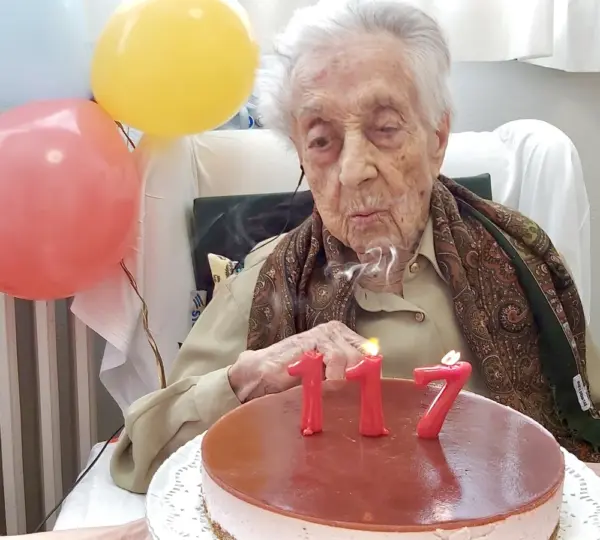
She bore witness not only to world history but also to a litany of technological revolutions — from cars and airplanes to satellites and the internet — a span of progress that few individuals have ever seen firsthand.
Yet through all this change, she maintained a grounded life. For decades, Branyas lived in the Santa Maria del Tura nursing home in Olot, a town in the Catalan region of northeastern Spain, surrounded by family, friends, and caregivers.
There she stayed active, mentally engaged, and socially connected — key aspects of her long life that she often credited alongside genetics and lifestyle habits.
A Woman Who Asked to Be Studied
Unlike most people whose lives end quietly and privately, Maria Branyas Morera approached the end of her life with curiosity and generosity
. She understood that her biology might hold insights for science and for others who aspire to long, healthy lives.
Before her death, she explicitly expressed a wish that doctors study her body and biology in depth, hoping that lessons from her physiology could benefit others.
Her request was granted, and an international research effort was undertaken — one of the most comprehensive scientific examinations ever conducted on an individual supercentenarian.
Teams led by experts at the University of Barcelona and the Josep Carreras Leukaemia Research Institute analysed her genome, metabolome, microbiome, blood biomarkers, cellular age markers, and more.
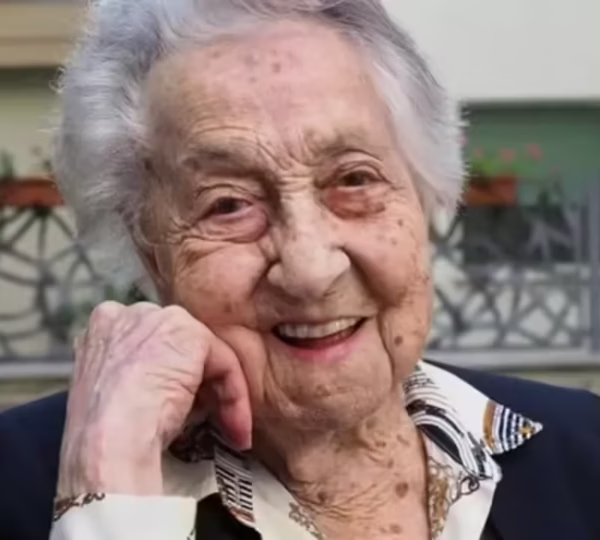
Their findings, published in Cell Reports Medicine, were both remarkable and deeply instructive.
The lead scientist involved, Dr. Manel Esteller, emphasized that Branyas’s life challenged assumptions about aging. Traditionally, extreme age is equated with frailty, chronic illness, and cognitive decline.
But Maria’s biology suggested something different: it showed that advanced age and serious disease are not intrinsically linked in all cases.
The Science of Maria’s Longevity
The research into Maria Branyas Morera’s biology did not point to a single “silver bullet” for long life — but rather to a complex interplay of genetics, metabolic health, immune resilience, and lifestyle. Here’s what scientists discovered:
1. Exceptional Genetic Profile
Maria’s DNA contained rare genetic variants that are associated with enhanced health and longevity.
These variants appeared to protect her cardiovascular system, cognitive function, and immune response — factors that often deteriorate in advanced age.
Her genome was enriched with gene profiles that research has also found linked to long life in other species, including worms and flies.
Remarkably, she also lacked many genetic variants typically associated with common age‑related diseases such as cancer, Alzheimer’s, and metabolic disorders.

This unusual genetic composition likely played a central role in allowing her body to withstand disease pressures that affect most people as they age.
2. Youthful Biological and Metabolic Markers
When scientists examined her biomolecular data, they found that Maria’s biological age — a measure based on cellular and molecular markers — was significantly lower than her chronological age.
In other words, while she was 117 years old by time lived, many aspects of her biology resembled those of a much younger person.
Her lipid profile was unusually efficient: she had very low levels of harmful cholesterol and triglycerides, combined with high levels of protective HDL cholesterol. Such a profile is far more typical of younger individuals and is strongly correlated with cardiovascular health.
3. Low Inflammation and Gut Health
Chronic inflammation is known to be a major driver of aging and age‑related disease.
Maria’s body showed low levels of inflammatory markers, and her gut microbiome — the complex community of bacteria in the digestive tract — was rich in beneficial microbes such as Bifidobacterium, which are linked to better immune health and reduced inflammation.
Scientists believe that her microbiome, possibly influenced by lifelong diet habits, contributed to protecting her from diseases associated with inflammation, including cardiovascular conditions and metabolic syndromes.
4. Lifestyle: Diet, Activity, and Social Engagement
While her genetics laid a strong foundation, Maria’s lifestyle choices also played a meaningful role.
She followed a Mediterranean‑style diet, rich in fruits, vegetables, olive oil, and fish — foods long associated with good cardiovascular health.
One particularly striking detail was her daily habit of eating plain, sugar‑free yogurt, often several times a day.
Yogurt contains live cultures and beneficial bacteria that can help support a healthy gut microbiome, reduce inflammation, and support digestion — factors increasingly linked to healthy aging.
She also refrained from smoking and alcohol, maintained regular physical activity through walking, and stayed socially connected with family, friends, and caregivers.
She lived a life rich in human connection and mental stimulation — factors that many aging experts believe help protect cognitive health.
Beyond Telomeres: Rethinking Cellular Ageing
One intriguing biological observation was related to telomeres — the protective caps at the ends of chromosomes that typically shorten with age.
In most people, very short telomeres are markers of advanced cellular aging and correlate with higher disease risk. Maria’s telomeres were very short, which is expected for someone of her age.
However, scientists hypothesized that certain aspects of her cellular regulation may have limited uncontrolled cell division — a process that, when dysregulated, can lead to cancer.
This hints at a nuanced decoupling of aging biology — where markers of age do not necessarily translate to disease vulnerability — a phenomenon that researchers believe could inform future therapeutic strategies aimed at promoting healthy aging.
Life Lessons from a Supercentenarian
Maria Branyas Morera’s life is a testament to resilience — not just biological resilience, but emotional and social resilience.
She often spoke about the importance of order, tranquility, strong family bonds, connection with nature, and emotional stability as cornerstones of her long life.
She said that avoiding “toxic people” and living with positivity were part of what allowed her to thrive.
Her daughter, Rosa Moret, once noted that her mother had never been hospitalized, never broken a bone, and spent her final years pain‑free — a rarity for someone of such advanced age.
A Legacy That Transcends Time
Although Maria Branyas Morera’s life ended in August 2024, her legacy lives on — not just as a record in the annals of human longevity, but as a scientific resource and a symbol of what human life can encompass when biology, lifestyle, and environment align.
Her story reminds us that longevity is not about a single secret or magic bullet, but rather the convergence of genetics, habits, environment, and meaningful human connection.
In a time when aging populations are increasing worldwide, the lessons gleaned from Branyas’s life could inform new approaches to healthy aging — from better understanding of genetic factors to new biomarkers that distinguish between chronological age and biological health.
As researchers continue to publish and analyse data from her extensive study, Maria’s life will remain a benchmark for gerontologists, physicians, and anyone curious about the boundaries of human life.
She showed the world that old age does not inevitably mean disease, decline, or isolation — and that with curiosity and compassion, science can learn not only how long we can live, but how well.
Maria Branyas Morera lived an extraordinary life that spanned more than a century and bridged eras most people today can only imagine.
Born on March 4, 1907, in San Francisco, California, Branyas moved with her Catalan family to Catalonia, Spain when she was just a young girl in 1915.
There, she would spend the rest of her remarkable life, witnessing the seismic shifts of the 20th and early 21st centuries — from global conflicts to medical revolutions and technological transformations that reshaped how we live, work, and age.
When she died on August 19, 2024, at the age of 117 years and 168 days, Maria Branyas Morera held the distinction of being the world’s oldest verified living person, recognized by the Gerontology Research Group and Guinness World Records.
She also became one of the longest‑lived humans in documented history, placing her among an elite group of supercentenarians whose lives defy typical biological expectations.
But Branyas’s story was not only astonishing for its length.
It was also inspiring for its quality, its resilience, and the profound lessons it offered about how humans can age — not merely survive, but live with clarity, engagement, and purpose almost to the very end.
A Life That Spanned Worlds
When Maria Branyas was born in 1907, the world was dramatically different from today.
She entered life in a period before commercial airplanes, antibiotics, or radio broadcasts were widespread. She lived through:
World War I and its aftermath.
The Spanish Civil War and the rise of fascism in Europe.
World War II and its global reshaping of politics and society.
The Great Depression and massive economic upheavals.
Major medical breakthroughs, including the creation of vaccines and treatments for once‑fatal diseases.
The COVID‑19 pandemic, which Branyas survived at age 113 — becoming one of the oldest documented survivors of the virus.
She bore witness not only to world history but also to a litany of technological revolutions — from cars and airplanes to satellites and the internet — a span of progress that few individuals have ever seen firsthand.
Yet through all this change, she maintained a grounded life. For decades, Branyas lived in the Santa Maria del Tura nursing home in Olot, a town in the Catalan region of northeastern Spain, surrounded by family, friends, and caregivers.
There she stayed active, mentally engaged, and socially connected — key aspects of her long life that she often credited alongside genetics and lifestyle habits.
A Woman Who Asked to Be Studied
Unlike most people whose lives end quietly and privately, Maria Branyas Morera approached the end of her life with curiosity and generosity
. She understood that her biology might hold insights for science and for others who aspire to long, healthy lives.
Before her death, she explicitly expressed a wish that doctors study her body and biology in depth, hoping that lessons from her physiology could benefit others.
Her request was granted, and an international research effort was undertaken — one of the most comprehensive scientific examinations ever conducted on an individual supercentenarian.
Teams led by experts at the University of Barcelona and the Josep Carreras Leukaemia Research Institute analysed her genome, metabolome, microbiome, blood biomarkers, cellular age markers, and more.
Their findings, published in Cell Reports Medicine, were both remarkable and deeply instructive.
The lead scientist involved, Dr. Manel Esteller, emphasized that Branyas’s life challenged assumptions about aging. Traditionally, extreme age is equated with frailty, chronic illness, and cognitive decline.
But Maria’s biology suggested something different: it showed that advanced age and serious disease are not intrinsically linked in all cases.
The Science of Maria’s Longevity
The research into Maria Branyas Morera’s biology did not point to a single “silver bullet” for long life — but rather to a complex interplay of genetics, metabolic health, immune resilience, and lifestyle. Here’s what scientists discovered:
1. Exceptional Genetic Profile
Maria’s DNA contained rare genetic variants that are associated with enhanced health and longevity.
These variants appeared to protect her cardiovascular system, cognitive function, and immune response — factors that often deteriorate in advanced age.
Her genome was enriched with gene profiles that research has also found linked to long life in other species, including worms and flies.
Remarkably, she also lacked many genetic variants typically associated with common age‑related diseases such as cancer, Alzheimer’s, and metabolic disorders.
This unusual genetic composition likely played a central role in allowing her body to withstand disease pressures that affect most people as they age.
2. Youthful Biological and Metabolic Markers
When scientists examined her biomolecular data, they found that Maria’s biological age — a measure based on cellular and molecular markers — was significantly lower than her chronological age.
In other words, while she was 117 years old by time lived, many aspects of her biology resembled those of a much younger person.
Her lipid profile was unusually efficient: she had very low levels of harmful cholesterol and triglycerides, combined with high levels of protective HDL cholesterol. Such a profile is far more typical of younger individuals and is strongly correlated with cardiovascular health.
3. Low Inflammation and Gut Health
Chronic inflammation is known to be a major driver of aging and age‑related disease.
Maria’s body showed low levels of inflammatory markers, and her gut microbiome — the complex community of bacteria in the digestive tract — was rich in beneficial microbes such as Bifidobacterium, which are linked to better immune health and reduced inflammation.
Scientists believe that her microbiome, possibly influenced by lifelong diet habits, contributed to protecting her from diseases associated with inflammation, including cardiovascular conditions and metabolic syndromes.
4. Lifestyle: Diet, Activity, and Social Engagement
While her genetics laid a strong foundation, Maria’s lifestyle choices also played a meaningful role.
She followed a Mediterranean‑style diet, rich in fruits, vegetables, olive oil, and fish — foods long associated with good cardiovascular health.
One particularly striking detail was her daily habit of eating plain, sugar‑free yogurt, often several times a day.
Yogurt contains live cultures and beneficial bacteria that can help support a healthy gut microbiome, reduce inflammation, and support digestion — factors increasingly linked to healthy aging.
She also refrained from smoking and alcohol, maintained regular physical activity through walking, and stayed socially connected with family, friends, and caregivers.
She lived a life rich in human connection and mental stimulation — factors that many aging experts believe help protect cognitive health.
Beyond Telomeres: Rethinking Cellular Ageing
One intriguing biological observation was related to telomeres — the protective caps at the ends of chromosomes that typically shorten with age.
In most people, very short telomeres are markers of advanced cellular aging and correlate with higher disease risk. Maria’s telomeres were very short, which is expected for someone of her age.
However, scientists hypothesized that certain aspects of her cellular regulation may have limited uncontrolled cell division — a process that, when dysregulated, can lead to cancer.
This hints at a nuanced decoupling of aging biology — where markers of age do not necessarily translate to disease vulnerability — a phenomenon that researchers believe could inform future therapeutic strategies aimed at promoting healthy aging.
Life Lessons from a Supercentenarian
Maria Branyas Morera’s life is a testament to resilience — not just biological resilience, but emotional and social resilience.
She often spoke about the importance of order, tranquility, strong family bonds, connection with nature, and emotional stability as cornerstones of her long life.
She said that avoiding “toxic people” and living with positivity were part of what allowed her to thrive.
Her daughter, Rosa Moret, once noted that her mother had never been hospitalized, never broken a bone, and spent her final years pain‑free — a rarity for someone of such advanced age.
A Legacy That Transcends Time
Although Maria Branyas Morera’s life ended in August 2024, her legacy lives on — not just as a record in the annals of human longevity, but as a scientific resource and a symbol of what human life can encompass when biology, lifestyle, and environment align.
Her story reminds us that longevity is not about a single secret or magic bullet, but rather the convergence of genetics, habits, environment, and meaningful human connection.
In a time when aging populations are increasing worldwide, the lessons gleaned from Branyas’s life could inform new approaches to healthy aging — from better understanding of genetic factors to new biomarkers that distinguish between chronological age and biological health.
As researchers continue to publish and analyse data from her extensive study, Maria’s life will remain a benchmark for gerontologists, physicians, and anyone curious about the boundaries of human life.
She showed the world that old age does not inevitably mean disease, decline, or isolation — and that with curiosity and compassion, science can learn not only how long we can live, but how well.