
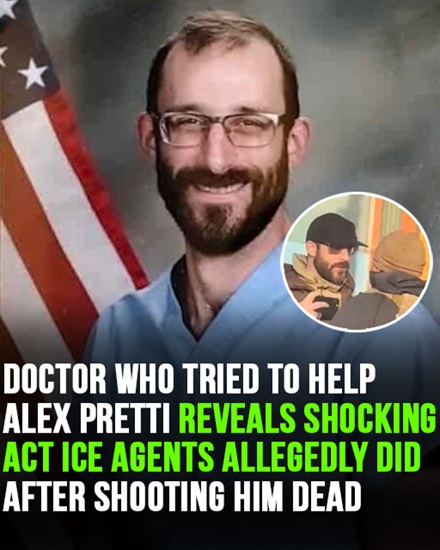
On January 24, 2026, Minneapolis became the focus of national attention after 37‑year‑old intensive care unit (ICU) nurse Alex Alan Pretti was shot and killed by federal agents during an enforcement operation tied to heightened immigration policing in the city.
The shooting has since sparked widespread protest, political debate, and questions about the appropriate use of force by federal authorities.
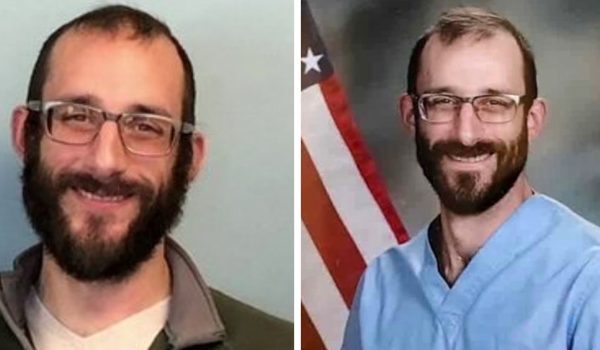
Who Was Alex Pretti? Alex Pretti was a registered ICU nurse at the VA Health Care System in Minneapolis, remembered by friends, family, and colleagues as a compassionate caregiver who dedicated his life to helping others, particularly veterans.
Born and raised in the Midwest, he later moved to Minnesota, where he studied, trained, and built his nursing career. Those close to him described him as kind, thoughtful, and committed to justice and community service.
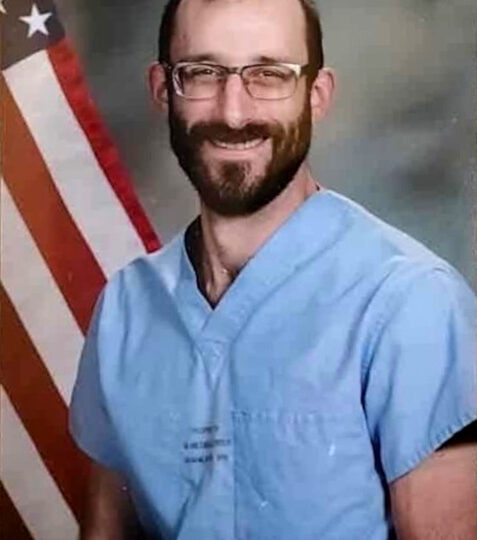
Pretti was a lawful gun owner and held a permit for concealed carry under Minnesota law, but he had no significant criminal record beyond routine traffic infractions, according to Minneapolis police and state officials.
Federal Enforcement in Minneapolis: The Backdrop
The fatal shooting occurred amid an unusually large federal immigration enforcement operation in Minneapolis. In early 2026, the Department of Homeland Security (DHS), including U.S.
Immigration and Customs Enforcement (ICE) and U.S. Border Patrol personnel, was conducting heightened sweeps and arrests targeting individuals suspected of being in the country without federal authorization.
This operation was part of what officials described as a broader effort to enforce immigration laws but also drew criticism and protests from local residents, activists, civil rights groups, and some elected officials.
Tensions had already been high after the January 7 shooting death of 37‑year‑old Renee Nicole Good by an ICE agent in the same area, which authorities ruled a homicide.
That earlier incident became a flashpoint for activism and outrage, and the presence of federal agents in Minneapolis only added to the tension leading up to the Pretti shooting.
The Incident: What Happened on January 24, 2026
According to statements from federal officials, the shooting took place in the morning hours near 26th Street and Nicollet Avenue in south Minneapolis.
DHS said a Border Patrol agent fired shots in self‑defense after Pretti allegedly approached federal officers with a handgun and resisted attempts to disarm him. DHS characterized the encounter as dangerous and violent, asserting the agent fired to protect life.
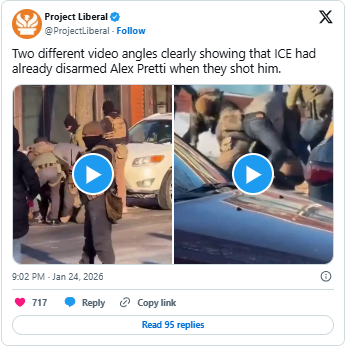
However, multiple video‑verified eyewitness accounts and bystander footage significantly complicate this narrative:
Footage circulating on social media and reviewed by news outlets showed Pretti holding a phone, not a weapon, moments before the confrontation with federal agents.
One video shows Pretti filming agents and later moving toward them, apparently attempting to assist a woman who had been pushed to the ground by an agent.
Another angle shows federal agents pepper‑spraying Pretti widely and repeatedly, then pushing him to the ground while multiple agents restrain him.
One agent appears to remove a holstered firearm from Pretti’s waistband after Pretti was already restrained on the pavement, and only afterward do shots ring out.
According to some video breakdowns, at least 10 shots were fired over approximately five seconds, even as Pretti was pinned by officers.
These contrasting accounts have become central to national debate over what actually occurred during the encounter.
Medical Response and Witness Concerns
In the days following the shooting, a physician who was present near the incident later filed a sworn statement as part of ongoing litigation.
According to the filing reported by People, the doctor attempted to help Pretti after he was shot. They reported that instead of administering first aid or checking for a pulse, federal agents were observed “counting bullet wounds” on Pretti’s body while he lay wounded.
The physician described being confused by the agents’ actions, noting that standard emergency protocol would be to attempt CPR or other life‑saving measures immediately.
The doctor’s statement raises serious questions about how federal agents managed the scene after the shooting and has added to the controversy surrounding the response.
Official Government Accounts and Investigations
DHS and Border Patrol officials have defended the actions of the agent who fired the fatal shots, suggesting that Pretti’s resistance and possession of a firearm justified the use of deadly force.
U.S. Secretary of Homeland Security Kristi Noem publicly described Pretti as armed and dangerous, a characterization sharply disputed by witness videos and protestors.
In the wake of the shooting, federal officials initiated an internal investigation. The Homeland Security Investigations (HSI) unit of ICE, along with the FBI, began examining the incident.
Some experts in law enforcement oversight noted that placing HSI at the lead of this investigation is somewhat unusual, as HSI is not typically tasked with examining officer‑involved shootings; experts have recommended independent review mechanisms to ensure transparency and trust.
A federal court also issued a temporary restraining order preventing DHS and other agencies from destroying or altering evidence at the scene, after state officials sought to secure the federal property for independent investigation.
This order aims to preserve all relevant physical evidence, video footage, and forensic materials tied to Pretti’s death.
Family and Community Reaction
Pretti’s family has vocally rejected the federal government’s version of events. In a public statement, they described the official claims as “sickening lies,” emphasizing that video evidence does not show Pretti brandishing a weapon at any point before he was shot.
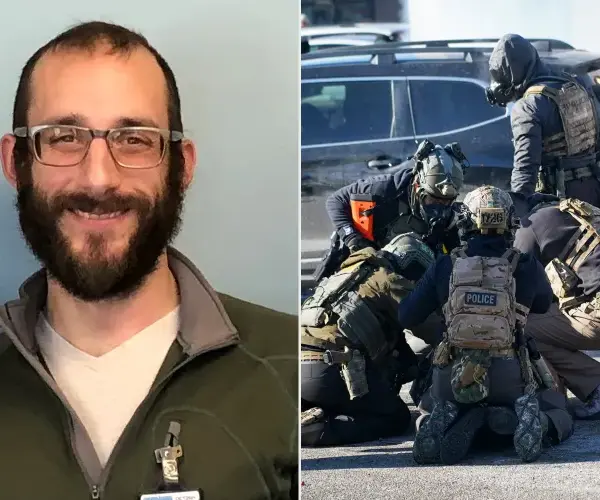
They remembered him as a devoted nurse, family man, and community member who was widely respected for his empathy and professionalism.
Community members across Minneapolis and beyond have organized vigils, rallies, and protests in honor of Pretti. Some activists and residents view his death as evidence of excessive force by federal agents and demand accountability and reform in how federal law enforcement interacts with civilians, particularly during domestic deployments.
Broader National Debate and Political Fallout
The shooting has quickly become a flashpoint in the broader national discussion over immigration enforcement, law enforcement accountability, and the proper use of force by federal authorities. ■
Political leaders from both major parties have weighed in, with some Democrats and progressive figures calling for transparency, independent investigations, and even calls to review or reduce federal enforcement presence in Minneapolis.
Leading Republican and conservative voices have defended federal agents’ actions, with some describing them as operating within the scope of their duties amid challenging conditions.
Activists seen as outside traditional political structures have used Pretti’s death to amplify awareness of immigration enforcement practices and civil liberties concerns at a national level.
Prominent technology and business leaders have also expressed public concern about the shooting, framing it as a troubling moment for American democratic norms and accountability.
These varied responses illustrate how deeply the incident has resonated beyond Minnesota, catalyzing discussions about federal authority, individual rights, and law enforcement practices nationwide.
Legal and Investigative Developments
As of now, federal investigations are ongoing, and no formal charges or disciplinary actions have been announced. Minnesota state authorities have pushed for greater access to evidence and independent review, while federal officials maintain that they are conducting an internal process consistent with protocol.
The temporary restraining order to preserve evidence indicates courts are taking these concerns seriously, and it may shape how future oversight is handled in similar incidents.
Legacy and Public Memory
Alex Pretti’s death joins a list of recent controversial law enforcement shootings that have drawn public scrutiny and demand for reform. While investigations continue, the incident has already ignited wider dialogue about:
The role of federal agents in domestic operations.
How use‑of‑force decisions are made and evaluated.
The importance of transparent, independent investigations.
Community trust in law enforcement.
Many advocates continue to honor Pretti’s memory by highlighting his life of service and calling for accountability and justice in his case.
Conclusion
The fatal shooting of Alex Pretti by federal agents in Minneapolis on January 24, 2026, remains a deeply contested event with far‑reaching implications.
Differing official statements, corroborating bystander video, medical witness accounts, and widespread public reaction have combined to create one of the most closely watched law enforcement incidents of recent years.
As investigations proceed and public dialogue evolves, Pretti’s death will likely continue to shape discussions around law enforcement accountability, immigration policy enforcement, and civil liberties in the United States.
