
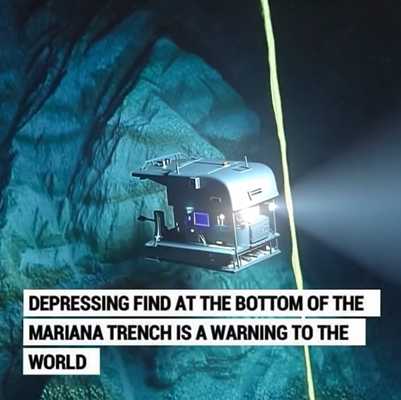
For decades, the Mariana Trench represented the ultimate symbol of Earth’s untouched wilderness. Located in the western Pacific Ocean and plunging deeper than Mount Everest is tall.
It was long viewed as a realm beyond the reach of human activity. Scientists once believed that its extreme depth, crushing pressure, and total darkness created a natural barrier protecting it from the consequences of modern life.
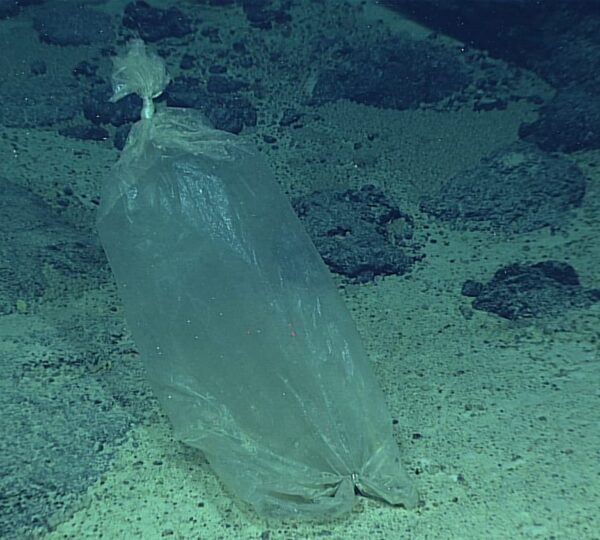
That belief changed profoundly when researchers discovered a plastic bag resting on the seafloor of the Mariana Trench. The finding was quiet, unremarkable in appearance, yet deeply unsettling in meaning.
A single discarded object, designed for brief convenience, had traveled nearly seven miles below the ocean’s surface. Its presence delivered a powerful message: no place on Earth is truly isolated from human influence.
This discovery forced scientists, policymakers, and the public alike to reconsider how interconnected the planet truly is. It revealed that human actions ripple through natural systems in ways that are often invisible but deeply consequential.
The Mariana Trench: Earth’s Deepest Frontier
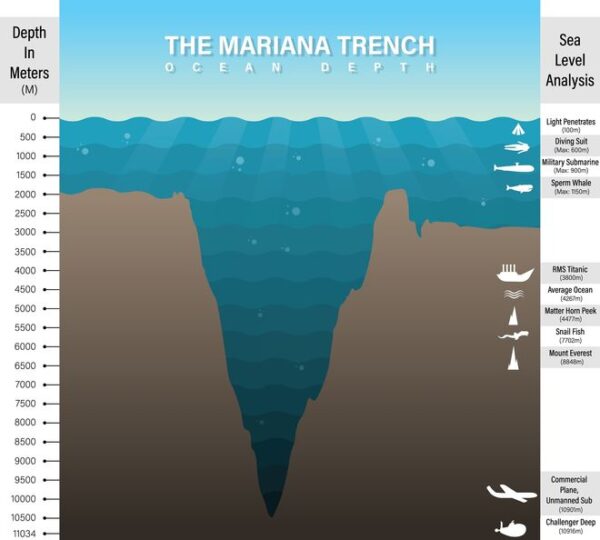
The Mariana Trench is the deepest known part of the world’s oceans, reaching a maximum depth of nearly 36,000 feet (almost 11,000 meters).
At these depths, sunlight cannot penetrate, temperatures hover just above freezing, and water pressure exceeds one thousand times that at sea level. These conditions would be lethal to most surface-dwelling organisms.
Yet despite these extremes, life not only exists but thrives. Scientists have documented a remarkable diversity of species uniquely adapted to this environment.
These include translucent jellyfish, snailfish with gelatinous bodies, giant amphipods, sea cucumbers, and microbial communities that survive without sunlight by relying on chemical energy.
These ecosystems evolved over millions of years in relative stability. Their isolation allowed delicate balances to form, where even small disturbances could have outsized effects. For a long time, it was assumed that human pollution could not reach such depths. The discovery of plastic debris proved otherwise.
Plastic Pollution Reaches the Deepest Depths
The plastic bag found in the Mariana Trench was not an isolated anomaly. Subsequent research has revealed that plastic debris is widespread even in the deepest parts of the ocean.
Studies have shown that nearly one in five plastic items recovered from the Trench shows signs of interaction with marine life.
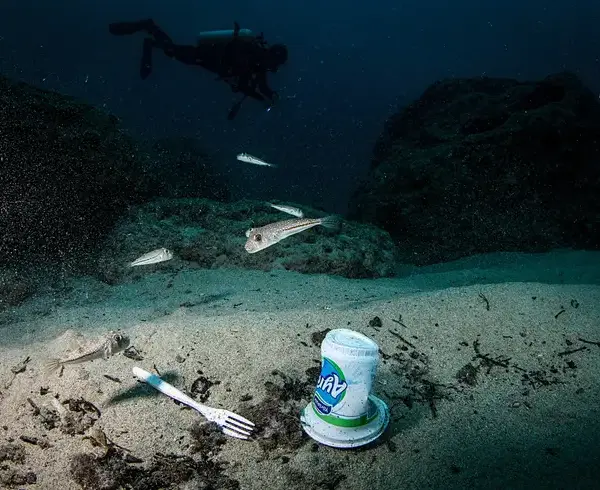
This means that deep-sea organisms are not only encountering plastic but are being affected by it. Some animals ingest plastic fragments, mistaking them for food. Others become entangled in debris, which can restrict movement, cause injury, or interfere with feeding and reproduction.
What makes this particularly troubling is that deep-sea species often have slow growth rates and long lifespans. Damage to individuals or habitats can take decades or even centuries to repair, if recovery is possible at all.
How Plastic Travels So Far
The presence of plastic in the Mariana Trench raises an obvious question: how does everyday waste end up in one of the most remote places on Earth?
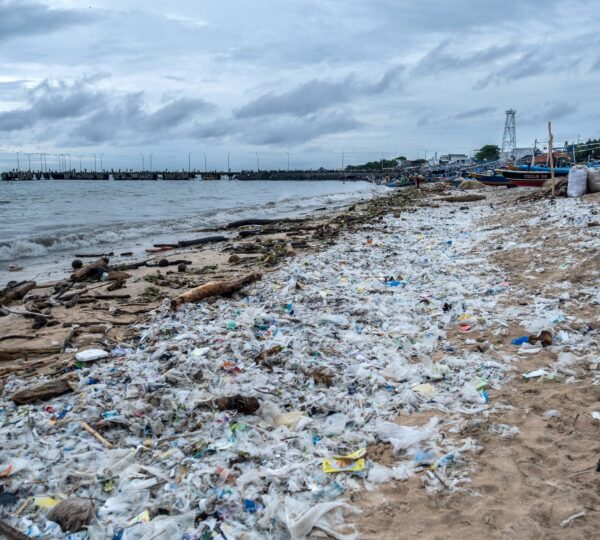
The answer lies in the interconnected nature of the planet’s water systems. Plastic waste discarded on land can be carried by wind, rainfall, and rivers into the ocean.
Once in marine environments, ocean currents transport debris across vast distances. Over time, some plastic sinks due to biofouling, a process where microorganisms and algae attach to its surface, increasing its weight.
Eventually, gravity and ocean circulation carry this debris downward, where it can settle in deep-sea trenches. Research indicates that approximately 89% of plastic retrieved from the Mariana Trench consists of single-use items, such as bags, wrappers, and food packaging.
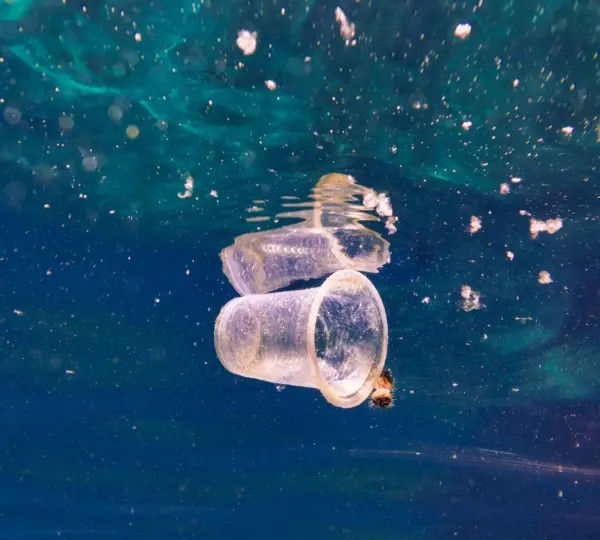
These objects are not produced near the Trench. They originate from ordinary human activities, often thousands of miles away, highlighting how small daily decisions accumulate into global consequences.
The Longevity of Plastic in the Ocean
One of the most damaging characteristics of plastic is its durability. Most plastics do not biodegrade in natural environments. Instead, they break down into smaller and smaller fragments known as microplastics.
These particles can persist in the ocean for hundreds of years. Microplastics are easily ingested by marine organisms at all levels of the food web, from microscopic plankton to large fish and mammals. Once ingested, they can cause physical damage, block digestive systems, and transport harmful chemicals.
In deep-sea environments, where conditions slow natural processes even further, plastic may persist indefinitely. This creates a long-term presence of synthetic material in ecosystems that evolved without it.
Chemical and Biological Consequences
Plastic pollution has both physical and chemical effects on marine life. Larger debris can entangle animals or damage habitats, such as fragile deep-sea corals. Smaller fragments pose subtler but equally serious risks.
Plastics can absorb and release chemical pollutants, including persistent organic compounds. Over time, these chemicals can leach into surrounding water or accumulate in the tissues of marine organisms.
While research into deep-sea exposure is still developing, there is growing concern about how these substances may affect reproduction, growth, and survival.
Because deep-sea ecosystems are poorly understood, scientists worry that damage may be occurring without immediate or visible signs. By the time effects become clear, it may be too late to reverse them.
A Global Issue with Shared Responsibility
The plastic bag found in the Mariana Trench is not merely symbolic. It is a tangible indicator of how human behavior affects the entire planet. Oceans do not recognize borders, and pollution introduced in one region can impact ecosystems far beyond its point of origin.
Every river, coastline, city, and rural community contributes to the condition of the marine environment. Waste that is improperly managed does not disappear. It moves through natural systems, eventually reaching places that most people will never see.
This reality underscores the importance of collective responsibility. Governments, industries, communities, and individuals all play a role in addressing plastic pollution.
The Role of Policy and Innovation
Efforts to reduce plastic pollution have increased in recent years. Many countries and cities have implemented bans or restrictions on certain single-use plastics. Improved waste management systems, recycling programs, and product redesigns are helping reduce the amount of plastic entering the environment.
Innovation also plays a role. Biodegradable materials, reusable alternatives, and more efficient packaging designs offer promising paths forward. However, these solutions require widespread adoption to make a meaningful difference.
Policy alone is not enough. Without public participation and behavioral change, even the strongest regulations can fall short.
The Power of Individual Choices
While the scale of plastic pollution can feel overwhelming, individual actions matter. The majority of plastic found in the Mariana Trench originated from common consumer products. This means that everyday choices, repeated millions of times, shape the future of the oceans.
Using reusable bags, bottles, and containers reduces demand for single-use plastics. Proper waste disposal and recycling prevent debris from entering waterways. Supporting companies and policies that prioritize sustainability encourages systemic change.
Education is also critical. When people understand how their actions affect distant ecosystems, they are more likely to make informed and responsible decisions.
The Mariana Trench as a Mirror
The deep sea may seem distant, but it reflects humanity’s global footprint. The creatures living in the Mariana Trench will never encounter humans directly, yet they are not beyond our influence. The plastic bag found on the seafloor is a reminder that human presence is now planetary in scale.
This realization challenges us to think differently about conservation. Protecting the environment is not limited to visible landscapes like forests, beaches, or coral reefs. It also includes hidden realms where life is just as complex and valuable.
A Call to Reflection and Action
The discovery of plastic in the Mariana Trench is both a warning and an opportunity. It warns us of the unintended consequences of convenience-driven consumption. At the same time, it offers an opportunity to rethink our relationship with the planet.
By recognizing that Earth functions as a single interconnected system, we can begin to act with greater care. Every step toward sustainability, no matter how small, contributes to a healthier planet.
The deep ocean reminds us that there is no “away” when we throw something away. Our choices travel farther than we imagine, reaching even the darkest and most remote corners of the world.
Protecting the Ocean’s Future
Safeguarding the oceans requires long-term commitment. It demands collaboration between science, policy, industry, and individuals. Continued research helps us understand the full impact of pollution, while education empowers people to act responsibly.
Most importantly, it requires a shift in perspective. The health of the oceans is inseparable from human well-being. Clean oceans support climate regulation, food systems, and biodiversity on a global scale.
The Mariana Trench now carries a message for all of humanity: the future of life on Earth, both visible and unseen, depends on the decisions we make today.
Final Thoughts
The plastic bag discovered at the bottom of the Mariana Trench is more than debris. It is a symbol of humanity’s reach and responsibility. It shows that even the most remote ecosystems are vulnerable to the consequences of modern life.
Protecting these hidden worlds is not an abstract ideal; it is a practical necessity. By reducing waste, supporting sustainable practices, and acting with awareness, we can help ensure that the oceans remain resilient for generations to come.
Our actions matter. From the surface of the sea to its deepest depths, the planet reflects the choices we make. The Mariana Trench stands as a reminder that stewardship of Earth is a shared responsibility — and one we cannot afford to ignore.
