
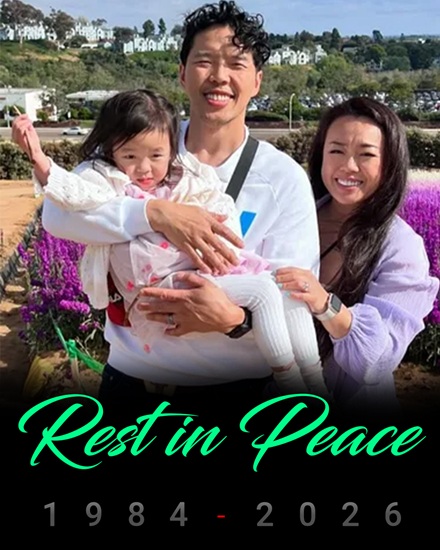
The entertainment industry is mourning the unexpected loss of comedian and actor Alex Duong, who passed away at just 42 years old after a prolonged battle with a rare and aggressive cancer that ultimately led to septic shock.
Alex was best known for his appearances on popular shows like “Jeff Ross Presents Roast Battle” and “Blue Bloods,” where his sharp wit and fearless humor made him a fan favorite across both television and live comedy circuits.
He died peacefully on March 28, 2026, surrounded by family and close friends who had been supporting him throughout his final, intensely challenging months. His passing left colleagues and fans around the world in shock.
Before his diagnosis, Alex’s career was steadily gaining momentum. The Los Angeles-based comedian had a diverse resume, including appearances on Netflix’s Historical Roasts and roles in Pretty Little Liars, proving his versatility as both actor and comic.

Industry insiders noted that Alex was on the verge of a major breakthrough, with plans to perform in 41 states in 2025, as well as discussions about future collaborations tied to Blue Bloods and other scripted projects.
The first sign of trouble came unexpectedly: a persistent headache that initially seemed minor but quickly escalated when his eye began swelling dramatically, signaling a deeper and far more serious medical problem.
After multiple consultations, doctors diagnosed Alex with alveolar rhabdomyosarcoma, a rare and aggressive cancer, which had formed a tumor pressing on his optic nerve, obstructing blood flow and threatening his vision permanently.
A biopsy confirmed the severity of the tumor, and Alex was sent home with an eye patch and a treatment plan that left him frustrated and questioning the healthcare system’s responsiveness to aggressive cancers.
Despite the seriousness of his condition, Alex maintained his characteristic humor, often sharing jokes with friends and fans, demonstrating his commitment to his craft even under extreme physical and emotional strain.
At one point, he joked about comedy shows, saying, “If you want a clean comedy show, you don’t book Doug Stanhope. You’re not gonna book the Legion of Skanks for your Toyotathon,” reflecting his unique comedic perspective.

However, behind the humor, his health was deteriorating rapidly. Within weeks, he lost vision in his left eye, which added to his frustration and anxiety about accessing adequate care and effective treatment options.
Determined to seek better medical support, Alex made the bold decision to leave the hospital in the middle of the night and take an Uber to UCLA at 2 a.m., demonstrating both courage and desperation in the face of life-threatening illness.
He underwent major surgery and multiple rounds of chemotherapy, enduring immense physical pain while trying to remain present for his young daughter, Everest, and maintain some sense of normalcy in his family life.
As the cancer progressed, it spread to his spine, leaving him bedridden and dependent on constant medical care, significantly impacting his mobility, independence, and ability to continue performing professionally.
In December 2025, Alex suffered a seizure in front of Everest, highlighting just how devastating his condition had become and marking a turning point in both his physical health and his family’s emotional journey.
Even during his decline, Alex never lost his voice or his honesty, often expressing that he wanted to continue making people laugh and spending meaningful time with his family rather than being forced into a narrative of forced inspiration.
“I don’t want to be strong! I just want to go tell my d— jokes, make people laugh, and hang out with my family,” he said, emphasizing the importance of authenticity over performative positivity in his final months.

While Alex fought the disease physically, his wife Christina managed the overwhelming emotional and financial burdens, caring for him full-time while also supporting their five-year-old daughter, Everest, and handling household responsibilities.
Medical bills accumulated rapidly, threatening the family’s financial stability. At one point, they faced the very real possibility of losing their home due to mounting expenses and the loss of Alex’s income from performing.
A fundraiser for Alex described their struggle candidly, noting that despite Christina’s best efforts, there was still a financial gap created by Alex’s inability to work and the growing costs associated with his medical care.
Even milestones that should have been joyful, like their daughter’s birthday, were overshadowed by hospital visits, medical procedures, and the stress of navigating a complex, unpredictable health crisis.
On March 27, 2026, an urgent social media update revealed that Alex had gone into septic shock, leaving fans and friends worldwide anxiously awaiting news about his condition and hoping for a miracle.
The following morning, the heartbreaking news came: Alex Duong had passed away peacefully, surrounded by loved ones, with relief that he was no longer suffering and was at peace in his final moments.
He was able to say goodbye to Everest, creating one final, deeply meaningful memory with his daughter, a moment that encapsulated his identity as a devoted father above all else.

After his death, many revisited his social media accounts, and one post, in particular, stood out: photos from Everest’s first school performance, capturing her pride and joy as she held flowers and performed on stage.
The images showed Everest smiling alongside friends, her parents watching from the audience, and the caption read simply: “✨Everest’s first show at school. 💜🫶🏼🥺,” revealing a quiet, intimate moment amid profound tragedy.
At the time, the post seemed like an ordinary proud parent sharing a milestone, but in retrospect, it became a poignant reminder of what Alex held most dear: his daughter’s happiness and the small, precious moments of family life.
There was no dramatic farewell, no public statement of despair—just a simple post highlighting the beauty of everyday life and the love he had for his child, which resonated deeply with fans and followers.
Many social media users reflected on the significance of that post, noting that it symbolized the essence of Alex’s final months: cherishing meaningful moments even as he faced overwhelming illness and uncertainty.
Alex Duong’s story underscores the human side of battling terminal illness, highlighting not only the medical struggles but the emotional realities faced by patients and their families in navigating rare and aggressive diseases.
He leaves behind a legacy of laughter, compassion, and authenticity, reminding the entertainment industry and fans that the personal connections we forge often matter far more than fame or accolades.
His passing also sheds light on the challenges faced by families dealing with catastrophic health crises, from medical costs to emotional strain, and the importance of community support during such times.

The focus on Everest and their family moments reflects a universal truth: even amid loss and suffering, love and family remain central to human experience, and small joys can carry profound meaning.
For those who admired Alex professionally, his dedication to comedy and performance remains a testament to his talent, resilience, and ability to bring joy to audiences even under dire personal circumstances.
Colleagues remember him as a fearless performer, a supportive friend, and a devoted father, whose humor and warmth left an indelible mark on everyone who knew him or experienced his work on screen and stage.
Alex’s approach to sharing life publicly, especially through candid social media posts, emphasized transparency and authenticity, offering a window into the joys and struggles that defined his final months.
The simplicity of his last shared moments, focusing on family and everyday milestones, contrasted sharply with the complex medical and financial challenges he faced, highlighting his priorities and values.
Fans worldwide expressed their grief and admiration for Alex, often reflecting on how his comedic talent and personal authenticity had impacted their own lives, offering laughter and inspiration even in small doses.
Alex Duong’s death is a sobering reminder of the unpredictable nature of life, the fragility of health, and the ways in which even vibrant, talented individuals can be taken too soon by aggressive illness.
His legacy continues through the memories of those he touched, his body of work in comedy and acting, and the enduring love and joy he shared with his daughter, Everest, and family.
In the end, Alex’s story is less about fame or tragedy and more about the small moments that define humanity: love, laughter, and the quiet persistence of family bonds even in the face of overwhelming adversity.
While the entertainment world mourns, his story also encourages reflection on health, family priorities, and the importance of cherishing meaningful experiences while we can, emphasizing empathy and human connection.
Alex Duong will be remembered not only for his talent but for his courage, humor, and unwavering devotion to family, leaving a legacy that transcends his career and continues to inspire those who knew him.
The images of Everest’s first performance stand as a testament to what mattered most in his life, serving as a lasting tribute to a father’s love, a comedian’s heart, and a man who faced unimaginable challenges with dignity.
Even as grief surrounds his passing, the focus on family, laughter, and authenticity provides a lasting lesson in perspective: that life’s most profound meaning often exists in the moments we hold close, quietly and lovingly.
