
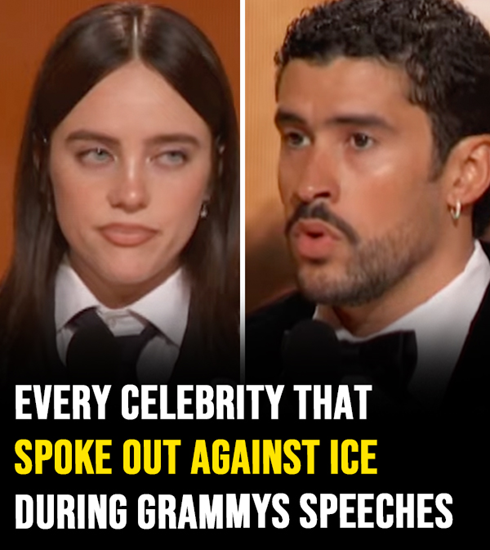
The 2026 Grammy Awards, held on Sunday in Los Angeles, California, showcased not only the brilliance of the music industry but also the growing intersection of entertainment and political activism.
While the evening traditionally celebrates the achievements of artists, songwriters, producers, and industry professionals, this year’s gala also became a platform for artists to voice strong opinions against U.S. immigration policies, particularly the actions of Immigration and Customs Enforcement (ICE) under the Trump administration.
Across the red carpet, on the stage, and in acceptance speeches, several artists used their moment in the spotlight to address immigration issues, including recent controversial ICE operations in cities such as Minneapolis, Saint Paul, and Portland, drawing attention to what they describe as a pattern of systemic overreach and human rights concerns.
ICE in the Spotlight
In recent months, ICE operations in Minneapolis and Saint Paul made headlines after actions that tragically left two people dead, prompting protests and public outcry.
Portland, Oregon, has similarly experienced protests against ICE activities, with some demonstrations ending in confrontations and tear gas deployments. These events have intensified debates about the agency’s role in American cities, particularly in communities with large immigrant populations.
At the Grammys, many artists expressed solidarity with affected communities and called for accountability. Celebrities including Billie Eilish, Carole King, Finneas O’Connell, Justin Bieber, Hailey Bieber, Jason Isbell, Margo Price, Kehlani, and Rhiannon Giddens used pins, apparel, and speeches to convey their opposition to ICE policies and practices.
Red Carpet Statements: “ICE OUT”
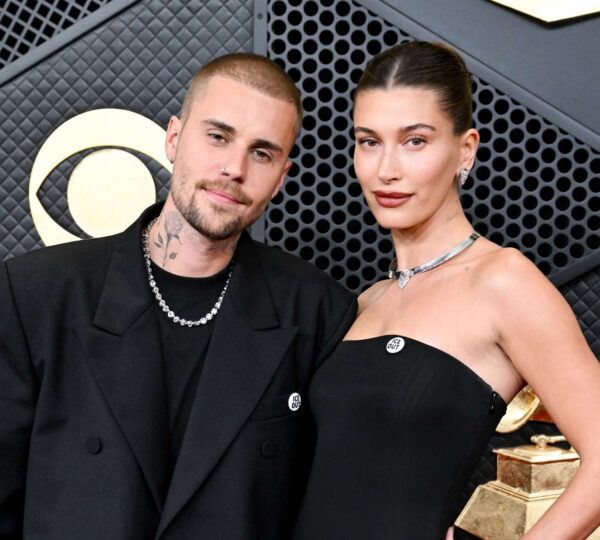
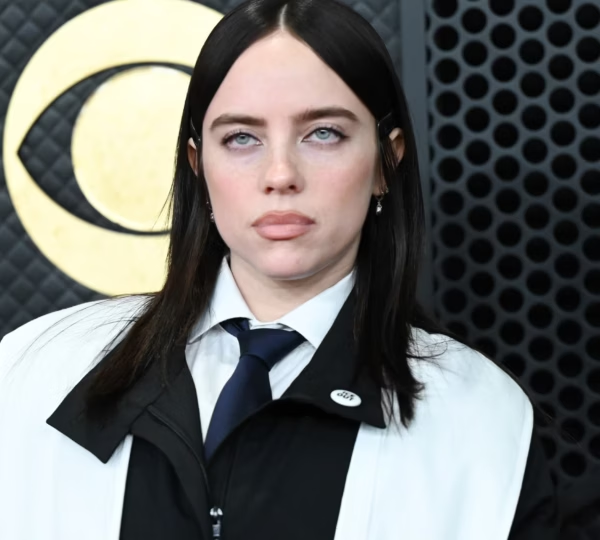
One of the earliest signals of activism came from the red carpet, where multiple artists chose protest pins and apparel to make statements before even entering the awards venue.
Billie Eilish and her brother, Finneas O’Connell, were among those prominently wearing “ICE OUT” pins, signaling their disapproval of ICE operations.
Justin Bieber and Hailey Bieber, who had historically avoided public commentary on American politics, also displayed the pins, demonstrating a notable shift toward activism within high-profile celebrity circles.
Other artists, including Jason Isbell, Margo Price, Kehlani, and Rhiannon Giddens, opted for protest-themed clothing and accessories, further emphasizing the theme of advocacy at an event traditionally focused on entertainment.
Justin Vernon Honors Community Observers
Justin Vernon, the founder and lead singer of the band Bon Iver, also made a statement on the red carpet. Wearing a whistle pin, Vernon explained that it represented solidarity with community observers in Minneapolis, individuals who have been documenting ICE activity to protect their neighborhoods.
In an interview with Variety, Vernon stated: “They are there to protect their community, and they’ve been doing it for weeks. It’s great to stop here and celebrate music and the power of music, but the real work is in the streets of Minneapolis right now, and I’m here to honor them.”
Vernon’s remarks reflected the growing trend of artists using cultural influence to highlight social and political issues, bridging the gap between the music industry and civic engagement.
Billie Eilish and Finneas O’Connell: Song of the Year Speech
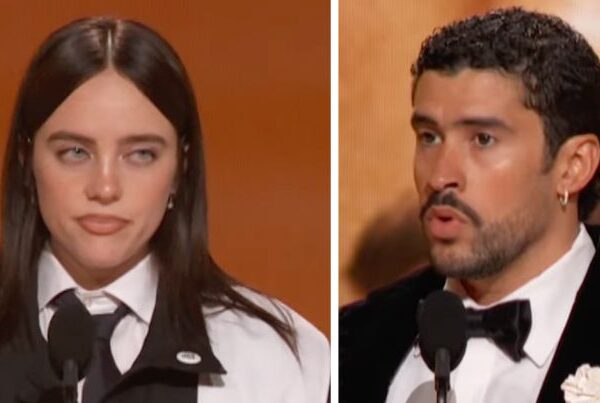
The Grammy winners for Song of the Year, Billie Eilish and her brother Finneas O’Connell, continued the activist theme on stage. Their award-winning song, Wildflower, earned them recognition not only for their musical talent but also for their use of platform to raise awareness about immigration and Indigenous rights.
During her acceptance speech, Billie Eilish said: “I feel so honored every time I get to be in this room. And, as grateful as I feel, I honestly don’t feel like I need to say anything, but that no one is illegal on stolen land … It’s just really hard to know what to say and what to do right now, and I feel really hopeful in this room.”
Her words highlighted both the complexity of discussing immigration policy in the context of cultural events and her desire to acknowledge historical and ongoing injustices while celebrating music.
Olivia Dean: Immigrant Rights on the Grammy Stage
British soul-pop singer Olivia Dean, named Best New Artist, also addressed the intersection of music and immigration. As the granddaughter of an immigrant, Dean emphasized the importance of recognizing and celebrating the contributions of immigrants to society, reinforcing the broader political message emerging from the evening.
“Immigrants deserve to be celebrated,” Dean said, noting her personal connection to the immigrant experience and advocating for a more inclusive understanding of cultural identity within the United States.
Her remarks underscored a trend among young artists to use high-profile platforms to highlight systemic issues while blending personal narrative with public advocacy.
Bad Bunny: “ICE Out” and Human Rights
Latin music superstar Bad Bunny, who recently drew public attention due to criticism from former President Donald Trump ahead of his Super Bowl performance, used his moment to make a powerful statement. Winning the Grammy for Best Música Urbana Album, he began his acceptance speech by declaring: “Before I say thanks to God, I’m gonna say: ICE out.”
Bad Bunny’s remarks continued with an assertion of shared humanity and dignity: “We’re not savage, we’re not animals, we’re not aliens. We are humans and we are Americans.”
His speech drew widespread attention for combining the celebration of musical achievement with social justice advocacy, bridging the gap between cultural influence and political discourse.
Kehlani: First-Time Grammy Winner Calls Out ICE
For Kehlani, winning her first-ever Grammy for Best R&B Performance provided an opportunity to speak out against ICE operations. On stage, she emphasized the importance of artists using their platforms for community activism: “I hope everybody’s inspired to join together as a community of artists and speak out against what’s going on. … Imma leave this and say f— ICE.”
Her direct message reflected the growing willingness among performers to address controversial political topics without hesitation, signaling a shift in how award shows are used as platforms for social commentary.
Broader Context: Music and Political Activism
The 2026 Grammys demonstrate a trend of increasing activism within the music industry, as performers integrate political messages into red carpet appearances, speeches, and performances.
While entertainment awards have always had elements of political expression, the explicit targeting of ICE operations, combined with historical immigration concerns, highlights the contemporary urgency of these issues.
Protests against ICE and other federal agencies have escalated in several American cities. Minneapolis, Saint Paul, and Portland have seen significant civic responses, including demonstrations, legal challenges, and local advocacy.
By bringing these issues to a global entertainment stage, artists are amplifying local struggles to international audiences, using the visibility of the Grammys to raise awareness and encourage public engagement.
Celebrity Influence and Public Reaction
The prominent use of political messaging at high-profile cultural events has sparked both praise and controversy. Fans and advocacy groups lauded artists for using their influence to highlight pressing social issues.
Social media platforms were filled with commentary, with hashtags related to immigration and ICE trending following the awards.
Conversely, some commentators questioned the appropriateness of political commentary in entertainment settings, reflecting ongoing debates about the role of celebrities in public discourse. Despite differing opinions, the Grammys clearly provided a high-impact stage for artists to combine artistic achievement with social advocacy.
Conclusion: A Night of Music and Advocacy
The 2026 Grammy Awards were marked not only by celebration of artistic excellence but also by a distinctively activist tone, as performers and attendees highlighted immigration policy concerns and the impact of ICE operations across the United States.
From red carpet pins to stage speeches, the event illustrated how music and social activism increasingly intersect in contemporary culture.
Artists including Billie Eilish, Finneas O’Connell, Olivia Dean, Bad Bunny, Kehlani, Justin Vernon, and others used their platforms to acknowledge ongoing community struggles, advocate for immigrant rights, and honor those confronting ICE operations on the ground.
Their speeches and public appearances reflected a broader movement in which cultural figures actively engage with political issues, emphasizing the power of visibility and influence in shaping public discourse.
Ultimately, the 2026 Grammys served as a reminder that entertainment spaces can also be spaces for advocacy, where voices from across genres and backgrounds converge to highlight critical social concerns while celebrating the artistry that unites them.
