
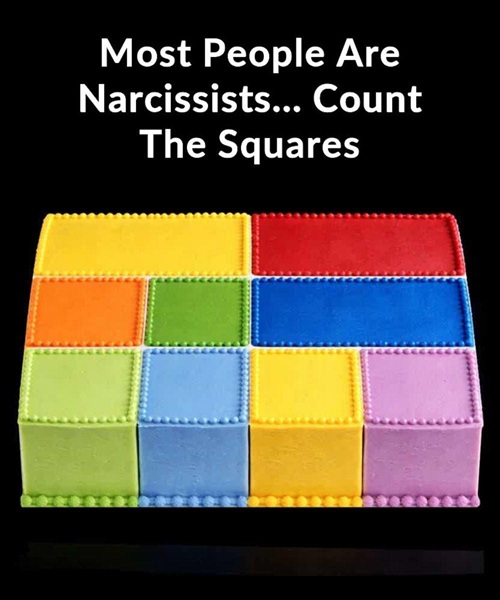
At first glance, it’s the kind of image you might scroll past on social media and smirk at — a bright stack of geometric blocks arranged neatly in a pattern, with a caption daring you:
It reads like a harmless brain teaser. You glance at it, quickly tally the squares you see, and move on. The puzzle seems simple, even trivial.
Count the squares, drop a number, and scroll to the next post. But the moment you stop and actually try to count, something curious happens. Suddenly, the task feels slippery.
The numbers don’t seem to match your expectations. You might start second-guessing yourself, or notice squares you hadn’t considered before.
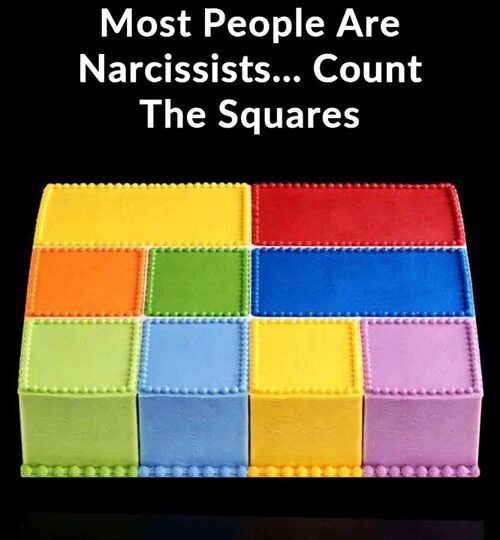
Some people get frustrated. Others pause, inspecting the structure from multiple angles. The puzzle, simple on the surface, becomes a small mirror — reflecting not just perception, but personality, attention, and even ego.
The Mechanics of the Puzzle
At face value, these puzzles are visual exercises. They usually involve stacked squares — often in 2D or pseudo-3D arrangements — with blocks that overlap or partially obscure one another.
Some faces are clearly visible; others are implied by edges or shadows. The challenge isn’t arithmetic complexity; it’s visual analysis.
Here’s why it’s tricky:
-
Top-facing squares — These are the squares that immediately draw the eye. They are the surface layers, often appearing as a simple grid.
-
Front-facing squares — Squares on the front or side planes that are partially visible can be overlooked if the brain focuses only on the top layer.
-
Hidden or implied squares — The puzzle may include squares that exist conceptually in the structure but aren’t fully visible in the image. Counting these requires imagining the full 3D structure.
Even if you are mathematically astute, the answer depends on what you consider “countable.” The ambiguity is deliberate: it reveals something about how your brain processes information.
Why People Count Differently
Human perception is not like a camera recording everything equally. Our brains filter, prioritize, and interpret sensory information constantly.
This filtering helps us conserve energy, make rapid decisions, and navigate a world that is far more complex than we could process if we noticed everything at once.
When faced with a “count the squares” puzzle:
-
Most people respond fast, tallying only the top-facing squares. Their instinct is efficiency: see the most obvious, trust the gut, submit an answer.
-
Others slow down, including visible front-facing squares. They’re slightly more cautious, accounting for perspective and depth.
-
A smaller group becomes hyper-analytical, seeking partial faces, overlaps, and implied structures. They ask themselves: Does a partially visible square count? How do I treat corners that are shared by two layers?
All of these approaches are valid — but they yield different answers. The divergence isn’t about intelligence or attention span; it’s about how the brain defines the task.
Consider three implicit ways someone might interpret the puzzle:
-
“Count the squares I can clearly see.” This is the most straightforward, surface-level approach.
-
“Count every square face visible from any angle.” This includes the sides and layers that are partially visible.
-
“Count all squares in the structure, including hidden or implied ones.” This requires imagining the 3D structure as a whole.
Each approach produces a different number. When people debate these answers online, it often escalates into arguments — not because someone is wrong, but because their mental definitions of the task differ.
The “Narcissism” Angle
The caption claiming that “Most People Are Narcissists” isn’t scientifically meaningful — it’s intentionally provocative. It taps into a social trigger: the idea that your perception reveals something about your character.
Psychologically, this is clever. As soon as people feel evaluated, they shift from curiosity to defensiveness. You see this instantly in comment threads:
-
“No, it’s definitely 8.”
-
“I counted carefully; you’re overthinking it.”
-
“That doesn’t count because it’s not fully visible.”
Notice what happens: the puzzle, initially a neutral brain teaser, becomes an identity test. Ego kicks in. People argue, not over squares, but over being right.
Clinically, narcissism is a specific personality trait characterized by inflated self-importance, need for admiration, and low empathy.
Most people are not narcissists. But the puzzle cleverly exposes a common human behavior: the impulse to protect one’s ego when challenged, even in trivial circumstances.
Cognitive Bias at Work
The differences in square counts are also a lesson in cognitive bias:
-
Confirmation bias: Once you see a number that “feels right,” you are inclined to stick with it, discounting evidence that suggests otherwise.
-
Anchoring: Your first impression sets a mental anchor, making it difficult to adjust your count after seeing additional information.
-
Selective attention: You see what seems relevant first, ignoring less obvious details.
These biases, while adaptive in daily life, can mislead you in puzzles. They show how perception and decision-making are intertwined, influenced by prior expectations, context, and even emotional responses.
Counting Methods Explained
To illustrate, let’s imagine a simplified puzzle: a 3×3 stack of squares, arranged in layers.
Scenario 1: Top-facing squares only
-
You see 9 squares on the top layer.
-
Total count = 9.
Scenario 2: Top-facing + front-facing
-
Top layer = 9
-
Middle layer (partially visible fronts) = 4
-
Bottom layer (corners visible) = 1
-
Total count = 14
Scenario 3: Total squares including hidden
-
Top = 9
-
Middle = 9
-
Bottom = 9
-
Total = 27
Depending on your approach, the answer varies dramatically. And most people do not pause to specify which definition they are using, which explains why arguments escalate in comment threads.
Lessons for Real Life
The “count the squares” puzzle is a microcosm of human perception and social interaction. The principles at play extend far beyond a simple visual challenge:
-
Perspective Matters
-
Two people can view the same situation and arrive at different conclusions.
-
Instead of assuming the other is wrong, curiosity and clarification are more productive.
-
-
Define Your Terms
-
Miscommunication often arises from unspoken assumptions.
-
In life, business, or debates, clarify what is meant before arguing about outcomes.
-
-
Attention vs. Ego
-
Are you engaging deeply with the task, or are you defending your self-image?
-
Many conflicts are ego-driven, not fact-driven.
-
-
Patience is Key
-
The best solutions emerge when you slow down, examine details, and consider multiple angles.
-
This puzzle rewards both attention and humility: look carefully, accept alternative counts, and learn from the process.
-
Why People Love Optical Puzzles
Puzzles like this are fascinating because they exploit the brain’s natural habits:
-
Our brain seeks efficiency. It prioritizes what seems immediately relevant.
-
It forms quick conclusions, treating first impressions as sufficient.
-
It assumes simplicity — often ignoring hidden layers or subtle complexity.
This is why optical illusions, visual riddles, and puzzles like “count the squares” spread widely on social media. They are engaging, shareable, and subtly revealing.
The puzzle isn’t testing math, intelligence, or actual narcissism. It’s testing how you perceive reality, process complexity, and handle uncertainty.
The Real Punchline
Without the actual image, giving a definitive count is impossible. Every version of this puzzle has unique layouts, overlaps, and layers. But that’s the point: the most important square isn’t the one in the image.
The real lesson is about how you approach challenges:
-
Do you pause to consider multiple angles, or settle on the first answer?
-
Do you respond with curiosity, or defensiveness, when confronted with a different perspective?
Growth, insight, and problem-solving begin when you are willing to look again, reconsider, and question assumptions — whether it’s a visual puzzle or a real-world problem.
Practical Exercise: How to Count Wisely
If you want to engage with these puzzles intentionally:
-
Define your counting rules upfront
-
Are you counting top-facing only, visible sides, or total implied squares?
-
-
Use a systematic method
-
Count row by row, layer by layer. Mark squares already counted to avoid duplication.
-
-
Consider alternative perspectives
-
Rotate the image mentally or imagine the 3D structure.
-
-
Check assumptions
-
What constitutes a “square”? Full face only? Partial? Hidden?
-
-
Compare with others calmly
-
Recognize differences in approach as opportunities to learn, not as personal attacks.
-
Beyond Squares: Cognitive Lessons
-
Attention and Detail
-
Many people skip subtleties; the puzzle rewards patience and observation.
-
-
Humility and Curiosity
-
Seeing another answer doesn’t invalidate yours. It can expand understanding.
-
-
Self-awareness
-
Notice when ego drives your response. The first instinct often is to defend, not explore.
-
-
Decision-making under ambiguity
-
Life is full of partially visible “squares” — incomplete data, unseen consequences, hidden motives.
-
In other words, a puzzle about squares is also a puzzle about the human mind.
Conclusion: The Most Important Square
These simple optical puzzles are deceptively profound. They reveal how attention, definition, and perspective shape understanding.
They show how ego subtly influences decisions. They demonstrate why collaboration, clarity, and patience matter in any complex system — from problem-solving at work to personal relationships.
The next time you encounter a “count the squares” challenge, remember: the puzzle is not about numbers. It’s about how you approach complexity, uncertainty, and disagreement.
And when you pause, look again, and consider the perspective of others, you may discover that the most important square was never on the picture at all.
It was in your decision to see clearly, reconsider, and grow.
