
Hospital corridors can be places of quiet anticipation, hushed conversations, and undercurrents of fear. For five-year-old Tommy Chen, a bright-eyed.
Energetic child with a love for building blocks and picture books, the sterile hallways of St. Mary’s Children’s Hospital felt daunting and intimidating.
Every beep of a monitor, every shuffle of nurses’ shoes, every muffled announcement over the PA system seemed louder and heavier when he lay confined to a hospital bed, awaiting one of the most critical moments of his young life: a complex heart surgery that represented not just a medical procedure, but his only chance at survival.
Tommy’s condition was severe. Born with a congenital heart defect, his small body had struggled for years with diminished oxygen flow, fatigue, and episodes of breathlessness.
Doctors had monitored him closely, adjusting medications, running tests, and carefully planning the next steps in his treatment.
But this upcoming surgery was particularly delicate, requiring precision, skill, and full alertness from the surgical team. Even a minor lapse could carry life-or-death consequences.
Despite his tender age, Tommy understood — in the way children do — that the moment was serious. He wasn’t oblivious to the tubes, the monitors, or the unfamiliar faces in scrubs who hovered around him.
He wasn’t entirely unaware of the stakes. Yet, beneath his nervous anticipation, he carried a quiet bravery that only a child with such a journey could muster.
The Comfort of a Friend
Tommy’s mother, Li Chen, and his father, Michael Chen, held hands tightly beside his bed, exchanging silent prayers.
The atmosphere was a tense mix of sterile order and raw emotion — nurses moved efficiently, doctors conferred softly, and monitors hummed in rhythm with the anxious beating of hearts in the room.
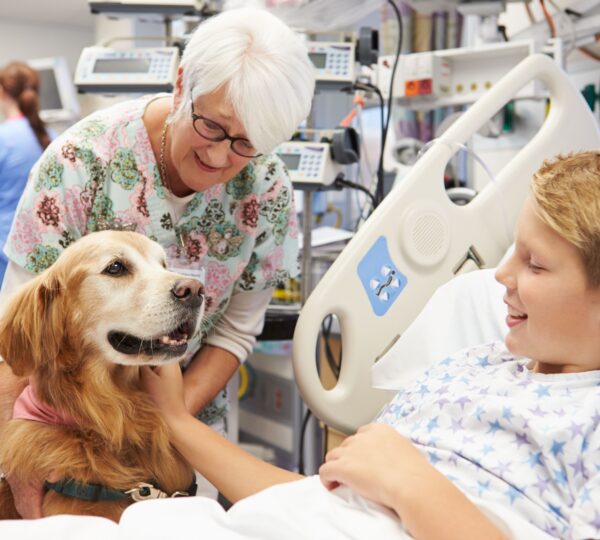
But amid all the medical machinery and procedure checklists, there was one constant source of comfort for Tommy: Archie, his faithful Golden Retriever.
Archie had been part of Tommy’s life since he was a toddler, a gentle companion who provided unconditional love, reassurance, and stability through every hospital visit, doctor’s appointment, and sleepless night.
Where humans sometimes felt clinical or hurried, Archie offered a calming presence, the kind that needed no words. He understood Tommy in a way that transcended language: when Tommy was anxious, Archie was still;
when Tommy laughed, Archie wagged his tail. He was more than a pet; he was a silent guardian, a confidant, and a source of unspoken courage.
As the surgery approached, Tommy’s anxiety intensified. Clutching a small stuffed rabbit named BunBun, he whispered to the nurse beside him, “Can… Archie come to me?
I might never see him again.” It was a simple request, but it carried a weight far beyond his words — the desire for familiar comfort in a world that suddenly felt clinical and frightening.
Hospital staff recognized the importance of the request. They knew that therapy dogs had profound effects on patient anxiety, particularly in pediatric settings, and that the emotional stability provided by such animals could impact physiological responses, from heart rate to cortisol levels. Without hesitation, Archie was brought into the room.
A Moment of Pure Relief
The door opened, and Archie padded into the room, his golden coat glimmering under the hospital lights. Tommy’s face lit up instantly, a radiant smile breaking through weeks of fear and tension.
He reached out, wrapping his small arms around Archie’s neck, burying his face in the dog’s fur. In that moment, the sterile room seemed warmer, brighter, and safer. Even the attending nurses paused, touched by the palpable connection between boy and dog.
For Tommy, Archie’s presence was not merely comforting; it was grounding. He felt a sense of protection, reassurance, and companionship that no medical intervention could provide.
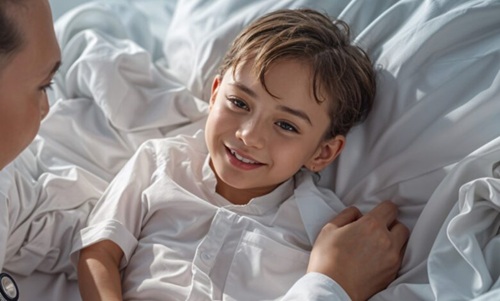
His parents exhaled, some of their tension melting away as they witnessed their son’s rare, genuine smile. This fleeting moment of joy and peace was a reminder of why therapy animals are so essential in hospitals — they heal not just the body but the spirit.
⚠️ An Unexpected Warning
But what happened next stunned everyone. Archie, who had always been gentle and composed, suddenly tensed. A low, guttural growl escaped his throat.
His tail stiffened, his ears perked, and his body shifted as he lunged toward Dr. Hawthorne, the lead surgeon who was preparing for Tommy’s operation.
Teeth bared in a rare display of aggression, Archie issued a clear warning that something was wrong.
The medical team froze in disbelief. How could a friendly therapy dog — trained specifically to remain calm in hospital settings — react in such a threatening manner toward a member of the staff?
There was no immediate explanation. The room felt electric with tension, uncertainty, and a flicker of fear.
It didn’t take long for the truth to emerge. Dogs’ senses far surpass human capabilities, particularly their sense of smell.
While humans perceive scent in narrow bands, dogs detect subtle chemical variations, including the presence of alcohol, medications, and even metabolic changes. Archie had picked up something alarming: Dr. Hawthorne smelled strongly of alcohol.
In a normal hospital check, this might have been overlooked. Surgeons are trusted implicitly to maintain focus and sobriety, and the routine of preparation can lull even senior staff into overconfidence.
If the surgery had proceeded with an impaired surgeon, the outcome could have been catastrophic.
Thanks to Archie’s intervention, hospital administrators acted immediately. Dr. Hawthorne was removed from the case, and the surgery was postponed.
A new surgeon, carefully vetted and verified for sobriety and preparedness, was assigned to perform the procedure.
A Successful Surgery and Recovery
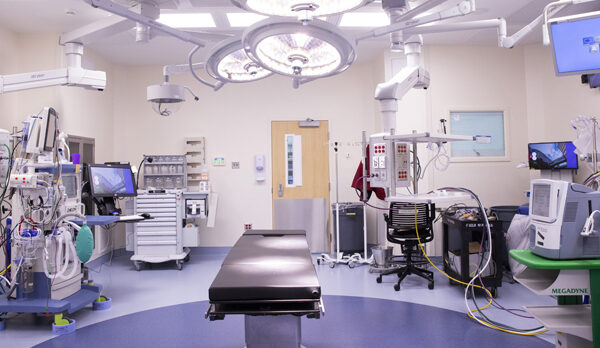
When Tommy finally entered the operating room again, the environment was calm, the staff focused, and the surgical team prepared with precision.
The surgery, a delicate procedure requiring skilled bypass techniques and meticulous attention to Tommy’s fragile physiology, proceeded without complication.
Hours later, the procedure was declared a success. Tommy’s heart was repaired, his vital signs stable, and he began the slow, steady process of recovery.
The Chen family felt overwhelming relief and gratitude. They recognized that Archie’s instincts had prevented what could have been a fatal mistake, and that the dog’s loyalty had changed the course of their child’s life.
Nurses, doctors, and staff were equally moved, reflecting on the profound, tangible impact of animals in healing spaces.
The Birth of the Archie Foundation
Inspired by Archie’s bravery and the vital role therapy animals can play in medical settings, the Chen family established the Archie Foundation, a nonprofit organization dedicated to bringing therapy dogs into hospitals nationwide. Their mission is multifaceted:
-
Emotional Support: Therapy dogs provide companionship to patients of all ages, helping reduce anxiety and stress.
-
Comfort During Treatment: Children facing invasive procedures experience less fear when accompanied by trained animals.
-
Family Support: Hospital stays affect entire families; therapy dogs provide solace to parents and siblings as well.
-
Training and Certification: The foundation trains dogs to recognize cues of patient stress, maintain calm under pressure, and follow strict hygiene and hospital protocols.
Since its founding, the Archie Foundation has expanded its reach, providing therapy dogs to children’s hospitals, oncology units, and rehabilitation centers across multiple states.
Hundreds of patients and families have benefited, experiencing the soothing, life-affirming presence of animals trained for empathy, patience, and attentiveness.
Impact Beyond the Hospital
Tommy’s story also highlighted systemic issues in patient safety. The discovery that a surgeon was impaired prompted hospitals to reassess their monitoring protocols, staff screening procedures, and oversight mechanisms.
Administrators implemented additional safeguards, ensuring that all surgical staff undergo regular checks for sobriety, stress levels, and alertness prior to procedures.
By emphasizing vigilance and accountability alongside the human-animal connection, Tommy’s experience underscored the intersection of compassion, instinct, and professional responsibility.
It demonstrated how even the smallest signals — in this case, Archie’s behavior — can prevent potentially devastating errors.
A Lasting Legacy of Hope
Years later, Tommy Chen is a healthy, energetic child who often visits hospitals alongside Archie. Together, they share their story with children facing medical challenges, inspiring hope and resilience.
Children meet a boy who has faced life-threatening illness and a dog whose loyalty and intuition helped him survive.
Tommy’s parents continue to advocate for therapy animals, speaking at conferences, hospitals, and community events.
They emphasize the unique bond between humans and animals, noting that this connection can lower anxiety, stabilize vital signs, and provide emotional healing that medicine alone cannot always achieve.
For children facing surgeries, long-term treatments, or chronic conditions, the Archie Foundation has become a symbol of courage, comfort, and resilience.
The organization also provides training for medical staff on how to incorporate therapy dogs effectively and safely into patient care routines.
The Lesson of Archie
Tommy Chen’s story is more than an anecdote of a heroic dog. It is a lesson about vigilance, empathy, and the often-overlooked power of non-human companions.
Archie’s instincts safeguarded a child’s life, while his presence reminded everyone in that hospital room — doctors, nurses, and parents alike — that healing extends beyond surgical skill and medicine.
In the quiet moments before surgery, in the grip of fear and uncertainty, the steadfast companionship of a loyal animal can provide strength, hope, and courage.
Archie’s actions that day saved a life, shaped a family’s future, and launched a foundation that continues to touch countless lives.
True heroism, it seems, does not always come with medals or accolades. Sometimes, it comes on four legs, with fur that glows in the light of hospital corridors, a wagging tail that signals unwavering loyalty, and a heart attuned to the subtle signs of danger.
✅ Conclusion
The extraordinary story of Tommy Chen and Archie demonstrates that heroes can appear in unexpected forms. It bridges human and animal intuition, showing how vigilance, love, and connection can literally save lives.
The Archie Foundation ensures that children, like Tommy, have access to that same comfort and protection.
This story also serves as a reminder to medical institutions worldwide: safeguarding patients requires both rigorous procedures and attention to subtle, often unexpected cues.
The collaboration of skilled professionals and instinctive, compassionate companions can create a safety net that saves lives and fosters hope in the most challenging circumstances.
In the end, Tommy’s recovery, Archie’s loyalty, and the creation of a foundation dedicated to healing through therapy dogs stand as a testament to the power of courage, empathy, and vigilance — lessons that extend far beyond the hospital walls.
And in every child’s smile, every hug of a therapy dog, and every quiet reassurance in a hospital room, the legacy of Archie’s heroism continues.
