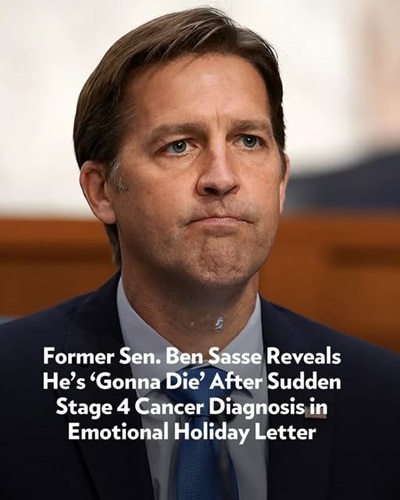
Former U.S. Senator Ben Sasse, a prominent Republican from Nebraska, revealed in a deeply emotional letter this week that he has been diagnosed with terminal stage 4 pancreatic cancer.
The 53-year-old politician shared his prognosis on X (formerly Twitter) on Tuesday, December 23, 2025, in a candid post that reflected both sorrow and resilience.
“Last week I was diagnosed with metastasized, stage-four pancreatic cancer, and am gonna die,” Sasse wrote.
His words, stark in their honesty, immediately drew widespread attention, as followers and constituents alike grappled with the devastating news.
He continued: “Advanced pancreatic is nasty stuff; it’s a death sentence. But I already had a death sentence before last week too — we all do.”
Sasse’s letter, sent during the holiday season, reflects a combination of personal reflection, familial gratitude, and spiritual contemplation.
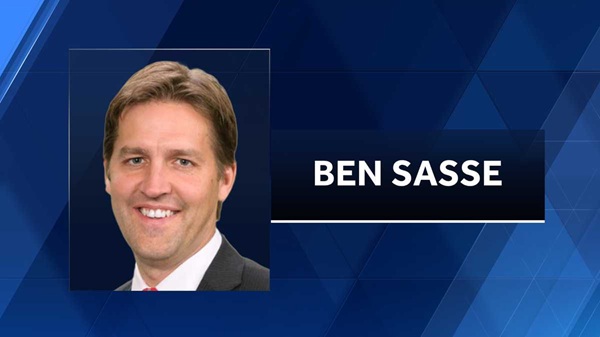
In it, he emphasized the inevitability of death and the value of close relationships. “I’m blessed with amazing siblings and half-a-dozen buddies that are genuinely brothers.
As one of them put it, ‘Sure, you’re on the clock, but we’re all on the clock.’ Death is a wicked thief, and the bastard pursues us all.”
A Life in Public Service
Ben Sasse served as the junior United States Senator for Nebraska from 2015 to 2023.
Known for his independent streak within the Republican Party, Sasse became a prominent voice in national politics, often taking positions that diverged from party lines.
One notable example was his vote to convict former President Donald Trump during the second impeachment trial in 2021, a decision that drew both criticism and praise from across the political spectrum.
Before his tenure in the Senate, Sasse held various leadership roles in academia and public policy, including serving as president of the University of Florida.
He stepped down from that position last year to focus on family matters after his wife was diagnosed with epilepsy, demonstrating his commitment to prioritizing loved ones over professional obligations.
His career trajectory reflects a blend of political engagement, academic leadership, and personal conviction.
Facing a Grim Diagnosis
Pancreatic cancer, particularly in its late stages, is one of the deadliest forms of cancer. According to the National Cancer Institute, it ranks as the third leading cause of cancer-related deaths in the United States.
It is often detected too late for curative treatment, primarily because it produces few noticeable symptoms in its early stages.
Currently, the five-year survival rate for pancreatic cancer remains below 13%, making early detection and treatment particularly challenging.

Sasse’s diagnosis of stage 4 pancreatic cancer indicates that the disease has metastasized, or spread to other parts of the body.
This stage is generally considered terminal, though advances in medical research, immunotherapy, and targeted treatments have provided some patients with extended survival and improved quality of life.
Despite the gravity of his prognosis, Sasse expressed determination and hope in his letter.
Personal Reflections and Family Support
In his message, Sasse reflected on the impact of his diagnosis on his role as a husband and father. “I’ve got less time than I’d prefer, and it’s hard to cope with that as a husband and father,” he admitted.
Yet, amid this personal struggle, he emphasized the importance of family and community, praising his siblings, friends, and immediate family for their unwavering support.
“There’s not a good time to tell your peeps you’re now marching to the beat of a faster drummer — but the season of advent isn’t the worst,” he wrote, linking his personal experience to the broader context of his Christian faith.
Sasse described the weeks leading up to Christmas as a period for orienting the heart toward hope, acknowledging the spiritual dimension of his journey.
He made a distinction between hope and optimism, noting: “Not an abstract hope in fanciful human goodness; not hope in vague hallmark-sappy spirituality; not a bootstrapped hope in our own strength…
Often we lazily say ‘hope’ when what we mean is ‘optimism.’ To be clear, optimism is great, and it’s absolutely necessary, but it’s insufficient
. It’s not the kinda thing that holds up when you tell your daughters you’re not going to walk them down the aisle. Nor telling your mom and pops they’re gonna bury their son.”
In this reflection, Sasse conveyed both the harsh realities of terminal illness and the deeper spiritual and emotional resources that help sustain individuals and families through such moments.
His words resonate with anyone grappling with the fragility of life, the inevitability of mortality, and the enduring value of connection and love.

Faith, Humor, and Courage in the Face of Death
Sasse’s letter was not only an announcement of his illness but also a meditation on faith, humor, and resilience.
He wrote: “A well-lived life demands more reality — stiffer stuff. That’s why, during advent, even while still walking in darkness, we shout our hope — often properly with a gravelly voice soldiering through tears.”
He underscored the role of science and modern medicine in his fight, mentioning recent advances in immunotherapy as a source of hope.
“One sub-part of God’s grace is found in the jaw-dropping advances science has made the past few years in immunotherapy and more,” he said.
“Death and dying aren’t the same — the process of dying is still something to be lived. We’re zealously embracing a lot of gallows humor in our house, and I’ve pledged to do my part to run through the irreverent tape.”
Sasse’s openness about the emotional and spiritual complexities of facing death is striking.
Rather than presenting a sanitized narrative, he conveyed both vulnerability and courage, illustrating how faith, humor, and familial love can coexist even in the darkest of times.
A Message of Peace and Gratitude
The senator concluded his letter by extending a message of peace and hope for the holiday season. “But for now, as our family faces the reality of treatments, but more importantly as we celebrate Christmas, we wish you peace: ‘The people walking in darkness have seen a great light; on those living in the land of deep darkness a light has dawned…
For to us a son is given’ (Isaiah 9),” he wrote. He signed off with gratitude and humility: “With great gratitude, and with gravelly-but-hopeful voices, Ben — and the Sasses.”
Sasse’s heartfelt reflections highlight a fundamental truth: the confrontation with mortality often brings into sharper focus the things that matter most—family, faith, friendship, and the pursuit of meaning.
His letter, while deeply personal, also serves as a universal reminder of the human capacity for resilience, hope, and gratitude even in the face of seemingly insurmountable challenges.
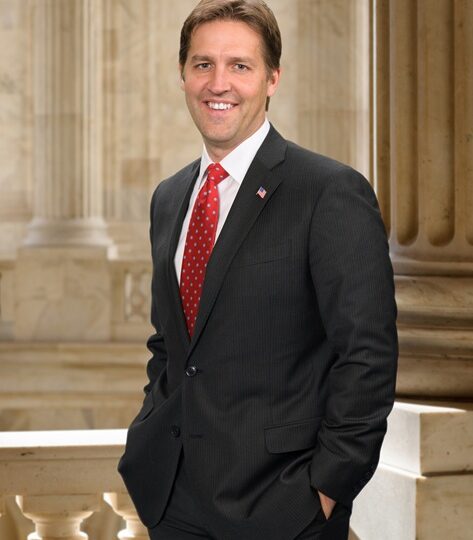
Understanding Pancreatic Cancer
Pancreatic cancer is a formidable disease largely due to its silent progression. Early-stage pancreatic cancer often presents with vague symptoms such as abdominal discomfort, fatigue, or unexplained weight loss.
By the time more severe symptoms appear—jaundice, intense abdominal pain, or digestive issues—the cancer is frequently advanced and has spread to other organs.
This late detection is a major reason why survival rates remain low despite significant advances in medical research.
Treatment options for pancreatic cancer typically include surgery, chemotherapy, radiation therapy, and increasingly, immunotherapy and targeted therapies.
Stage 4 pancreatic cancer, in particular, is challenging because the cancer has already metastasized beyond the pancreas, often affecting the liver, lungs, or other organs.
While treatment may not be curative at this stage, it can provide symptom relief, slow progression, and in some cases, extend life.
Legacy and Public Impact
Sasse’s public disclosure of his illness reflects a broader trend among public figures who choose transparency about their health challenges.
By sharing his diagnosis, he not only informs his supporters but also raises awareness about pancreatic cancer—a disease that claims tens of thousands of lives each year yet remains relatively unknown to the general public.
Throughout his career, Sasse has been a voice for thoughtful discourse, ethical leadership, and civic responsibility.
His openness about his illness now adds another dimension to his public legacy, demonstrating vulnerability, courage, and an unwavering commitment to family and faith.

Final Thoughts
Ben Sasse’s revelation is a sobering reminder of the fragility of life, the inevitability of mortality, and the profound importance of love, friendship, and faith.
While the prognosis he faces is grim, his message is one of hope, courage, and reflection. In sharing his journey, Sasse invites us to contemplate our own lives, priorities, and the ways in which we confront life’s ultimate challenges.
As he and his family navigate the difficult path ahead, the public is offered a rare glimpse into the deeply human experience of facing terminal illness with honesty, dignity, and grace.
In doing so, Ben Sasse not only shares his personal story but also enriches the broader conversation about mortality, faith, and resilience in the modern age.
Former U.S. Senator Ben Sasse, a prominent Republican from Nebraska, revealed in a deeply emotional letter this week that he has been diagnosed with terminal stage 4 pancreatic cancer.
The 53-year-old politician shared his prognosis on X (formerly Twitter) on Tuesday, December 23, 2025, in a candid post that reflected both sorrow and resilience.
“Last week I was diagnosed with metastasized, stage-four pancreatic cancer, and am gonna die,” Sasse wrote.
His words, stark in their honesty, immediately drew widespread attention, as followers and constituents alike grappled with the devastating news.
He continued: “Advanced pancreatic is nasty stuff; it’s a death sentence. But I already had a death sentence before last week too — we all do.”
Sasse’s letter, sent during the holiday season, reflects a combination of personal reflection, familial gratitude, and spiritual contemplation.
In it, he emphasized the inevitability of death and the value of close relationships. “I’m blessed with amazing siblings and half-a-dozen buddies that are genuinely brothers.
As one of them put it, ‘Sure, you’re on the clock, but we’re all on the clock.’ Death is a wicked thief, and the bastard pursues us all.”
A Life in Public Service
Ben Sasse served as the junior United States Senator for Nebraska from 2015 to 2023.
Known for his independent streak within the Republican Party, Sasse became a prominent voice in national politics, often taking positions that diverged from party lines.
One notable example was his vote to convict former President Donald Trump during the second impeachment trial in 2021, a decision that drew both criticism and praise from across the political spectrum.
Before his tenure in the Senate, Sasse held various leadership roles in academia and public policy, including serving as president of the University of Florida.
He stepped down from that position last year to focus on family matters after his wife was diagnosed with epilepsy, demonstrating his commitment to prioritizing loved ones over professional obligations.
His career trajectory reflects a blend of political engagement, academic leadership, and personal conviction.
Facing a Grim Diagnosis
Pancreatic cancer, particularly in its late stages, is one of the deadliest forms of cancer. According to the National Cancer Institute, it ranks as the third leading cause of cancer-related deaths in the United States.
It is often detected too late for curative treatment, primarily because it produces few noticeable symptoms in its early stages.
Currently, the five-year survival rate for pancreatic cancer remains below 13%, making early detection and treatment particularly challenging.
Sasse’s diagnosis of stage 4 pancreatic cancer indicates that the disease has metastasized, or spread to other parts of the body.
This stage is generally considered terminal, though advances in medical research, immunotherapy, and targeted treatments have provided some patients with extended survival and improved quality of life.
Despite the gravity of his prognosis, Sasse expressed determination and hope in his letter.
Personal Reflections and Family Support
In his message, Sasse reflected on the impact of his diagnosis on his role as a husband and father. “I’ve got less time than I’d prefer, and it’s hard to cope with that as a husband and father,” he admitted.
Yet, amid this personal struggle, he emphasized the importance of family and community, praising his siblings, friends, and immediate family for their unwavering support.
“There’s not a good time to tell your peeps you’re now marching to the beat of a faster drummer — but the season of advent isn’t the worst,” he wrote, linking his personal experience to the broader context of his Christian faith.
Sasse described the weeks leading up to Christmas as a period for orienting the heart toward hope, acknowledging the spiritual dimension of his journey.
He made a distinction between hope and optimism, noting: “Not an abstract hope in fanciful human goodness; not hope in vague hallmark-sappy spirituality; not a bootstrapped hope in our own strength…
Often we lazily say ‘hope’ when what we mean is ‘optimism.’ To be clear, optimism is great, and it’s absolutely necessary, but it’s insufficient
. It’s not the kinda thing that holds up when you tell your daughters you’re not going to walk them down the aisle. Nor telling your mom and pops they’re gonna bury their son.”
In this reflection, Sasse conveyed both the harsh realities of terminal illness and the deeper spiritual and emotional resources that help sustain individuals and families through such moments.
His words resonate with anyone grappling with the fragility of life, the inevitability of mortality, and the enduring value of connection and love.
Faith, Humor, and Courage in the Face of Death
Sasse’s letter was not only an announcement of his illness but also a meditation on faith, humor, and resilience.
He wrote: “A well-lived life demands more reality — stiffer stuff. That’s why, during advent, even while still walking in darkness, we shout our hope — often properly with a gravelly voice soldiering through tears.”
He underscored the role of science and modern medicine in his fight, mentioning recent advances in immunotherapy as a source of hope.
“One sub-part of God’s grace is found in the jaw-dropping advances science has made the past few years in immunotherapy and more,” he said.
“Death and dying aren’t the same — the process of dying is still something to be lived. We’re zealously embracing a lot of gallows humor in our house, and I’ve pledged to do my part to run through the irreverent tape.”
Sasse’s openness about the emotional and spiritual complexities of facing death is striking.
Rather than presenting a sanitized narrative, he conveyed both vulnerability and courage, illustrating how faith, humor, and familial love can coexist even in the darkest of times.
A Message of Peace and Gratitude
The senator concluded his letter by extending a message of peace and hope for the holiday season. “But for now, as our family faces the reality of treatments, but more importantly as we celebrate Christmas, we wish you peace: ‘The people walking in darkness have seen a great light; on those living in the land of deep darkness a light has dawned…
For to us a son is given’ (Isaiah 9),” he wrote. He signed off with gratitude and humility: “With great gratitude, and with gravelly-but-hopeful voices, Ben — and the Sasses.”
Sasse’s heartfelt reflections highlight a fundamental truth: the confrontation with mortality often brings into sharper focus the things that matter most—family, faith, friendship, and the pursuit of meaning.
His letter, while deeply personal, also serves as a universal reminder of the human capacity for resilience, hope, and gratitude even in the face of seemingly insurmountable challenges.
Understanding Pancreatic Cancer
Pancreatic cancer is a formidable disease largely due to its silent progression. Early-stage pancreatic cancer often presents with vague symptoms such as abdominal discomfort, fatigue, or unexplained weight loss.
By the time more severe symptoms appear—jaundice, intense abdominal pain, or digestive issues—the cancer is frequently advanced and has spread to other organs.
This late detection is a major reason why survival rates remain low despite significant advances in medical research.
Treatment options for pancreatic cancer typically include surgery, chemotherapy, radiation therapy, and increasingly, immunotherapy and targeted therapies.
Stage 4 pancreatic cancer, in particular, is challenging because the cancer has already metastasized beyond the pancreas, often affecting the liver, lungs, or other organs.
While treatment may not be curative at this stage, it can provide symptom relief, slow progression, and in some cases, extend life.
Legacy and Public Impact
Sasse’s public disclosure of his illness reflects a broader trend among public figures who choose transparency about their health challenges.
By sharing his diagnosis, he not only informs his supporters but also raises awareness about pancreatic cancer—a disease that claims tens of thousands of lives each year yet remains relatively unknown to the general public.
Throughout his career, Sasse has been a voice for thoughtful discourse, ethical leadership, and civic responsibility.
His openness about his illness now adds another dimension to his public legacy, demonstrating vulnerability, courage, and an unwavering commitment to family and faith.
Final Thoughts
Ben Sasse’s revelation is a sobering reminder of the fragility of life, the inevitability of mortality, and the profound importance of love, friendship, and faith.
While the prognosis he faces is grim, his message is one of hope, courage, and reflection. In sharing his journey, Sasse invites us to contemplate our own lives, priorities, and the ways in which we confront life’s ultimate challenges.
As he and his family navigate the difficult path ahead, the public is offered a rare glimpse into the deeply human experience of facing terminal illness with honesty, dignity, and grace.
In doing so, Ben Sasse not only shares his personal story but also enriches the broader conversation about mortality, faith, and resilience in the modern age.