

On August 1, 2023, what began as a routine immigration enforcement stop at a permanent U.S. Border Patrol checkpoint along U.S. Highway 57 in South Texas quickly escalated into a federal criminal prosecution with long‑lasting legal consequences.
The case of Kevin Dominguez, a then‑26‑year‑old Texas man, highlights how split‑second decisions during immigration enforcement can lead to serious federal charges, substantial prison time, and broader questions about border security, smuggling, and the use of force.
This article provides a complete, factual account of the incident, the charges, the court’s reasoning, and the broader legal and policy context surrounding border checkpoints and immigration enforcement. Every fact here is drawn from public reporting and federal court records.
The Incident: A Stop That Escalated
Border Patrol Checkpoints — Legal Basis and Purpose
To understand the context of this case, it’s important to know why the stop occurred in the first place.
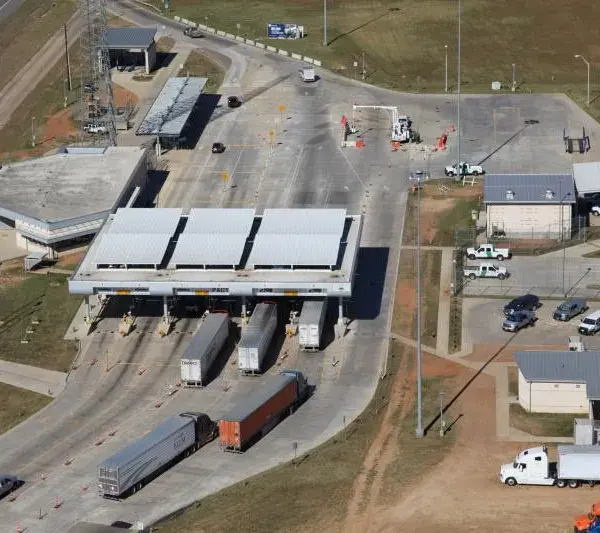
Under longstanding U.S. law and Supreme Court precedent, Border Patrol checkpoints on highways leading away from the U.S.–Mexico border are considered constitutional and lawful.
In United States v. Martinez‑Fuerte (1976), the Supreme Court held that routine questioning and brief inspections by U.S. Border Patrol agents at fixed checkpoints are consistent with the Fourth Amendment and do not require individualized suspicion of wrongdoing.
These checkpoints are places where agents routinely inspect vehicles for evidence of smuggling — of drugs, undocumented immigrants, or other contraband — as part of federal immigration enforcement operations.
The Stop on U.S. Highway 57
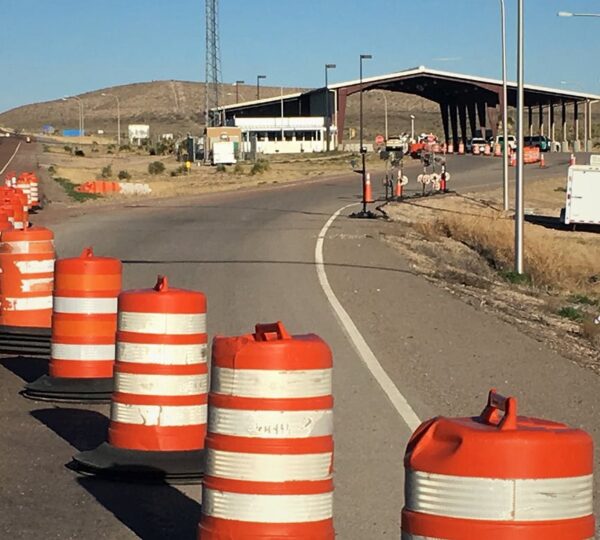
On the morning of August 1, 2023, agents from U.S. Customs and Border Protection’s Border Patrol were conducting standard enforcement duties at a permanent checkpoint on U.S. Highway 57, a rural highway in South Texas that leads northward from the border with Mexico.
According to federal court records and reporting, a Border Patrol K‑9 unit alerted to possible concealed activity in a grey sedan being driven by 26‑year‑old Kevin Dominguez of Katy, Texas. When agents opened the vehicle’s trunk, they discovered an undocumented individual hidden inside.
Concealing a person in a vehicle — especially at a border checkpoint — is a classic indicator of human smuggling, a federal offense that traffics in unauthorized entry and transport of non‑citizens into the United States. But for Dominguez, that was not the end of the interaction.
The Alleged Attempted Escape and Assault
According to prosecutors and court filings, when Border Patrol agents confronted Dominguez about the hidden individual in the trunk, he shifted his vehicle into reverse and attempted to flee the checkpoint.
In the process, he struck a federal agent with the car before driving away. The injured agent, who had been performing lawful official duties at the checkpoint, was later reported to have recovered from his injuries.
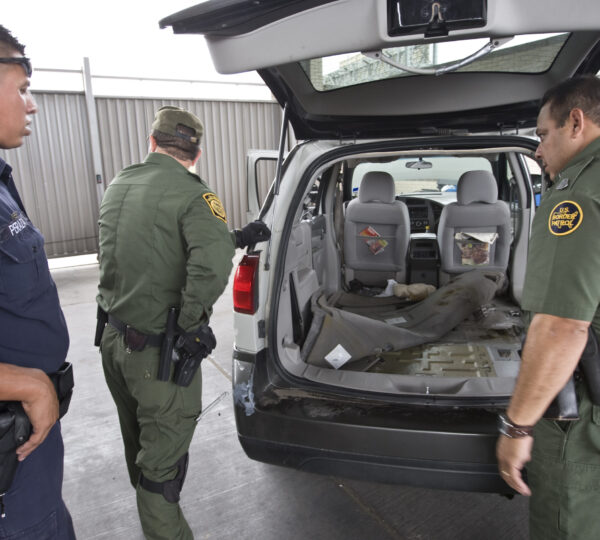
Vehicles being driven toward or away from law enforcement checkpoints can pose serious danger to agents, particularly when drivers attempt to flee or behave recklessly.
In several past cases around the country, people charged with assaulting or resisting federal officers have faced long prison terms because their actions placed officers’ lives at risk.
In some District of Arizona cases, for example, individuals who struck federal agents during immigration stops were prosecuted under federal assault statutes.
After the collision and attempted escape, Dominguez’s vehicle was pursued by law enforcement and he was apprehended shortly afterward. Agents also found and took custody of the hidden individual who had been concealed in the trunk of the sedan.
Federal Charges Filed Against Dominguez
Following the incident, Dominguez was indicted in federal court on two major charges stemming from his actions at the checkpoint:
-
Assaulting a federal officer — for striking the agent with his vehicle during the attempt to flee following the discovery of the concealed person, and
-
Transporting an individual unlawfully present in the United States — for allegedly driving with an undocumented person hidden in his trunk.
These charges reflect two separate areas of federal law: the protection of federal officers performing official duties, and the prohibition on knowingly transporting a person lacking legal authorization to enter or reside in the United States.
Federal law treats assaults on federal officers seriously because such assaults endanger individuals who are performing essential public safety and enforcement functions.
Under Title 18 of the U.S. Code, assaulting, resisting, or impeding certain officers or employees can carry significant prison terms, fines, and long supervised release periods.
Similarly, knowingly transporting undocumented individuals can result in prosecution under immigration statutes, particularly when it involves concealed persons or other elements that elevate the severity of the offense.
Court Proceedings and Sentencing
After a federal trial or plea process, Dominguez was sentenced on January 24, 2025, to 18 months in federal prison, followed by a period of supervised release.
In imposing the sentence, the federal judge underscored how seriously U.S. law treats:
-
Assaults against federal officers
-
Reckless conduct during law enforcement stops
-
Risks posed to agents and others during evasion attempts
Sentencing decisions in federal court usually consider a range of factors, including:
-
The degree of injury sustained by any victim — in this case the agent who was struck;
-
The defendant’s intent and level of recklessness during the attempt to flee;
-
The risk posed to others — including the person hidden in the trunk and other motorists;
-
The defendant’s criminal history or lack thereof; and
-
Federal sentencing guidelines that set ranges for different offenses.
The 18‑month term reflects the court’s judgment that the conduct — assaulting a federal officer during an attempt to evade arrest — warranted significant prison time, even if the agent’s injuries were ultimately non‑life‑threatening.
The Broader Context: Immigration Enforcement and Public Debate
Cases like Dominguez’s often become part of wider discussions about immigration policy, border security, and law enforcement authority.
Guarding Border Patrol Agents and Enforcement Duties
Supporters of strict immigration enforcement argue that federal agents at checkpoints and ports of entry must be protected while performing lawful duties. U.S. law authorizes Border Patrol officers to stop vehicles at fixed checkpoints without individualized suspicion — a practice upheld by the Supreme Court in Martinez‑Fuerte.
Checkpoint operations are designed to deter and detect smuggling of contraband and unlawful entry by persons who lack legal authorization.
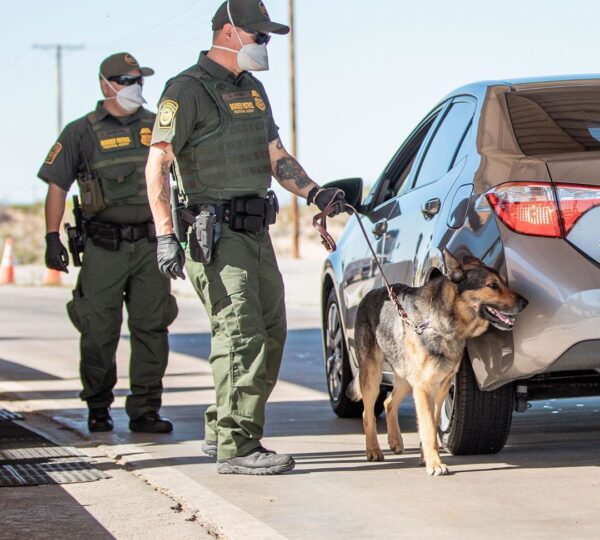
When drivers attempt to flee or resist those operations, federal prosecutors view the conduct as not just an immigration violation but a potential threat to public safety and enforcement integrity.
Human Smuggling and Transportation of Undocumented Individuals
Transporting undocumented individuals in hidden compartments or trunks is a form of human smuggling recognized as a serious federal offense.
Smugglers often put those they transport at physical risk — hidden spaces are dangerous, especially in high heat or lack of ventilation — and also undermine immigration law enforcement.
Human smuggling statutes are intended to discourage and punish those who exploit or endanger vulnerable migrants for financial or other gain.
Cases involving more substantial smuggling operations — such as those involving dozens of undocumented individuals concealed in tractor‑trailers — can result in much longer prison sentences and complex conspiracy prosecutions.
Public Debate and Policy Criticism
While the criminal justice consequences of Dominguez’s actions have been clear, the broader public discourse around immigration enforcement remains politically charged.
On one side, proponents of strong border security emphasize the need to support law enforcement, deter smuggling, and uphold federal statutes designed to control rates of unlawful entry. On the other side, critics of immigration policy often focus on:
-
the humanitarian conditions that drive migrants to take extreme risks,
-
the fairness and efficacy of immigration enforcement tactics, and
-
the broader structural issues within U.S. immigration law.
These debates extend beyond any single case and involve lawmakers, advocacy organizations, policy analysts, and immigration attorneys exploring complex questions about borders, enforcement resources, and legal reform.
Why This Case Matters
Several key lessons emerge from the Dominguez prosecution:
1. A Routine Stop Can Become a Felony Case
Most vehicles passing through a Border Patrol checkpoint are briefly inspected and allowed to continue on their way. But when actions cross the line — such as concealing a person in a vehicle or attempting to flee a checkpoint — the encounter can rapidly move from an administrative matter into federal criminal prosecution.
Dominguez’s decision to back his vehicle into an agent and flee the checkpoint escalated what might otherwise have been an immigration violation into a crime with serious consequences.
2. Assaulting Federal Officers Is Taken Seriously
Federal statutes protect officers performing official duties. Striking a federal officer — whether with a vehicle or other means — can result in lengthy prison terms, especially when paired with other offenses such as human smuggling.
Sentences in assault cases vary based on the facts, but federal prosecutors routinely argue for significant punishment when conduct places officers at risk or impedes official operations.
3. Legal Authority for Border Patrol Operations Is Well‑Established
The legal foundation for fixed Border Patrol checkpoints has existed for decades. Cases like Martinez‑Fuerte confirm that brief investigations of vehicles at checkpoints are constitutional, even without individualized suspicion — a key point in allowing agents to conduct roadside enforcement along known migrant corridors.
Conclusion: Decisions and Consequences at the Border
The Kevin Dominguez case illustrates how quickly a routine immigration enforcement stop can evolve into a federal prosecution when someone attempts to evade the law or endanger agents and others.
His convictions for assaulting a federal officer and transporting an undocumented individual — and his subsequent 18‑month prison sentence — serve as a reminder that actions taken during high‑stress encounters with law enforcement carry serious legal consequences, and that federal courts take both officer safety and smuggling offenses seriously.
As immigration enforcement continues to be a topic of national policy debate, individual cases like this one shed light on how laws are applied on the ground, how courts evaluate dangerous conduct, and how federal sentencing principles aim to balance punishment with public safety.
If you’d like a brief timeline of this case from the initial stop through sentencing, or a summary of relevant immigration and assault laws cited here, I can provide that next.
