
Most of us move through life with a quiet expectation: that after decades of hard work, responsibility, and contribution, our later years will offer rest, stability, and dignity.
We imagine retirement as a season defined by slower mornings, time with loved ones, and freedom from the daily pressures of earning a paycheck.
Whether that security comes from family support, personal savings, or a national safety net, the hope is the same — that we will be cared for when our working years are behind us.
Yet for many older adults, that expectation does not always match reality. While some countries and institutions have systems designed to protect retirees, unexpected economic shifts, corporate restructurings, and policy changes can leave even diligent workers vulnerable.

Financial security built over decades can sometimes change in ways no one anticipated.
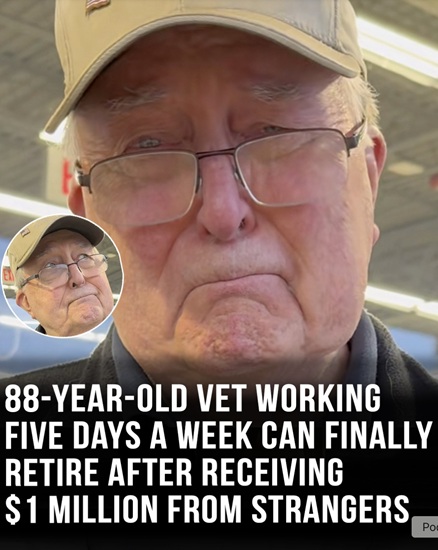
A recent story that gained national attention centers on Ed Bambas, an 88-year-old U.S. Army veteran from Michigan whose long retirement took an unexpected turn — and who, decades after finishing his primary career, found himself back at work just to make ends meet.
A Lifetime of Work and Service
Ed Bambas served his country in the U.S. Army before embarking on a civilian career. Like many veterans of his generation, he returned home determined to build a stable life through steady employment.
He went on to work for General Motors, one of the largest automotive manufacturers in the United States.
For years, Ed worked diligently, contributing to the company and earning what he believed would be a reliable pension. In 1999, after decades of employment, he retired. At the time, he felt confident about the future.
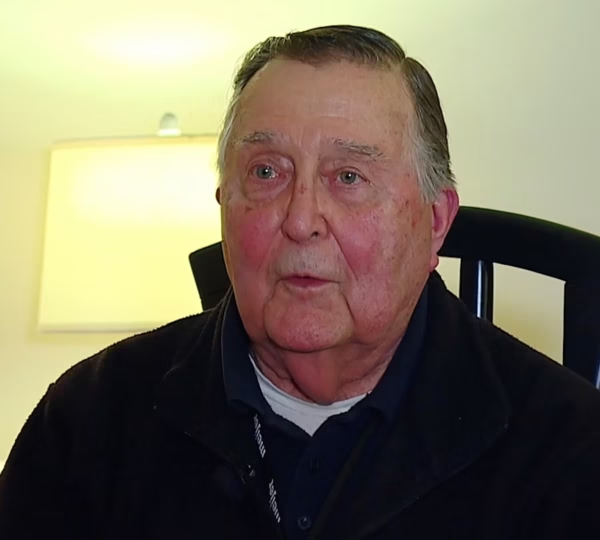
In an interview with WXYZ-TV, he reflected on that period of his life, saying he felt financially secure. He owned his home, had a pension he believed would sustain him, and did not foresee major hardship.
Like many retirees, he expected his savings and benefits to carry him through his later years with relative comfort.
For a while, that expectation seemed reasonable.

The 2009 Bankruptcy and Its Impact
The global financial crisis of 2008–2009 profoundly affected the automotive industry. In 2009, General Motors filed for bankruptcy as part of a government-backed restructuring process.
The ripple effects of that event were significant, not only for current employees but also for many retirees.
According to reporting by the Associated Press, nearly 20,000 salaried workers from Delphi Corporation, a former GM subsidiary, lost their pensions and retirement benefits during the restructuring. Ed Bambas was among those affected.
Corporate bankruptcies often involve complex legal and financial processes, including decisions about pension obligations. In this case, certain non-union salaried retirees experienced substantial reductions or eliminations of their expected pension benefits.
The Pension Benefit Guaranty Corporation (PBGC), a federal agency that insures certain private-sector pension plans, stepped in to provide assistance.
However, PBGC coverage has limits. While it can protect a portion of pension income, it does not always fully restore the original benefits that retirees were promised.
Reports from the early 2010s indicated that salaried retirees collectively lost hundreds of millions of dollars in expected pension income as a result of reductions to their monthly payments. For individuals like Ed, the impact was personal and immediate.
The Loss of Benefits
In addition to reduced pension income, Ed also lost other important benefits. In interviews shared on social media and with local news outlets, he explained that healthcare coverage connected to his pension was affected. He also lost a significant portion of his life insurance coverage.
One of the most painful aspects of this loss came during a difficult chapter in his personal life. His wife, Joan, to whom he had been married for 50 years, faced serious health challenges before her passing in 2018.
Ed has spoken openly about how losing healthcare coverage during that period was especially distressing.
After decades of building a life together, he found himself navigating financial uncertainty while also coping with his wife’s illness. Eventually, financial pressures forced him to sell his home.
The loss of a spouse after half a century of marriage is devastating on its own. Combined with financial strain, it created a particularly challenging period in Ed’s life.
Returning to Work in His Late Eighties
Rather than withdrawing from society or surrendering to hardship, Ed chose to keep working.
Well into his eighties — an age when most people have long since retired — he took on part-time jobs to support himself. He worked at Ace Hardware and at Meijer, working approximately eight hours a day, five days a week between the two positions.
To many observers, the idea of an 88-year-old veteran working regular retail shifts was striking. While some older adults choose to work for personal fulfillment or social engagement, Ed’s situation was rooted in financial necessity.
Despite the circumstances, those who interacted with him described him as polite, steady, and dignified. He reportedly showed up consistently, performed his duties responsibly, and maintained a quiet resilience that impressed customers and coworkers alike.
A Viral Encounter
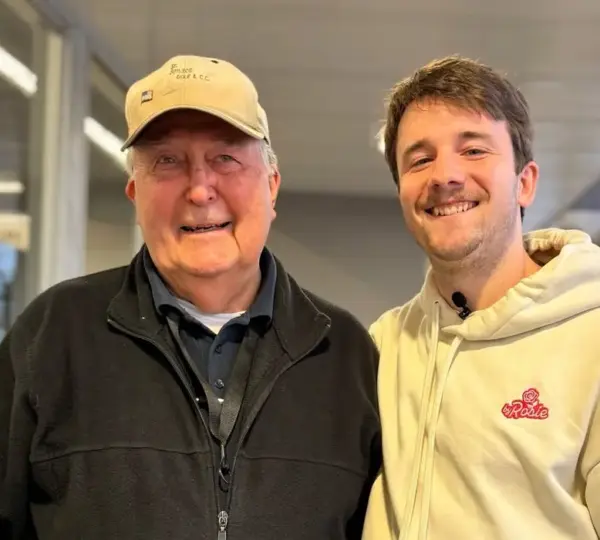
Ed’s story might have remained largely local if not for a chance encounter with social media influencer Sam Weidenhofer.
Weidenhofer, known for sharing stories of individuals facing hardship and offering spontaneous financial support, traveled to Michigan to meet Ed after learning about his situation. During their meeting, he offered a $400 tip as an immediate gesture of support.
Moved by Ed’s life story — his military service, decades of corporate work, and unexpected financial setbacks — Weidenhofer decided to do more.
He created a GoFundMe campaign to raise money for Ed’s living expenses, medical needs, and overall comfort.
The fundraiser described Ed as an 88-year-old Army veteran who had worked his entire life yet never fully received the pension he had expected.

It highlighted his perseverance and emphasized that many seniors, including veterans, continue to face significant financial challenges.
An Outpouring of Support
The response was swift and widespread. Donations began arriving from across the United States. People from different backgrounds resonated with Ed’s story — some because they were retirees themselves, others because they had family members who had faced similar challenges.
Within a short period, the campaign surpassed expectations. By early December, it had reportedly raised more than $1.5 million.
Weidenhofer publicly stated that efforts were underway to ensure the funds would be managed responsibly, including exploring secure banking arrangements or trust structures to protect Ed’s long-term financial stability.
For Ed, the outpouring of generosity was overwhelming. In interviews, he expressed gratitude and modest hopes for the future.
When asked what he wished for, he responded simply that he would like to “live a little of somewhat the life” he had once envisioned for his retirement.
A Broader Conversation About Retirement Security
Ed Bambas’s story resonated not only because of its emotional impact, but also because it highlights larger issues about retirement security, corporate restructuring, and the vulnerability of pension systems.
While pension insurance programs like the PBGC provide an important safety net, they have limitations. Corporate bankruptcies can alter retirement benefits in ways that retirees may not fully anticipate.
Additionally, healthcare coverage in retirement often depends on employer-specific arrangements that can change over time.
Experts frequently advise workers to diversify retirement planning through multiple sources — pensions, personal savings, and government programs such as Social Security.
However, not every worker has equal access to these options, and economic events beyond individual control can still disrupt even careful planning.
Ed’s experience underscores how macroeconomic events can have deeply personal consequences.
The Human Element
Beyond policy discussions, what has most moved people is Ed’s demeanor. Reports consistently describe him as humble and appreciative. He did not seek public attention. He simply continued working.
The public response suggests that many people value perseverance and service. Ed is both a veteran and a longtime worker who believed he had earned a stable retirement.
The perception that someone who fulfilled those responsibilities still faced hardship sparked empathy.
At the same time, his story illustrates the power of digital platforms to mobilize support quickly. Social media, when used constructively, can connect individuals to large audiences willing to help.
A New Chapter
With substantial funds raised, Ed now has the opportunity to step back from daily work and focus on comfort and stability. Organizers have emphasized the importance of ensuring that the money is protected and used wisely to support his long-term needs.
For an 88-year-old man who once expected a peaceful retirement but instead found himself back on the job, the change represents more than financial relief. It represents recognition.
He spent years serving his country and decades contributing to the workforce. Now, strangers have come together to support him.
Hope for the Future
Stories like Ed’s remind us that retirement security is not guaranteed for everyone, even for those who work diligently for decades. They also demonstrate that compassion can make a tangible difference.
While systemic reforms and economic policies remain complex issues, individual acts of generosity can still transform lives in meaningful ways.
For Ed Bambas, the immediate future appears brighter than it has in years. Instead of worrying about weekly shifts, he can look toward rest. Instead of focusing on financial survival, he can focus on comfort.
And perhaps, at long last, he can experience the kind of retirement he once imagined — one defined not by stress, but by dignity and peace.
Here’s to hoping that his remaining years are filled with stability, appreciation, and the opportunity to enjoy the life he worked so hard to build.
