
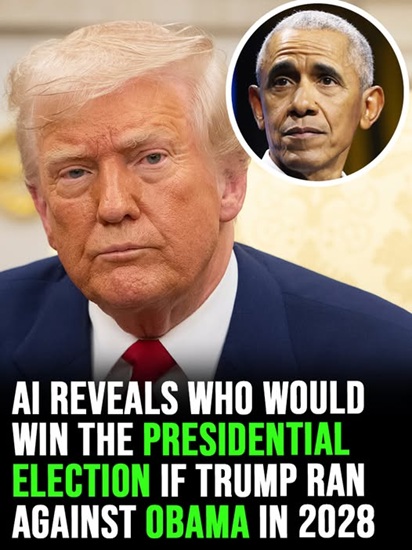
In recent political discussions, speculation has surfaced around whether former President Donald Trump could seek another term in the White House in 2028.
While such conversations often gain traction online and in media commentary, it is important to begin with the constitutional reality: under current United States law, a president cannot be elected to the office more than twice.
This restriction is clearly outlined in the Twenty-second Amendment to the United States Constitution, which was ratified in 1951 following President Franklin D. Roosevelt’s unprecedented four electoral victories.
The 22nd Amendment states: “No person shall be elected to the office of the President more than twice.” The amendment was introduced to formalize the two-term precedent originally set by George Washington, who voluntarily stepped down after serving two terms.
For more than a century, Washington’s decision was treated as a guiding tradition rather than a legal requirement.
That changed after Franklin D. Roosevelt was elected four times, serving from 1933 until his death in 1945. In response, Congress passed the 22nd Amendment to ensure a two-term limit moving forward.
Because of this constitutional provision, any scenario involving Donald Trump—or any other former two-term president—running again in 2028 would require a constitutional amendment.
Amending the Constitution is an extremely rigorous process. It requires either a two-thirds vote in both the House of Representatives and the Senate followed by ratification from three-fourths of the states, or a constitutional convention called by two-thirds of state legislatures.
Historically, constitutional amendments are rare and difficult to achieve, reflecting the nation’s emphasis on stability and continuity in its governing framework.
In recent interviews and public remarks, Donald Trump has occasionally addressed questions about a potential third term in a manner that some observers interpret as leaving the door rhetorically open.
However, as of now, there is no enacted legal pathway that would allow a third presidential election victory under existing law.
Speculation about alternative “plans” or “workarounds” has circulated in political commentary, but no officially proposed or legally viable mechanism has been presented that would bypass the explicit wording of the 22nd Amendment without a formal constitutional change.
For the sake of academic discussion, however, political analysts and commentators sometimes explore hypothetical scenarios.
One such thought experiment imagines a contest in 2028 between Donald Trump and Barack Obama. Like Trump, Barack Obama has also served two elected terms as president and is equally bound by the 22nd Amendment.
Therefore, under current law, neither individual is eligible to be elected again. Any discussion of a Trump-versus-Obama race remains purely theoretical.
Despite the legal impossibility under current constitutional rules, such a matchup generates interest because both figures are among the most influential and polarizing political leaders of the 21st century.
Donald Trump’s presidency from 2017 to 2021 reshaped the Republican Party and had a lasting impact on American political discourse.
Barack Obama’s presidency from 2009 to 2017 marked significant legislative achievements, including the Affordable Care Act, and carried historic significance as the first African American president.
In hypothetical modeling exercises—sometimes conducted by commentators using artificial intelligence tools—analysts attempt to forecast how such a race might unfold.
It is important to understand what these AI-generated predictions represent. Artificial intelligence models do not “predict” the future in a literal sense. Rather, they analyze patterns in available data, such as historical election results, approval ratings, demographic shifts, and public opinion trends, to simulate possible outcomes.
These simulations are speculative and depend heavily on assumptions built into the model.
In a theoretical 2028 contest between Trump and Obama, campaign dynamics would likely center on contrasting leadership styles, policy legacies, and voter sentiment about the direction of the country.
Supporters of Donald Trump often emphasize his economic policies, tax reforms, deregulation efforts, and approach to border security.
Supporters of Barack Obama frequently highlight his healthcare reform initiatives, international diplomacy efforts, and emphasis on multilateral cooperation.
A hypothetical Obama campaign, according to some AI-generated analyses shared online, might frame itself as a return to stability and institutional norms.
Conversely, a hypothetical Trump campaign might frame itself as a continuation of an “America First” agenda, emphasizing economic nationalism and assertive political messaging.
However, it is crucial to reiterate that such narratives are speculative constructs rather than real campaign strategies.
Political outcomes are influenced by numerous variables beyond candidate popularity. Economic conditions, global events, domestic crises, voter turnout, demographic shifts, and media environments all play significant roles.
Incumbency typically provides certain structural advantages, such as greater visibility and established campaign infrastructure.
However, in a fully hypothetical scenario where both candidates were former presidents, the traditional concept of incumbency would not apply in the same way.
AI simulations that lean toward one candidate often do so based on hypothetical assumptions about voter fatigue, polarization, and turnout patterns.
For example, some models speculate that in a political climate characterized by exhaustion with conflict and division, a candidate perceived as less confrontational might benefit.
Others suggest that strong partisan loyalty in modern American politics would produce a highly competitive race regardless of the personalities involved.
It is also important to recognize that public opinion evolves over time. Approval ratings and legacy evaluations for former presidents often shift years after they leave office.
Historical reassessments, generational changes, and shifting policy priorities all influence how past administrations are viewed.
Therefore, any projection about a 2028 contest would depend heavily on the social, economic, and geopolitical environment at that time.
Beyond the personalities involved, discussions about third terms raise broader constitutional and democratic considerations.
Presidential term limits are designed to prevent excessive concentration of executive power and to encourage leadership renewal.
The 22nd Amendment reflects lessons learned from history and the belief that regular transitions of power strengthen democratic institutions.
Debates over term limits occasionally arise in academic circles. Some scholars argue that voters should have the right to re-elect leaders without restriction, while others contend that formal limits protect against authoritarian tendencies.
However, altering presidential term limits would require widespread bipartisan support and state-level ratification, making it one of the most challenging constitutional changes conceivable.
In reality, the 2028 presidential election will feature candidates who meet constitutional eligibility requirements.
Speculation about former two-term presidents reentering the race may generate online engagement, but it does not alter the legal framework governing elections.
The fascination with a hypothetical Trump-versus-Obama rematch reflects the lasting impact both leaders have had on American politics.
Their presidencies shaped debates on healthcare, taxation, immigration, foreign policy, judicial appointments, and the role of executive authority.
For many Americans, these years defined distinct political eras, making the idea of a rematch symbolically compelling—even if constitutionally impossible.
It is also worth noting that artificial intelligence tools are increasingly used to simulate electoral scenarios. While these models can provide interesting thought experiments, they are not substitutes for real-world electoral processes.
Elections are decided by voters casting ballots within the legal structures established by the Constitution and federal law.
In conclusion, under the current provisions of the 22nd Amendment, neither Donald Trump nor Barack Obama is eligible to be elected president again after serving two terms. Any discussion of a 2028 matchup between them remains a purely hypothetical exercise.
While AI simulations and political commentary can explore imaginative scenarios, the constitutional framework governing presidential elections remains clear and firmly in place.
The future of American politics will unfold according to established legal procedures, shaped by voters, candidates, and the evolving national landscape.
Until and unless the Constitution is amended through the formal process outlined within it, the two-term limit remains binding on all presidents—past, present, and future.
