
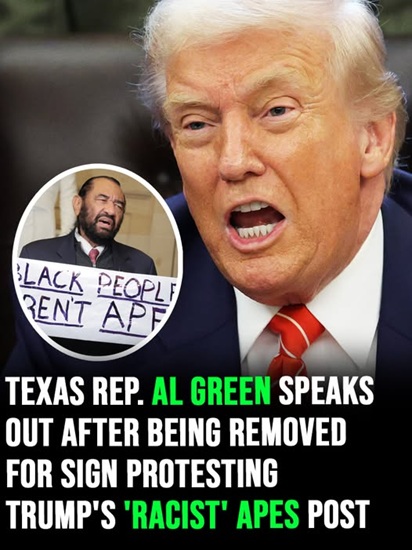
During the opening minutes of President Donald Trump’s 2026 State of the Union address on February 24, a dramatic protest by Texas Democratic Rep.
Al Green captured national media attention and sparked fresh debate about race, political protest, and decorum in the U.S. Capitol.
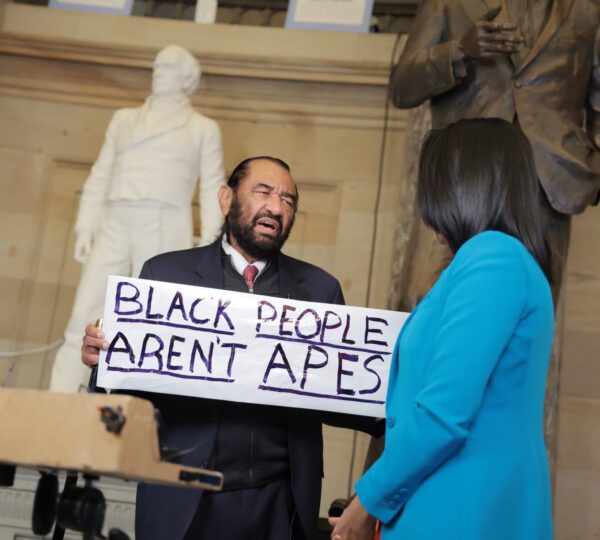
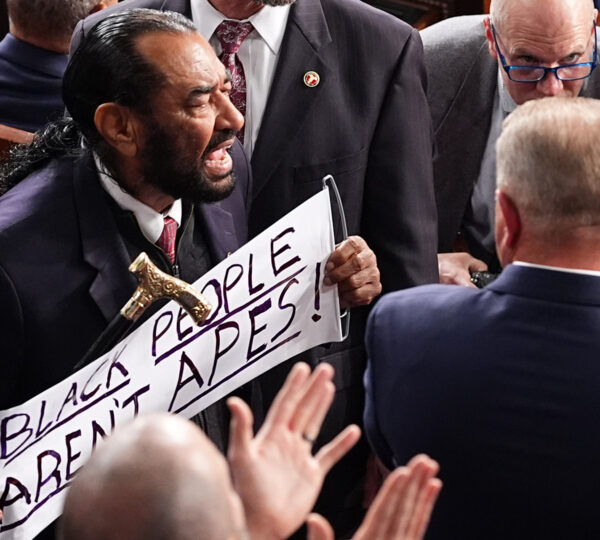
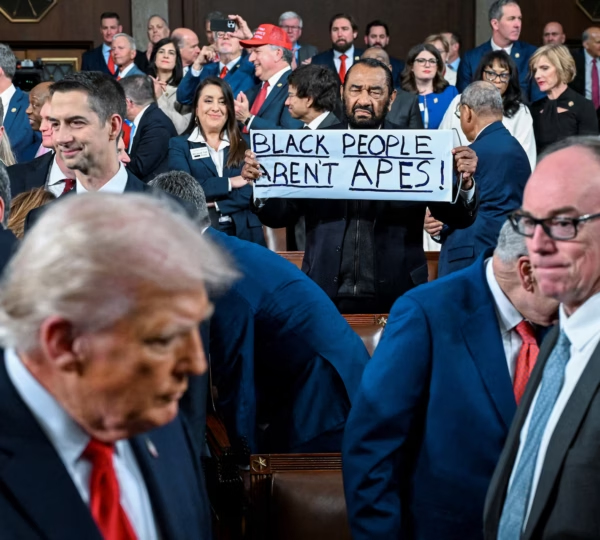
Minutes after Trump began speaking before a joint session of Congress, Green — a longtime legislator and vocal critic of the president — was escorted out of the House chamber after holding up a sign that read, “Black people aren’t apes!”
The protest was widely understood as a response to a racially insensitive and controversial social media video shared earlier that month on the former president’s Truth Social account, in which former President Barack Obama and former First Lady Michelle Obama were depicted as primates.
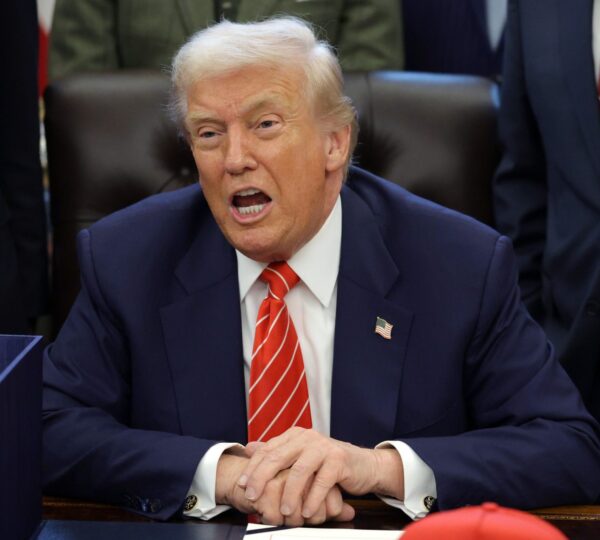
Trump later deleted the video but declined to issue an apology when asked to do so.
A Symbolic Protest at a High‑Profile Address
The State of the Union is one of the highest‑profile political events in the American calendar, combining formal policy speeches with symbolic interaction among lawmakers.
Green, 78 and a representative of a majority‑Black district in Texas, positioned himself near the front of the House chamber shortly before the address began.
As Trump entered and walked down the aisle on his way to the podium, Green stood and raised the cardboard sign in silent protest.
The message on the placard was a direct repudiation of the social media video. Although Trump’s team would later describe the posting as a mistake by a staffer, the image drew bipartisan criticism at the time for its racist undertones.
Green’s sign was intended to affirm the dignity and humanity of Black Americans and to draw attention to what he and others saw as a dangerous pattern of racially charged content.
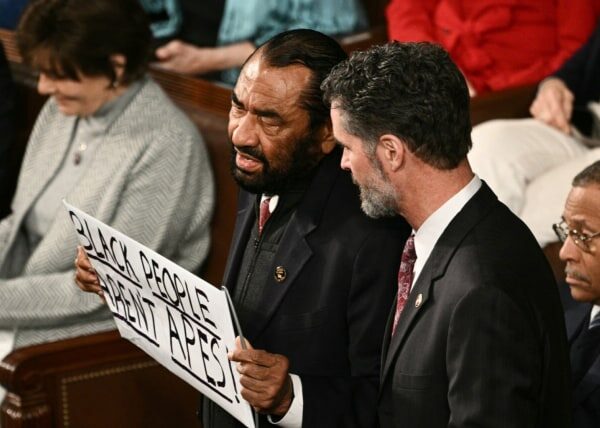
Video and photographs from the event show members of both parties reacting to Green’s protest. Some Republican lawmakers approached him, attempting to lower or remove the sign themselves as security personnel prepared to escort him from the chamber.
Among those trying to intervene were Republican Reps. Troy Nehls of Texas and Steve Scalise of Louisiana.
Second Consecutive Removal During State Address
The ejection marked the second consecutive year that Green was removed from a State of the Union address during a Trump speech. In March 2025, he had been escorted out after repeatedly interrupting the president and shaking his cane while objecting to proposed budget cuts to programs such as Medicaid.
That incident ultimately led to the House voting to censure Green, with bipartisan support.
During the 2026 address, Green remained silent while holding the sign and did not shout or otherwise disrupt the speech.
Nonetheless, House officials determined his actions warranted removal under the chamber’s rules governing decorum during joint sessions of Congress.
Al Green Speaks Out After Being Removed
After being escorted out of the chamber, Green addressed reporters outside the Capitol, explaining his motivation.
He said he wanted the president to “know that Black people are not apes” and that he believed it was important to confront what he described as racial dehumanization at the highest levels of public discourse.
Green framed his protest as an act of conscience, saying that silence in the face of offensive imagery was no longer acceptable to him.
Green acknowledged that he expected to be removed, but he said the consequences were not a deterrent. “The consequences were of no consequence to me,” he told reporters, later adding that he believed standing up against discrimination was worth any punishment he might face.
Green even drew parallels to historical figures who accepted consequences for taking a stand, comparing his protest to civil rights actions — an analogy that attracted both attention and criticism in media coverage.
Political Repercussions: Calls for Censure
Within hours of Green’s removal, some Republican lawmakers signaled they might pursue another censure resolution against him.
Republican Rep. Mike Rulli of Ohio told conservative media outlets that his office was seeking support from colleagues on both sides of the aisle for such a measure, arguing that Green’s protest violated the norms of the House chamber during a joint session.
Green’s protest sign and subsequent ejection also became a flashpoint in broader partisan discussions about race, political speech, and protest in America.
Some conservative commentators criticized Green’s conduct as disrespectful and inappropriate for the solemn setting of a joint address to Congress, while many Democratic lawmakers and civil rights advocates praised his willingness to speak out against what they regarded as racially insensitive conduct.
Public reactions on social media ranged widely, reflecting deep divisions in contemporary U.S. politics.
Historical Context and Racial Sensitivities
The controversy that formed the backdrop to Green’s protest had itself been a subject of debate in the weeks leading up to the State of the Union.
The Truth Social video posted by Trump, which superimposed faces of political opponents onto characters from The Lion King, including portraying the Obamas as primates, sparked widespread condemnation from civil rights groups, veteran lawmakers, and even figures within the Republican Party.
Among those who criticized the post was Republican Sen. Tim Scott, who called the imagery “the most racist thing I’ve seen out of this White House.”
Trump addressed the controversy by stating that he did not personally post the portion of the video showing the Obama family and that it was mistakenly shared by a staffer.
He also stated he did not believe he had made a mistake in how the video appeared, a response that drew additional criticism from political opponents and media outlets.
The Broader Scene at the 2026 State of the Union
Green’s protest occurred against a backdrop of significant political drama in Washington.
According to The Wall Street Journal and other outlets, dozens of Democratic lawmakers had planned to boycott the State of the Union entirely as a form of protest, reflecting ongoing tensions between the parties over legislative priorities and political rhetoric.
Other disruptions also took place during the address. Representatives such as Ilhan Omar and Rashida Tlaib were reported to have shouted objections at various points in Trump’s speech, prompting admonishments from House leadership.
These moments highlighted broader conflicts over policy issues including immigration enforcement and federal funding.
Green’s Career and Continued Advocacy
Rep. Al Green has been a prominent figure in Democratic politics for decades, known for his advocacy on civil rights, healthcare, and social justice issues.
Elected to Congress in 2004, he has often used his platform to highlight racial inequities and challenge political leaders on matters he considers discriminatory or harmful to marginalized communities.
His vocal opposition to Trump predates the 2025 and 2026 confrontations, including early calls for impeachment during the Trump presidency.
At age 78, Green is also navigating a competitive primary campaign amid redistricting in his home state, which has drawn greater public scrutiny to his actions and political future.
His protest at the State of the Union is likely to be a significant talking point among both supporters and critics as that primary unfolds.
Public Discussion on Protest, Decorum, and Race
The broader debate sparked by Green’s protest reflects ongoing national conversations about the balance between free expression and institutional decorum, especially in settings like joint sessions of Congress that have strict rules about disruptions.
Supporters of Green argue that political leaders must be able to raise urgent moral concerns, even in formal venues, while critics contend that elected representatives should use established processes and respect procedural norms.
The incident also reinvigorated discussions about racial imagery in political discourse, particularly the historical legacy of dehumanizing portrayals of Black Americans.
Scholars, civil rights advocates, and political analysts have weighed in on the significance of public figures using charged visuals or rhetoric, noting the potential impact on civic trust and social cohesion.
Conclusion
Representative Al Green’s removal from the 2026 State of the Union address after holding a sign reading “Black people aren’t apes” was one of the most widely reported and debated moments of the night.
The protest underscored enduring tensions in American politics around race, symbolism, and public protest — particularly in moments of high ceremonial visibility.
Green’s subsequent statements further illuminated his motivations and beliefs, and the fact that this was his second ejection during a Trump address adds a layer of historical continuity to his ongoing advocacy.
The event continues to be discussed in media, on Capitol Hill, and in public discourse, reflecting broader debates about leadership, representation, and the boundaries of protest in democratic institutions.
