
After Years, Details of Melania Trump’s Romantic History Emerge
Long before she became First Lady of the United States, Melanija Knavs was a young woman with quiet ambition and a guarded private life.
A Slovenian model whose path from Sevnica to the global public stage was shaped as much by discipline and discretion as by beauty and opportunity.
Her early years, relationships, and the choices she made along the way have often been the subject of speculation, rumor, and fascination, but the details that can be verified reveal a journey defined by determination, careful self‑representation, and a deep sense of personal purpose.
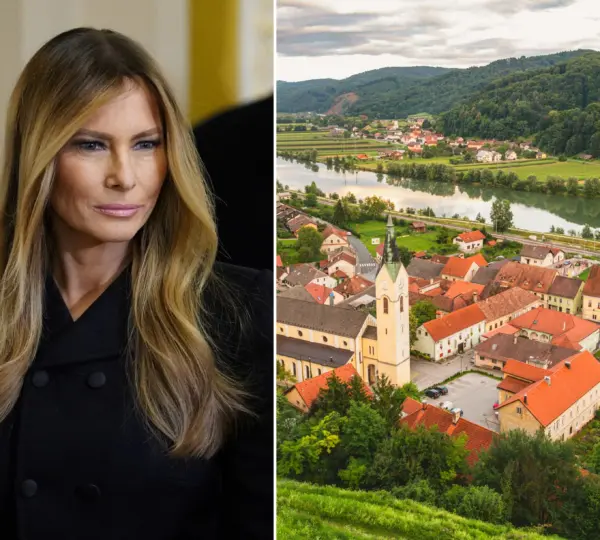
Melania was born Melanija Knavs on April 26, 1970, in the former Yugoslavia, now Slovenia, in the small industrial town of Sevnica, nestled on the banks of the Sava River.
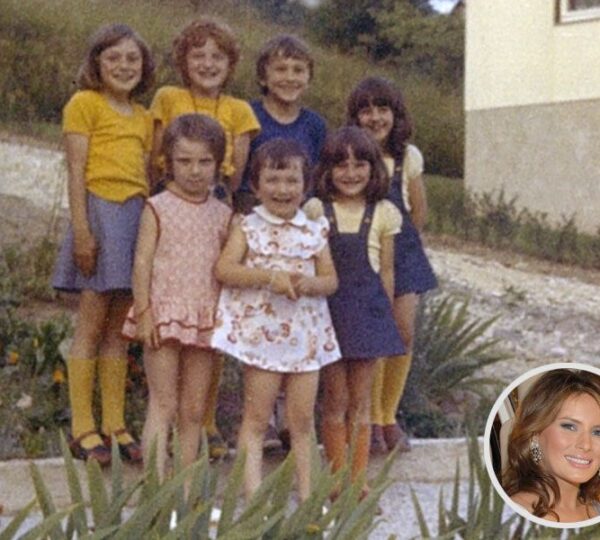
Her father, Viktor Knavs, worked as a car and motorcycle dealer connected to a state‑owned manufacturer, and her mother, Amalija, worked as a patternmaker in a children’s clothing factory.
These early circumstances were modest, but from a young age Melania was exposed to fashion and design through those family connections — including participating in children’s fashion shows during factory events, which sparked her early interest in the world of style.
As a child she was always described by those around her as reserved, serious, and lacking the boisterousness typical of girls her age — traits that would become hallmarks of her public personality decades later.
Her formal education began in Sevnica, and by age 15 she moved to the capital city, Ljubljana, to attend the Secondary School of Design and Photography, a progressive arts institution housed in a converted Renaissance monastery.
There she studied industrial design while also being introduced to the broader world of culture and fashion.
It was in Ljubljana that people from her earliest years remember her as quiet, poised, and different from others in her social circle.
One of the young men who knew her from that period, Peter Butoln, later said he met Melania socially in her late teens.
Riding his metallic blue Vespa around downtown Ljubljana, he recalled taking her to small discothèques and dancing to hits from Wham!, noting that she was more disciplined than most girls their age and seemingly unconcerned with the typical party scene.
Though he described their time together as youthful and informal, and he insisted the romance wasn’t deeply serious, their connection reflected the early stirrings of independence that would soon carry her far beyond Slovenia.
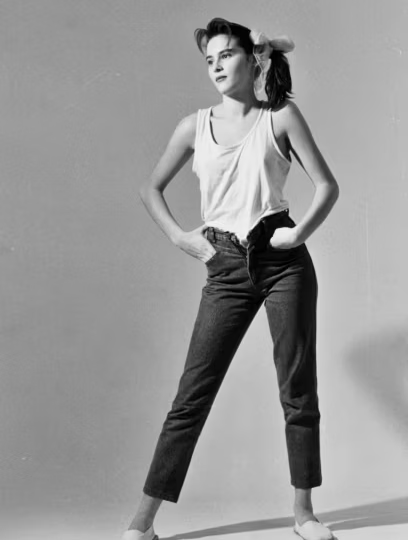
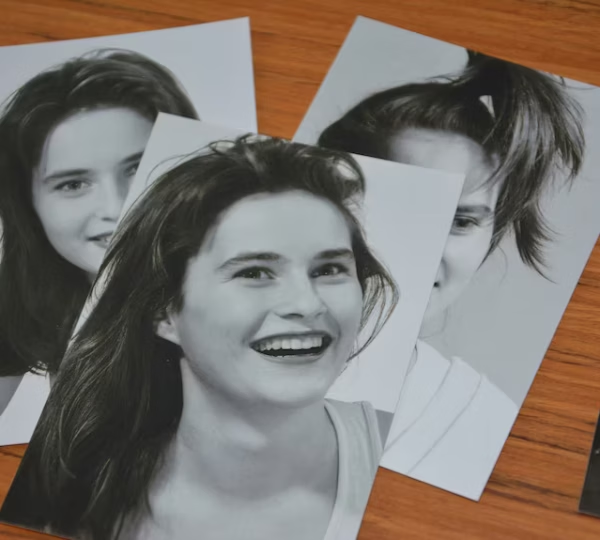
During this same period, a fashion photographer named Stane Jerko noticed Melania at a local modeling event in 1987.
Though she was only 17, Jerko saw in her the potential for broader opportunities and invited her to pose for his lens.
Those early photographs — a mix of casual and editorial styles — caught the attention of fashion contacts and helped open the door to modeling classes and courses that were her first real introduction to the craft.
This marked a turning point: the beginning of a decision that would shape the course of her life.
While formal relationships from her pre‑modeling years are sparsely documented — and often remembered only through personal accounts — there is another name associated with Melania before her international career took off:
Jure Zorčič, whom some sources describe as a young boyfriend from her time in Slovenia.
Zorčič and Melania are said to have met around 1991, and they spent several months together before she left Europe to pursue modeling in fashion capitals like Milan and Paris.
Years later, they reportedly crossed paths again in New York City, where Melania, focused on her own future, explained that she would not be returning to Slovenia to resume the relationship.
At age 18, after completing one year of study at the University of Ljubljana, Melania made a decisive choice: she left academia to pursue modeling full‑time.
She signed with an agency in Milan and adopted the professional name Melania Knauss, a Germanized variation she felt would more easily fit an international market.
From Milan, where she walked runways and built her portfolio, she moved to Paris — one of fashion’s most competitive and prestigious centers — and worked with various agencies and designers.
Her days were filled with photo shoots, go‑sees, and the unglamorous realities of a young model trying to break through: long hours, frequent travel, and the constant need to balance confidence with humility.
Despite her growing experience abroad, Melania was not known in that era as part of the supermodel elite that dominated global fashion magazines like Naomi Campbell or Cindy Crawford.
Instead, she was regarded by acquaintances and industry veterans as a disciplined, composed, and quietly ambitious professional — someone who naturally drew attention not through self‑promotion but through poise and perseverance.
However, because much of her career in Europe was documented through agency portfolios rather than mainstream magazine spreads, public records of specific relationships or social life during this time are limited.
Melania’s breakthrough into the American modeling scene came through the persistent encouragement of Paolo Zampolli, a Milan‑based agent with ties to New York’s fashion industry.
Zampolli saw in her a look and temperament suited to the United States’ competitive market and convinced her to make the leap across the Atlantic.
In 1996, with his help, she moved to New York City, where she continued building her portfolio and establishing herself on an international stage.
She modeled for fashion houses, appeared in major magazine spreads, and worked with renowned photographers, including Patrick Demarchelier and Helmut Newton.
It was during this period, in September 1998, that Melania’s life intersected with a figure who would alter her path in ways no earlier ambition had: Donald J. Trump, then a real estate magnate known for his business ventures and social presence in Manhattan.
They met at a fashion industry party in New York — often described as taking place at the city’s Kit Kat Club — introduced by Zampolli.
Though Trump arrived that night with another companion, he was immediately taken by Melania and approached her.
According to later accounts, she refused to give him her phone number, insisting instead that he provide his, a subtle test of interest and intent.
Once he offered multiple personal numbers rather than an office line, she agreed to a date, and their courtship began.
Their early relationship was measured and private, mirroring Melania’s own approach to life. She did not seek attention, and even as Trump’s public profile grew — bolstered by business success and media appearances — she remained selective about what aspects of their courtship were made public.
Friends from that period recall her as disciplined, serious, and thoughtful, someone who kept her personal life closely guarded even amid a social environment that often encouraged exposure and spectacle.
By the time Melania and Trump married on January 22, 2005, at the Bethesda‑by‑the‑Sea church in Palm Beach, Florida, their relationship had become more widely known.
The ceremony was elegant and attended by political figures, celebrities, and fashion elites alike.
Melania wore a couture gown designed by John Galliano for Dior Couture, featured on the cover of Vogue magazine shortly before and after the wedding, signaling her transition not just to American society but into the highest echelons of public life.
In 2006, shortly after becoming a U.S. citizen, Melania and Donald Trump welcomed their son, Barron William Trump, further anchoring her life in her adopted country while expanding her role from model and spouse to mother.
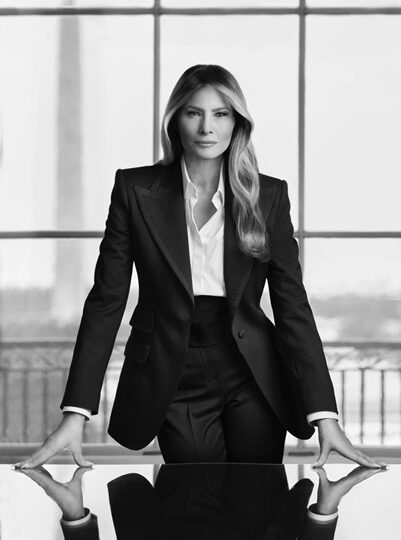
Although Trump’s career continued to evolve — including his entry into television and later politics — Melania navigated her new responsibilities with the same deliberate discretion that had marked every earlier phase of her life.
Melania’s journey from a reserved young woman in Slovenia to the world stage was not sudden, nor was it entirely defined by the glitter of high fashion or political ascent.
Instead, it was deliberate: a series of choices about when to step forward and when to hold back, how much of her inner life to reveal and what to keep private, and how to balance personal ambition with the roles imposed by circumstance and association.
Her early relationships — whether with figures like Peter Butoln or Jure Zorčič — reflected fleeting chapters of youth, while her careful cultivation of self and career foreshadowed a life that would always be more layered than simple public narratives suggest.
Melania Trump’s story illustrates a path defined not by impulsive exposure but by intentional presentation, measured risk, and a persistent focus on long‑term purpose — from the quiet streets of Sevnica to the global stage of New York, and ultimately to the White House.
Long before she became First Lady of the United States, Melanija Knavs was a young woman with quiet ambition and a guarded private life.
A Slovenian model whose path from Sevnica to the global public stage was shaped as much by discipline and discretion as by beauty and opportunity.
Her early years, relationships, and the choices she made along the way have often been the subject of speculation, rumor, and fascination, but the details that can be verified reveal a journey defined by determination, careful self‑representation, and a deep sense of personal purpose.
Melania was born Melanija Knavs on April 26, 1970, in the former Yugoslavia, now Slovenia, in the small industrial town of Sevnica, nestled on the banks of the Sava River.
Her father, Viktor Knavs, worked as a car and motorcycle dealer connected to a state‑owned manufacturer, and her mother, Amalija, worked as a patternmaker in a children’s clothing factory.
These early circumstances were modest, but from a young age Melania was exposed to fashion and design through those family connections — including participating in children’s fashion shows during factory events, which sparked her early interest in the world of style.
As a child she was always described by those around her as reserved, serious, and lacking the boisterousness typical of girls her age — traits that would become hallmarks of her public personality decades later.
Her formal education began in Sevnica, and by age 15 she moved to the capital city, Ljubljana, to attend the Secondary School of Design and Photography, a progressive arts institution housed in a converted Renaissance monastery.
There she studied industrial design while also being introduced to the broader world of culture and fashion.
It was in Ljubljana that people from her earliest years remember her as quiet, poised, and different from others in her social circle.
One of the young men who knew her from that period, Peter Butoln, later said he met Melania socially in her late teens.
Riding his metallic blue Vespa around downtown Ljubljana, he recalled taking her to small discothèques and dancing to hits from Wham!, noting that she was more disciplined than most girls their age and seemingly unconcerned with the typical party scene.
Though he described their time together as youthful and informal, and he insisted the romance wasn’t deeply serious, their connection reflected the early stirrings of independence that would soon carry her far beyond Slovenia.
During this same period, a fashion photographer named Stane Jerko noticed Melania at a local modeling event in 1987.
Though she was only 17, Jerko saw in her the potential for broader opportunities and invited her to pose for his lens.
Those early photographs — a mix of casual and editorial styles — caught the attention of fashion contacts and helped open the door to modeling classes and courses that were her first real introduction to the craft.
This marked a turning point: the beginning of a decision that would shape the course of her life.
While formal relationships from her pre‑modeling years are sparsely documented — and often remembered only through personal accounts — there is another name associated with Melania before her international career took off:
Jure Zorčič, whom some sources describe as a young boyfriend from her time in Slovenia.
Zorčič and Melania are said to have met around 1991, and they spent several months together before she left Europe to pursue modeling in fashion capitals like Milan and Paris.
Years later, they reportedly crossed paths again in New York City, where Melania, focused on her own future, explained that she would not be returning to Slovenia to resume the relationship.
At age 18, after completing one year of study at the University of Ljubljana, Melania made a decisive choice: she left academia to pursue modeling full‑time.
She signed with an agency in Milan and adopted the professional name Melania Knauss, a Germanized variation she felt would more easily fit an international market.
From Milan, where she walked runways and built her portfolio, she moved to Paris — one of fashion’s most competitive and prestigious centers — and worked with various agencies and designers.
Her days were filled with photo shoots, go‑sees, and the unglamorous realities of a young model trying to break through: long hours, frequent travel, and the constant need to balance confidence with humility.
Despite her growing experience abroad, Melania was not known in that era as part of the supermodel elite that dominated global fashion magazines like Naomi Campbell or Cindy Crawford.
Instead, she was regarded by acquaintances and industry veterans as a disciplined, composed, and quietly ambitious professional — someone who naturally drew attention not through self‑promotion but through poise and perseverance.
However, because much of her career in Europe was documented through agency portfolios rather than mainstream magazine spreads, public records of specific relationships or social life during this time are limited.
Melania’s breakthrough into the American modeling scene came through the persistent encouragement of Paolo Zampolli, a Milan‑based agent with ties to New York’s fashion industry.
Zampolli saw in her a look and temperament suited to the United States’ competitive market and convinced her to make the leap across the Atlantic.
In 1996, with his help, she moved to New York City, where she continued building her portfolio and establishing herself on an international stage.
She modeled for fashion houses, appeared in major magazine spreads, and worked with renowned photographers, including Patrick Demarchelier and Helmut Newton.
It was during this period, in September 1998, that Melania’s life intersected with a figure who would alter her path in ways no earlier ambition had: Donald J. Trump, then a real estate magnate known for his business ventures and social presence in Manhattan.
They met at a fashion industry party in New York — often described as taking place at the city’s Kit Kat Club — introduced by Zampolli.
Though Trump arrived that night with another companion, he was immediately taken by Melania and approached her.
According to later accounts, she refused to give him her phone number, insisting instead that he provide his, a subtle test of interest and intent.
Once he offered multiple personal numbers rather than an office line, she agreed to a date, and their courtship began.
Their early relationship was measured and private, mirroring Melania’s own approach to life. She did not seek attention, and even as Trump’s public profile grew — bolstered by business success and media appearances — she remained selective about what aspects of their courtship were made public.
Friends from that period recall her as disciplined, serious, and thoughtful, someone who kept her personal life closely guarded even amid a social environment that often encouraged exposure and spectacle.
By the time Melania and Trump married on January 22, 2005, at the Bethesda‑by‑the‑Sea church in Palm Beach, Florida, their relationship had become more widely known.
The ceremony was elegant and attended by political figures, celebrities, and fashion elites alike.
Melania wore a couture gown designed by John Galliano for Dior Couture, featured on the cover of Vogue magazine shortly before and after the wedding, signaling her transition not just to American society but into the highest echelons of public life.
In 2006, shortly after becoming a U.S. citizen, Melania and Donald Trump welcomed their son, Barron William Trump, further anchoring her life in her adopted country while expanding her role from model and spouse to mother.
Although Trump’s career continued to evolve — including his entry into television and later politics — Melania navigated her new responsibilities with the same deliberate discretion that had marked every earlier phase of her life.
Melania’s journey from a reserved young woman in Slovenia to the world stage was not sudden, nor was it entirely defined by the glitter of high fashion or political ascent.
Instead, it was deliberate: a series of choices about when to step forward and when to hold back, how much of her inner life to reveal and what to keep private, and how to balance personal ambition with the roles imposed by circumstance and association.
Her early relationships — whether with figures like Peter Butoln or Jure Zorčič — reflected fleeting chapters of youth, while her careful cultivation of self and career foreshadowed a life that would always be more layered than simple public narratives suggest.
Melania Trump’s story illustrates a path defined not by impulsive exposure but by intentional presentation, measured risk, and a persistent focus on long‑term purpose — from the quiet streets of Sevnica to the global stage of New York, and ultimately to the White House.


