
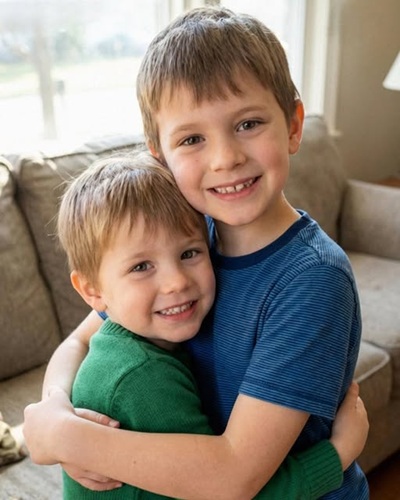
My son had only been back at kindergarten for a week when he climbed into the car, buckled himself halfway into his seat, and said it like it was the most ordinary thing in the world.
“Mom, Ethan came to see me.” I froze mid-step. The word slipped out, casual and startling. Ethan. My firstborn. My bright, eight-year-old boy who had been dead for six months.
The parking lot noises—the tires squealing, the engines revving, the faint chatter of parents gathering children—diminished to a dull hum in my ears.
My hands clenched the steering wheel a little tighter, my fingers tracing invisible patterns. I had to keep my voice steady, light, unshaking.
“Oh, sweetheart,” I said, forcing a softness into my tone. “You missed him today?”
Noah frowned, his round cheeks squishing together in concentration. “No,” he said simply. “He was here. At school.”
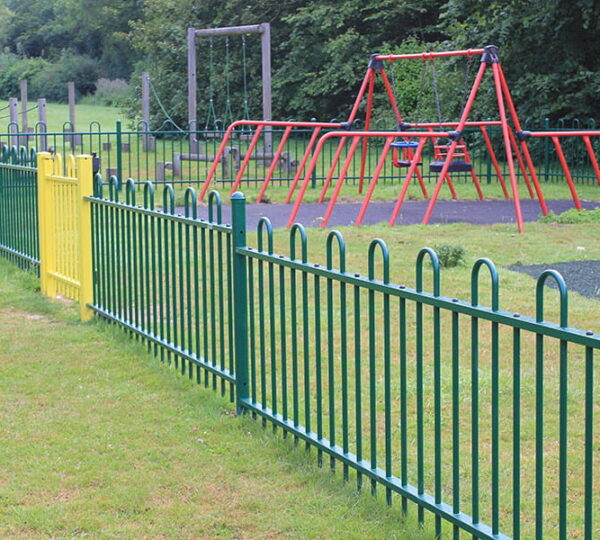
The word “here” fell like a stone inside me, sinking into some hollow space I hadn’t known was empty.
Ethan had been eight when the accident happened. Mark was driving him to soccer practice—a routine, ordinary Tuesday—when a truck drifted across the yellow line.
Mark survived. Ethan didn’t. I had never identified the body myself. A doctor, looking at my fragile state, told me I was “too fragile” for that moment of closure. The world had decided that grief revoked my right to see my own child one last time.
And now, Noah—five, bright-eyed, his hair still thick with baby softness—was telling me that his brother was visiting kindergarten.
“What did he say?” I asked, my voice measured but thinly trembling underneath.
Noah grinned, a dimple carving itself into his cheek. “He said you should stop crying.”
My chest seized. Air turned sharp and brittle in my lungs. I buckled him in fully, drove away with my eyes fixed on the road, and yet the asphalt kept folding into that other road—the one that had carried Mark and Ethan, the one where a truck had ended a life.
The Cemetery Visit
That Saturday, I took Noah to the cemetery. White daisies in my hands, I stepped carefully on the gravel, trying not to disturb the small stones marking lives lost and remembered.
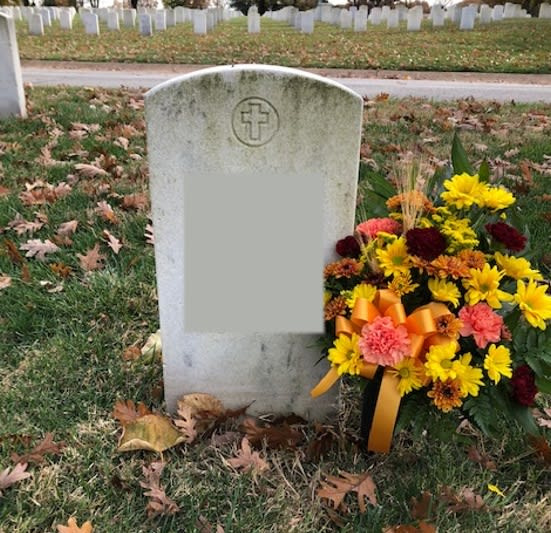
Ethan’s headstone gleamed unnaturally in the winter sun. Too clean. Too new. Too unearned in a world that had taken him too soon.
“Come say hi to your brother,” I said softly, extending my hand toward Noah.
He didn’t move. His eyes were wide and steady, staring not at the stone but past it, into some unseen horizon.
“Mom,” he whispered. “Ethan isn’t there.”
My heart leapt, then fell. My fingers curled around the daisies so tightly they threatened to snap the stems. “What do you mean he isn’t there?”
Noah tilted his head, his small face calm and sure. “He told me. He’s not in there.”
A cold, creeping chill ran down my spine, crawling along every nerve. I swallowed against the lump rising in my throat, trying to understand what my child had seen that I hadn’t.
The Secret Visits
Monday morning arrived, gray and drizzling. I drove Noah to school with the memory of the cemetery clinging to me like a wet coat. He leaned over from the back seat.
“He came back. By the fence,” he said.
My fingers froze on the wheel. “At school?”
Noah nodded, eyes shining with certainty. “He talks to me.”
“What does he say?” My voice was careful, a whisper of curiosity and fear.
He hesitated, his gaze slipping away toward the window. “It’s a secret.”
Every nerve in my body lit up like the wires of a live current. A secret from my five-year-old? And me, his mother, left out?
“Noah,” I said quietly, “we don’t keep secrets from Mom. If anyone tells you to keep a secret from me, you tell me anyway. Okay?”
He nodded, slowly, the movement hesitant.
That night, I called the school. My hands shook slightly as I spoke to the secretary, trying to keep my fear contained, trying to sound normal.
The next morning, I walked into the kindergarten office. My shoes clicked against the polished tile floor, echoing in the quiet.
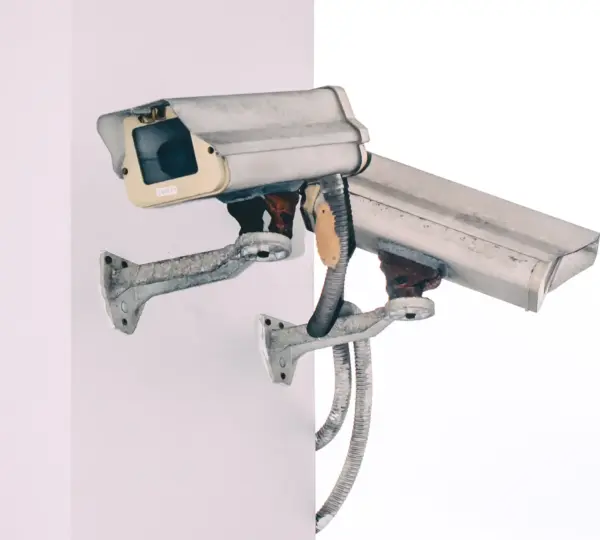
“Show me the security footage from the playground,” I said to Ms. Alvarez, the school secretary.
She hesitated, eyes flicking toward the screen behind her. I didn’t wait for permission. “My son is being approached,” I said. “Show me now.”
On the monitor, children ran in a blur of bright jackets, laughing and shouting in the early morning sun. Then Noah wandered toward the back fence.
He stopped.
He smiled.
He waved.
“Zoom in,” I ordered.
A man crouched on the other side of the fence. A work jacket, baseball cap pulled low. Half-hidden, leaning close, speaking through the metal bars. Noah laughed, answering him as though this was completely ordinary.
The man slipped something small through the fence.
My stomach lurched. My vision narrowed, focusing on him.
“Who is that?” I demanded.
Ms. Alvarez swallowed. “One of the contractors. He’s been fixing the exterior lights.”
The word “contractor” didn’t register. I saw the crash report I had refused to study for months. The photos. The name. The red-rimmed eyes.
“That’s him,” I whispered.
“Who?”
“The truck driver,” I said, my voice barely audible. “The one who hit them.”
The office went silent.
I called 911.
Confrontation
When officers arrived, they located him near the maintenance shed. He didn’t run. He didn’t resist.
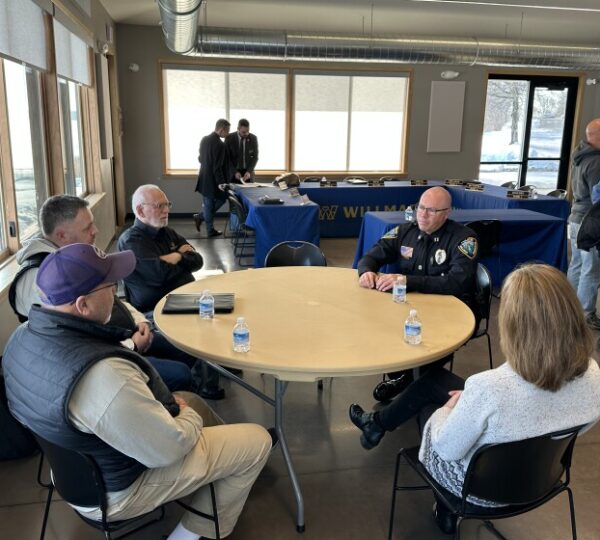
They let me see him, but not alone. He sat in a small conference room, cap removed, revealing thinning hair and eyes rimmed red. Hands clasped tight.
He looked up when I entered.
“Mrs. Elana,” he said hoarsely. Hearing my name on his lips made my skin crawl.
Noah pressed against my side. “That’s Ethan’s friend,” he whispered.
I sent Noah out with Ms. Alvarez, my stomach twisting.
I turned to the man. “Why were you talking to my son?”
He flinched. “I didn’t mean to scare him.”
“You told him you were Ethan,” I said. “You told him to keep secrets.”
His shoulders folded inward. “I know.”
Officer Haines asked for his name.
“Raymond Keller,” he said.
“Why approach the child?”
Raymond stared at his hands. “I saw him at pickup last week. He looks like Ethan,” he admitted. “I got the repair job on purpose.”
The words hit like a slap, sharp and unforgiving.
“Why?” I demanded.
“I can’t sleep,” he said. “Every time I close my eyes, I’m back in the truck. I have syncope… fainting spells. I was supposed to get cleared. Tests. I didn’t go. I couldn’t lose work.”
“And you drove anyway,” I said.
He nodded, tears pricking his eyes.
“And my son died,” I whispered, the weight of the words making the room feel suffocating.
“Yes,” he admitted.
“And you thought talking to Noah would help who?”
“Me,” he said quietly. “I thought if I could do something good… if I could help you stop crying… maybe I could breathe.”
I leaned forward. “So you used my living child to soothe your guilt.”
He didn’t argue.
Officer Haines offered a no-contact order. I asked for it. I asked that he be banned from the property. I asked the school to change its security protocol immediately.
The Truth for Noah
When Noah returned, clutching a plastic dinosaur like it was armor against the world, I knelt in front of him.
“That man is not Ethan,” I said gently.
Noah’s lip trembled. “But he said—”
“He said something that wasn’t true,” I said, voice steady and warm. “Grown-ups don’t put their sadness on kids. And they don’t ask kids to keep secrets.”
Noah blinked hard, the weight of realization pressing on him. “So Ethan didn’t tell him?”
“No,” I said. The words felt jagged, brittle, like shards of glass being swallowed. “Ethan didn’t.”
Noah cried then—not loudly, not with force, but softly, quietly, with the kind of devastation that only a child could embody. I held him until his breathing slowed, until the tremors of confusion and sorrow subsided.
Returning to the Cemetery
Two days later, I went to the cemetery alone. The wind cut through my coat, carrying a sharp chill and the scent of damp earth. Ethan’s name, etched in cold stone, felt small beneath my fingertips.
“Hi, baby,” I whispered. “I’m sorry I couldn’t see you. I’m sorry I couldn’t say goodbye.”
The air felt different now. Not haunted. Not heavy with unspoken horrors. Just honest.
“I can’t forgive him,” I said aloud, the words tasting bitter and true. “Maybe not ever. But I won’t let anyone speak for you. No more borrowed words. No more secrets.”
I pressed my palm to the cold stone.
“I’m going to keep Noah safe,” I promised. “And I’m going to keep you clear.”
The grief still hurt. It always would. But now it was the clean hurt of truth—the kind of sorrow that could be carried without shame, without lies, without shadows that reached into the innocence of my son.
