
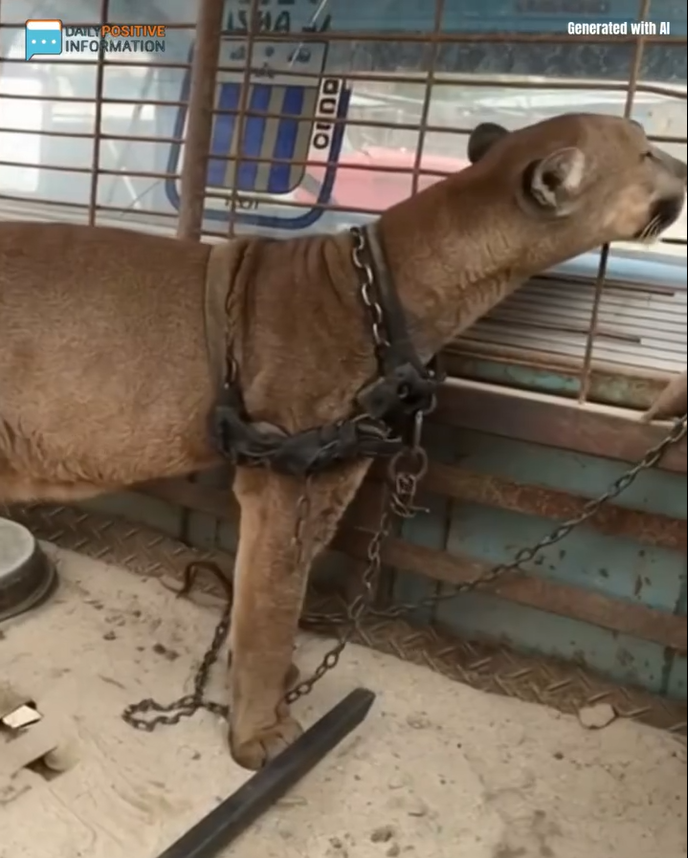
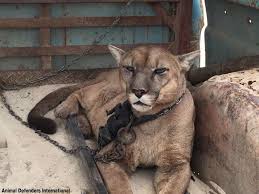
For more than two decades, a mountain lion named Mufasa lived a life no wild animal should ever endure — chained to the back of a truck and forced to travel from village to village as part of an illegal circus in Peru.
Mufasa’s story is one of prolonged suffering, exploitation, and survival — culminating in a dramatic rescue that has become symbolic of efforts to end animal abuse tied to circuses and the exotic pet trade.
The big cat’s name, Mufasa, was likely inspired by the noble lion from The Lion King — a contrast to the harsh reality of his life chained amidst circus equipment with no proper enclosure.
Mufasa was believed to have been taken from his natural home as a cub and sold into the illegal exotic pet trade before being used for entertainment by a traveling circus across remote Peruvian towns.
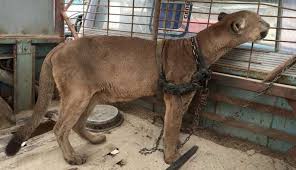
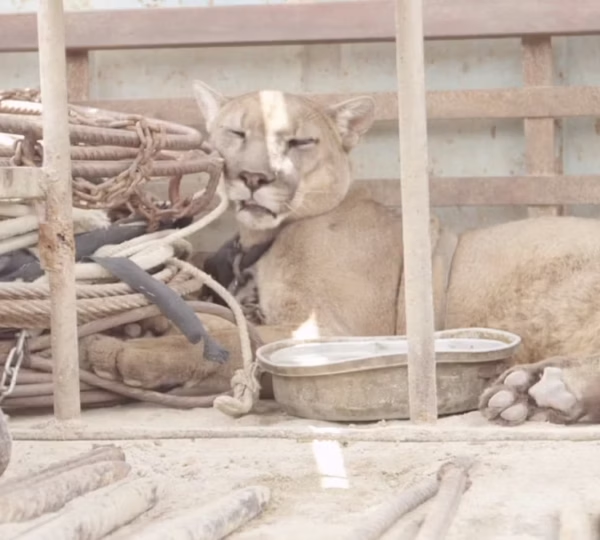
In many of the villages where the circus performed, he never knew anything close to a real habitat — no forests, no privacy, no grass, and no freedom of movement beyond the chains securing him to the truck bed.
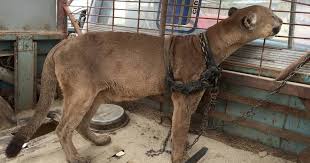
Rather than a cage or secure enclosure, Mufasa spent his life chained to the back of a pickup truck, surrounded by tent poles, metal equipment, and the constant noise that comes with constant transport.
According to rescuers, when they finally began cutting the heavy harness and chains from his body, Mufasa stretched in ways he had never been able to before — a poignant moment captured in photographs shared worldwide.
Jan Creamer, president of Animal Defenders International (ADI), described the scene as “heartbreaking,” noting that Mufasa’s body language gave the impression that he was “not even alive” before his chains were removed.
ADI is a nonprofit wildlife organization founded in 1990 that works to protect animals from cruelty worldwide, including enforcement of bans on animal performances and large‑scale rescue operations.
The rescue of Mufasa was part of ADI’s Operation Spirit of Freedom, a coordinated effort begun after Peru enacted a ban on the use of wild animals in circuses in 2011.
Peru’s wildlife protection laws make it illegal for circuses to keep and display wild animals, yet enforcement had been inconsistent until animal rights groups like ADI partnered with authorities to enforce the ban.
Over more than a year, ADI tracked down illegal circuses throughout Peru and worked with local officials to free dozens of animals — including lions, bears, monkeys, and big cats like Mufasa.
Rescuers documented horrific conditions in many of these circuses, where animals were confined to small cages or chains, denied proper nutrition, veterinary care, and the simple dignity of living in a controlled sanctuary.
When ADI’s teams located Mufasa’s circus, they were met with resistance from the circus owners — including an eight‑hour standoff between authorities and the handlers before Mufasa could be safely freed.
Once rescued, Mufasa was transported to the Spirit of Freedom rescue center near Lima, Peru, a facility operated by ADI to rehabilitate animals seized from abusive environments.
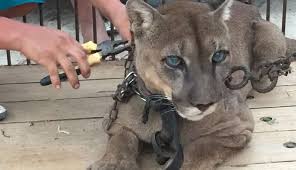
At the center, veterinary teams discovered that Mufasa was severely underweight and showed signs of severe malnutrition — as though he had rarely, if ever, been properly fed in his life.
More alarming than his physical state, rescuers reported that Mufasa was very nervous and fearful of people, a psychological effect of decades of confinement, abuse, and constant forced proximity to humans.
The veterinary team began a tailored treatment plan designed to improve his health gradually, including a nutrient‑rich diet, regular veterinary care, and gradual introduction to a more natural lifestyle.
Over subsequent weeks, Mufasa’s coat improved, his appetite strengthened, and the deep fear in his eyes began to soften as he started adjusting to compassionate care rather than cruelty.
The rehabilitation process was slow, carefully monitored by veterinarians, caretakers, and animal behavior specialists who understood how decades of abuse can affect an animal’s psyche and sense of safety.
Once Mufasa reached a healthier weight and stability, ADI began planning his move to a permanent safe habitat where he could live out his life in a protected environment resembling his natural range.
That permanent home became the Taricaya Ecological Reserve, a protected area of the Amazon rainforest set aside for wildlife rehabilitation and ecological conservation in southeastern Peru.
Taricaya has been used as a refuge for many rescued animals — some permanently, others released — offering vast areas of protected forest where animals can experience trees, grass, and space they never knew existed.
Unlike wild lions and mountain lions in nature, Mufasa was deemed unreleasable into the wild because decades of captivity had prevented him from developing survival skills needed to hunt or fend for himself.
However, that did not mean he would spend his life in chains; instead, he was moved into an expansive, natural enclosure where he could roam, rest, and explore without fear of predators or human exploitation.
When the day came to transfer Mufasa to Taricaya, supporters and rescuers documented his first steps into a life of freedom — moments marked by emotional reactions from witnesses and viral video footage shared online.
In those early moments, Mufasa cautiously explored his surroundings, sniffing at grass, pausing under tall foliage, and walking beyond enclosures he had never before been allowed to approach.
With nothing hurting him and nothing restraining him, each step symbolized a milestone in a life that had been defined by captivity rather than choice — a dramatic reversal of his 20‑year existence.
ADI’s president, Jan Creamer, described how remarkable it was to see Mufasa walk among trees and open space — a moment that contrasted starkly against his past life chained in the bed of a truck.
Creamer called his transformation “magical,” emphasizing that after years of suffering, he finally experienced the natural world — grass underfoot and sounds of the forest rather than circus music.
Mufasa’s story became an emblem of the broader persecution and rescue of wild animals from circuses in Latin America, highlighting the emotional and physical toll of forced performance on wildlife.
Though his early life was marked by adversity, Mufasa’s rehabilitation was not his only legacy. His case drew global attention to illegal animal trade, circus bans, and enforcement of animal rights laws.
Over the course of Operation Spirit of Freedom, ADI helped rescue more than 100 animals, including lions, tigers, bears, monkeys, and exotic birds from abusive circuses throughout Peru and Colombia.
Many of those animals were given second chances — some at Taricaya, others at sanctuaries across the globe where they could live without exploitation.
The success of this operation also contributed to broader increases in legislation banning the use of wild animals in entertainment across Latin America and incentivized enforcement of existing wildlife protection laws.
ADI’s efforts didn’t stop with Mufasa; their campaigns and rescues continue, working with governments and wildlife officials to track down illegal circuses and shut down animal abuse operations.
Sanctuaries, including Taricaya, are vital to providing lifelong care for animals that cannot be reintroduced to the wild but deserve comfort, dignity, and safety in their remaining years.
These protected reserves also support conservation efforts, environmental protection, and education about the importance of wild habitats for animals displaced or harmed by human exploitation.
While Mufasa’s rescue and transformation are deeply touching, they also remind us of the ongoing need for vigilance against illegal animal trade, educational outreach, and enforcement of animal welfare laws.
Support from donors and animal lovers around the world has been instrumental in funding the care, transport, rehabilitation, and long‑term maintenance of rescued animals like Mufasa.
Today, Taricaya and similar reserves offer safe homes for animals previously denied the dignity of natural behavior — places where they can live without performance, pain, or exploitation.
Mufasa’s first steps into this protected forest were not just personal triumphs; they were symbols of freedom, hope, and the resilience of the natural world in the face of human cruelty.
Although he could never return to the wild, the joy in his exploratory steps among trees and grass marked a new chapter — a life sustained by compassion rather than chains.
Mufasa’s legacy continues to inspire animal advocates and members of the public worldwide to demand better for animals held captive in unlawful conditions and to pursue laws that protect wildlife.
His story endures as a testament to what can happen when dedicated individuals, organizations, and governments decide to protect, rather than exploit, the creatures with whom we share this planet.
