
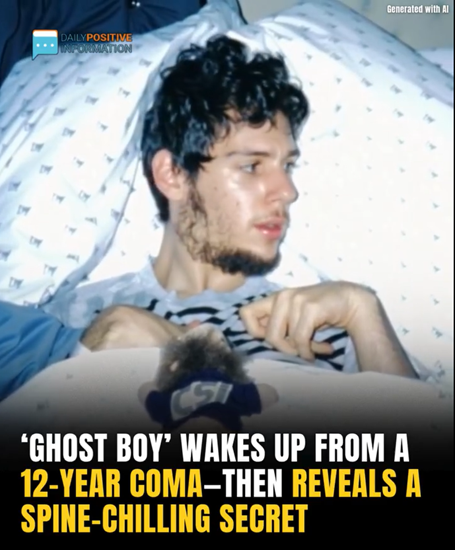
The idea of being fully conscious yet unable to communicate is one of the most terrifying experiences imaginable. For some, this is not just a nightmare—it is a reality that tests the limits of human endurance.
Martin Pistorius, a young boy from South Africa, experienced this unimaginable fate starting at age twelve. A mysterious neurological condition robbed him of his ability to move and speak, leaving him completely dependent on others.
Initially, doctors and family members believed he had fallen into a strange coma. Despite appearances, Martin was fully aware of his surroundings and the conversations happening around him, though he could neither respond nor indicate his consciousness.
For years, he existed silently inside a body that refused to obey him. This “locked-in” state left him in a form of isolation that most people could scarcely imagine enduring for even a single day.
Martin described his awareness returning gradually, a slow, disorienting process that blurred the line between life and unconsciousness. “It wasn’t like one moment I was asleep and the next moment I was awake,” he later explained.
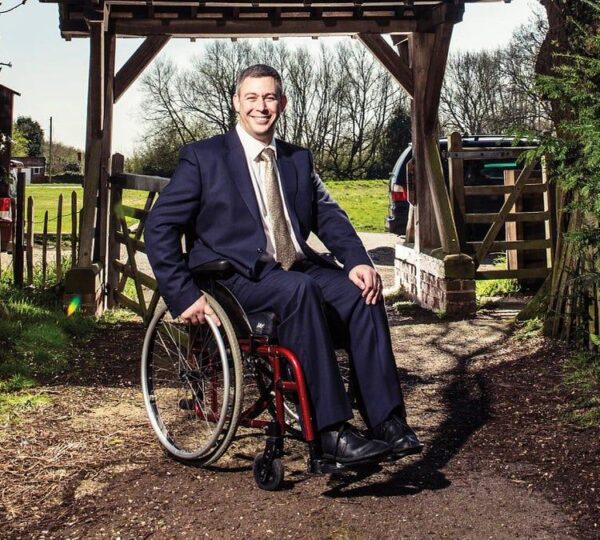
As his consciousness strengthened, Martin realized the horrifying truth: he was trapped within his own body, unable to interact with the world or communicate even the simplest needs or emotions.
Though physically present, he was effectively invisible to those around him. Teachers, caregivers, and family members assumed he remained unconscious, reinforcing a profound sense of isolation and helplessness.
During these years, Martin observed life continuing around him, fully aware but utterly powerless. He witnessed conversations, family struggles, and school interactions, all without being able to respond.
The psychological toll of being conscious while immobile cannot be overstated. Martin faced intense frustration, anxiety, and a sense of imprisonment that few could comprehend.
Eventually, his situation drew the attention of medical specialists who began to suspect that something more complex than a simple coma was occurring. Yet, for years, his condition baffled doctors and caregivers alike.
Martin’s experience was not simply physical; it was deeply cognitive and emotional. He retained thoughts, memories, and reasoning abilities, trapped in a body that refused to cooperate.
He describes the sensation as being both “inside” and “outside” of his body simultaneously—a dual existence that was profoundly disorienting and emotionally draining.
Eventually, with the help of family, therapists, and assistive technology, Martin began to find ways to communicate, first through subtle eye movements and eventually with a computer-assisted communication system.
This system, designed to translate eye or minimal head movements into text, became his voice, giving him a tool to participate in the world once more. Though it could never fully restore natural speech, it offered a crucial bridge to connection and independence.
Through persistence and support, Martin slowly regained limited mobility. He learned to walk again, defying initial medical expectations, though his ability to speak naturally has never returned.
His resilience and determination have inspired millions worldwide, as evidenced by the widespread attention his story has garnered through interviews, articles, and social media coverage.
Martin’s experiences were documented in his autobiographical book, Ghost Boy: My Escape from a Life Locked Inside My Own Body, published by Simon & Schuster. The book details his internal life, struggles, and eventual steps toward reconnection with the external world.
Readers around the globe were captivated by his narrative, reflecting the universal appeal of overcoming extreme adversity through courage, intellect, and perseverance.
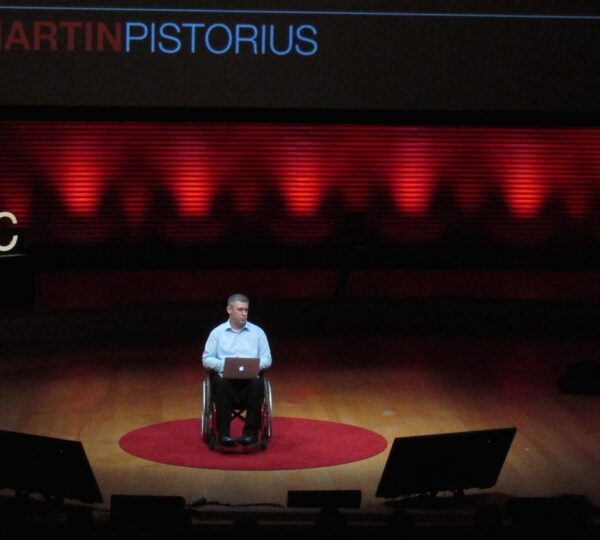
The book not only recounts medical challenges but also highlights the emotional and psychological dimensions of locked-in syndrome, providing a detailed view of daily life from the perspective of someone trapped within.
Martin’s life story has reached millions, including over ten million viewers of his interview with NBC News, where he shared his reflections on survival, patience, and the human spirit.
Despite the limitations imposed by his condition, Martin has achieved remarkable personal and professional success. He operates his own business from his home in Essex, UK, showcasing his independence and entrepreneurial skills.
He is married, maintaining meaningful personal relationships that reflect his ability to navigate complex social dynamics despite physical constraints. His story demonstrates that even extreme challenges do not preclude fulfillment, connection, and purpose.
The neurological condition Martin suffered from remains relatively rare and not fully understood. It represents a complex interaction between brain function, neural pathways, and motor control, highlighting gaps in medical knowledge and treatment options.
Medical experts describe cases like Martin’s as “locked-in syndrome,” where cognitive faculties remain intact despite near-total paralysis. Awareness exists without the ability to express or act, creating profound isolation.

Martin’s journey underscores the importance of early recognition, adaptive technology, and emotional support for individuals experiencing similar conditions, as timely intervention can dramatically alter quality of life.
His story also illuminates the limitations of traditional diagnostic methods, which often fail to detect consciousness in patients who cannot communicate physically.
Through his experience, Martin became an advocate for awareness and research into neurological disorders, assisting in advancing public understanding of conditions like locked-in syndrome.
His advocacy emphasizes empathy, patience, and the need to recognize the humanity of individuals whose outward appearances might suggest unconsciousness or incapacity.
Martin’s narrative provides insights into the resilience of the human mind. Despite extreme isolation and frustration, he maintained cognitive clarity, emotional depth, and the capacity for hope.
He also reflects on the role of family and caregivers, highlighting how attentive, compassionate, and innovative support systems can dramatically influence outcomes for patients trapped in similar conditions.
Educational institutions, healthcare providers, and technology developers have drawn inspiration from Martin’s experience, leading to improved accessibility tools and communication systems for those with severe physical limitations.
Through his book, interviews, and public speaking, Martin contributes to societal understanding of neurological conditions, bridging gaps between medical knowledge and lived experience.
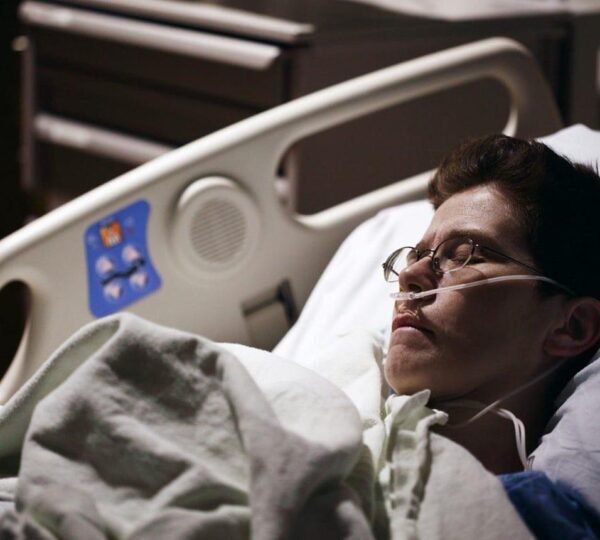
His story exemplifies the human capacity for adaptation. Though speech and mobility were lost for many years, intellect, memory, and emotional life remained intact, illustrating that identity and consciousness persist beyond physical constraints.
The psychological implications of Martin’s experiences also highlight the importance of addressing mental health in patients with severe physical disabilities, emphasizing emotional resilience alongside medical care.
Technological innovations, such as eye-tracking software and voice synthesis systems, were essential in restoring agency and autonomy for Martin, demonstrating the potential of adaptive tools to transform lives.
Martin’s ongoing life in Essex shows that recovery, in varying forms, is possible even after years of extreme physical limitation, offering hope to families and patients confronting similar conditions worldwide.
By sharing his story openly, Martin also challenges societal assumptions about disability, ability, and consciousness, emphasizing that true awareness is not always externally visible.
His marriage and active professional life underscore that meaningful experiences, relationships, and contributions are attainable regardless of physical impairments, redefining notions of independence and self-determination.
Martin’s narrative also emphasizes patience and perseverance. Recovery from extreme neurological impairment is gradual, often requiring years of incremental progress, sustained support, and personal determination.
Readers of Ghost Boy gain insight into daily life in a locked-in state, understanding the mental strategies Martin employed to maintain engagement with the external world despite complete immobilization.
His story has sparked global interest, encouraging further research, awareness campaigns, and adaptive technological development to assist others in similar circumstances.
Martin Pistorius embodies resilience, courage, and hope, demonstrating that even in seemingly hopeless situations, human determination, ingenuity, and support networks can foster significant life improvements.
In the end, Martin’s journey is a testament to human strength, illustrating that consciousness, identity, and purpose endure even when the body is temporarily imprisoned, inspiring millions to value life, empathy, and perseverance.
