
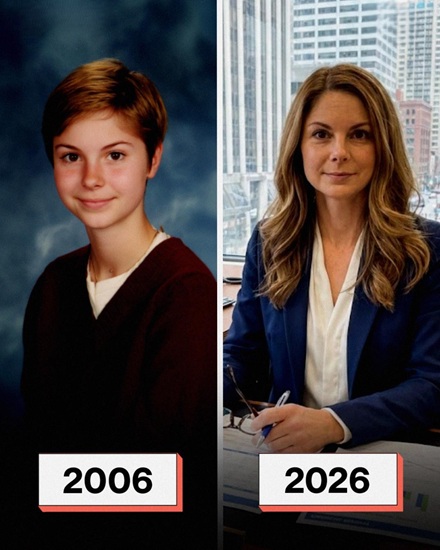
I can still remember the smell, even after two decades. Industrial wood glue. Burnt hair. The faint metallic scent of old desks that had absorbed years of teenage restlessness.
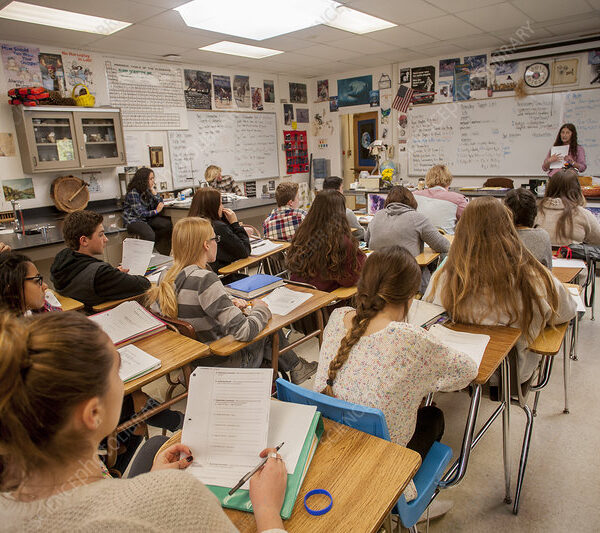
Fluorescent lights hummed overhead with a constant, irritating buzz, casting everything in that pale, unforgiving glow unique to public schools built in the 1970s.
It was sophomore chemistry. I was sixteen — quiet, studious, and deeply committed to staying invisible. I had mastered the art of shrinking myself: sitting in the back row, speaking only when called upon, wearing neutral colors, keeping my braid tight and practical down the center of my back.
Blending in felt safer than being seen. Attention, in my experience, was rarely kind. But he made sure I was seen. He sat behind me that semester in his football jacket, broad-shouldered and loud, the kind of boy teachers tolerated and classmates admired.
His laugh carried across rooms. His name was spoken with admiration in the hallways. Coaches praised him. Girls noticed him. Other boys followed his lead. Popularity wrapped around him like armor.
It wasn’t the first time someone had pulled my hair. I assumed it was nothing more than another small attempt to get a reaction.
I refused to give him one.
The bell rang forty minutes later. Chairs scraped against linoleum as students surged toward the door. I gathered my notebook, slid my pencil into the spiral binding, and tried to stand.
Pain exploded across my scalp.
It was instant and blinding — a tearing, searing sensation that rooted me in place. I gasped and reached back instinctively. My braid would not move. I pulled again, harder, and the pain intensified.
The laughter started before understanding did.
I heard his voice above the others, bright with amusement. I heard someone say, “No way.” Another voice: “That’s savage.” A girl near the front covered her mouth, not in horror, but in barely concealed delight.
He had glued my braid to the metal frame of the desk.
Not a small dab. Not an accident. He had taken the time — while I was focused on the board — to wind the end of my braid around the cold bar beneath the desktop and secure it there with industrial-strength glue he must have brought from shop class.
I stood trapped while thirty students watched.
Mr. Jensen shouted for quiet, but even his voice sounded distant. My scalp throbbed as tears blurred my vision. I remember the humiliation more vividly than the pain — the feeling of being reduced to spectacle.
The school nurse had to cut me free.

She worked carefully, murmuring reassurances as scissors sliced through hair I had grown for years. When she finished, I touched the back of my head and felt the damage.
A bald patch the size of a baseball. Uneven strands where my braid had been. By the end of the day, everyone knew. For the rest of high school, they called me “Patch.”
Humiliation like that does not evaporate with time. It calcifies. It embeds itself into memory and reshapes how you move through the world.
I stopped raising my hand in class. I stopped attending football games. I stopped believing that invisibility was enough to protect me.
If I could not be popular, I decided, I would be powerful.
That decision did not happen in a single dramatic moment. It was quieter than that. It showed up in late nights studying while others were at parties.
It showed up in scholarship applications filled out meticulously at the kitchen table. It showed up in my refusal to let anger consume me — because anger is loud, and I had learned that loudness invites attention.
I chose discipline instead.
Twenty years later, I owned controlling interest in a regional community bank. It had not been handed to me. I worked as an intern during college, stayed through graduate school, moved from analyst to risk officer to executive leadership.
I learned how money moves, how risk is measured, how decisions ripple through families and communities. By the time I became majority shareholder, I no longer entered rooms with my head down.
I reviewed high-risk loans personally. Not because I distrusted my team, but because I understood how fragile a financial life can be. A single medical emergency. A failed contract. A downturn in the local economy. Behind every application was a story.
Two weeks before everything shifted, my assistant placed a file on my desk.
“You’ll want to see this one,” she said.
Her tone was neutral, but curious.
I opened the folder.
The name froze my fingers.
Mark H.
Same town. Same birth year.
I do not believe in fate. But I understand irony.

My former bully was asking my bank for $50,000.
On paper, it was an easy denial. His credit score had deteriorated significantly. Credit cards were maxed out. Car payments overdue. No substantial collateral. Several short-term business ventures that had failed to produce stable income.
From a purely financial standpoint, the risk profile was high.
Then I read the purpose of the loan.
Emergency pediatric cardiac surgery.
I closed the file and leaned back in my chair.
Numbers are clean. They either qualify or they do not. But life is rarely that simple.
I told my assistant to send him in.
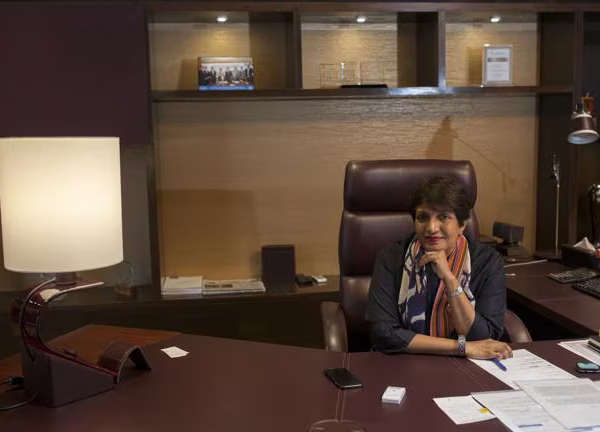
When he stepped into my office, I barely recognized him. The confident linebacker was gone. In his place stood a thin, exhausted man wearing a suit that did not fit quite right, as if purchased for an occasion he never expected to face. His shoulders curved inward. His eyes carried the weight of sleepless nights.
He extended his hand automatically, then hesitated when he read my nameplate.
Claire Thompson.
“Have we met?” he asked uncertainly.
“Sophomore chemistry was a long time ago,” I said calmly.
The color drained from his face.
Recognition arrived slowly, then all at once. His jaw tightened. His gaze flickered to the floor.
“I… didn’t know,” he said quietly. “I’m sorry to waste your time.”
“Sit,” I told him.
He obeyed.
His hands trembled slightly as they rested on his knees. The man in front of me looked nothing like the boy who had laughed while I stood trapped at my desk.
“I know what I did to you,” he said. “I was cruel. I thought it was funny.” His voice cracked. “But please… don’t punish her for that.”
“Your daughter?” I asked.
“Lily. She’s eight.” He swallowed. “She was born with a congenital heart defect. The surgery is in two weeks. Insurance covers part of it, but not enough. I’ve tried everywhere.”
I studied him carefully. Not for revenge. For truth.
Desperation cannot easily be faked.
The rejection stamp sat near my elbow. So did the approval stamp.
Power is quiet. It does not need to raise its voice.
“I’m approving the full amount,” I said at last. “Interest-free.”
His head snapped up, disbelief flashing across his face.
“But there’s a condition.”
I slid the contract toward him and pointed to the handwritten clause at the bottom.
He read it once. Then again.
“You can’t be serious,” he whispered.
“I am.”
The condition was simple in structure, but not in impact.
He would speak at our former high school’s annual anti-bullying assembly the following day. He would describe exactly what he had done to me — the glue, the humiliation, the nickname — using my full name.
The event would be recorded for educational purposes. If he minimized, deflected, or refused to appear, the loan agreement would be void.
“You want me to humiliate myself,” he said.
“I want you to tell the truth.”
Silence stretched between us.
“Claire… I was a kid.”
“So was I.”
He stared at the page for a long time. I could almost see the conflict playing out — pride battling fatherhood, image battling accountability.
Finally, he picked up the pen.
He signed.
The next morning, I stood at the back of our old auditorium. The same faded curtains framed the stage. A banner hung overhead: Words Have Weight.
Students filled the seats, whispering and scrolling on their phones. Teachers lined the walls. The principal introduced the speaker as a local parent who wanted to share an important lesson.

Mark walked onto the stage as if stepping into fire.
He gripped the podium, inhaled, and began.
“I played football here,” he said. “I thought popularity made me important.”
He paused. The easy route was right there — a general speech about kindness, vague regrets, lessons learned.
Then he saw me.
“I glued her braid to her desk,” he said clearly.
Gasps rippled across the auditorium.
“I led the nickname,” he continued. “I encouraged the laughter. It wasn’t a joke. It was cruelty.”
The room went silent.
“We were old enough to know better,” he said. “And I chose not to.”
Then he looked directly at me.
“Claire Thompson, I am genuinely sorry. You deserved respect. I was wrong.”
There was no theatrical flourish. No attempt to soften the memory. Just acknowledgment.
“I have a daughter,” he went on. “When I imagine someone treating her the way I treated Claire, it makes me sick. That’s when I understood the damage I caused.”
Applause began hesitantly, then grew.
Afterward, students lined up to speak with him. I watched as a teenage boy approached, eyes downcast. Mark knelt so they were eye level. I could not hear their conversation, but I saw something I had not seen twenty years ago — humility.
When the crowd thinned, he approached me.
“I almost didn’t do it,” he admitted. “But I’ve protected the wrong image for twenty years.”
“You fulfilled the condition,” I said. “The hospital will receive the funds within the hour.”
Relief flooded his expression.
“But come back to the bank with me,” I added.
He looked confused.
“Some of your debt isn’t recklessness,” I told him later in my office. “It’s medical bills and failed contracts during a volatile economy. We can restructure it. Consolidate high-interest balances. Create a sustainable payment plan. I’ll oversee it personally.”
“You’d do that?” he asked.
“For Lily,” I said. “And because accountability should lead to growth.”
He broke then — not dramatically, but quietly. Tears slipped down his face as he tried to steady his breathing.
“I don’t deserve this.”
“Maybe not before,” I replied. “But now you do.”
We hugged — not to erase the past, because the past cannot be erased — but to acknowledge it.
As I drove home that afternoon, I realized something fundamental had shifted inside me. For years, I believed power meant control — the ability to deny, to refuse, to protect myself from ever being vulnerable again.
But real power is more nuanced.
It is the ability to decide who you become when given the chance.
I did not require his public apology for revenge. I required it because silence protects the wrong people. Because teenagers sitting in that auditorium needed to see what accountability looks like. Because harm does not dissolve simply because time passes.
For the first time in twenty years, the memory of that chemistry classroom did not sting when it surfaced.
It felt resolved.
So I still ask the question — not from bitterness, but from reflection:
Was I right to require public accountability? Or did I cross a line between justice and retribution?
Perhaps the answer depends on how we define growth.
What I know is this: cruelty thrives in silence. Change begins with truth. And sometimes, the most powerful decision is not whether to punish — but whether to transform pain into something that prevents it from happening again.
