...

A Reflective Radio Broadcast from 1965 That Continues to Inspire Discussion Today

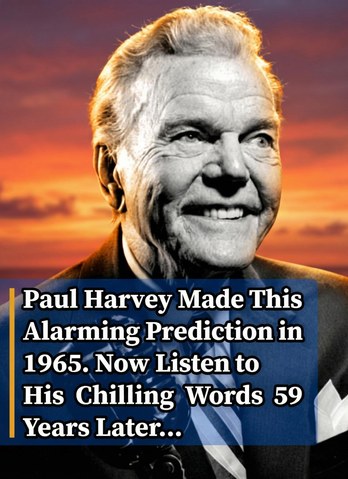
A short radio commentary recorded in the mid-1960s by American broadcaster Paul Harvey has quietly re-entered modern conversations.

Not through controversy or sensationalism, but because of how thoughtful and relevant it feels decades later.

Commonly associated with the phrase “If I Were the Devil,” the message is often misunderstood by those encountering it for the first time.

Rather than delivering a dramatic warning or a literal prediction, Harvey offered a reflective and imaginative exercise—one designed to prompt listeners to think carefully about human behavior, cultural priorities, and the subtle ways societies change over time.

At its core, the commentary is not about fear, accusation, or inevitability. It is about awareness.

Harvey’s tone is calm, measured, and almost conversational, consistent with the radio style of his era.

He does not shout, threaten, or demand agreement. Instead, he invites listeners to consider a hypothetical perspective, using symbolism and restraint to encourage introspection.

This approach was typical of thoughtful radio commentary in the 1950s and 1960s, when broadcasters often sought to engage the public in shared reflection rather than provoke emotional reactions.

When the broadcast first aired, it was received as a creative and philosophical monologue.

Listeners of the time were accustomed to commentary that explored moral questions, civic responsibility, and cultural direction through storytelling and metaphor.

Harvey’s message fit comfortably within that tradition. It was not intended to define the future or predict specific events, but to explore how small, everyday choices can gradually shape the character of a society.

In that sense, the message was less about where the world was headed and more about how individuals influence the path through their values and decisions.

One of the defining features of the commentary is its focus on gradual change rather than sudden collapse. Harvey does not describe chaos arriving overnight.

Instead, he paints a picture of slow transformation—one marked by subtle shifts in priorities and attitudes.

He suggests that when comfort becomes more important than character, when distraction replaces reflection, and when convenience outweighs responsibility, meaningful change occurs almost unnoticed.

This idea resonated with audiences then, as it reflected common concerns about modernization, media influence, and cultural complacency during a period of rapid social change.

Importantly, Harvey’s use of symbolism allows the message to remain flexible across generations.

He does not anchor his ideas to specific technologies, political movements, or historical events.

Instead, he focuses on universal human tendencies: the desire for ease, the attraction to entertainment, and the challenge of maintaining discipline and purpose.

Because of this, the commentary does not feel locked into its time. Its themes can be interpreted and reinterpreted as society evolves, which helps explain why it continues to feel relevant long after its original broadcast.

In the decades since, the world has changed dramatically. Advances in technology, communication, and media have reshaped how people interact, learn, and spend their attention.

Modern audiences often encounter Harvey’s words through recordings shared online, removed from their original radio context.

When heard today, the message can feel striking—not because it explicitly references modern life, but because its themes align with contemporary experiences.

Concerns about constant distraction, shortened attention spans, and the difficulty of maintaining focus and connection are woven naturally into the reflection, even though they were expressed long before the digital age.

This perceived relevance has led some listeners to interpret the commentary as prophetic. However, a closer examination suggests that its power lies not in prediction, but in observation.

Harvey was not forecasting specific developments; he was describing patterns of human behavior that repeat across time.

Societies have always faced the challenge of balancing progress with principle, and individuals have always struggled to align their actions with their values.

By framing these challenges in symbolic language, Harvey created a message that transcends its original moment without claiming special insight into the future.

Another reason the commentary endures is its refusal to assign blame. Harvey does not single out particular groups, institutions, or generations. Instead, he emphasizes personal responsibility and self-awareness.

The message encourages listeners to look inward rather than outward, to examine their own habits and priorities before judging the direction of society as a whole.

This emphasis on individual accountability makes the commentary accessible and constructive, rather than divisive or accusatory.

Paul Harvey’s broader body of work helps place this message in context.

Known for his distinctive voice and storytelling style, Harvey built a career on engaging audiences through clarity, curiosity, and respect for the listener’s intelligence.

His commentaries often highlighted overlooked details, moral questions, and human-interest stories that invited reflection rather than outrage.

The enduring appeal of “If I Were the Devil” aligns with this legacy. It reflects his belief that meaningful communication should inspire thought, not dictate conclusions.

The ad-friendly and enduring nature of the message is also rooted in its balance. It does not rely on extreme language or shocking imagery.

Its power comes from restraint and clarity, making it suitable for thoughtful discussion across different platforms and audiences.

By avoiding explicit hostility or fear-driven rhetoric, the commentary remains accessible to listeners with diverse perspectives.

This balance helps explain why it continues to be shared and discussed without losing its relevance or integrity.

Modern listeners often find that the message prompts personal reflection rather than agreement or disagreement. It raises questions rather than answers: How do we use our time?

What do we prioritize? How do small choices shape larger outcomes?

These questions are as relevant today as they were when the commentary was first aired.

In a fast-moving world filled with constant information and competing demands, the reminder to pause and reflect can feel especially meaningful.

It is also worth noting that the commentary gains depth when understood within its historical setting.

The 1960s were a time of cultural transition, marked by social change, technological advancement, and shifting norms.

Harvey’s reflection emerged during this period, offering listeners a way to think critically about progress without rejecting it.

He did not argue against change itself, but against unexamined change—change that occurs without intention or awareness. This distinction is key to understanding the message’s purpose and tone.

Today, revisiting the commentary can feel less like hearing a voice from the past and more like engaging in an ongoing conversation.

Each generation brings its own experiences and concerns to the message, finding new layers of meaning without altering its core.

This adaptability speaks to the strength of Harvey’s approach and the universality of the themes he explored.

Ultimately, the lasting significance of Paul Harvey’s 1965 radio commentary lies in its quiet wisdom.

It reminds listeners that societies are not shaped solely by grand events or powerful institutions, but by everyday decisions made by ordinary people.

What we choose to value, how we communicate, and where we direct our attention all contribute to the broader cultural landscape.

By encouraging awareness, balance, and responsibility, the message continues to offer guidance without instruction.

Rather than serving as a warning or a prediction, the commentary functions as a mirror. It reflects back the tendencies and choices that define human behavior across time.

In doing so, it invites listeners to slow down, think critically, and act with intention. That invitation remains relevant, not because the world has stayed the same, but because the fundamental challenges of being human have not.

In an era often dominated by noise, speed, and division, the calm and reflective tone of Paul Harvey’s message stands out.

Its endurance is a testament to the power of thoughtful communication and the enduring value of personal responsibility.

Revisiting his words today offers not a sense of alarm, but a gentle reminder: reflection, purpose, and intention are timeless qualities, and they remain as important now as they were when the message was first shared.

A short radio commentary recorded in the mid-1960s by American broadcaster Paul Harvey has quietly re-entered modern conversations.

Not through controversy or sensationalism, but because of how thoughtful and relevant it feels decades later.

Commonly associated with the phrase “If I Were the Devil,” the message is often misunderstood by those encountering it for the first time.

Rather than delivering a dramatic warning or a literal prediction, Harvey offered a reflective and imaginative exercise—one designed to prompt listeners to think carefully about human behavior, cultural priorities, and the subtle ways societies change over time.

At its core, the commentary is not about fear, accusation, or inevitability. It is about awareness.

Harvey’s tone is calm, measured, and almost conversational, consistent with the radio style of his era.

He does not shout, threaten, or demand agreement. Instead, he invites listeners to consider a hypothetical perspective, using symbolism and restraint to encourage introspection.

This approach was typical of thoughtful radio commentary in the 1950s and 1960s, when broadcasters often sought to engage the public in shared reflection rather than provoke emotional reactions.

When the broadcast first aired, it was received as a creative and philosophical monologue.

Listeners of the time were accustomed to commentary that explored moral questions, civic responsibility, and cultural direction through storytelling and metaphor.

Harvey’s message fit comfortably within that tradition. It was not intended to define the future or predict specific events, but to explore how small, everyday choices can gradually shape the character of a society.

In that sense, the message was less about where the world was headed and more about how individuals influence the path through their values and decisions.

One of the defining features of the commentary is its focus on gradual change rather than sudden collapse. Harvey does not describe chaos arriving overnight.

Instead, he paints a picture of slow transformation—one marked by subtle shifts in priorities and attitudes.

He suggests that when comfort becomes more important than character, when distraction replaces reflection, and when convenience outweighs responsibility, meaningful change occurs almost unnoticed.

This idea resonated with audiences then, as it reflected common concerns about modernization, media influence, and cultural complacency during a period of rapid social change.

Importantly, Harvey’s use of symbolism allows the message to remain flexible across generations.

He does not anchor his ideas to specific technologies, political movements, or historical events.

Instead, he focuses on universal human tendencies: the desire for ease, the attraction to entertainment, and the challenge of maintaining discipline and purpose.

Because of this, the commentary does not feel locked into its time. Its themes can be interpreted and reinterpreted as society evolves, which helps explain why it continues to feel relevant long after its original broadcast.

In the decades since, the world has changed dramatically. Advances in technology, communication, and media have reshaped how people interact, learn, and spend their attention.

Modern audiences often encounter Harvey’s words through recordings shared online, removed from their original radio context.

When heard today, the message can feel striking—not because it explicitly references modern life, but because its themes align with contemporary experiences.

Concerns about constant distraction, shortened attention spans, and the difficulty of maintaining focus and connection are woven naturally into the reflection, even though they were expressed long before the digital age.

This perceived relevance has led some listeners to interpret the commentary as prophetic. However, a closer examination suggests that its power lies not in prediction, but in observation.

Harvey was not forecasting specific developments; he was describing patterns of human behavior that repeat across time.

Societies have always faced the challenge of balancing progress with principle, and individuals have always struggled to align their actions with their values.

By framing these challenges in symbolic language, Harvey created a message that transcends its original moment without claiming special insight into the future.

Another reason the commentary endures is its refusal to assign blame. Harvey does not single out particular groups, institutions, or generations. Instead, he emphasizes personal responsibility and self-awareness.

The message encourages listeners to look inward rather than outward, to examine their own habits and priorities before judging the direction of society as a whole.

This emphasis on individual accountability makes the commentary accessible and constructive, rather than divisive or accusatory.

Paul Harvey’s broader body of work helps place this message in context.

Known for his distinctive voice and storytelling style, Harvey built a career on engaging audiences through clarity, curiosity, and respect for the listener’s intelligence.

His commentaries often highlighted overlooked details, moral questions, and human-interest stories that invited reflection rather than outrage.

The enduring appeal of “If I Were the Devil” aligns with this legacy. It reflects his belief that meaningful communication should inspire thought, not dictate conclusions.

The ad-friendly and enduring nature of the message is also rooted in its balance. It does not rely on extreme language or shocking imagery.

Its power comes from restraint and clarity, making it suitable for thoughtful discussion across different platforms and audiences.

By avoiding explicit hostility or fear-driven rhetoric, the commentary remains accessible to listeners with diverse perspectives.

This balance helps explain why it continues to be shared and discussed without losing its relevance or integrity.

Modern listeners often find that the message prompts personal reflection rather than agreement or disagreement. It raises questions rather than answers: How do we use our time?

What do we prioritize? How do small choices shape larger outcomes?

These questions are as relevant today as they were when the commentary was first aired.

In a fast-moving world filled with constant information and competing demands, the reminder to pause and reflect can feel especially meaningful.

It is also worth noting that the commentary gains depth when understood within its historical setting.

The 1960s were a time of cultural transition, marked by social change, technological advancement, and shifting norms.

Harvey’s reflection emerged during this period, offering listeners a way to think critically about progress without rejecting it.

He did not argue against change itself, but against unexamined change—change that occurs without intention or awareness. This distinction is key to understanding the message’s purpose and tone.

Today, revisiting the commentary can feel less like hearing a voice from the past and more like engaging in an ongoing conversation.

Each generation brings its own experiences and concerns to the message, finding new layers of meaning without altering its core.

This adaptability speaks to the strength of Harvey’s approach and the universality of the themes he explored.

Ultimately, the lasting significance of Paul Harvey’s 1965 radio commentary lies in its quiet wisdom.

It reminds listeners that societies are not shaped solely by grand events or powerful institutions, but by everyday decisions made by ordinary people.

What we choose to value, how we communicate, and where we direct our attention all contribute to the broader cultural landscape.

By encouraging awareness, balance, and responsibility, the message continues to offer guidance without instruction.

Rather than serving as a warning or a prediction, the commentary functions as a mirror. It reflects back the tendencies and choices that define human behavior across time.

In doing so, it invites listeners to slow down, think critically, and act with intention. That invitation remains relevant, not because the world has stayed the same, but because the fundamental challenges of being human have not.

In an era often dominated by noise, speed, and division, the calm and reflective tone of Paul Harvey’s message stands out.

Its endurance is a testament to the power of thoughtful communication and the enduring value of personal responsibility.

Revisiting his words today offers not a sense of alarm, but a gentle reminder: reflection, purpose, and intention are timeless qualities, and they remain as important now as they were when the message was first shared.