
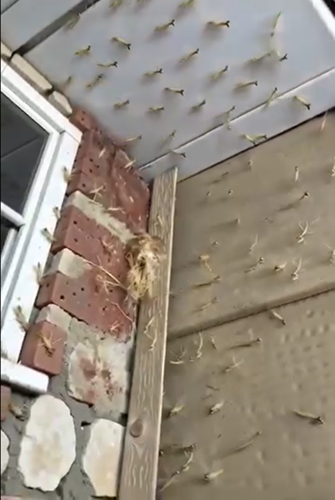
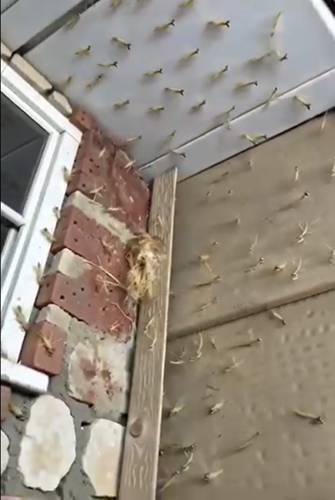
One quiet spring morning, as I opened my front door to let in the fresh air, I was met with an unexpected and fascinating sight.
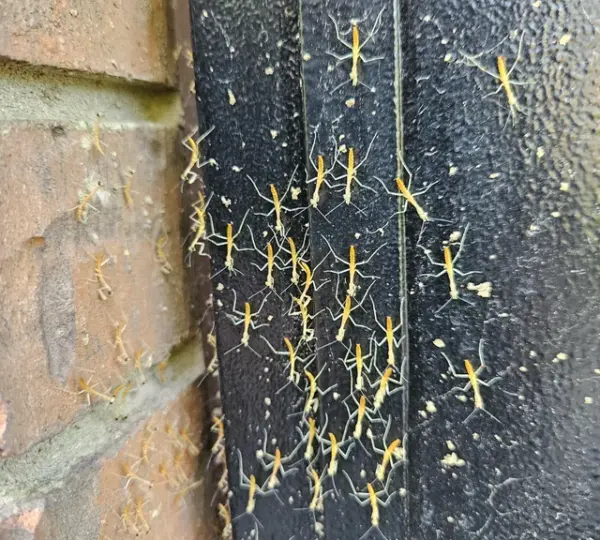
Dozens of tiny insects were scattered across my doorstep, slowly moving in different directions as if exploring a brand-new world.
At first glance, they looked like delicate green threads with legs. When I leaned closer, I realized I was looking at baby praying mantises — newly hatched and no larger than my pinky finger.
It was both surprising and magical. The brick wall beside my door seemed alive with movement. Some of the hatchlings clung to the surface, while others made their way toward nearby plants.
The air felt still and calm, yet there was an unmistakable sense that something extraordinary had just occurred.
The Ootheca: Nature’s Protective Nursery
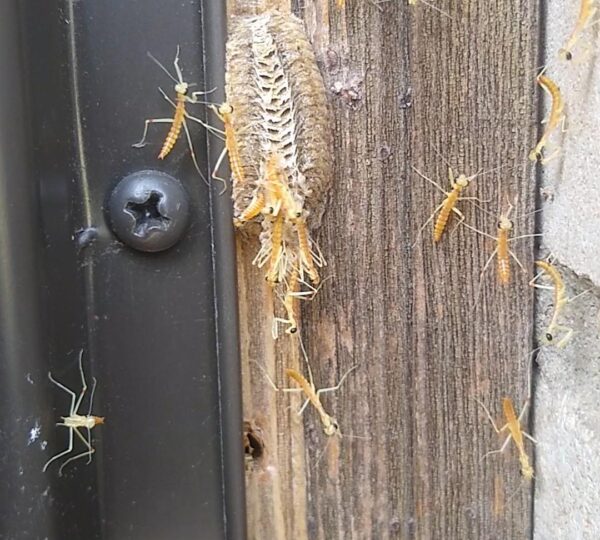
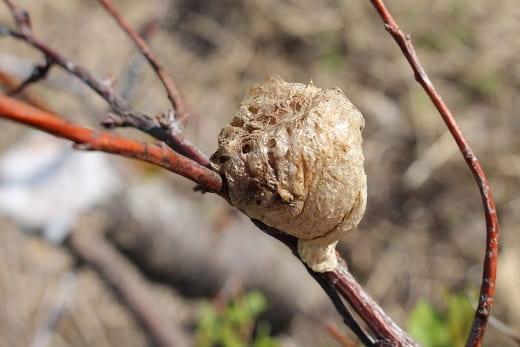
These tiny mantises had emerged from an egg case known as an ootheca. An ootheca is a protective, foam-like structure created by the female mantis to house her eggs.
After mating, the female deposits dozens — sometimes up to 100 or more — fertilized eggs into this frothy secretion, which quickly hardens into a durable casing.
The ootheca is usually attached to a sturdy surface such as a tree branch, fence post, shrub stem, wall, or even the side of a house. Its texture resembles dried foam or hardened insulation.
This structure plays a crucial role in protecting the developing eggs from harsh weather, predators, and environmental stress during the colder months.
Inside the ootheca, the eggs remain dormant throughout winter. When temperatures rise in spring and environmental conditions become favorable, the young mantises hatch almost simultaneously. They emerge through tiny openings in the casing and disperse quickly.
Discovering that an ootheca had been attached to my doorway without me noticing for months was a reminder of how much of nature’s activity occurs quietly, often right under our noses.
The Early Moments of Life
Freshly hatched mantises are miniature versions of adults, though much smaller and without wings. This stage of development is called a nymph. Unlike insects that undergo complete metamorphosis — such as butterflies — mantises develop through gradual metamorphosis.
They do not have a pupal stage. Instead, they grow through a series of molts, shedding their exoskeleton multiple times as they increase in size.
Watching the nymphs scatter in different directions was a remarkable sight. Some climbed upward toward sunlight. Others sought shelter among leaves. A few remained still for moments at a time, as if adjusting to their new surroundings.
At this stage, they are extremely vulnerable. Birds, ants, spiders, and even other mantises pose threats. In fact, mantis nymphs may exhibit cannibalistic behavior if food is scarce.
Their survival rate in the wild is relatively low, which makes witnessing such a large hatch feel even more special.
Unique Physical Characteristics
Praying mantises are instantly recognizable due to their distinctive posture. Their name comes from the way they hold their enlarged forelegs folded in front of their bodies, resembling hands clasped in prayer.
These forelegs are specialized for hunting. They are equipped with sharp spines that allow the mantis to grasp and secure prey with remarkable precision. When an insect approaches within striking range, a mantis can capture it in a fraction of a second.
Another extraordinary feature is their vision. Mantises have large compound eyes that provide them with an expansive field of view.
Their triangular heads can rotate significantly, allowing them to scan their environment without moving their bodies. This head mobility, combined with nearly 360-degree awareness, makes them highly effective predators.
Even as nymphs, these traits are visible in miniature form.
The Role of Mantises in the Ecosystem
Praying mantises are beneficial insects in many environments. They feed on a variety of small creatures, including flies, mosquitoes, aphids, moths, caterpillars, and beetles. By consuming these insects, mantises help regulate pest populations naturally.
Because of this, gardeners often welcome mantises as allies. Unlike chemical pesticides, mantises do not introduce toxins into the environment. Their presence contributes to ecological balance by maintaining natural predator-prey relationships.
It is important to note, however, that mantises are generalist predators. They do not discriminate between harmful pests and beneficial insects.
They may also prey on pollinators such as bees or even small vertebrates like hummingbirds in rare cases. Nevertheless, their overall impact in many gardens is considered positive.
Seeing so many hatchlings on my doorstep felt like an unspoken promise that the surrounding plants would have vigilant, natural guardians in the weeks ahead.
Observing Without Interfering
If you ever encounter mantis hatchlings near your home, the best course of action is gentle observation. They are fragile at this stage, and handling them can cause injury.
It is advisable to avoid using pesticides in areas where mantises are present. Chemical sprays can harm not only pests but also beneficial insects like mantises.
Leaving shrubs, tall grasses, or flowering plants nearby provides shelter and hunting grounds for the young insects.
Over the course of several weeks, the nymphs will molt repeatedly. With each molt, they grow larger and more capable. By late summer, many will reach adulthood and develop wings.
Witnessing even a small part of that transformation can deepen one’s appreciation for the complexity of insect life cycles.
A Quiet Lesson in Renewal
That morning, standing at my doorway, I felt as though I had stumbled upon a private moment in nature’s rhythm. The world around me was quiet — no dramatic event, no loud announcement — just dozens of tiny lives beginning their journey.
It was a powerful reminder that renewal happens constantly and often unnoticed. While we go about our routines, nature carries on its cycles of birth, growth, and adaptation.
There was something humbling about realizing that these insects had been developing just inches from my daily path, protected inside a casing I had never seen.
Cultural Significance of the Praying Mantis
Beyond their ecological importance, praying mantises hold symbolic meaning in various cultures around the world.
In Chinese tradition, the mantis is associated with patience, mindfulness, and calm focus. Its stillness before striking prey is often viewed as a metaphor for disciplined awareness and thoughtful action.
In certain African cultural traditions, mantises are regarded as symbols of good luck, wisdom, or spiritual presence. Some communities interpret the appearance of a mantis as a sign to remain attentive and reflective.
Among some Native American traditions, the mantis is described as a teacher of quiet observation and intuition. Its ability to remain motionless for long periods reflects self-control and attentiveness.
While interpretations vary across cultures, a common theme emerges: the mantis represents stillness combined with readiness — the balance between calm presence and decisive action.
The Science of Patience
From a biological standpoint, the mantis embodies efficiency. Rather than expending energy chasing prey, it waits. This ambush strategy conserves energy and increases success rates.
The same principle can serve as a metaphor in human life. Not every situation requires immediate reaction. Sometimes, careful observation leads to better outcomes.
Watching the hatchlings move cautiously into the world reinforced this idea. They did not rush aimlessly. They paused, adjusted, and proceeded.
Life in Small Details
In modern life, it is easy to overlook small natural events. We often focus on large milestones and dramatic changes. Yet much of life’s beauty lies in subtle, quiet moments.
The hatching of mantises is not accompanied by spectacle. There are no bright colors or loud sounds. Yet it represents a critical stage in the life cycle of a species that has existed for millions of years.
Praying mantises belong to the order Mantodea and have ancient evolutionary roots. Fossil records indicate that mantis-like insects have existed for tens of millions of years, adapting and surviving through changing climates and ecosystems.
To witness even a small part of that ongoing story is a privilege.
Encouraging Biodiversity at Home
If you hope to support beneficial insects like mantises in your yard or garden, consider planting a variety of native plants. Native vegetation attracts diverse insect populations, providing food sources for predators like mantises.
Avoid overusing chemical treatments. Instead, embrace integrated pest management strategies that prioritize ecological balance.
Leaving natural spaces such as hedges, shrubs, and small patches of undisturbed growth can create microhabitats for insects and other wildlife.
By making small adjustments, homeowners can contribute to healthier local ecosystems.
A Morning I Won’t Forget
As the sun rose higher, the tiny mantises gradually dispersed. Within an hour, most had disappeared into the surrounding greenery. The doorstep returned to its usual quiet state.
But I felt changed by the encounter.
It was more than an unusual sighting. It was a reminder that life renews itself continuously and often invisibly. Even in familiar spaces, extraordinary processes unfold.
The presence of those hatchlings encouraged me to slow down, observe more closely, and appreciate the intricate systems operating all around us.
Nature does not need grand stages to perform its miracles. Sometimes, all it takes is opening a front door on a quiet morning to discover a scene of silent transformation.
And if we pause long enough to notice, we may find that the smallest creatures offer the most profound lessons — about resilience, balance, patience, and the enduring cycle of life.
