A Mysterious Package Thrown from a Car—What John Found Inside Will Shock You!
The sky was heavy with thick, low-hanging clouds, their gray mass pressing down on the winding country road like a prelude to a storm.
A cold, icy wind whistled down from the mountains, rattling the bare branches of trees and sending fallen leaves skittering across the slick asphalt.
Rain had begun to drizzle intermittently, each drop pattering against the windshield and forming tiny, winding rivulets along the hood of the car.
Visibility was poor, the dim glow of distant streetlights cut by the harsh beam of John’s headlights, the rhythmic swish of his windshield wipers the only sound punctuating the quiet of the empty road.
John had been driving for over two hours, his mind focused entirely on the urgent summons he had received from his office.
A critical project needed his attention before nightfall, and every minute counted.
Beside him in the passenger seat, his German Shepherd, Barbara, lay curled up, her dark fur damp from the rain earlier, head resting lightly on her front paws.
Her deep, even breathing provided a quiet comfort as John navigated the twisting, near-deserted roadway.
Ahead, the faint outline of a vehicle emerged from the mist, moving unusually slowly for a road almost devoid of traffic. Something about the car’s pace immediately triggered a sense of unease in John.
He instinctively eased off the gas, letting the distance between his vehicle and the slower car increase slightly.
The engine’s hum seemed unnaturally loud in the stillness, blending with the soft whine of the wind and the rhythmic taps of rain against the windshield.
As he drew closer, John’s eyes caught something odd. The rear door of the vehicle, just barely visible in the dim headlights, began to crack open.
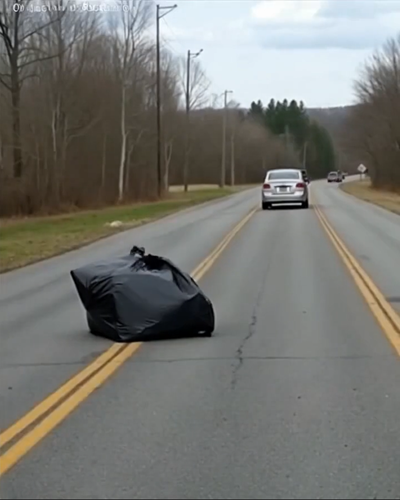
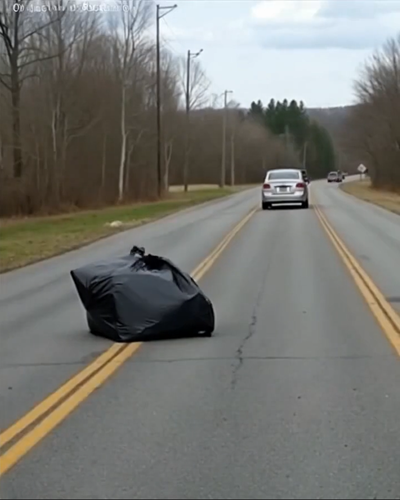
Before he could comprehend what was happening, a dark bundle was hurled onto the side of the road.
The car’s door slammed shut, and the vehicle immediately accelerated, disappearing into the gray mist as though it had never existed.
Barbara lifted her head, ears pricked, eyes wide and alert. She growled low in her throat, a sound that conveyed both confusion and warning.
“Did you catch that, girl?” John muttered, his voice barely audible over the rustling wind. But Barbara’s attention was fixed, unwavering, on the dark bundle that had landed on the roadside shoulder.
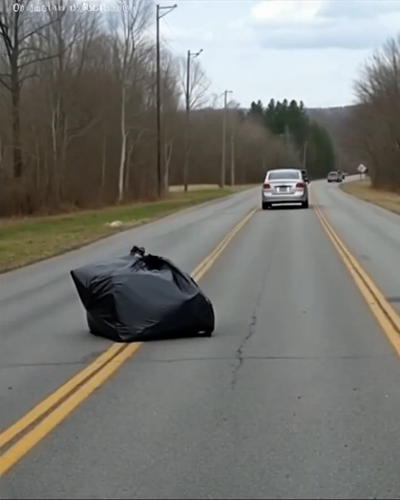
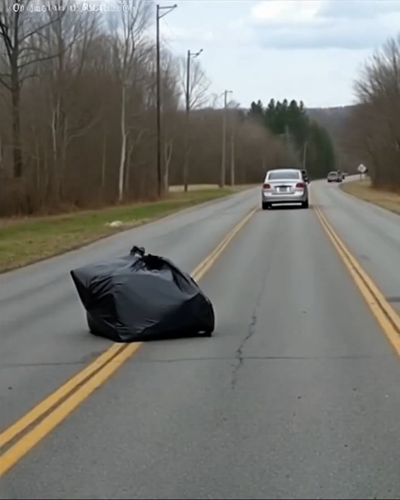
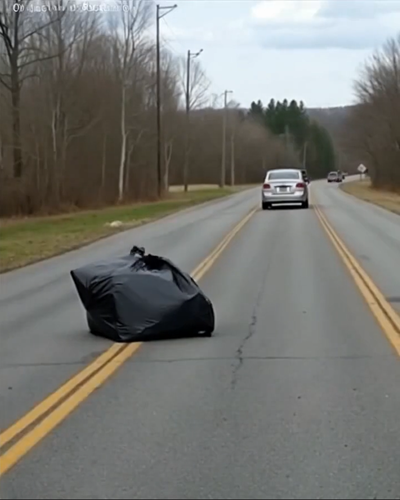
At first glance, John thought it was just a discarded garbage bag, left behind carelessly by a passerby. Yet something was off.
A faint motion — subtle and deliberate — shifted beneath the surface of the wet, bundled mass.
Rainwater pooled on the uneven asphalt, reflecting the faint movement, and a sound so delicate it could almost have been imagined reached John’s ears: a whimper.
His heart skipped a beat. Without hesitation, he steered his car to the side, engaging the emergency brake and switching off the engine.
The sudden silence felt almost deafening; the only sounds were the muffled slap of raindrops on metal and the occasional rustle of leaves caught in the wind.
Stepping out into the cold, John felt the icy rain slice through his jacket collar. Each breath formed clouds in the chill air, and the gravel crunched under his shoes as he approached the mysterious bundle.
It was wrapped in a thick, soiled blanket, secured tightly with a frayed blue rope. But the movement — it wasn’t caused by the wind.
The whimper became slightly louder, unmistakable now. A sinking realization gripped John: this was no ordinary trash. Something was alive inside, and it was in distress.
Kneeling carefully, he untied the cord, his fingers trembling slightly as the rope loosened. The blanket fell open to reveal a tiny, shivering boy, no older than two years.
His skin was pale, lips tinged with a bluish hue, and his small body shook uncontrollably. Eyes wide with terror, he stared at John, his whimpers barely audible over the wind.
His hair was matted to his forehead, and the rain had soaked through the blanket, clinging to his tiny frame.
“Oh my God…” John whispered, the words lost in the roar of the wind. Instinctively, he scooped the boy up, pulling him close against his chest.
The warmth of his own jacket enveloped the child, but the shaking did not immediately cease. Barbara, sensing the fragility of the situation, jumped lightly into the backseat of the car, giving John room.
She leaned gently over the boy, sniffing him cautiously before giving a soft lick to his cheek. The child flinched, then relaxed slightly, comforted by the dog’s presence.
John’s mind raced. He had no idea how long the child had been out in the storm or where he had come from.
The road behind them was empty, disappearing into fog and rain, and the vehicle that had thrown the child aside was long gone.
The thought of what might have happened if he hadn’t been paying attention made his stomach turn. Every second now counted.
He gently placed the boy in the backseat, wrapping him in additional layers of his own clothing.
Barbara moved to the front seat but remained alert, her gaze sweeping across the misty road. John started the car again, slowly inching forward toward the nearest town where he could find help.
Minutes later, the distant wail of an approaching siren signaled the arrival of an ambulance.
Paramedics worked swiftly, wrapping the child in warm blankets, administering oxygen, and checking for signs of hypothermia.
Dr. Harlan, the attending physician, gave John a reassuring nod. “He’s hypothermic,” she said, her voice calm but urgent. “But you found him just in time.
Had he stayed out there another hour, we might not have been able to save him.” The relief was palpable, but so was the gravity of the situation.
The child’s survival depended entirely on the random twist of fate that had placed John — and Barbara — in the right place at the right moment.
At the police station, John recounted the entire sequence of events. His voice remained steady, though the adrenaline still thrummed through his veins.
The officer on duty listened intently, taking careful notes. When he finished, the officer leaned back in his chair, eyes heavy with the weight of the implications.
“You don’t realize just how lucky this child is,” he said. “We’re already investigating a report from a nearby foster facility.
A woman reportedly fled with her two-year-old son late last night.
This may very well be that child. Your report could very well have saved his life. If you hadn’t stopped… he wouldn’t have survived the night.”
The magnitude of the revelation hit John. He had been rushing to reach his office, preoccupied with deadlines and meetings, yet here he was — the unwitting guardian who had intervened in a situation that could have ended in tragedy.
Barbara sat quietly by his side, her ears tilted forward, eyes glimmering with a mixture of curiosity and calm pride.
As he finally continued his drive into the city, John’s urgency had dissipated.
Every second counted at the office, yes, but nothing now seemed more pressing than the fragile, life-affirming reality of the boy safe in the backseat.
The world outside was still gray and misty, rain slicking the asphalt and wind rustling the treetops, but inside the car, a fragile warmth persisted — a warmth born of instinct, compassion, and the extraordinary presence of a dog who had witnessed every moment.
In the end, the story of that rainy, icy night became more than a tale of chance.
It was a story of vigilance, empathy, and the profound impact of taking action when it seems impossible.
The child — anonymous for now, but alive and well — owed his survival to a man willing to stop, a dog willing to care, and the unpredictable rhythm of a quiet road in the mountains where fate had conspired to intervene just in time.
The sky was heavy with thick, low-hanging clouds, their gray mass pressing down on the winding country road like a prelude to a storm.
A cold, icy wind whistled down from the mountains, rattling the bare branches of trees and sending fallen leaves skittering across the slick asphalt.
Rain had begun to drizzle intermittently, each drop pattering against the windshield and forming tiny, winding rivulets along the hood of the car.
Visibility was poor, the dim glow of distant streetlights cut by the harsh beam of John’s headlights, the rhythmic swish of his windshield wipers the only sound punctuating the quiet of the empty road.
John had been driving for over two hours, his mind focused entirely on the urgent summons he had received from his office.
A critical project needed his attention before nightfall, and every minute counted.
Beside him in the passenger seat, his German Shepherd, Barbara, lay curled up, her dark fur damp from the rain earlier, head resting lightly on her front paws.
Her deep, even breathing provided a quiet comfort as John navigated the twisting, near-deserted roadway.
Ahead, the faint outline of a vehicle emerged from the mist, moving unusually slowly for a road almost devoid of traffic. Something about the car’s pace immediately triggered a sense of unease in John.
He instinctively eased off the gas, letting the distance between his vehicle and the slower car increase slightly.
The engine’s hum seemed unnaturally loud in the stillness, blending with the soft whine of the wind and the rhythmic taps of rain against the windshield.
As he drew closer, John’s eyes caught something odd. The rear door of the vehicle, just barely visible in the dim headlights, began to crack open.
Before he could comprehend what was happening, a dark bundle was hurled onto the side of the road.
The car’s door slammed shut, and the vehicle immediately accelerated, disappearing into the gray mist as though it had never existed.
Barbara lifted her head, ears pricked, eyes wide and alert. She growled low in her throat, a sound that conveyed both confusion and warning.
“Did you catch that, girl?” John muttered, his voice barely audible over the rustling wind. But Barbara’s attention was fixed, unwavering, on the dark bundle that had landed on the roadside shoulder.
At first glance, John thought it was just a discarded garbage bag, left behind carelessly by a passerby. Yet something was off.
A faint motion — subtle and deliberate — shifted beneath the surface of the wet, bundled mass.
Rainwater pooled on the uneven asphalt, reflecting the faint movement, and a sound so delicate it could almost have been imagined reached John’s ears: a whimper.
His heart skipped a beat. Without hesitation, he steered his car to the side, engaging the emergency brake and switching off the engine.
The sudden silence felt almost deafening; the only sounds were the muffled slap of raindrops on metal and the occasional rustle of leaves caught in the wind.
Stepping out into the cold, John felt the icy rain slice through his jacket collar. Each breath formed clouds in the chill air, and the gravel crunched under his shoes as he approached the mysterious bundle.
It was wrapped in a thick, soiled blanket, secured tightly with a frayed blue rope. But the movement — it wasn’t caused by the wind.
The whimper became slightly louder, unmistakable now. A sinking realization gripped John: this was no ordinary trash. Something was alive inside, and it was in distress.
Kneeling carefully, he untied the cord, his fingers trembling slightly as the rope loosened. The blanket fell open to reveal a tiny, shivering boy, no older than two years.
His skin was pale, lips tinged with a bluish hue, and his small body shook uncontrollably. Eyes wide with terror, he stared at John, his whimpers barely audible over the wind.
His hair was matted to his forehead, and the rain had soaked through the blanket, clinging to his tiny frame.
“Oh my God…” John whispered, the words lost in the roar of the wind. Instinctively, he scooped the boy up, pulling him close against his chest.
The warmth of his own jacket enveloped the child, but the shaking did not immediately cease. Barbara, sensing the fragility of the situation, jumped lightly into the backseat of the car, giving John room.
She leaned gently over the boy, sniffing him cautiously before giving a soft lick to his cheek. The child flinched, then relaxed slightly, comforted by the dog’s presence.
John’s mind raced. He had no idea how long the child had been out in the storm or where he had come from.
The road behind them was empty, disappearing into fog and rain, and the vehicle that had thrown the child aside was long gone.
The thought of what might have happened if he hadn’t been paying attention made his stomach turn. Every second now counted.
He gently placed the boy in the backseat, wrapping him in additional layers of his own clothing.
Barbara moved to the front seat but remained alert, her gaze sweeping across the misty road. John started the car again, slowly inching forward toward the nearest town where he could find help.
Minutes later, the distant wail of an approaching siren signaled the arrival of an ambulance.
Paramedics worked swiftly, wrapping the child in warm blankets, administering oxygen, and checking for signs of hypothermia.
Dr. Harlan, the attending physician, gave John a reassuring nod. “He’s hypothermic,” she said, her voice calm but urgent. “But you found him just in time.
Had he stayed out there another hour, we might not have been able to save him.” The relief was palpable, but so was the gravity of the situation.
The child’s survival depended entirely on the random twist of fate that had placed John — and Barbara — in the right place at the right moment.
At the police station, John recounted the entire sequence of events. His voice remained steady, though the adrenaline still thrummed through his veins.
The officer on duty listened intently, taking careful notes. When he finished, the officer leaned back in his chair, eyes heavy with the weight of the implications.
“You don’t realize just how lucky this child is,” he said. “We’re already investigating a report from a nearby foster facility.
A woman reportedly fled with her two-year-old son late last night.
This may very well be that child. Your report could very well have saved his life. If you hadn’t stopped… he wouldn’t have survived the night.”
The magnitude of the revelation hit John. He had been rushing to reach his office, preoccupied with deadlines and meetings, yet here he was — the unwitting guardian who had intervened in a situation that could have ended in tragedy.
Barbara sat quietly by his side, her ears tilted forward, eyes glimmering with a mixture of curiosity and calm pride.
As he finally continued his drive into the city, John’s urgency had dissipated.
Every second counted at the office, yes, but nothing now seemed more pressing than the fragile, life-affirming reality of the boy safe in the backseat.
The world outside was still gray and misty, rain slicking the asphalt and wind rustling the treetops, but inside the car, a fragile warmth persisted — a warmth born of instinct, compassion, and the extraordinary presence of a dog who had witnessed every moment.
In the end, the story of that rainy, icy night became more than a tale of chance.
It was a story of vigilance, empathy, and the profound impact of taking action when it seems impossible.
The child — anonymous for now, but alive and well — owed his survival to a man willing to stop, a dog willing to care, and the unpredictable rhythm of a quiet road in the mountains where fate had conspired to intervene just in time.


