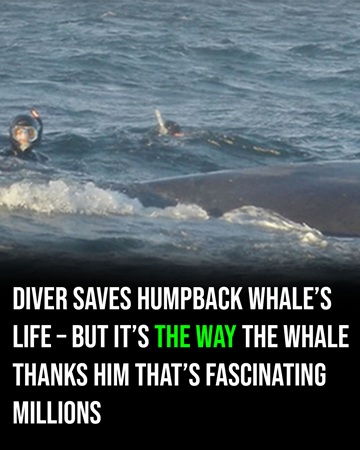
The cold, open waters near the Farallon Islands off the coast of San Francisco are known for their rugged beauty, powerful currents, and rich marine life.
It was in this challenging environment that professional diver James Moskito was working alongside a small team of volunteers, conducting routine operations focused on ocean conservation and safety.
None of them expected that the day would turn into a dramatic rescue that would later be shared around the world as a powerful example of courage, trust, and the deep emotional capacity of marine animals.
The moment that changed everything began quietly. While scanning the surface of the water, James noticed something that immediately felt wrong.
A massive humpback whale was lingering at the surface far longer than is typical for the species.
Normally, humpback whales surface briefly to take in air before diving again, sometimes remaining underwater for extended periods as they feed or migrate.
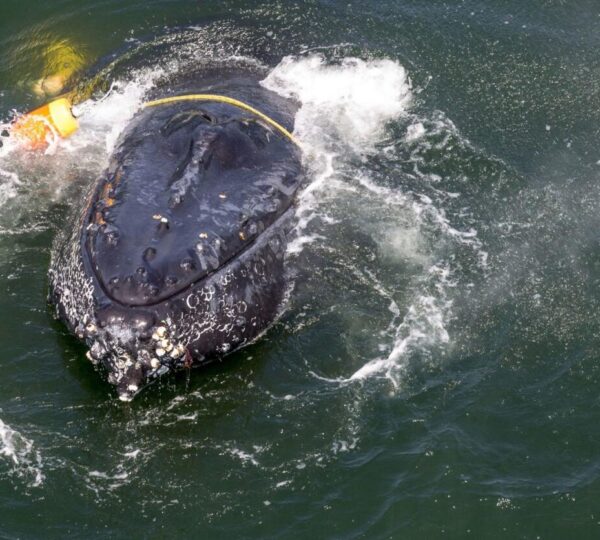
This whale, however, was unusually still. One of its eyes remained above the waterline, fixed in James’s direction.
Years of experience had taught James to recognize subtle signs of distress in marine animals. This was not a curious whale passing through. Its behavior suggested exhaustion, discomfort, and possibly fear.
“I could tell it was looking at me,” James later explained in interviews. The connection felt unmistakable. Instead of moving away, the whale seemed to be waiting, as if seeking help.
Trusting his instincts, James made a decision that would require both courage and calm.
He entered the water and slowly swam toward the enormous animal, fully aware of the risks involved.
Adult humpback whales can weigh up to 40 tons, and any sudden movement from such a powerful creature could be deadly to a human.
Yet James approached with patience, keeping his movements slow and non-threatening.
As he drew closer, the scale of the whale became overwhelming. Its massive body floated just beneath the surface, scars and markings telling a story of long migrations and encounters with the ocean’s hazards.
James gently placed his hand near the whale’s eye, an area he knew could convey reassurance without causing harm. Speaking softly through the water, he said, “I’m here to help you. I’m not going to hurt you.”
While there was no way to know how much the whale understood, the animal remained still, allowing James to stay close.
As James moved carefully along the whale’s body, the reason for its distress soon became horrifyingly clear.
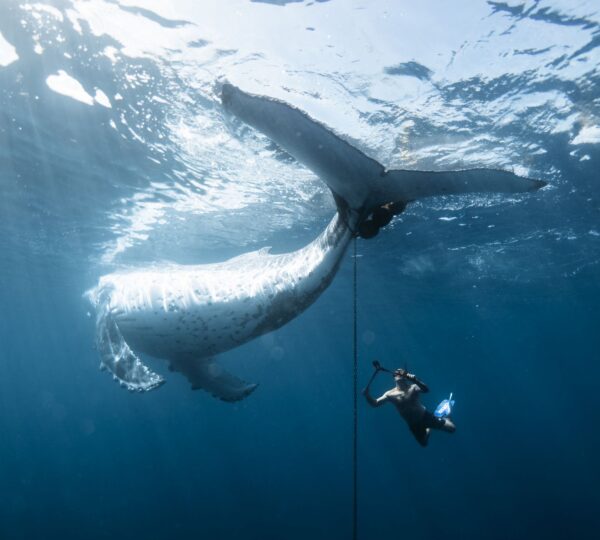
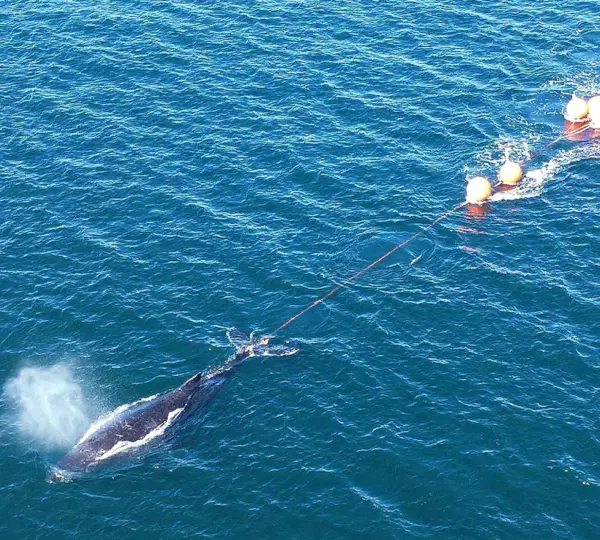
Lodged deep in the whale’s tail was a massive anchor weighing approximately 3,000 pounds. Attached to it was a thick metal chain that stretched nearly a mile in length.
The anchor and chain had become entangled around the whale, dragging behind it and severely restricting its movement.
The weight alone posed a deadly threat. Being forced to carry such a heavy load made it difficult for the whale to dive properly or swim efficiently. Over time, the strain could have led to exhaustion, injury, or drowning.
The chain also risked cutting into the whale’s flesh, increasing the chance of infection and long-term damage.
It was clear that without immediate intervention, the whale’s survival was unlikely.
James quickly signaled to the rest of the team, and the rescue effort began in earnest.
The divers understood the urgency of the situation, but they also knew that the operation would be extremely dangerous.
Working in open ocean conditions meant contending with strong currents, limited visibility, cold temperatures, and the unpredictable movement of a distressed animal.
The team carefully began cutting away sections of the chain, working methodically to avoid injuring the whale or themselves.
Each cut required precision and strength, as the metal links were thick and heavy. The divers took turns, battling fatigue while maintaining focus.
Hours passed as they slowly freed the whale piece by piece, the weight gradually lessening with each section removed.
Throughout the rescue, the whale remained remarkably calm. Rather than thrashing or attempting to flee, it stayed near the surface, allowing the divers to continue their work.
This behavior was striking, given the natural instincts of wild animals to avoid human contact.
Many involved later described the experience as deeply emotional, noting the sense of mutual trust that seemed to develop between the whale and its rescuers.
Finally, after hours of exhausting effort, the last section of the chain was cut free. The massive anchor dropped away, sinking into the depths below.
For the first time since becoming entangled, the whale was no longer burdened by the crushing weight that had threatened its life.
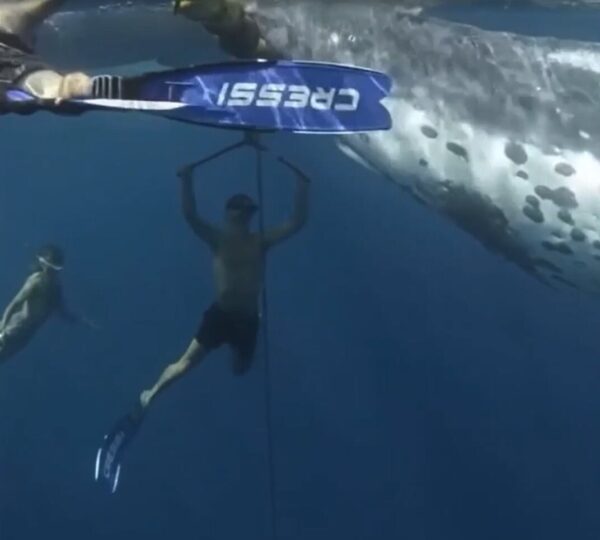
What happened next left a lasting impression on everyone who witnessed it. Instead of immediately swimming away, the humpback whale remained near James.
t began to circle him slowly, tracing gentle figure-eight patterns in the water. At times, it moved close enough to lightly brush against him, a gesture many interpreted as an expression of recognition or gratitude.
James later described the moment as unforgettable. While scientists are careful to avoid projecting human emotions onto animals, the whale’s behavior was undeniably unusual.
It did not display fear or aggression. Instead, it seemed calm, deliberate, and engaged, as if acknowledging the help it had received before continuing on its journey.
The rescue quickly gained attention, not only because of the dramatic circumstances, but because it highlighted the remarkable intelligence and emotional complexity of whales.
Scientific research has shown that whales possess specialized brain cells known as spindle neurons, which are associated with emotion, empathy, and social awareness.
These cells are also found in humans and great apes, suggesting that whales are capable of complex emotional processing.
Humpback whales, in particular, are known for their intricate social behaviors and communication.
Their long, complex songs, cooperative feeding strategies, and apparent curiosity toward humans have fascinated researchers for decades.
The rescue near the Farallon Islands added another powerful example to the growing body of evidence that whales are not only intelligent, but deeply aware of their surroundings and relationships.
The incident also serves as a stark reminder of the dangers human activity poses to marine life. Discarded fishing gear, anchors, and other debris continue to injure and kill countless ocean animals each year.
Even equipment that is not intentionally abandoned can become deadly when lost or improperly secured.
Large marine animals are especially vulnerable to entanglement, which often leads to slow and painful deaths.
Conservation groups emphasize that preventing such incidents requires better management of marine equipment, increased awareness among boat operators, and continued support for rescue and monitoring programs.
While heroic rescues like this one capture public attention, they are only possible because of training, coordination, and a commitment to protecting ocean ecosystems.
For James Moskito and the volunteers involved, the experience reinforced why they dedicate their lives to the sea.
The risks were real, and the outcome was uncertain, but the reward was witnessing a life saved through patience, skill, and compassion.
Moments like this, they say, remind them that their efforts matter, even when the challenges feel immense.
Beyond the specifics of the rescue, the story resonates on a deeper level. It illustrates the possibility of meaningful connection between humans and wild animals, built not on control or domination, but on respect and empathy.
In a world where environmental crises often feel abstract or overwhelming, this encounter offers a tangible reminder of what individual action can achieve.
Ultimately, the rescue of the humpback whale near the Farallon Islands stands as a powerful example of cooperation across species.
It underscores the responsibility humans bear as stewards of the oceans and the extraordinary resilience of the creatures that inhabit them.
Through courage, calm, and compassion, a life was saved—and a story was created that continues to inspire people around the world to care more deeply about the natural world.
The cold, open waters near the Farallon Islands off the coast of San Francisco are known for their rugged beauty, powerful currents, and rich marine life.
It was in this challenging environment that professional diver James Moskito was working alongside a small team of volunteers, conducting routine operations focused on ocean conservation and safety.
None of them expected that the day would turn into a dramatic rescue that would later be shared around the world as a powerful example of courage, trust, and the deep emotional capacity of marine animals.
The moment that changed everything began quietly. While scanning the surface of the water, James noticed something that immediately felt wrong.
A massive humpback whale was lingering at the surface far longer than is typical for the species.
Normally, humpback whales surface briefly to take in air before diving again, sometimes remaining underwater for extended periods as they feed or migrate.
This whale, however, was unusually still. One of its eyes remained above the waterline, fixed in James’s direction.
Years of experience had taught James to recognize subtle signs of distress in marine animals. This was not a curious whale passing through. Its behavior suggested exhaustion, discomfort, and possibly fear.
“I could tell it was looking at me,” James later explained in interviews. The connection felt unmistakable. Instead of moving away, the whale seemed to be waiting, as if seeking help.
Trusting his instincts, James made a decision that would require both courage and calm.
He entered the water and slowly swam toward the enormous animal, fully aware of the risks involved.
Adult humpback whales can weigh up to 40 tons, and any sudden movement from such a powerful creature could be deadly to a human.
Yet James approached with patience, keeping his movements slow and non-threatening.
As he drew closer, the scale of the whale became overwhelming. Its massive body floated just beneath the surface, scars and markings telling a story of long migrations and encounters with the ocean’s hazards.
James gently placed his hand near the whale’s eye, an area he knew could convey reassurance without causing harm. Speaking softly through the water, he said, “I’m here to help you. I’m not going to hurt you.”
While there was no way to know how much the whale understood, the animal remained still, allowing James to stay close.
As James moved carefully along the whale’s body, the reason for its distress soon became horrifyingly clear.
Lodged deep in the whale’s tail was a massive anchor weighing approximately 3,000 pounds. Attached to it was a thick metal chain that stretched nearly a mile in length.
The anchor and chain had become entangled around the whale, dragging behind it and severely restricting its movement.
The weight alone posed a deadly threat. Being forced to carry such a heavy load made it difficult for the whale to dive properly or swim efficiently. Over time, the strain could have led to exhaustion, injury, or drowning.
The chain also risked cutting into the whale’s flesh, increasing the chance of infection and long-term damage.
It was clear that without immediate intervention, the whale’s survival was unlikely.
James quickly signaled to the rest of the team, and the rescue effort began in earnest.
The divers understood the urgency of the situation, but they also knew that the operation would be extremely dangerous.
Working in open ocean conditions meant contending with strong currents, limited visibility, cold temperatures, and the unpredictable movement of a distressed animal.
The team carefully began cutting away sections of the chain, working methodically to avoid injuring the whale or themselves.
Each cut required precision and strength, as the metal links were thick and heavy. The divers took turns, battling fatigue while maintaining focus.
Hours passed as they slowly freed the whale piece by piece, the weight gradually lessening with each section removed.
Throughout the rescue, the whale remained remarkably calm. Rather than thrashing or attempting to flee, it stayed near the surface, allowing the divers to continue their work.
This behavior was striking, given the natural instincts of wild animals to avoid human contact.
Many involved later described the experience as deeply emotional, noting the sense of mutual trust that seemed to develop between the whale and its rescuers.
Finally, after hours of exhausting effort, the last section of the chain was cut free. The massive anchor dropped away, sinking into the depths below.
For the first time since becoming entangled, the whale was no longer burdened by the crushing weight that had threatened its life.
What happened next left a lasting impression on everyone who witnessed it. Instead of immediately swimming away, the humpback whale remained near James.
t began to circle him slowly, tracing gentle figure-eight patterns in the water. At times, it moved close enough to lightly brush against him, a gesture many interpreted as an expression of recognition or gratitude.
James later described the moment as unforgettable. While scientists are careful to avoid projecting human emotions onto animals, the whale’s behavior was undeniably unusual.
It did not display fear or aggression. Instead, it seemed calm, deliberate, and engaged, as if acknowledging the help it had received before continuing on its journey.
The rescue quickly gained attention, not only because of the dramatic circumstances, but because it highlighted the remarkable intelligence and emotional complexity of whales.
Scientific research has shown that whales possess specialized brain cells known as spindle neurons, which are associated with emotion, empathy, and social awareness.
These cells are also found in humans and great apes, suggesting that whales are capable of complex emotional processing.
Humpback whales, in particular, are known for their intricate social behaviors and communication.
Their long, complex songs, cooperative feeding strategies, and apparent curiosity toward humans have fascinated researchers for decades.
The rescue near the Farallon Islands added another powerful example to the growing body of evidence that whales are not only intelligent, but deeply aware of their surroundings and relationships.
The incident also serves as a stark reminder of the dangers human activity poses to marine life. Discarded fishing gear, anchors, and other debris continue to injure and kill countless ocean animals each year.
Even equipment that is not intentionally abandoned can become deadly when lost or improperly secured.
Large marine animals are especially vulnerable to entanglement, which often leads to slow and painful deaths.
Conservation groups emphasize that preventing such incidents requires better management of marine equipment, increased awareness among boat operators, and continued support for rescue and monitoring programs.
While heroic rescues like this one capture public attention, they are only possible because of training, coordination, and a commitment to protecting ocean ecosystems.
For James Moskito and the volunteers involved, the experience reinforced why they dedicate their lives to the sea.
The risks were real, and the outcome was uncertain, but the reward was witnessing a life saved through patience, skill, and compassion.
Moments like this, they say, remind them that their efforts matter, even when the challenges feel immense.
Beyond the specifics of the rescue, the story resonates on a deeper level. It illustrates the possibility of meaningful connection between humans and wild animals, built not on control or domination, but on respect and empathy.
In a world where environmental crises often feel abstract or overwhelming, this encounter offers a tangible reminder of what individual action can achieve.
Ultimately, the rescue of the humpback whale near the Farallon Islands stands as a powerful example of cooperation across species.
It underscores the responsibility humans bear as stewards of the oceans and the extraordinary resilience of the creatures that inhabit them.
Through courage, calm, and compassion, a life was saved—and a story was created that continues to inspire people around the world to care more deeply about the natural world.