“Circumcision and Autism: RFK Jr. Shares Controversial Theory – Here’s What He Believes”
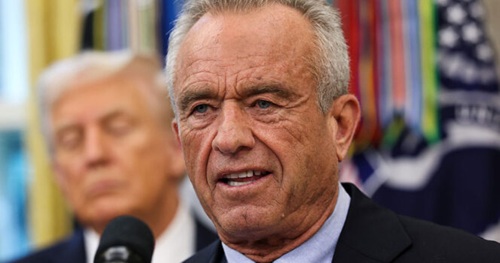
Health Secretary Robert F. Kennedy Jr. is once again in the spotlight — not for a new policy or public health initiative, but for repeating controversial and scientifically unproven claims about autism. During a recent meeting with former President Donald Trump and other Cabinet members, Kennedy doubled down on earlier remarks suggesting that the use of over-the-counter painkillers, particularly Tylenol (acetaminophen), during pregnancy may be linked to a higher risk of autism in children.
Despite openly admitting that no medical evidence currently supports the theory, Kennedy told those present, “We’re doing the studies to make the proof,” and described pregnant women who take Tylenol unnecessarily as “irresponsible.” His statements immediately reignited concern among health professionals, researchers, and advocacy groups. Medical Experts and Organizations Respond. Experts across the medical and scientific community have strongly rejected Kennedy’s claims. Multiple studies have shown no causal link between Tylenol use during pregnancy and autism. The National Autistic Society labeled the comments “dangerous, anti-science, and deeply irresponsible,” while Tylenol’s manufacturer issued a statement saying it “strongly disagrees” with the accusations. Health authorities warn that such unproven claims can create confusion and fear among expectant parents, possibly leading them to avoid necessary medications without medical guidance.
Confusing Anatomy and Misinformation
Kennedy’s remarks also raised eyebrows for their inaccuracy. Referring to a TikTok video, he claimed a woman had been “gobbling Tylenol with a baby in her placenta” — a comment quickly criticized by health experts for its incorrect use of basic anatomy. (Babies develop in the uterus, not inside the placenta.) He went on to suggest that the woman’s actions were an example of “Trump derangement syndrome,” implying that political opinions were causing people to act irresponsibly in matters of health — a statement many found confusing and off-topic.
Reviving a Debunked Circumcision Claim
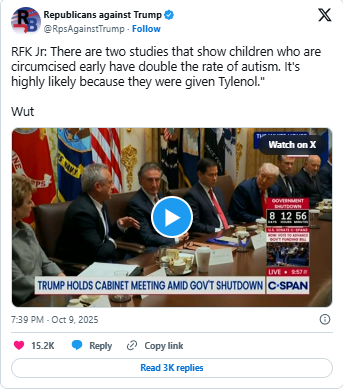
Adding to the controversy, Kennedy revisited a claim he has made before: that male infants who are circumcised may be twice as likely to develop autism, supposedly due to Tylenol given after the procedure. This theory appears to reference a 2015 Danish study that found a weak statistical correlation between circumcision and autism rates — but no causal relationship. Importantly, the study’s authors themselves warned that they had no information on painkiller use and that further research would be needed before drawing any conclusions. Kennedy’s interpretation of the study has been widely criticized as misleading. Medical professionals have emphasized that correlation does not equal causation, and that spreading such claims without strong evidence risks harming public understanding of both autism and routine medical procedures.
A Growing Concern Over Misinformation in High Office
What concerns many experts most is Kennedy’s current position as U.S. Health Secretary — a role that carries significant influence over public perception and health policy. While Kennedy has long been known for his skepticism of vaccines and other mainstream health practices, critics say that repeating such theories from within government adds a dangerous layer of credibility to misinformation. Former President Barack Obama also weighed in, saying that the administration’s current approach to public health could pose a serious threat to science-based medicine and long-term trust in public institutions.
Free Speech or Dangerous Misinformation?
Kennedy’s repeated promotion of unverified medical claims has sparked a wider public debate: should government officials and public figures be held accountable for spreading false or misleading health information, especially when it may influence large numbers of people? Or is this protected under the right to free speech? Regardless of the legal or political framing, many health experts agree on one thing: public trust in medicine and science is fragile — and statements like these, made without solid evidence, risk doing real harm.
Health Secretary Robert F. Kennedy Jr. is once again in the spotlight — not for a new policy or public health initiative, but for repeating controversial and scientifically unproven claims about autism. During a recent meeting with former President Donald Trump and other Cabinet members, Kennedy doubled down on earlier remarks suggesting that the use of over-the-counter painkillers, particularly Tylenol (acetaminophen), during pregnancy may be linked to a higher risk of autism in children.
Despite openly admitting that no medical evidence currently supports the theory, Kennedy told those present, “We’re doing the studies to make the proof,” and described pregnant women who take Tylenol unnecessarily as “irresponsible.” His statements immediately reignited concern among health professionals, researchers, and advocacy groups. Medical Experts and Organizations Respond. Experts across the medical and scientific community have strongly rejected Kennedy’s claims. Multiple studies have shown no causal link between Tylenol use during pregnancy and autism. The National Autistic Society labeled the comments “dangerous, anti-science, and deeply irresponsible,” while Tylenol’s manufacturer issued a statement saying it “strongly disagrees” with the accusations. Health authorities warn that such unproven claims can create confusion and fear among expectant parents, possibly leading them to avoid necessary medications without medical guidance.
Confusing Anatomy and Misinformation
Kennedy’s remarks also raised eyebrows for their inaccuracy. Referring to a TikTok video, he claimed a woman had been “gobbling Tylenol with a baby in her placenta” — a comment quickly criticized by health experts for its incorrect use of basic anatomy. (Babies develop in the uterus, not inside the placenta.) He went on to suggest that the woman’s actions were an example of “Trump derangement syndrome,” implying that political opinions were causing people to act irresponsibly in matters of health — a statement many found confusing and off-topic.
Reviving a Debunked Circumcision Claim
Adding to the controversy, Kennedy revisited a claim he has made before: that male infants who are circumcised may be twice as likely to develop autism, supposedly due to Tylenol given after the procedure. This theory appears to reference a 2015 Danish study that found a weak statistical correlation between circumcision and autism rates — but no causal relationship. Importantly, the study’s authors themselves warned that they had no information on painkiller use and that further research would be needed before drawing any conclusions. Kennedy’s interpretation of the study has been widely criticized as misleading. Medical professionals have emphasized that correlation does not equal causation, and that spreading such claims without strong evidence risks harming public understanding of both autism and routine medical procedures.
A Growing Concern Over Misinformation in High Office
What concerns many experts most is Kennedy’s current position as U.S. Health Secretary — a role that carries significant influence over public perception and health policy. While Kennedy has long been known for his skepticism of vaccines and other mainstream health practices, critics say that repeating such theories from within government adds a dangerous layer of credibility to misinformation. Former President Barack Obama also weighed in, saying that the administration’s current approach to public health could pose a serious threat to science-based medicine and long-term trust in public institutions.
Free Speech or Dangerous Misinformation?
Kennedy’s repeated promotion of unverified medical claims has sparked a wider public debate: should government officials and public figures be held accountable for spreading false or misleading health information, especially when it may influence large numbers of people? Or is this protected under the right to free speech? Regardless of the legal or political framing, many health experts agree on one thing: public trust in medicine and science is fragile — and statements like these, made without solid evidence, risk doing real harm.
