Ex-White House Photographer Slams Trump for ‘Petty’ Move to Hide Obama’s Portrait
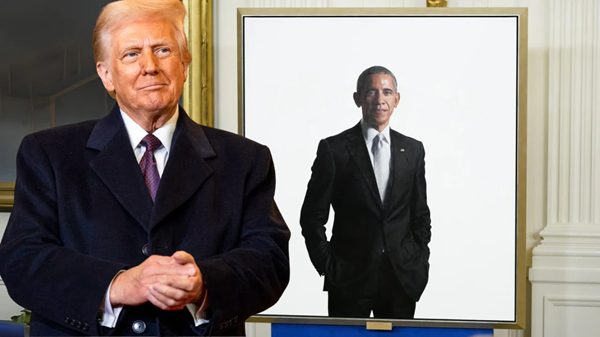
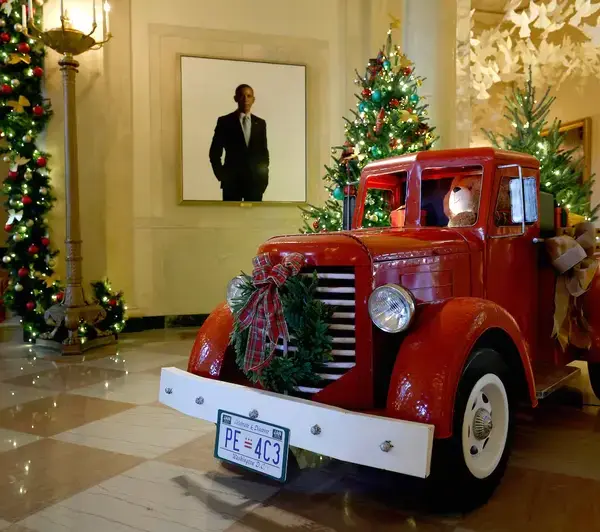
For generations, the White House has maintained a proud and unbroken tradition that honors former presidents through the public display of their official portraits in the Grand Foyer — one of the most visible and symbolically significant areas of the executive mansion. These portraits serve not only as artistic representations of the men who have held the nation’s highest office but also as powerful reminders of the peaceful continuity of American democracy, the history of leadership, and the respect owed to the office itself, independent of personal or political differences.
However, this deeply respected tradition was abruptly broken in a way that has drawn significant attention, criticism, and reflection on what it means to honor presidential legacy. In a revealing and somewhat surprising disclosure, Pete Souza, the highly regarded former White House photographer who was the official photographer for both President Ronald Reagan and President Barack Obama, revealed that Obama’s official presidential portrait was not hung in its traditional prominent place in the Grand Foyer during the Trump administration.
Instead, the portrait was reportedly placed in a restricted, seldom-used stairwell, effectively hidden from the view of visitors, White House staff, and dignitaries. This decision, Souza asserts, was ordered by Donald Trump himself, marking a stark departure from decades of White House custom.
Pete Souza’s Public Criticism: Questioning Motives Behind the Portrait’s Concealment
Souza, who captured some of the most iconic images of the Obama presidency, used his considerable platform on social media to call attention to this break with tradition. In a widely shared Instagram post, he questioned whether the decision to hide Obama’s portrait was motivated by pettiness or even racial animus. He asked his followers and the public to consider whether the move was a manifestation of personal grievance, noting pointedly that “President Obama lives rent free in the current occupant’s head,” a phrase that suggests Trump’s continued fixation on his predecessor.
Souza highlighted the significance of presidential portraits in maintaining the historical narrative of the United States. He noted that portraits of past presidents, ranging from George Washington — the nation’s founding father — to Abraham Lincoln — the great emancipator — and many others, have traditionally been displayed prominently and respectfully. These images remind visitors and officials alike of the enduring institution of the presidency, transcending any single occupant’s tenure. “This,” Souza emphasized, “is different.” The concealment of Obama’s portrait sends a message that extends beyond art or decoration, reflecting a rupture in respect and historical continuity.
The Fraught Relationship Between Trump and Obama: A Backdrop of Political Hostility
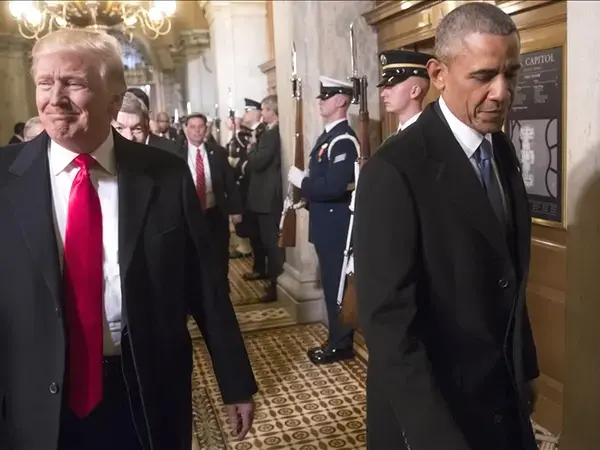
This controversy cannot be fully understood without acknowledging the intense and often hostile relationship between Donald Trump and Barack Obama, both during and after their respective presidencies. Trump’s ascent to the presidency was, in many ways, defined by his outspoken criticism of Obama, whom he frequently attacked on a personal and political level. Trump’s claims of “treason” against Obama’s administration were met with swift condemnation and dismissed by fact-checkers, Obama’s team, and many in the political mainstream as unfounded conspiracy theories.
Their public feud encompassed a wide array of issues — from policy disagreements on healthcare, immigration, and foreign relations to more personal jabs and social media confrontations. This animosity has been described as unprecedented in modern American politics, often contributing to the country’s deepening political polarization. Against this backdrop, the decision to hide Obama’s portrait within the White House becomes not merely an aesthetic or administrative choice but a symbolic act in an ongoing cultural and political struggle.
A Stark Visual Contrast: Trump’s Mugshot Hanging Near the Oval Office
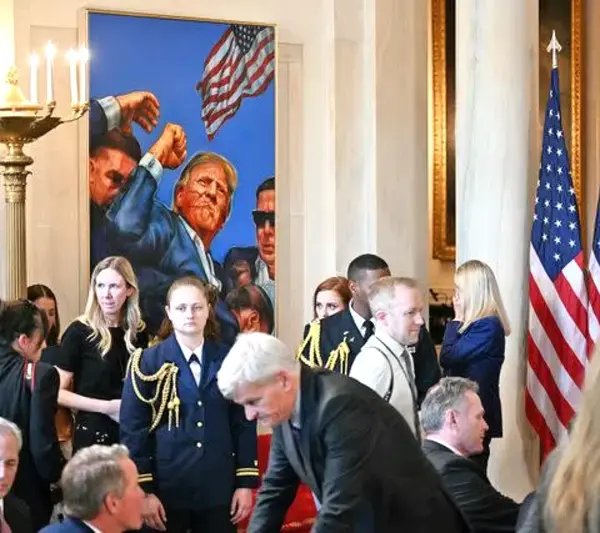
While Obama’s portrait was relegated to a back stairwell, Donald Trump’s own visual representation in the White House has been markedly different and equally provocative. In a highly unusual and controversial move, Trump’s mugshot — taken in 2023 following his arrest in Georgia on charges related to election interference — was displayed just outside the Oval Office. This mugshot, capturing a stern, defiant expression, has been the subject of extensive media coverage and public discourse.
John Bolton, a former national security advisor to Trump, speculated that the choice to display the mugshot was intended to project an image of toughness and resilience. The decision to prominently showcase such a polarizing and historically unprecedented image further underscores the deep divisions not only between Trump and Obama but also in how leadership and legacy are visually curated within the White House itself.
The juxtaposition of Obama’s hidden portrait and Trump’s displayed mugshot crystallizes a profound narrative about political symbolism and control over historical memory. It raises essential questions about how former presidents are remembered and respected and who gets to decide which images are elevated or concealed.
The Broader Significance: Tradition, Respect, and the Presidency’s Legacy
Critics argue that the concealment of Obama’s portrait is more than just an act of personal dislike or political spite. It represents a break with a vital American tradition designed to honor the presidency as an institution beyond any individual occupant. This ritual reflects the core democratic principle of peaceful transitions of power and the respect that should be extended to all who serve in the nation’s highest office.
This tradition fosters a sense of continuity and national unity by reminding Americans — and the world — that the presidency endures despite political differences and changing administrations. When such traditions are broken or disregarded, it sends a message that political rivalry or personal grievances take precedence over respect for the office and the country’s democratic heritage.
Reflections on Leadership, Symbolism, and the Future
The controversy surrounding the portrait’s concealment invites deeper reflection on how America’s political culture treats its leaders, particularly in an era of intense polarization. It raises questions about how future administrations will balance personal feelings with institutional respect and whether the nation’s democratic traditions can withstand such pressures.
Moreover, the incident exposes the broader challenge of how public figures are remembered in a hyper-partisan environment, where even symbols like portraits can become battlegrounds for ideological conflict. The symbolism embedded in presidential portraits speaks not only to historical record-keeping but also to collective memory and national identity.
Will the Tradition Be Restored?
Looking forward, the question remains whether this break in tradition will be temporary or if it will set a precedent for future administrations. The restoration of Obama’s portrait to the Grand Foyer would signal a reaffirmation of respect for presidential history and democratic norms, while its continued concealment might indicate a shift toward more personalized and politically charged handling of presidential legacies.
This moment in White House history also invites a broader conversation about race, respect, and the evolving expectations placed upon American presidents and their successors. Some see the concealment as a reflection of racial bias, while others interpret it as a symptom of the broader tribalism that has engulfed modern American politics.
Conclusion: More Than Just a Picture — A Reflection of Our Times
In the end, the story of Obama’s hidden portrait is about much more than a picture on a wall. It is a potent symbol of the divisions, tensions, and struggles that define contemporary American political life. It speaks to the fragility of traditions that once seemed unassailable and to the power of symbolism in shaping national narratives.
Former White House photographer Pete Souza’s revelations have opened a window into these dynamics, encouraging the public to consider how history is preserved, remembered, and honored — or, conversely, how it can be obscured and contested. Whether one views the concealment as an act of pettiness, political posturing, or something more troubling, it remains a vivid example of how the personal and the political intersect in the corridors of power.
As the nation continues to grapple with questions of leadership, respect, and legacy, the fate of Obama’s portrait will stand as a telling symbol of the state of American democracy and the challenges it faces in maintaining unity amidst profound division.
For generations, the White House has maintained a proud and unbroken tradition that honors former presidents through the public display of their official portraits in the Grand Foyer — one of the most visible and symbolically significant areas of the executive mansion. These portraits serve not only as artistic representations of the men who have held the nation’s highest office but also as powerful reminders of the peaceful continuity of American democracy, the history of leadership, and the respect owed to the office itself, independent of personal or political differences.
However, this deeply respected tradition was abruptly broken in a way that has drawn significant attention, criticism, and reflection on what it means to honor presidential legacy. In a revealing and somewhat surprising disclosure, Pete Souza, the highly regarded former White House photographer who was the official photographer for both President Ronald Reagan and President Barack Obama, revealed that Obama’s official presidential portrait was not hung in its traditional prominent place in the Grand Foyer during the Trump administration.
Instead, the portrait was reportedly placed in a restricted, seldom-used stairwell, effectively hidden from the view of visitors, White House staff, and dignitaries. This decision, Souza asserts, was ordered by Donald Trump himself, marking a stark departure from decades of White House custom.
Pete Souza’s Public Criticism: Questioning Motives Behind the Portrait’s Concealment
Souza, who captured some of the most iconic images of the Obama presidency, used his considerable platform on social media to call attention to this break with tradition. In a widely shared Instagram post, he questioned whether the decision to hide Obama’s portrait was motivated by pettiness or even racial animus. He asked his followers and the public to consider whether the move was a manifestation of personal grievance, noting pointedly that “President Obama lives rent free in the current occupant’s head,” a phrase that suggests Trump’s continued fixation on his predecessor.
Souza highlighted the significance of presidential portraits in maintaining the historical narrative of the United States. He noted that portraits of past presidents, ranging from George Washington — the nation’s founding father — to Abraham Lincoln — the great emancipator — and many others, have traditionally been displayed prominently and respectfully. These images remind visitors and officials alike of the enduring institution of the presidency, transcending any single occupant’s tenure. “This,” Souza emphasized, “is different.” The concealment of Obama’s portrait sends a message that extends beyond art or decoration, reflecting a rupture in respect and historical continuity.
The Fraught Relationship Between Trump and Obama: A Backdrop of Political Hostility
This controversy cannot be fully understood without acknowledging the intense and often hostile relationship between Donald Trump and Barack Obama, both during and after their respective presidencies. Trump’s ascent to the presidency was, in many ways, defined by his outspoken criticism of Obama, whom he frequently attacked on a personal and political level. Trump’s claims of “treason” against Obama’s administration were met with swift condemnation and dismissed by fact-checkers, Obama’s team, and many in the political mainstream as unfounded conspiracy theories.
Their public feud encompassed a wide array of issues — from policy disagreements on healthcare, immigration, and foreign relations to more personal jabs and social media confrontations. This animosity has been described as unprecedented in modern American politics, often contributing to the country’s deepening political polarization. Against this backdrop, the decision to hide Obama’s portrait within the White House becomes not merely an aesthetic or administrative choice but a symbolic act in an ongoing cultural and political struggle.
A Stark Visual Contrast: Trump’s Mugshot Hanging Near the Oval Office
While Obama’s portrait was relegated to a back stairwell, Donald Trump’s own visual representation in the White House has been markedly different and equally provocative. In a highly unusual and controversial move, Trump’s mugshot — taken in 2023 following his arrest in Georgia on charges related to election interference — was displayed just outside the Oval Office. This mugshot, capturing a stern, defiant expression, has been the subject of extensive media coverage and public discourse.
John Bolton, a former national security advisor to Trump, speculated that the choice to display the mugshot was intended to project an image of toughness and resilience. The decision to prominently showcase such a polarizing and historically unprecedented image further underscores the deep divisions not only between Trump and Obama but also in how leadership and legacy are visually curated within the White House itself.
The juxtaposition of Obama’s hidden portrait and Trump’s displayed mugshot crystallizes a profound narrative about political symbolism and control over historical memory. It raises essential questions about how former presidents are remembered and respected and who gets to decide which images are elevated or concealed.
The Broader Significance: Tradition, Respect, and the Presidency’s Legacy
Critics argue that the concealment of Obama’s portrait is more than just an act of personal dislike or political spite. It represents a break with a vital American tradition designed to honor the presidency as an institution beyond any individual occupant. This ritual reflects the core democratic principle of peaceful transitions of power and the respect that should be extended to all who serve in the nation’s highest office.
This tradition fosters a sense of continuity and national unity by reminding Americans — and the world — that the presidency endures despite political differences and changing administrations. When such traditions are broken or disregarded, it sends a message that political rivalry or personal grievances take precedence over respect for the office and the country’s democratic heritage.
Reflections on Leadership, Symbolism, and the Future
The controversy surrounding the portrait’s concealment invites deeper reflection on how America’s political culture treats its leaders, particularly in an era of intense polarization. It raises questions about how future administrations will balance personal feelings with institutional respect and whether the nation’s democratic traditions can withstand such pressures.
Moreover, the incident exposes the broader challenge of how public figures are remembered in a hyper-partisan environment, where even symbols like portraits can become battlegrounds for ideological conflict. The symbolism embedded in presidential portraits speaks not only to historical record-keeping but also to collective memory and national identity.
Will the Tradition Be Restored?
Looking forward, the question remains whether this break in tradition will be temporary or if it will set a precedent for future administrations. The restoration of Obama’s portrait to the Grand Foyer would signal a reaffirmation of respect for presidential history and democratic norms, while its continued concealment might indicate a shift toward more personalized and politically charged handling of presidential legacies.
This moment in White House history also invites a broader conversation about race, respect, and the evolving expectations placed upon American presidents and their successors. Some see the concealment as a reflection of racial bias, while others interpret it as a symptom of the broader tribalism that has engulfed modern American politics.
Conclusion: More Than Just a Picture — A Reflection of Our Times
In the end, the story of Obama’s hidden portrait is about much more than a picture on a wall. It is a potent symbol of the divisions, tensions, and struggles that define contemporary American political life. It speaks to the fragility of traditions that once seemed unassailable and to the power of symbolism in shaping national narratives.
Former White House photographer Pete Souza’s revelations have opened a window into these dynamics, encouraging the public to consider how history is preserved, remembered, and honored — or, conversely, how it can be obscured and contested. Whether one views the concealment as an act of pettiness, political posturing, or something more troubling, it remains a vivid example of how the personal and the political intersect in the corridors of power.
As the nation continues to grapple with questions of leadership, respect, and legacy, the fate of Obama’s portrait will stand as a telling symbol of the state of American democracy and the challenges it faces in maintaining unity amidst profound division.


