
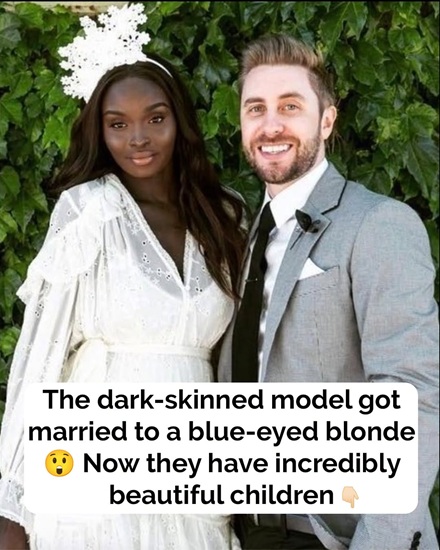
Long before their relationship became familiar to millions of viewers, Jamie Perkins and Nikki Thot met in a place that now feels like part of another internet era.
MySpace. It was around 2009. Social media looked very different then. Instagram had not yet transformed personal photographs into global brands.
TikTok did not exist. And the idea that documenting everyday family life could become a full-time career was still relatively new.
Nikki and Jamie could not have known where one online connection would eventually lead.
At first, there was no famous YouTube family.
No viral wedding.
No children growing up in front of an audience.
There were simply two young adults getting to know each other.
Nikki was building a modeling career.
Jamie was developing his own creative work in photography, cinematography, and video production.
Their friendship gradually became something more serious.
Nikki’s life was already taking her into the fashion world.
Born in Khartoum, Sudan, she had moved to Australia with her family as a child and grown up around Melbourne.
As a young adult, modeling took her beyond Australia.
She spent time pursuing work internationally, including in New York.
Her career would eventually include representation by major modeling agencies.
Jamie was following a creative path of his own.
He worked with cameras and video and was interested in music-video production and other visual projects.
Their professions were different.
But they shared an interest in creative work.
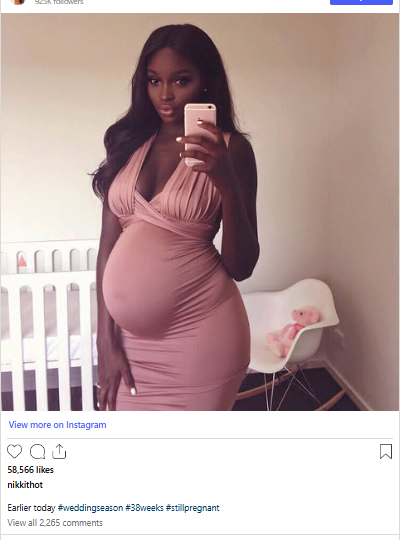
The relationship continued.
Then Jamie began planning a moment that would unexpectedly change much more than their personal lives.
He wanted to propose.
And he knew Nikki enjoyed watching elaborate proposal videos.
So he decided that a quiet question at home was not enough.
He created a video.
Then he arranged for Nikki to see it on a large screen at Melbourne’s Federation Square.
On April 26, 2012, Nikki sat watching as Jamie’s plan unfolded.
A friend recorded what happened.
The intention was not initially to launch a media career.
They wanted the footage so the people close to them could share the moment.
Then they uploaded it.
And strangers started watching.
The audience kept growing.
What had begun as a personal milestone reached millions of people.
Viewers became curious about the couple behind the proposal.
Who were Jamie and Nikki?
What was their relationship like?
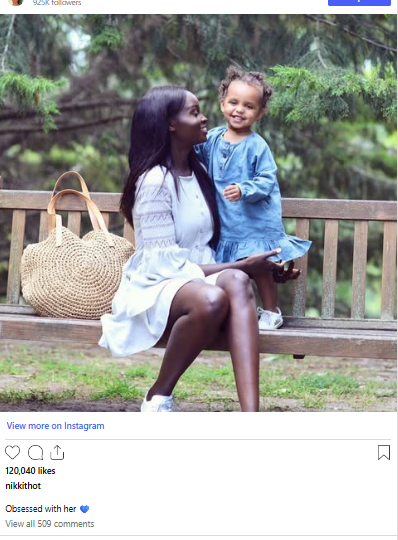
What would happen next?
That curiosity created an opportunity neither of them had originally planned.
They started sharing more.
Videos followed.
Then more videos.
The relationship that had begun through social media slowly became part of a new career built through social media.
Jamie later explained that they had essentially fallen into vlogging.
There had been no elaborate original plan to become one of the internet’s recognizable family couples.
The audience arrived.
They responded.
And the channel grew.
On March 21, 2013, Jamie and Nikki married.
Their wedding provided another major chapter for the viewers who had discovered them through the proposal.
The wedding video also attracted millions of views.
For followers, there was a natural progression.
They had watched the proposal.
Now they could watch the wedding.
And soon, the videos extended into ordinary married life.
Trips appeared.
Home routines appeared.
Funny conversations appeared.
Relationship milestones became episodes.
The channel gave viewers a sense of following a young couple through life almost in real time.
But there was an important distinction.
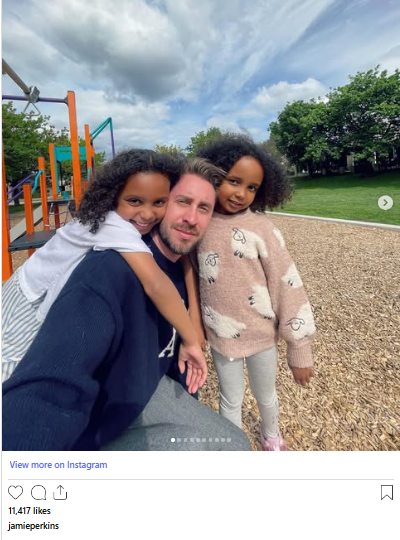
Jamie said publicly that they did not show everything.
Viewers might feel as though they knew the couple intimately.
The couple still kept parts of their lives outside the camera.
At the time, that statement may not have seemed particularly significant.
Years later, it would.
For a while, however, the public story continued to grow.
Then came parenthood.
On January 24, 2016, Nikki and Jamie welcomed their first daughter, Ava Sarah.
The channel changed again.
What had been couple content increasingly became family content.
People who had watched Jamie propose to Nikki could now watch them becoming parents.
There were new routines.
New responsibilities.
And a new generation appearing in the videos.
Two years later, another major milestone arrived.
Their second daughter, Zoe Reign, was born on March 29, 2018.
By then, Jamie and Nikki were no longer simply a couple with a successful YouTube account.
They had become a recognizable online family.
Their dog, Louis, appeared as another familiar part of the household.
The formula seemed almost effortless from the outside.
A couple with an unusual online origin.
A cinematic proposal.
A wedding.
Two daughters.
Travel.
Family life.
Beautifully produced videos.
And millions of people interested in following along.
For some viewers, it resembled a modern fairy tale.
But Nikki’s story had started long before Jamie or YouTube entered it.
She was born in Sudan and grew up in Australia after her family relocated there when she was young.
Her upbringing was considerably more private than the life she would eventually share online.
She has spoken about growing up in a family that valued education and hard work.
Her parents had expectations for the future.
Like many parents, they wanted stability for their daughter.
A traditional professional path could provide that.
Modeling and internet videos looked much less predictable.
Nikki chose the less conventional route.
That choice created tension at first.
Her family was not naturally comfortable with cameras following everyday life.
Privacy had been normal.
Vlogging was almost the opposite.
A camera could turn an ordinary family interaction into something thousands or even millions of strangers might see.
Nikki once recalled an amusing example of how strange that new world felt to her father.
Subscribers apparently recognized him while he was traveling on a train.
They knew exactly who he was.
He was Nikki’s father.
For someone who preferred privacy, the experience was startling.
To Nikki, the memory eventually became funny.
But it illustrated how dramatically her life had changed.
Fame did not stop at the person uploading the video.
It could reach everyone around them.
There was another change too.
Nikki has explained that during childhood she did not constantly experience her skin color as something separating her from everyone around her.
She said she had not generally been bullied for it.
Public life was different.
Once she became a recognizable model and creator, strangers increasingly commented on her appearance and skin tone.
Her relationship with Jamie also attracted attention because they were an interracial couple.
Some people celebrated the family.
Others made intrusive or negative remarks.
Nikki noticed that the tone could differ depending on which online community she was interacting with.
The family content often attracted people who appreciated seeing a diverse family.
Beauty-related content could bring a harsher audience.
Comments became more personal.
And as the audience grew, the family lost control over what strangers considered acceptable to discuss.
Their marriage.
Their skin tones.
Their children’s appearances.
Their backgrounds.
Their decisions.
Everything could become material for public commentary.
Even ordinary encounters sometimes demonstrated how people viewed them.
Jamie once described an interaction in which a doctor apparently asked how he knew Ava rather than immediately understanding that he was her father.
He characterized the experience as confronting.
It reflected an assumption based on appearance.
The moment was small.
Its meaning was larger.
A family that looked completely ordinary to itself could still encounter strangers who tried to fit it into expectations based on race or physical resemblance.
Online visibility amplified that experience.
But visibility brought advantages too.
The channel became a substantial platform.
Creative work that began almost accidentally became a profession.
Millions of views could create advertising income.
Brands could become interested.
A family video could become business content without ceasing to be a family memory.
That dual role is one of the unusual things about family vlogging.
A birthday can be both a personal milestone and a published video.
A vacation can be both family time and professional content.
A pregnancy announcement can be both intimate news and a high-performing upload.
The boundaries can become difficult to see.
For years, the audience watched that version of Jamie and Nikki’s life.
Then something changed.
The polished family image stopped matching what was happening privately.
By 2019, the marriage had broken down.
Nikki publicly confirmed the separation that August and indicated that she had already moved out months earlier.
For viewers who had followed the couple for years, the news felt sudden.
From inside the relationship, it apparently was not.
That contrast revealed one of the central realities of online life.
A viewer can watch hundreds of videos about a family and still know very little about what happens after the recording stops.
An edited vlog may show breakfast.
It may show a vacation.
It may show a birthday celebration.
It may show parents laughing with their children.
All of those moments can be real.
They still do not represent every hour of a marriage.
Arguments do not necessarily appear.
Stress does not necessarily appear.
Private conversations do not necessarily appear.
Problems may exist for months while the public continues seeing happy moments.
That does not automatically mean the happiness was staged.
Human relationships can contain both.
A couple can enjoy a vacation and still have serious problems.
Parents can laugh with their children while struggling privately with each other.
A beautiful wedding does not guarantee a permanent marriage.
Neither does a popular YouTube channel.
For several years after the separation, many details remained outside public view.
The couple moved into separate lives.
Their daughters remained their shared responsibility.
The public naturally became curious.
Speculation appeared.
Followers examined older videos.
Some claimed they had noticed warning signs.
Others chose sides despite having little reliable information.
But the complete reasons for the breakup were not something strangers could establish by rewatching vlogs.
Then, in 2023, the story changed again.
Jamie decided to speak publicly about his account of the marriage.
In a long online video, he made serious allegations about what he said had happened during the relationship.
Among the claims he made were allegations of abusive behavior and infidelity.
He also discussed mental-health difficulties that he said followed the relationship and separation.
Those were serious statements.
But they were allegations made by Jamie.
That distinction is essential.
Publishing a claim does not independently establish it as fact.
Nikki responded.
She rejected key parts of Jamie’s account, including the allegation that she had been unfaithful.
She described his public presentation as an attempt to damage her reputation and said she believed she had been blamed for problems in his life.
She also presented her own interpretation of what had happened between them.
That was Nikki’s account.
The two versions did not match.
And outside observers were not in a position to turn one side’s statements into established facts simply because one version sounded more convincing to them.
That is where responsible reporting becomes especially important.
A marriage happens primarily between the people inside it.
A public video can present one person’s memories and interpretation.
A response can present another.
Neither automatically provides independent proof of every allegation.
What can be reported safely is much narrower.
Jamie and Nikki separated in 2019.
Their divorce was finalized later.
Jamie publicly made allegations about the marriage in 2023.
Nikki disputed his claims and denied the infidelity allegation.
Beyond that, disputed private accusations should remain attributed.
There is no need to exaggerate them.
The story already contains enough contrast.
The same internet that once carried their romantic proposal to millions eventually carried their public disagreement about the marriage.
That transformation is difficult to ignore.
In 2012, viewers watched Jamie ask Nikki to marry him.
In 2013, they watched the wedding.
In 2016, they watched the couple become parents.
In 2018, another daughter arrived.
Then came separation.
Years later came conflicting public accounts of what the marriage had been like.
For longtime followers, it might have seemed as if they had watched an entire relationship from beginning to end.
But they had not.
They had watched selected parts.
That distinction becomes especially important when children are involved.
Ava and Zoe entered the public story from very young ages.
Their milestones became part of the family channel.
At the time, sharing children’s lives online was becoming common among successful family creators.
But children cannot fully understand what permanent online visibility means.
A baby cannot decide whether millions of strangers should see an early childhood moment.
A toddler cannot understand search engines.
A young child cannot predict how she might feel about an old video when she becomes a teenager.
Those questions extend far beyond Jamie and Nikki.
They apply to the entire family-vlogging industry.
But this family’s changing circumstances demonstrate why the questions matter.
A childhood video can remain online long after the family situation that produced it has changed.
Parents can divorce.
Homes can change.
Relationships can become contentious.
The child continues growing.
The digital record remains.
That is why current curiosity about Ava and Zoe deserves restraint.
They are not the dramatic reveal at the end of their parents’ story.
They are children.
Their appearance should not become a spectacle because their mother and father have different racial backgrounds.
Nor should their lives be treated as a continuation of public arguments between their parents.
Ava was born in 2016.
Zoe followed in 2018.
The babies who originally appeared in the family videos are now school-age children.
Their interests, friendships, school experiences, and personal development should not automatically belong to an audience.
Their parents’ decision to become public figures does not mean the daughters permanently surrender privacy.
The same applies to the racial framing that often surrounded the family.
Many stories about Jamie and Nikki emphasized the visual contrast between them.
His lighter complexion.
Her dark skin.
Then the appearance of their daughters.
But reducing an interracial family to skin-tone comparisons can obscure everything more interesting about the people involved.
Nikki had an international modeling career.
Jamie was a filmmaker and creator.
They met during the MySpace era.
They built a relationship.
A creative proposal unexpectedly attracted a huge online audience.
They converted that attention into a successful media career.
They raised two children while navigating public visibility.
Then their marriage ended.
That story does not require treating anyone’s skin color as a novelty.
It also does not require inflating the popularity of their early videos.
Some recycled versions describe millions of “likes.”
The better-supported descriptions concern millions of views.
The difference matters.
A view and a like are not the same metric.
The proposal and wedding videos were highly successful without turning one statistic into another.
Accuracy does not make the story less interesting.
It makes it more credible.
The same principle becomes even more important around divorce.
There is a natural temptation to search for one simple reason why a well-known marriage ended.
One person cheated.
One person caused everything.
One event destroyed the family.
Real relationships are often much more complicated.
And in this case, the former spouses publicly disagree about key allegations.
That means a responsible account should resist declaring a winner.
The audience did not live inside the marriage.
The audience watched videos.
That leads to the larger payoff hidden throughout the story.
For years, Jamie and Nikki’s channel created an extraordinary sense of familiarity.
Viewers knew the house.
They knew the children’s names.
They knew the dog.
They had seen pregnancies and birthdays.
They had watched travel videos and family routines.
They remembered the proposal.
They remembered the wedding.
That amount of exposure can create the feeling that nothing important is hidden.
But familiarity is not the same thing as complete knowledge.
The camera was always pointed in one direction at a time.
Something remained outside its frame.
That does not mean every happy moment was fake.
It means happy moments were only part of reality.
The marriage could contain genuine love and later contain serious conflict.
The proposal could be sincere even though the relationship eventually ended.
The wedding could be joyful even if the marriage did not last forever.
Human relationships do not become false retroactively simply because they eventually change.
And perhaps that is where the Jamie and Nikki story becomes more interesting than the usual “perfect couple falls apart” headline.
Their rise happened because the internet allowed strangers into important moments.
Their breakup demonstrated the limits of that access.
Millions had seen them.
Very few actually knew them.
The audience had access to footage.
Not every conversation.
They had access to edited days.
Not every difficult night.
They knew the public family.
They did not necessarily know the private marriage.
Years later, Jamie and Nikki offered different versions of that private reality.
Those accounts became public too.
But even then, the audience was still receiving information through separate perspectives.
The complete history remained known most intimately by the people who lived it.
This is the uncomfortable reality of social media.
It can make strangers feel remarkably close to one another.
A viewer can watch a child grow up.
A creator can speak directly into a camera from a bedroom.
Years of videos can create familiarity comparable to a long friendship.
But the relationship is not symmetrical.
The viewer sees what is uploaded.
The creator lives everything else too.
That gap usually remains invisible.
Until something happens that the old videos cannot explain.
For Jamie Perkins and Nikki Thot, separation exposed that gap.
Their digital archive still contains a proposal filled with hope.
A wedding.
Young parenthood.
Family adventures.
And countless ordinary moments from a life that no longer exists in the same form.
Those videos are real pieces of the past.
They simply were never the whole past.
Today, their former marriage should not be reduced to either its happiest upload or its most serious public accusation.
Both are fragments.
The safest conclusion is the one supported by the documented timeline.
They met online during the MySpace era.
Jamie proposed publicly in 2012.
They married in 2013.
They welcomed Ava in 2016.
Zoe arrived in 2018.
Their separation became public in 2019.
Years later, disputes about the marriage became public as well.
The relationship ended.
The digital record remained.
And their daughters continued growing beyond the period when their family life had been one of YouTube’s recognizable stories.
That is the final contrast.
The original proposal video preserved a moment Jamie and Nikki wanted people they loved to see.
Unexpectedly, millions watched it.
From that moment forward, the camera became part of their shared story.
But in the end, the most important lesson may be about everything the camera could never preserve.
The private conversations.
The changing feelings.
The disagreements.
The decisions made after recording stopped.
The complicated reality behind a polished screen.
Millions of people watched Jamie and Nikki build a family.
That never meant millions of people truly knew their marriage.
And sometimes, when an online fairy tale ends, the missing pieces are not hidden in another video.
They were simply never ours to see.

