
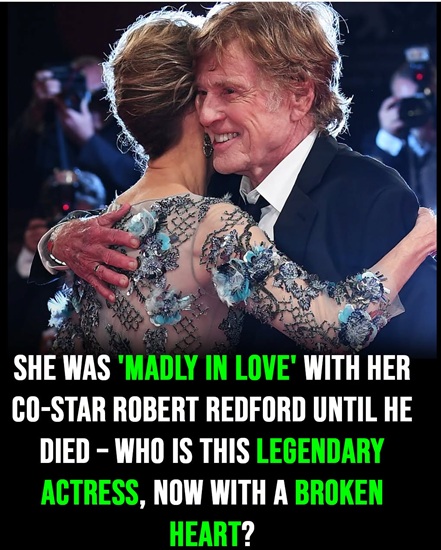
Robert Redford’s death at the age of 89 marked the end of an extraordinary chapter in American cinema. The acclaimed actor, director, producer and founder of the Sundance Institute died at his home in Sundance, Utah, in September 2025, surrounded by loved ones, according to his publicist. Across more than six decades in entertainment, Redford became known not only for his performances in some of Hollywood’s most memorable films but also for his work behind the camera and his lasting support for independent filmmakers.
His death prompted tributes from colleagues throughout the entertainment industry, including one of his longtime friends and frequent co-stars, Jane Fonda. For Fonda, the news carried an especially personal weight because her professional relationship with Redford stretched across more than half a century. Shortly after learning of his death, she said she had been deeply affected and described him as someone who meant a great deal to her. She also praised the values he represented and the causes he supported throughout his life.
Her reaction reflected not simply admiration for another famous actor, but grief over losing a friend with whom she had shared important chapters of her own career. Redford had become one of the defining screen stars of his generation long before his later work as a director and advocate for independent cinema. His film career included celebrated performances in Butch Cassidy and the Sundance Kid, The Sting, The Way We Were, All the President’s Men, Jeremiah Johnson and Out of Africa.
His combination of understated acting, screen presence and movie-star charisma made him one of Hollywood’s most recognizable leading men during the 1960s and 1970s. Yet his career eventually expanded far beyond the roles that originally made him famous. Redford later became an accomplished director and won the Academy Award for Best Director for Ordinary People. The film also won Best Picture, establishing that his talent extended beyond acting.
In later decades, his influence became closely connected with the Sundance Institute and the Sundance Film Festival, which provided opportunities for independent filmmakers and helped reshape the American film industry. Many of the directors and actors who emerged through independent cinema benefited from an environment Redford spent years helping to build. Jane Fonda’s connection with Redford began near the beginning of both of their careers.
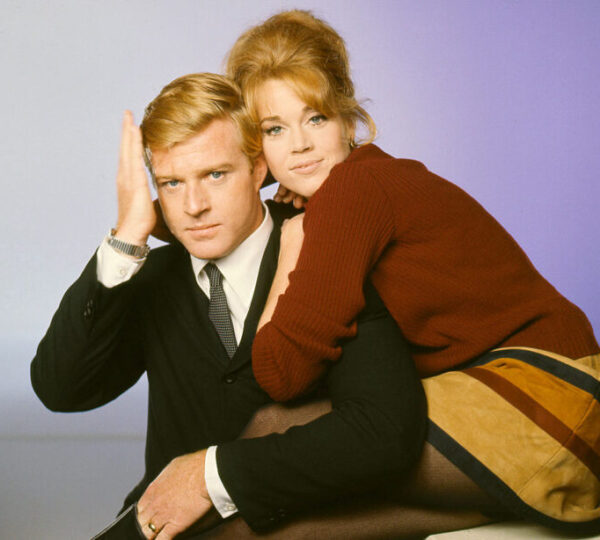
They appeared together in Tall Story in 1960, although their collaboration would become much more significant in later films. They subsequently worked together in The Chase, Barefoot in the Park, The Electric Horseman and, decades later, Our Souls at Night. Their repeated collaborations created one of Hollywood’s most enduring screen partnerships, with audiences often responding to the natural chemistry between them.
Their 1967 romantic comedy Barefoot in the Park became particularly important in the history of their friendship. Based on Neil Simon’s play, the film cast Fonda and Redford as newlyweds Corie and Paul Bratter, whose very different personalities create tension and comedy as they begin married life in a small New York apartment. Redford played the more reserved and practical husband, while Fonda portrayed the spontaneous and adventurous wife. Their contrasting personalities gave the movie much of its energy.
Fonda later spoke openly and humorously about developing a strong crush on Redford while they worked together. She repeatedly acknowledged that she found him extremely attractive and that those feelings sometimes resurfaced whenever they reunited professionally. Her comments were usually made with affection and humor rather than as claims of an actual romantic relationship. Both performers had their own marriages and personal lives during important periods of their friendship.
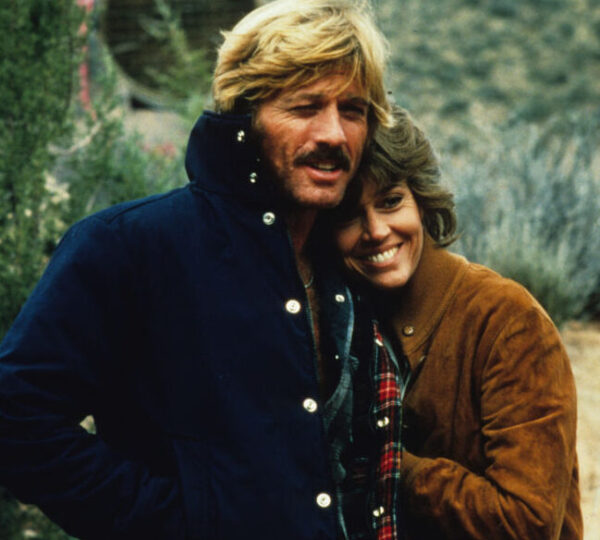
Over the years, Fonda became unusually candid about her admiration for Redford. In interviews, she joked that making movies with him often resulted in her falling for him again. She once explained that when they were younger, nothing happened romantically between them because both were married. Her recollections helped create a charming mythology around their screen relationship while also making clear that their connection primarily remained one of friendship and professional affection.
Redford also expressed admiration for Fonda. While promoting Our Souls at Night, he described her as a powerful presence and praised qualities that extended beyond acting. Their friendship had survived long separations between projects and enormous changes in both of their careers. By the time they reunited for the 2017 Netflix film, they were no longer playing young newlyweds or romantic leads in the traditional Hollywood sense. Instead, they portrayed older adults confronting loneliness, companionship and the possibility of finding intimacy late in life.
That made Our Souls at Night particularly appropriate as their final screen collaboration. The film, adapted from Kent Haruf’s novel, centers on two widowed neighbors who begin spending nights together simply because neither wants to be alone. Their relationship gradually develops into something deeper. The material gave Fonda and Redford an opportunity to explore aging, emotional vulnerability and companionship in ways that reflected where they themselves were in life.
Their long history gave the performances an added emotional dimension. Audiences were not simply watching two fictional characters slowly become close. Many viewers were also aware that the actors had known each other for decades and had repeatedly appeared together at different stages of their careers. That shared history made even quiet scenes carry memories of their earlier films.
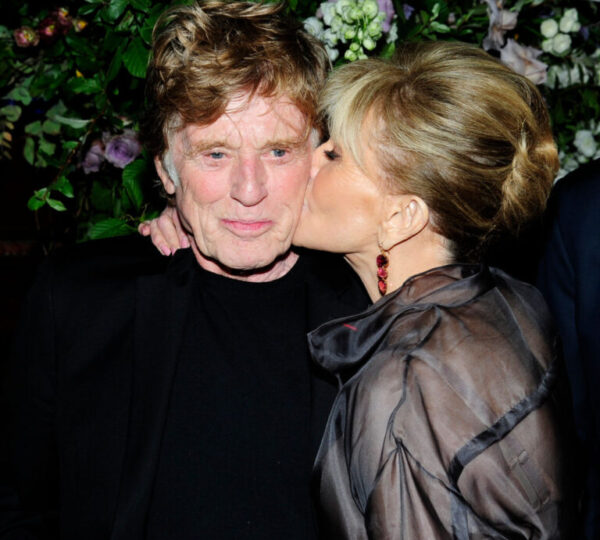
When Our Souls at Night premiered at the Venice Film Festival in 2017, Fonda and Redford appeared together publicly and were celebrated for their careers. Both received lifetime-achievement recognition at the festival. Photographs of the two embracing, smiling and speaking together became reminders of a friendship that had endured while Hollywood changed around them. Their reunion was especially meaningful because neither could assume there would be many more opportunities to work together.
Fonda frequently joked about how much she enjoyed filming romantic scenes with Redford. During interviews for Our Souls at Night, she playfully complained that one romantic sequence was shorter than she would have preferred. Such comments reflected the warm and humorous way the two discussed their long history. Rather than pretending they had never noticed the chemistry audiences saw between them, they often acknowledged it directly.
Fonda also joked that looking into Redford’s eyes could make it difficult for her to remember her lines. That kind of comment captured the playful side of their friendship. Even after decades of success, she could still speak about him with the enthusiasm of someone remembering the early days of her career. It became part of the affection surrounding their public appearances together.
Their relationship was especially interesting because it existed across several different eras of Hollywood. They first worked together when the studio system still strongly influenced American filmmaking. They reunited during the politically and culturally turbulent 1960s and 1970s. Decades later, they collaborated again in the streaming era, when Netflix was becoming a major film producer. Their partnership therefore spanned enormous changes in how movies were made, distributed and watched.
Redford’s own evolution during that period was remarkable. He began as an actor known partly for his appearance and charisma, but he increasingly sought projects with political, social or moral complexity. All the President’s Men, in which he played journalist Bob Woodward, became one of the most influential films about journalism and political accountability. Other projects explored environmental issues, institutional power and personal responsibility.
Fonda’s career underwent similarly dramatic transformations. She moved from early romantic comedies into politically engaged films, major dramas, fitness entrepreneurship and later television work such as Grace and Frankie. Like Redford, she became known for activism as well as entertainment. Their lives frequently intersected with major cultural debates even when they were not working together.
This shared interest in public causes helped deepen their friendship beyond movies. Both were associated with environmental advocacy, although their political activism took different forms and generated different levels of controversy over the years. Redford became particularly known for environmental conservation and protecting land in Utah. He also used his position in the film industry to support creative independence.
Sundance became perhaps his most important contribution outside traditional filmmaking. Through the Sundance Institute, Redford helped create a space where filmmakers could develop projects outside the largest Hollywood studios. The Sundance Film Festival eventually became one of the world’s best-known showcases for independent cinema. Filmmakers who might otherwise have struggled to find audiences were able to gain exposure through the festival.
That legacy explains why reactions to Redford’s death came from far beyond actors who had worked with him personally. Directors, producers, writers and independent artists remembered him as someone who helped create opportunities for others. Martin Scorsese, among many other major filmmakers, praised Redford’s contribution to American cinema after his death.
Meryl Streep, who worked with Redford in Out of Africa and later Lions for Lambs, also paid tribute. Their 1985 film remains one of the most famous romantic dramas of its era and won multiple Academy Awards, including Best Picture. Streep remembered Redford with affection after his death, joining a long list of artists who emphasized not only his professional achievements but his personal impact.
Barbra Streisand, Redford’s co-star in The Way We Were, also remembered him warmly. Their 1973 romantic drama became another defining Redford film, and the chemistry between their characters remains widely remembered. Streisand described him as an exceptionally talented and fascinating actor when paying tribute after his death.
Yet Jane Fonda’s tribute was particularly poignant because she had worked with him repeatedly for so long. The two knew one another as young actors trying to establish themselves and later reunited after both had become cultural icons. Their friendship was therefore connected not simply with one famous movie but with more than five decades of shared memories.
In her later tribute, Fonda reflected on the laughter they had shared and remembered Redford’s practical jokes. That detail offered a glimpse of the person behind the carefully composed public image. Redford was frequently portrayed as reserved and serious, especially when discussing film or environmental issues, but colleagues also remembered a playful side that emerged among friends.
Fonda also expressed regret that she had intended to visit him before his death but had waited too long. Her reflection became one of the most emotionally powerful parts of her tribute because it transformed a Hollywood story into something universal. She was not speaking as an actress remembering a famous co-star so much as an older person confronting the painful realization that opportunities to reconnect with friends are not unlimited.
Her message carried a simple lesson: when people reach advanced age, postponing a visit can mean losing the opportunity completely. That regret was deeply personal, but it resonated precisely because many people have experienced something similar with friends or relatives. Fame offered no protection from that ordinary human experience.
Fonda’s grief also demonstrated how friendships can remain meaningful even when people are not constantly together. Redford and Fonda did not spend every year working side by side, yet each reunion seemed to reactivate a connection formed decades earlier. Their professional paths often moved separately, but neither appeared to forget what the other had meant during formative periods of life.
Their first decades in Hollywood were particularly significant because both became famous during an era when movie stars occupied an enormous place in popular culture. Redford’s appearance was frequently discussed almost as much as his performances. His blond hair, blue eyes and relaxed manner became part of the classic image associated with him.
Stories circulated for years about how striking people found him when he was young. Fonda herself repeatedly remembered being impressed by his appearance when she first encountered him. Yet reducing Redford to physical attractiveness misses much of what allowed his career to endure. Many handsome actors passed through Hollywood during the same period without developing anything close to his longevity or influence.
Redford proved capable of playing romantic leads, outlaws, journalists, athletes and morally conflicted professionals. His restrained acting style often depended on subtle expressions rather than exaggerated emotion. That quality worked particularly well in movies where his characters carried secrets, uncertainty or internal conflict.
One of his most famous collaborations was with Paul Newman in Butch Cassidy and the Sundance Kid. Their chemistry helped turn the film into a classic, and Redford’s association with the Sundance Kid later influenced the name of the Sundance organization he created. The movie demonstrated that his appeal could work just as effectively in partnership with another major male star as in romantic dramas.
Redford and Newman reunited for The Sting, another enormous success. The film won Best Picture and became one of the most celebrated movies of the 1970s. Their friendship and screen partnership remained an important part of Redford’s career story, just as his collaborations with Fonda, Streisand and Streep became defining romantic pairings.
His work as a director eventually gave him a different kind of credibility. Ordinary People, released in 1980, was his directorial debut and told a deeply emotional story about grief and dysfunction within an affluent family. Rather than choosing an obvious star vehicle for his first film behind the camera, Redford focused on character and emotional complexity.
The success of Ordinary People demonstrated that his understanding of cinema extended far beyond performing. Winning the Academy Award for Best Director placed him among actors who successfully transitioned into filmmaking at the highest level. It also helped establish the second half of a career that became increasingly concerned with developing and supporting stories rather than simply starring in them.
His environmental activism was another major part of his public life. Redford had a longstanding connection with Utah and worked to protect landscapes he valued. Environmental themes sometimes appeared directly or indirectly in his projects, and he spoke frequently about conservation and climate-related concerns.
The property and community associated with Sundance became intertwined with that environmental identity. Redford’s connection to Utah was more than the ownership of a vacation home. The landscape played a central role in his personal philosophy, artistic work and environmental advocacy.
It was therefore fitting that his publicist said he died at his Sundance home in the mountains of Utah, surrounded by people he loved. No cause of death was initially provided publicly. Reporting emphasized the location because it was a place strongly associated with his life and legacy.
Redford’s death produced the kind of response reserved for performers whose influence extends beyond individual movies. Tributes came from colleagues who knew him personally, younger actors who had been inspired by him and filmmakers whose careers had benefited from the independent-film movement he championed.
Jane Fonda’s comments stood apart because she was able to remember several different versions of Redford. She knew the young actor whose appearance could capture a room’s attention. She knew the star who became one of Hollywood’s most bankable leading men. She knew the filmmaker and activist he became later in life. And she knew the older man with whom she reunited for one final screen romance.
Their final collaboration gave audiences something Hollywood historically has not always provided: a romantic story centered on older adults without treating affection and intimacy as a joke. Our Souls at Night approached companionship later in life with tenderness and seriousness. Fonda and Redford’s own ages and shared history made them unusually suited to the material.
Fonda’s playful comments about the film also challenged the assumption that romantic desire disappears with age. She spoke openly and humorously about enjoying romantic scenes with Redford even in their eighties. Her remarks generated attention because older performers, particularly older women, are often expected to discuss romance differently from younger celebrities.
Their comfort with one another allowed those conversations to remain warm rather than awkward. They had known each other for so long that teasing about old crushes became part of the friendship itself. It also gave audiences a sense of continuity stretching all the way back to Barefoot in the Park.
That 1967 movie showed them near the beginning of adulthood, portraying newlyweds trying to understand whether their differences would strengthen or damage their relationship. Fifty years later, Our Souls at Night placed them near the opposite end of life, portraying people who had already experienced marriage, loss and decades of adulthood before finding one another.
Few screen partnerships have been fortunate enough to receive such a natural bookend. The actors aged, their characters aged and the stories changed accordingly. Their chemistry remained recognizable even though the circumstances were completely different.
Their appearances together at the Venice Film Festival in 2017 captured that continuity visually. Photographs of the pair showed two actors who had known one another for more than half a century and were still comfortable laughing and embracing publicly.
Those images became especially poignant after Redford’s death. What once looked like a celebration of a reunion became, in retrospect, part of their final major professional chapter together.
For Fonda, memories of Redford appear to contain both romantic admiration and genuine friendship. She repeatedly said she had fallen in love with him in a playful sense during their films, while also making clear that they maintained boundaries in their real lives. Their relationship therefore did not need to become a secret Hollywood romance to be meaningful.
That distinction is worth preserving. Celebrity history is often rewritten through speculation, especially when two performers display strong chemistry. Fonda herself provided plenty of colorful comments about her attraction to Redford, but there is no need to turn those comments into claims of a relationship she did not describe.
What existed publicly was already remarkable: attraction, friendship, professional respect and a partnership that survived for decades. Their connection helped produce several films across very different stages of American cinema.
Redford also admired Fonda’s strength. Their political and personal views did not need to be identical for him to recognize what made her distinctive. He described her as a force, reflecting the determination that characterized both her acting career and her activism.
Fonda similarly admired Redford for qualities beyond appearance. After his death, she emphasized the person she believed him to be and the values she associated with him. Her grief clearly extended far beyond losing a handsome former co-star.
Redford’s legacy is difficult to summarize through a single role because he worked in so many different areas. Some viewers will always think first of the Sundance Kid riding beside Paul Newman. Others remember the mysterious Jay Gatsby, journalist Bob Woodward or the romantic figures he played opposite Streisand, Fonda and Streep.
Filmmakers may remember the director of Ordinary People or the creator of Sundance. Environmentalists may remember his advocacy for conservation and the landscapes of the American West. Younger independent filmmakers may connect his name primarily with opportunities created through the Sundance Institute.
These different legacies explain why his death generated such broad mourning. He had not simply remained a movie star from an earlier era. He spent decades using the position that stardom gave him to create other institutions and opportunities.
Jane Fonda’s relationship with him nevertheless provides one of the most personal ways to understand the person behind that legacy. She could remember mistakes, practical jokes, attraction and unfinished plans to visit. Those memories are not achievements listed in a biography; they are the ordinary details from which friendships are built.
Her regret about waiting too long to reconnect may ultimately be one of the most relatable parts of her tribute. Most people do not have friendships that unfold across internationally famous films or red carpets. Many people, however, understand the feeling of believing there will always be another opportunity to make a phone call or arrange a visit.
That was the lesson Fonda drew from losing Redford. At an advanced age, she realized that postponing something meaningful carries greater risk because time becomes increasingly uncertain. Her comments therefore became not just a remembrance of Redford but a reflection on aging and friendship.
For audiences, the movies remain. Barefoot in the Park preserves their youthful chemistry. The Electric Horseman captures them at another stage of adulthood. Our Souls at Night allowed them to reunite when both had accumulated decades of life and experience.
Those performances mean that their partnership can still be discovered by viewers who were not alive when the movies were originally released. The context may change, but the chemistry remains visible.
Redford’s wider filmography will continue to introduce him to new generations as well. Classic movies frequently outlive the cultural circumstances in which they were created, and several of his major films have already remained influential for decades.
The Sundance Institute ensures another form of continuation. Independent filmmakers supported through the organization carry forward an institution closely associated with Redford’s belief that unusual stories deserved opportunities outside conventional studio systems.
That may ultimately be one of his most significant contributions. Movie stars can leave famous performances behind, but Redford also helped build structures that enabled other artists to create their own work.
His career therefore combined celebrity with mentorship and institution-building in a way relatively few major actors achieve. His image helped make him famous, but his choices after achieving fame helped make his influence lasting.
For Fonda, however, the loss remained much simpler and more personal. She had lost Bob — a friend she had known for most of her adult life. Her words after his death reflected shock, sadness, gratitude and regret at the same time. She remembered the laughter and the work they shared while wishing she had acted sooner on her desire to visit him again.
There is something fitting about the fact that one of Hollywood’s most famous screen relationships ended not with speculation or manufactured drama but with a friend remembering another friend. Their professional story stretched from young actors building careers to elderly stars portraying late-life companionship. Their personal friendship lasted alongside enormous changes in both their lives.
Robert Redford died at 89 after leaving behind a career that transformed him from leading man to Oscar-winning director, environmental advocate and champion of independent film. Jane Fonda’s tribute adds a quieter dimension to that legacy. She remembered someone who made her laugh, someone she admired, someone she repeatedly enjoyed working with and someone she wished she had seen one more time.
For movie audiences, their connection survives through the films they made together. For Fonda, those same films are also records of different chapters of a friendship that lasted more than half a century. And that may be why her reaction resonated so strongly. Behind all the Hollywood history was something very ordinary and human: losing someone important and realizing that the opportunity for one more conversation had disappeared.

