
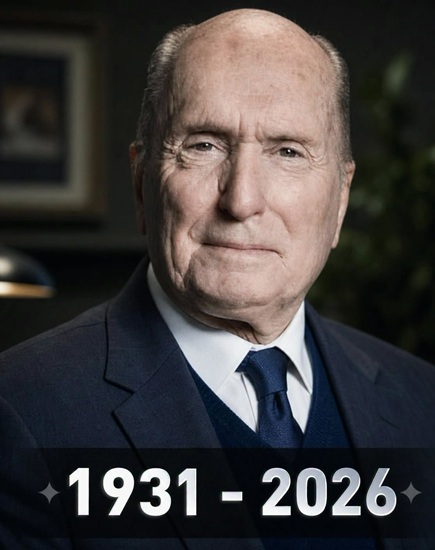
A black-and-white portrait presents the face of an elderly man alongside two simple dates: 1931 and 2026. No name, occupation, hometown or personal history accompanies the image in the information available here. Viewers are given only a face and two years that appear to represent the boundaries of a long life. That simplicity is part of what makes the image thought-provoking. Two dates can describe a span of time, but they cannot explain everything that happened between them.
If the dates are accurate birth and death years, they would represent approximately 95 years of life. Someone born in 1931 would have entered a world that differed dramatically from the one people knew by 2026. Many technologies now considered ordinary had either not yet been invented or were not widely available in everyday homes. Television had not become a routine household presence in many places, commercial aviation had not yet transformed international travel, and digital communication remained decades away.
Radio, printed newspapers and letters played much larger roles in communication. Over a lifetime stretching into the 2020s, those systems would exist alongside entirely new technologies that reshaped daily life. Communication provides one of the clearest examples of that transformation. Personal letters once traveled physically between cities and countries, sometimes requiring days or weeks to arrive.
Later generations became accustomed to email, text messages and instant video conversations across enormous distances. Telephones moved from fixed household devices to mobile phones capable of carrying photographs, maps, news and access to vast amounts of information. Someone living across those decades could therefore exist on both sides of one of the largest communication changes in modern history.
Photography changed in a similar way. Family pictures were once taken sparingly because film needed to be purchased, developed and printed. Physical albums might contain carefully selected photographs documenting birthdays, holidays and important family events. Digital photography eventually removed many of those limitations. A single phone could store thousands of pictures and capture moments that earlier generations might never have considered photographing. The way people preserved memories changed, even though the human desire to remember important people and experiences remained familiar.
Music and entertainment also moved through several major technological stages. Radio and physical records played important roles during earlier decades before magnetic tapes, compact discs and other formats became common. Digital downloads later changed how music was purchased, followed by streaming services that allowed enormous libraries to be accessed almost instantly. Movies and television followed their own technological transformations. What once required a theater, scheduled broadcast or physical recording could eventually be viewed on portable digital devices.
A long lifetime may overlap with many historical transformations, but those events do not necessarily become a person’s most important memories. People often remember private experiences more vividly than major inventions or public headlines. A parent’s voice, a childhood home, a friendship, a familiar meal or an ordinary conversation can remain meaningful for decades. Someone may remember the first time they held a child more clearly than the first time they saw a particular technology. Public history provides context for a lifetime, while personal relationships often provide its emotional meaning.
That is why the unidentified face in the portrait can encourage so many questions without answering any of them. Viewers might wonder what made the man laugh or what kind of work occupied his days. They might imagine the songs he enjoyed, the places he visited or the people who expected to see him at particular times. Yet none of those details can responsibly be stated as facts from the photograph alone. They are questions prompted by the image rather than information contained within it.
A photograph preserves appearance but only a very small part of identity. It cannot reproduce someone’s voice, mannerisms or sense of humor. It cannot show how the person behaved around friends or what relatives remembered about ordinary mornings together. A portrait does not record favorite expressions, repeated stories or habits that became familiar over decades. Those details exist mainly in the memories of people who actually shared a life with the person being remembered.
The dates themselves can also make a lifetime appear more orderly than it really was. A line reading 1931–2026 looks simple and complete, but human experience rarely feels that way from inside a life. Some childhood years may seem enormous in memory, while entire later decades can feel surprisingly short. There are periods of routine interrupted by celebration, uncertainty, grief, change and unexpected events. Ninety-five years are not experienced as a single continuous block of time. They are lived one morning, conversation and decision at a time.
Official records often reduce people to information that can be easily documented. A birth certificate records one beginning, while other documents may preserve marriages, addresses, occupations and family relationships. Eventually, a death record can add another date. These records are valuable, but they cannot contain an entire person. The difference between documented history and remembered life becomes especially clear after someone is gone. What remains with family and friends is often far more detailed than what survives in formal records.
Families may remember extremely small things that would never appear in a biography. A particular recipe may immediately bring someone to mind. A chair may remain associated with the person who always sat there. A familiar expression can continue appearing in family conversations years later. Someone may instinctively think about making a telephone call before remembering that the person is no longer there. Such memories demonstrate why a lifetime cannot be fully represented by dates, documents or photographs.
An image of an unknown elderly person can also become unexpectedly personal for viewers who never knew him. Instead of thinking only about the stranger in the photograph, people may begin thinking about their own parents or grandparents. Others may remember partners, friends, teachers or neighbors who once occupied an ordinary but important place in their lives. The photograph becomes meaningful not because viewers know the man’s biography but because they recognize the broader experience of remembering someone.
There is also no requirement that a person accomplish something famous for a life to have mattered. Most human influence occurs outside public attention. People care for children, help relatives, work ordinary jobs, maintain friendships and support others through difficult periods. They teach skills, keep promises and show up repeatedly for people who depend on them. Those actions rarely become historical headlines. Within a family or community, however, their importance can be enormous.
A person who lived from the early 1930s into the 2020s could have existed through extraordinary changes in medicine, transportation, communication and culture. Yet it would be misleading to claim that the unidentified man personally experienced every major development associated with those decades. Where he lived is not provided. Neither are his circumstances, interests or opportunities. Historical comparisons can describe how the wider world changed during the period shown in the image, but they cannot substitute for an actual biography.
The same principle applies to assumptions about family life. The portrait alone does not establish whether the man married, had children or lived surrounded by relatives. It does not reveal whether he traveled extensively, remained close to his birthplace or moved repeatedly. It cannot tell viewers what work he performed or what beliefs guided his decisions. Inventing those details might create a compelling story, but it would also turn imagination into supposed biography. Leaving those questions unanswered is more accurate.
Even the dates should be handled with appropriate caution. The image reportedly displays 1931 and 2026, but no independent documentation identifying the man or confirming what those years represent has been supplied here. They may be birth and death years, as the format strongly suggests, but that should not automatically be transformed into a verified biographical claim. The most accurate description is that these are the dates displayed alongside the portrait. Additional reliable information would be required to establish the man’s identity and life history.
If the dates do represent a lifespan, their emotional impact comes partly from how much history they compress. Roughly nine and a half decades can be reduced to a few characters separated by a line or dash. Everything else disappears from the visual summary. The ordinary mornings, conversations, mistakes, celebrations and relationships remain invisible. This is why memorial dates can feel simultaneously informative and incomplete. They establish when a life occurred without explaining what that life contained.
The portrait can therefore be understood as a reflection on memory rather than a complete biography. It encourages viewers to consider the difference between knowing facts about someone and actually knowing the person. Dates and photographs can preserve valuable information, but relationships preserve different kinds of knowledge. Someone who knew the man personally might remember details that could never be reconstructed from public records. Those memories would provide a richer picture than the photograph alone can offer.
The broader lesson does not depend on knowing who the man was. Every person eventually leaves behind different forms of evidence: photographs, documents, possessions, messages and memories held by others. Some lives are extensively documented, while others leave only a small number of records. Neither situation perfectly represents the person who actually lived. Human experience is too detailed to fit neatly inside a photograph or a pair of dates.
That realization can also encourage people to value ordinary moments while they are still happening. Not every memory needs to involve an extraordinary achievement. Listening to someone, sharing a meal, helping with a routine task or spending an uneventful afternoon together can become important later. Families often discover that the things they miss most are precisely the details that once seemed too ordinary to document. The significance of everyday life is often understood most clearly after circumstances change.
Between the two dates shown in this portrait appears to be the span of one exceptionally long human life. The surrounding world changed dramatically during those decades, but the image itself provides no reliable details about how this particular man experienced those changes. What remains visible is his face and the years beside it. Everything more personal belongs either to documented sources that have not been provided or to the memories of people who actually knew him.
This account is based solely on the described image of an unidentified elderly man accompanied by the dates 1931 and 2026. It does not claim to know his identity, occupation, nationality, family relationships or personal experiences. It also does not present the writer as someone who knew him, attended a memorial or represents any local community connected to the photograph. Historical references describe broad changes occurring during the period rather than events this particular individual is known to have experienced. The purpose is to reflect on what a long lifespan can represent while keeping unknown biographical details clearly unknown.

