
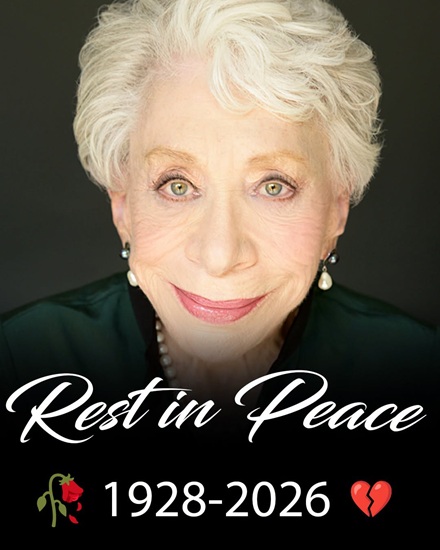
Bunny Levine, the veteran character actress who built an extraordinary second career after spending decades working in education, has died at the age of 97. Levine became familiar to audiences through appearances in productions including Gilmore Girls, Everybody Loves Raymond, Law & Order, Criminal Minds, Ugly Betty, Raising Hope, Shameless and La La Land. What made her professional journey particularly unusual was that acting did not become her primary career until she was approaching 60. She continued working for decades afterward, demonstrating remarkable professional longevity.
Levine died peacefully in her sleep at her home in Tarzana, California, on August 20, according to her manager, Brandon Kjar. Reports surrounding her death indicated that authorities believed she died from natural causes. No more specific medical cause should be assumed without additional confirmed information. Her family subsequently remembered her for the affection and admiration she inspired through both of the major professional worlds she inhabited during her life: education and performance.
Born Bernice Levine on December 22, 1928, in East Orange, New Jersey, she developed an interest in performing when she was young. That childhood ambition, however, did not immediately become a professional career. Her life initially moved toward education, and Levine pursued advanced academic studies before spending many years working in schools. She eventually earned graduate degrees associated with New York University and Columbia University, establishing a professional path very different from the entertainment career she would later pursue.
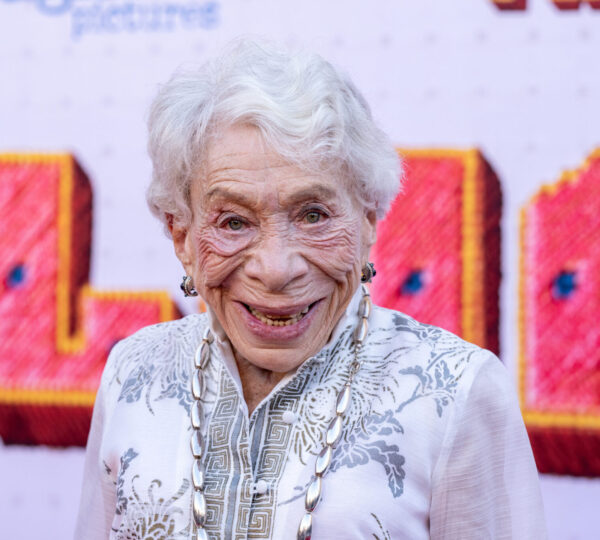
For approximately 25 years, Levine worked as a school librarian. It was a substantial first career and could easily have remained the defining professional chapter of her life. She helped students and worked within educational environments for decades before retiring in 1985. Retirement, however, did not become the beginning of a quiet withdrawal from professional life. Instead, it gave Levine an opportunity to revisit the acting ambition she had carried since childhood.
Approaching 60, Levine began pursuing professional acting seriously. Starting at that age was far from the conventional Hollywood route. Many performers spend their teenage years and early adulthood attending auditions and trying to establish themselves, while Levine was beginning only after completing an entirely separate career. She nevertheless started auditioning, accepting smaller opportunities and gradually developing the professional experience required to continue.
There was no sudden overnight transformation into a major celebrity. Her career grew through persistence and individual roles. Levine appeared in projects, gained additional credits and continued returning to auditions. Eventually, the collection of smaller performances developed into an extensive résumé covering television, movies and comedy. What could have remained a short retirement experiment instead became a second career lasting for roughly four decades.
Among her earlier screen credits was the 1990 comedy Cadillac Man, starring Robin Williams. She also appeared in Law & Order, placing her within one of television’s longest-running crime franchises. These projects represented some of the opportunities that helped Levine establish herself as a professional character actress after leaving education. Each new role gave her another opportunity to demonstrate that beginning later did not prevent her from becoming a working performer.
One of the more unusual stories from her early television career involved an appearance connected with Dr. Ruth Westheimer. Levine portrayed a widow seeking advice about beginning a romantic relationship after the death of her husband. The storyline was fictional, but Levine later recalled that some people who knew her became confused because her real-life husband, Bernie Levine, was very much alive.
Levine remembered the incident with humor in a later interview. The misunderstanding demonstrated something that would become characteristic of her acting career: she was willing to accept unexpected roles and approach them without being overly concerned about conventional expectations surrounding older women on screen. Her characters could be humorous, eccentric or surprising, and she increasingly found a professional niche in precisely those types of performances.
Character acting requires a particular ability to establish a memorable presence without necessarily receiving extensive screen time. A guest performer may have only a few minutes or even seconds to make a scene work. Levine became skilled at creating recognizable personalities in those circumstances. Her expressive delivery and willingness to embrace unusual material allowed her to stand out in roles that were sometimes relatively small within much larger productions.
Comedy became an especially important part of her résumé. Levine once remarked that she apparently came across as funny on camera even though she was not entirely certain why. Whatever the explanation, casting directors repeatedly found opportunities to use her comedic presence. Her age often became part of the contrast that made particular situations amusing, but she did not allow age to define the limits of the material she was prepared to perform.
Television viewers may remember Levine from Everybody Loves Raymond, the successful CBS sitcom starring Ray Romano. Appearing in such an established series placed her among a large group of talented guest and supporting performers who contributed to the show’s world. It was another step in a career increasingly filled with recognizable television titles.
She also appeared in Gilmore Girls, the popular series centered on Lorelai and Rory Gilmore and the fictional community of Stars Hollow. The show’s distinctive mixture of family relationships, comedy and rapid dialogue created another environment for character performers. Levine’s inclusion in the series meant that audiences from a different generation could encounter her work, further expanding the range of viewers familiar with her face.
Her résumé extended well beyond family comedy. Levine appeared in Criminal Minds, the long-running crime drama about an FBI behavioral analysis team. The darker tone of that program was significantly different from sitcoms such as Everybody Loves Raymond. Working in both demonstrated that she was not limited to one type of television production.
Another notable television credit was Ugly Betty, starring America Ferrera. The ABC series combined comedy, drama, family stories and satire of the fashion industry. Levine’s appearance added yet another recognizable program to a growing list of credits. By this stage, her late-starting career had already lasted for many years and showed no sign of being merely a temporary pursuit.
She later appeared in Raising Hope, the Fox comedy created by Greg Garcia. The series frequently featured eccentric characters and unconventional humor, making it well suited to the type of character work Levine often embraced. Her ability to step into distinctive roles helped her continue finding opportunities as television styles and audiences changed.
Levine’s comedic work also included Chappelle’s Show. Dave Chappelle’s sketch series became known for its bold and frequently provocative comedy, representing a very different environment from traditional network sitcoms. Levine’s participation illustrated her willingness to work across contrasting comedic styles rather than restricting herself to material that audiences might traditionally associate with performers of her age.
Movies provided additional opportunities throughout her second career. Levine appeared in You Don’t Mess with the Zohan, the 2008 comedy starring Adam Sandler. Once again, she demonstrated a readiness to participate in broad and sometimes unexpected comedy. Instead of treating older age as a reason to become more professionally cautious, Levine often appeared willing to do exactly the opposite.
Her film credits eventually included La La Land, Damien Chazelle’s acclaimed 2016 musical starring Emma Stone and Ryan Gosling. The movie became a major international success and received extensive awards recognition. Levine’s participation connected her late-career résumé with one of the most prominent Hollywood films of the decade.
By the time La La Land arrived, Levine had already spent roughly three decades acting professionally. That fact alone demonstrates how misleading it would be to describe her career merely as someone who “tried acting after retirement.” She did far more than try it. Acting became a genuine second profession that continued through changing generations of television, filmmaking and entertainment.
Levine also appeared in Shameless, another example of her willingness to work in productions with substantially different styles. The Showtime comedy-drama was known for mature storylines and an unconventional family at its center. Her appearance further broadened a résumé that already included network comedy, crime drama, sketch television and feature films.
One of her later film credits came in Thelma, the 2024 action-comedy starring June Squibb. The film attracted attention partly because it placed an older woman at the center of a story influenced by action movies. Levine’s involvement seemed particularly appropriate given her own history of continuing to perform well beyond the age at which Hollywood careers traditionally begin to slow down.
Even reaching her 90s did not bring Levine’s professional ambitions to an immediate end. Her later credits included work associated with The Upshaws, and her manager said that she continued pursuing acting opportunities close to the end of her life. Reports indicated that Levine was still auditioning and professionally active as recently as June 2026.
That detail adds another remarkable dimension to her story. Levine did not simply enjoy a successful period after beginning acting near 60 and then retire again. She remained interested in the next audition and the next possible character for decades. Acting had become a continuing part of her identity rather than an accomplishment she considered completed.
Her contribution to the entertainment industry also extended beyond her personal résumé. In 1991, Bunny Levine and her husband, Bernie, founded Actors Connection in New York City. The organization was designed to help aspiring and working performers develop skills, gain industry knowledge and connect with professionals involved in casting and other areas of entertainment.
Actors Connection became an important part of Levine’s legacy. Acting can be an uncertain profession, particularly for performers trying to understand how auditions, casting, representation and professional networking operate. Levine and her husband helped create an environment where actors could receive guidance and develop connections within the industry.
Following Levine’s death, Actors Connection publicly paid tribute to its co-founder. The organization remembered her passion for helping actors and credited her work with contributing to the careers of numerous performers. Its tribute also thanked Levine for creating a vibrant community intended to support fellow artists.
That part of her story reveals that Levine’s connection with acting was not limited to obtaining roles for herself. She was also interested in helping other performers pursue opportunities. For someone who had entered entertainment through such an unconventional route, supporting people navigating their own professional journeys became a meaningful extension of her career.
Her husband Bernie played an important role in both her personal life and that shared professional effort. Bunny and Bernie Levine were married for 53 years before his death in 2003. Their marriage encompassed decades of family life and included the creation of Actors Connection together. Levine continued performing for more than two decades after losing her husband.
Her family remained another central part of her life. Reports following her passing identified her surviving children as Marty, Francie and Joe, along with grandchildren Robin and Jeffrey. While audiences naturally focus on television programs and films when remembering an actress, the people closest to Levine knew a life much larger than a list of screen credits.
Her family’s statement reflected that broader perspective. They remembered the affection and admiration Levine inspired through both education and performance. Those two fields may appear very different, yet both involved interacting with people and contributing to communities. She spent one major portion of her life helping students and another working with performers and audiences.
The transition between those two careers remains perhaps the most remarkable element of her biography. Levine had already completed approximately 25 years as a school librarian before seriously entering acting. Many people at that stage of life would reasonably have considered their professional journey complete. Levine instead viewed retirement as an opening for another possibility.
Her story does not mean that beginning a new career later in life automatically produces success. Acting remained highly competitive, and Levine still had to audition repeatedly and convince casting professionals that she could contribute to their productions. Her accomplishments came through persistence rather than simply through the decision to follow a dream.
That distinction makes her journey particularly meaningful. Levine did not become famous overnight because Hollywood suddenly discovered a retired librarian. She gradually accumulated roles and experience. Small appearances led to additional opportunities, and those opportunities eventually created a career spanning numerous recognizable productions.
She also demonstrated the value of character actors throughout television and film. Not every performer needs to be the central star of a production to contribute something memorable. Television worlds depend on neighbors, relatives, customers, patients, witnesses, strangers and countless other supporting characters. Performers such as Levine bring those brief characters to life.
Her age sometimes became an advantage within those performances because audiences arrived with certain expectations about older characters. Levine could use those expectations for comedy or surprise. A scene became more memorable when her character behaved in a way viewers did not anticipate. Rather than resisting that contrast, she repeatedly appeared willing to embrace it.
As a result, different viewers may remember her from entirely different productions. Fans of Gilmore Girls may recognize her from that series, while others encountered her through Everybody Loves Raymond. Crime-drama audiences may remember Criminal Minds or Law & Order. Comedy viewers may associate her with Chappelle’s Show, and movie audiences may recognize her from La La Land or Thelma.
This range reflects the extraordinary length of her acting career. Television itself changed dramatically between the time Levine started performing and her final years. She began when broadcast networks dominated American viewing and continued into an era shaped by cable television, streaming platforms and digital entertainment.
Through those technological and cultural changes, Levine continued doing the fundamental work of an actor: auditioning, learning material, creating characters and performing. The platforms changed, but her willingness to participate remained. That adaptability helped sustain a career that began unusually late and lasted unusually long.
Her academic and educational background also remained an important part of the story. Before appearing in famous television programs, Levine had devoted years to graduate education and professional work in schools. Becoming an actress did not erase that accomplishment. Instead, the combination created a biography containing two substantial professional identities.
Her life consequently offers an unusual interpretation of what retirement can mean. Retirement from one occupation does not necessarily require someone to stop pursuing professional interests altogether. For Levine, it marked a transition. She left one established career and gradually constructed another from the beginning.
What followed lasted approximately four decades. She appeared in productions featuring performers from several generations, worked across multiple entertainment formats and remained engaged with acting into her 90s. The dream that had waited through decades of education ultimately occupied an enormous portion of her later life.
Levine’s death on August 20, 2026, brought that long journey to an end. According to her manager, she died peacefully while sleeping at her home in Tarzana, California. Her death was believed to have resulted from natural causes, while no more specific confirmed medical explanation was publicly established in the reports surrounding the announcement.
Avoiding speculation about those circumstances is important when discussing her passing. What can be responsibly emphasized is the life and career documented through her family, representative and professional work. Levine lived to 97 and remained connected with acting until close to the end of her life.
Actors Connection’s response demonstrated that her influence will also continue through a community she helped create. Performers who received guidance or professional opportunities through the organization became part of a legacy that cannot be measured simply by counting Levine’s own television episodes or movie appearances.
Her story therefore includes three interconnected elements: education, performance and mentorship. She spent decades working with students, decades appearing as an actress, and years helping create resources for other performers. Each chapter reflected a different way of contributing to the lives of people around her.
The impressive collection of television and movie titles naturally attracts attention, but the timing of her career remains equally memorable. Beginning near 60 meant Levine entered acting when many people would assume such an opportunity had already passed. Instead, she found enough professional work to continue into her 70s, 80s and 90s.
Her experience provides a documented example of how unpredictable career timelines can be. There is no universal age at which every ambition must begin or end. Circumstances differ greatly, and success is never guaranteed, but Levine’s life demonstrates that an unconventional timeline can still produce substantial achievements.
Even near the end of her life, she remained connected with the possibility of another performance. Her manager’s account that she continued auditioning in 2026 captures the persistence that defined much of her second career. She was not simply remembering what she had accomplished decades earlier; she was still looking toward potential new work.
For audiences, Bunny Levine leaves behind appearances across several decades of popular culture. Episodes and films containing her performances will continue to introduce her work to viewers who may know nothing about the remarkable biography behind the actress appearing on screen.
For the acting community, her contribution through Actors Connection represents another lasting legacy. Helping other performers navigate an uncertain profession gave Levine a role behind the scenes as well as in front of cameras. Her own unconventional entry into acting may have given her a particularly meaningful perspective on supporting people trying to find their place in the industry.
For her family and friends, however, those public achievements naturally represent only one part of her life. She was also a wife, mother, grandmother, educator and friend. Their remembrance emphasizes the personal relationships existing beyond the entertainment credits that introduced her to viewers.
Bunny Levine’s journey from school librarian to veteran character actress was neither immediate nor conventional. She spent decades building one professional life before deciding to begin another. What makes the story remarkable is not simply that she dared to start—it is that she continued.
She kept auditioning, accepted unexpected characters, worked in comedy and drama, appeared on television and in movies, and remained involved with other actors through the organization she helped establish. Over time, those individual choices created an entertainment career lasting for decades.
By the time of her death at 97, Levine had transformed an ambition postponed since childhood into a substantial professional legacy. She never followed the typical Hollywood timeline, yet her long list of credits demonstrates that there was room for a different path.
Bunny Levine will be remembered for the characters she portrayed, the students she served during her earlier career and the performers she helped through Actors Connection. Her life stands as a compelling example of how one chapter can end without preventing another from beginning.
The dream she postponed for decades eventually became a major part of her life. Beginning close to 60 did not give Levine the conventional start of an actress, but it gave her something equally significant: decades in which to pursue work she had long wanted to do.
Her passing closes an extraordinary second act that stretched far beyond what anyone might have expected when she retired from education in 1985. Bunny Levine leaves behind her family, an extensive collection of performances and an acting community she helped support. Her career remains a memorable reminder that meaningful new beginnings are not restricted to a particular age.

