
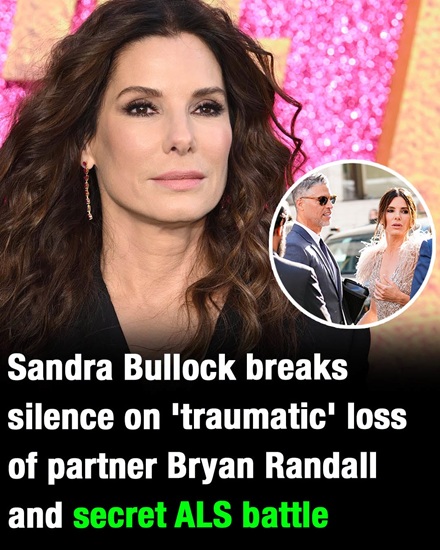
Sandra Bullock has opened up about one of the most painful periods of her personal life, speaking about the death of her longtime partner, photographer Bryan Randall. Randall died on August 5, 2023, at the age of 57 after living privately with amyotrophic lateral sclerosis, commonly known as ALS. His family revealed his diagnosis publicly only after his death, explaining that he had chosen early in his illness to keep the situation away from public attention. Bullock respected that decision while helping care for him and continuing to raise her children.
Years later, she has shared more about the emotional weight of that experience and why she remained largely silent while Randall was ill. Bullock and Randall first met in 2015 after he was hired to photograph a birthday celebration for her son Louis. Their connection developed into a relationship, and they began appearing publicly as a couple later that year. Despite Bullock’s international fame, the two generally maintained a relatively private relationship and avoided sharing every aspect of their lives with the public. Randall became an important part of Bullock’s family and developed close relationships with her children.
Although Bullock and Randall never married, she made clear during their years together that their commitment was meaningful to her. In a 2021 appearance on Red Table Talk, Bullock described Randall as the “love of my life.” Their lives changed significantly when Randall was diagnosed with ALS, a progressive neurological disease that affects the nerve cells responsible for voluntary muscle movement. His diagnosis was not announced publicly while he was alive. Instead, Randall made the personal decision to keep his medical condition private. Bullock and the people closest to him respected that request, even as his illness increasingly affected their everyday lives.
The public therefore knew very little about what the family was experiencing behind closed doors. Bullock continued balancing motherhood, caregiving and her professional responsibilities while protecting information that Randall specifically did not want shared. When Randall died in August 2023, his family released a statement explaining what he had been facing. They said he had died peacefully after a three-year battle with ALS and noted that he had chosen early on to keep his journey private.
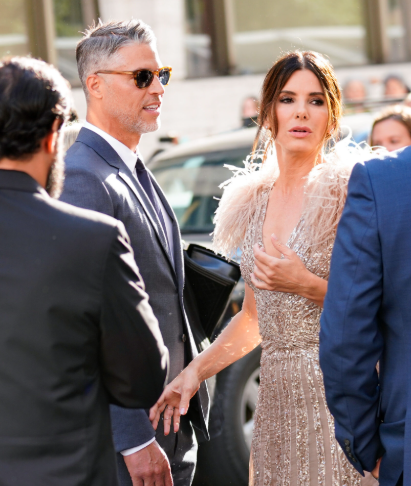
His family thanked the doctors who helped navigate the illness and the nurses who became an important part of their lives. The announcement revealed for the first time why the preceding years had been so challenging for those closest to him. Bullock herself did not immediately provide an extensive public account of Randall’s illness or her grief. She instead continued handling the loss privately and focused much of her attention on her children.
In the period following Randall’s death, reports indicated that Bullock spent considerable time at home and with her family. Returning immediately to the demands of Hollywood was not her primary focus. She had already announced a break from acting in 2022, before the public knew about Randall’s ALS diagnosis. Looking back, the timing provides important context for a period when Bullock was deliberately stepping away from the intense schedule that had defined much of her career. She was dealing with responsibilities that audiences could not fully understand at the time because Randall’s health condition remained private.
Bullock eventually discussed the experience in greater detail during an August 2026 appearance on the SmartLess podcast with Jason Bateman, Will Arnett and Sean Hayes. Her conversation offered listeners a clearer understanding of how difficult it had been to honor Randall’s wishes while simultaneously dealing with the reality of his illness. According to Bullock, Randall had specifically asked her not to tell people about his ALS diagnosis. She understood why he wanted privacy and took his request seriously. That meant there were people close to Bullock whom she could not initially tell what was happening inside her home.
Bullock explained that her sister was one of the few people who knew about the situation early on. Keeping such an important part of her life confidential inevitably affected how she interacted with others. Normally, someone dealing with a partner’s serious illness might rely heavily on friends and loved ones for emotional support. Bullock’s circumstances were different because protecting Randall’s privacy restricted what she felt able to discuss. She was therefore carrying significant responsibilities while simultaneously trying to make sure his personal medical information did not become public without his consent.
Another major complication was the COVID-19 pandemic. Randall’s illness unfolded during a period when everyday life was already dramatically disrupted for millions of families. Bullock had to navigate pandemic-related concerns while caring for Randall and looking after her children. She described the combination of illness, parenting and the pandemic as an extremely dark period. The isolation associated with those circumstances made an already difficult experience even more complicated. Her comments help explain why those years represented far more than a temporary break from acting or public appearances.
ALS progressively damages nerve cells in the brain and spinal cord that control voluntary movement. Over time, people living with the disease may experience increasing difficulties involving movement, speaking, swallowing and breathing. The progression varies among individuals, and medical care is focused on managing symptoms, maintaining quality of life and providing appropriate support. There is currently no cure for ALS. Bullock’s description of Randall’s experience included references to repeated tests, changing physical abilities and the need to continually prepare for what might come next. Her account was that of a partner and caregiver experiencing the disease alongside someone she loved.
One of the most emotional parts of Bullock’s reflections concerned the fact that her grieving process began before Randall physically died. She said that she felt she had started grieving him approximately four years before his death because something had changed during that difficult chapter of their relationship. That statement should not be interpreted as saying Randall had a confirmed ALS diagnosis for four years. His family specifically described his battle with ALS as lasting three years. Bullock was instead explaining her own emotional timeline and the feeling that illness had changed the person and relationship she had known.
She described experiencing the gradual transformation that can accompany a serious progressive illness. For a caregiver, there may not be one single moment when life changes completely. Instead, abilities, responsibilities and family dynamics can shift over time. Bullock indicated that she had little opportunity to fully process those changes while they were happening because she remained focused on what needed to be done. Appointments, caregiving responsibilities, parenting and planning continued regardless of how emotionally difficult the situation became. It was only after Randall’s death that she could begin looking back at what those years had meant for her personally.
Bullock also spoke about her previous experiences with illness within her family. Her mother, Helga Meyer, died in 2000 after battling cancer, and Bullock explained that serious medical situations themselves did not necessarily frighten her. She viewed herself as someone capable of dealing with practical responsibilities during difficult circumstances. Randall’s illness, however, involved another major consideration: her children were also living through the experience. Bullock was therefore making decisions not only as Randall’s partner and caregiver but also as a mother trying to provide emotional security for her family.
Her daughter Laila had come to view Randall as a father figure, making the changes caused by his illness particularly significant. Bullock also noticed how her son Louis responded to what was happening inside their household. She explained that she did not want him to feel pressure to assume the role of the adult man in the family while he was still young. Her goal was to protect his childhood rather than allowing difficult circumstances to push him prematurely into adult responsibilities. That concern became particularly important because the family was simultaneously dealing with the broader disruption created by the pandemic.
Bullock saw it as her responsibility to manage the adult pressures of the household while giving her children as much stability as possible. That did not mean shielding them completely from reality, but it meant making sure they did not feel responsible for solving problems that belonged to adults. Parenting under those circumstances required Bullock to consider how much her children understood, how Randall’s changing health affected them and how the family could continue functioning as normally as possible. Her reflections demonstrate how serious illness can affect an entire household rather than only the person who receives the diagnosis.
Her professional life naturally became less important during this period. Bullock had spent decades as one of Hollywood’s most successful actresses, appearing in films including Speed, Miss Congeniality, The Blind Side, Gravity, The Proposal and The Lost City. She won the Academy Award for Best Actress for her performance in The Blind Side. Yet professional success did not remove the responsibilities she faced at home. When Bullock stepped back from acting, audiences knew she wanted more time with her family, but they did not know the full circumstances surrounding that decision.
Randall’s request for privacy also explains why Bullock did not publicly use his illness as a reason for stepping away. Revealing that information would have gone against what he wanted. Instead, she maintained the boundary between her public career and what was happening within her household. Even as an internationally recognized actress whose life frequently attracted media attention, she kept one of the most consequential experiences of her life largely outside public discussion. That choice remained consistent with Randall’s preference until his family disclosed his ALS battle following his death.
After Randall died, Bullock did not immediately turn her grief into a series of public interviews. She continued spending time with her children and processing the experience privately. Grief after a long illness can involve many emotions, particularly when someone has spent years operating primarily as a caregiver. The practical demands that dominate life during an illness suddenly change after a death, leaving family members with time to confront feelings they may previously have postponed. Bullock suggested that some aspects of what she had experienced became clearer only after she was no longer constantly responding to the next immediate responsibility.
Her eventual SmartLess conversation therefore represented something different from a traditional celebrity announcement. Bullock was looking back on an experience several years after Randall’s death and explaining why she had handled it the way she did. Jason Bateman’s wife, Amanda Anka, is among Bullock’s friends, making her explanation about the secrecy surrounding Randall’s diagnosis especially revealing. Bullock indicated that there were periods when even people close to her could not know what was happening because she had promised Randall that she would protect his privacy.
The story also highlights an important distinction between privacy and secrecy imposed by outside forces. According to Bullock’s account, keeping Randall’s diagnosis confidential was his own request. She did not present his decision as something forced upon him by Hollywood or by the public. Randall was a professional photographer who generally lived a quieter public life than his famous partner, and maintaining control over information about his health was important to him. Bullock’s role was to respect that decision even when doing so made her own circumstances more isolating.
Randall had largely remained outside the celebrity spotlight throughout their relationship. While photographs of the couple occasionally appeared publicly and Bullock sometimes discussed their family, they did not build their relationship around constant media exposure. His decision to keep his ALS diagnosis private was therefore consistent with a broader preference for maintaining boundaries around personal matters. After his death, his family determined that it was appropriate to explain what he had been facing while also recognizing the medical professionals and caregivers who had supported him.
His death subsequently brought additional public attention to ALS and to organizations working with people affected by the disease. Randall’s family suggested that those wishing to honor his memory could consider donations to the ALS Association and Massachusetts General Hospital. The ALS Association later reported increased donations following news of his death. Although Randall did not publicly campaign around his diagnosis while alive, the disclosure after his death encouraged some people to learn more about ALS and support organizations involved in research, treatment and assistance for patients and their families.
Bullock’s reflections also underline the complicated nature of anticipatory grief, a term often used to describe grief experienced before an expected loss. Her description of grieving Randall before his death was deeply personal and should not be treated as a universal description of ALS or caregiving. Every family experiences serious illness differently. Some people may recognize similar emotions, while others may have completely different experiences. Bullock was speaking about her own relationship and emotional response rather than attempting to establish a rule about how caregivers should feel.
By 2026, Bullock had begun becoming more publicly active again after spending years focused heavily on her family. Among her professional projects is Practical Magic 2, which reunites her with Nicole Kidman following their work together in the original 1998 film. Returning to work represents another stage of Bullock’s life, but it does not mean the experience surrounding Randall’s illness has simply disappeared. Her comments suggest that understanding grief and rebuilding life after loss can take considerable time and does not necessarily follow a predictable schedule.
Her return also provides context for why she waited before taking on major professional commitments. Bullock had spent years prioritizing caregiving and motherhood, followed by a period in which she needed to process Randall’s death and support her children. She has not suggested that there was one particular moment when everything suddenly became easier. Instead, her story describes gradual adjustment after years of intense responsibility. Returning to acting became possible as she and her family moved into a different stage of their lives.
There is also a broader human element in Bullock’s experience that exists independently of her celebrity status. Serious illness can transform relationships, family responsibilities and everyday routines. Caregivers frequently have to manage practical tasks while also dealing with fear, uncertainty and grief. Children may experience the same events differently depending on their age and relationship with the person who is ill. Bullock’s account provides one individual example of those realities without suggesting that her experience represents everyone who has cared for someone with ALS.
Throughout her comments, Bullock emphasized the importance of Randall’s wishes. She had the public platform to discuss his illness while he was alive but deliberately chose not to do so because he had asked for privacy. Only after his death, and after his family had publicly disclosed his diagnosis, did the circumstances become widely known. Even then, Bullock waited years before discussing many of the emotional details herself. Her decision illustrates the boundary she tried to maintain between her public identity as an actress and the private responsibilities she carried as a partner, caregiver and mother.
The years surrounding Randall’s illness appear to have fundamentally changed Bullock’s priorities. A career that had required constant travel, filming and publicity temporarily moved into the background while her family needed her attention. The transition was not presented as a rejection of acting but as a response to circumstances that demanded her presence elsewhere. Now that she has resumed professional projects, Bullock can look back on those years with more distance while acknowledging how difficult they were.
Bryan Randall’s life should also not be defined exclusively by his illness. He worked professionally as a photographer and built a life that remained relatively private despite his relationship with a globally recognized actress. His ALS diagnosis became publicly known only after his death because that was the way he had chosen to handle it. The people around him respected that decision during the final years of his life. Bullock’s later comments provide additional understanding of what honoring that choice required from those closest to him.
Nearly three years after Randall’s death, Bullock’s willingness to discuss the experience offers a more complete picture of a period that had previously remained largely hidden from public view. She was simultaneously dealing with a partner’s progressive illness, raising two children, navigating the extraordinary circumstances of the pandemic and keeping a promise not to disclose Randall’s medical condition. Those pressures help explain why she withdrew from parts of her professional life and why returning to work required time.
Bullock’s account is ultimately not about finding a simple conclusion to grief. Instead, it describes the long process of adapting to illness, caregiving, loss and eventually a changed life. She has acknowledged that some of her grieving began long before Randall’s death and that she could only fully confront certain emotions after he was gone. Her children were also part of that journey, and protecting their ability to remain children remained one of her priorities throughout an exceptionally challenging period.
Randall died in August 2023 after the three-year ALS battle described by his family, leaving behind people who had spent years supporting him privately. Bullock’s decision to speak more openly in 2026 does not undo the privacy he requested during his lifetime. Instead, it allows her to describe her own experience after enough time has passed for her to reflect on what happened. Her story remains a personal account of love, caregiving, family responsibility and grief during circumstances that the public knew almost nothing about while they were unfolding.
For Bullock, moving forward has not meant forgetting Bryan Randall or minimizing what her family experienced. It has meant gradually returning to work, remaining present for her children and finding a way to speak about a chapter of her life that she once could not discuss publicly. Randall’s decision to keep his ALS journey private was respected while he was alive, and Bullock’s later reflections focus primarily on the emotional reality she experienced alongside him. Years after his death, her words provide additional context to a story that had remained private for a long time while preserving the central fact that Randall wanted his illness handled away from public attention.

