
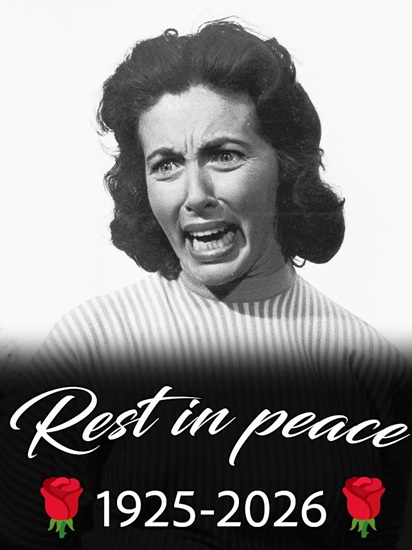
Peggy Webber, the prolific actress whose extraordinary career connected the golden age of American radio with later generations of film, television and audio drama, has died at the age of 100. Webber died on August 15, 2026, at an independent-living facility in Napa, California. Her son, Rob Sinskey, confirmed her death to The Hollywood Reporter and said the cause was natural causes. Her passing marks the end of a remarkable life devoted to performance, storytelling and especially the medium of radio.
Although her name may not have been as instantly recognizable as some of the major stars she worked beside, her voice reached enormous audiences during a career that lasted for decades. Born on September 15, 1925, in Laredo, Texas, Webber discovered her interest in performing when she was still very young. Her family later lived in Arizona, and she attended Tucson High School in Tucson. Long before most children begin thinking about a career, Webber was already developing the skills that would eventually define her professional life.
Radio became particularly important to her, and she entered the medium at an age when many young performers were still participating primarily in school productions. Her early introduction to broadcasting became the foundation for a career of exceptional longevity. Webber was only about 12 when she began appearing on radio. That early opportunity quickly grew into something much larger as she demonstrated an unusual ability to transform her voice.
Rather than having only one recognizable vocal style, she could create characters of different ages and personalities. Such versatility was enormously valuable during the golden age of radio, when performers needed to create convincing characters entirely through sound. Listeners could not see costumes, facial expressions or physical movements, so an actor’s voice carried much of the responsibility for making a character believable.
By the 1940s, Webber was already working at an impressive pace. Her versatility attracted national attention while she was still a young woman. A 1946 profile in Time magazine reported that during a period of only three years, her flexible voice had been used to create approximately 150 different characters across around 2,500 broadcasts. Those numbers were remarkable even during an era when radio actors frequently moved between multiple programs. They demonstrated both Webber’s talent and the extraordinary discipline required to maintain such a demanding professional schedule.
Radio audiences encountered Webber on numerous well-known programs. Her credits included The Adventures of Sherlock Holmes, where she worked in productions featuring Basil Rathbone as Sherlock Holmes and Nigel Bruce as Dr. Watson. Rathbone and Bruce became one of the most celebrated Holmes-and-Watson pairings of their era, and appearing within that world gave Webber another important entry in an already expanding résumé. She also contributed to other dramatic programs that reached listeners across the United States.
Another memorable assignment arrived in 1944 when Webber portrayed Ilsa in a radio adaptation of Casablanca. Movie audiences already knew the character through Ingrid Bergman’s celebrated performance in the 1942 film opposite Humphrey Bogart. Radio, however, required performers to reinterpret familiar characters without relying on the visual elements of cinema. Webber’s performance demonstrated the adaptability that would remain central to her career. She could enter an established story and help recreate its atmosphere exclusively through dialogue, vocal expression, music and sound.
Her work was not limited to adaptations of famous movies or literary characters. Webber appeared across a wide range of radio genres, from mystery and crime to drama and serialized programming. She worked alongside some of the most respected performers of the era and became one of those dependable character actresses capable of moving from one role to another. Instead of building her career around a single famous character, she accumulated an enormous collection of different performances.
One particularly important part of her radio career involved Dragnet. The influential police drama was created by Jack Webb, who became famous for portraying Detective Joe Friday. Webber appeared repeatedly in the radio version of the series and was among the performers who could take on different supporting characters as needed. She also became associated with the role of Joe Friday’s mother. Her involvement with the Dragnet world continued as the franchise expanded beyond its original radio format.
Working with Jack Webb gave Webber another connection to one of the most influential figures in American radio and television. Webb valued performers capable of delivering dialogue naturally and adapting quickly to different roles. Webber’s years of radio experience made her particularly well suited to that demanding environment. Over time, she appeared in many Dragnet broadcasts and later worked in television productions connected with Webb.
As television grew rapidly during the 1950s, many radio performers faced the challenge of adapting to a visual medium. Webber successfully made that transition while continuing her radio work. Her career therefore developed during one of the most significant technological changes in entertainment history. She had begun performing when radio dominated American homes, then watched television become a central part of popular culture while finding opportunities in both mediums.
Film provided yet another outlet for her talent. One of Webber’s most historically significant screen appearances came in 1948 when she worked with Orson Welles in his adaptation of William Shakespeare’s Macbeth. Webber portrayed Lady Macduff, while Welles directed the production and starred as Macbeth. The film gave Webber an opportunity to bring her dramatic skills to a Shakespearean production created by one of the most innovative filmmakers of the twentieth century.
Working with Welles placed Webber within an important chapter of American cinema, but it would not be her only connection with a legendary director. Several years later, she appeared in Alfred Hitchcock’s 1956 film The Wrong Man. The movie starred Henry Fonda and was based on the story of a man mistakenly identified as a criminal. Compared with some of Hitchcock’s more stylized thrillers, the film took a restrained approach influenced by the real events that inspired it.
Webber’s involvement with both Welles and Hitchcock illustrates the unusual breadth of her professional life. Few performers could point to extensive careers in golden-age radio while also having worked with two filmmakers whose influence would continue long after their own lifetimes. Yet Webber did not build her identity around those famous associations. She continued taking character roles and moving between radio, movies and television according to the opportunities available.
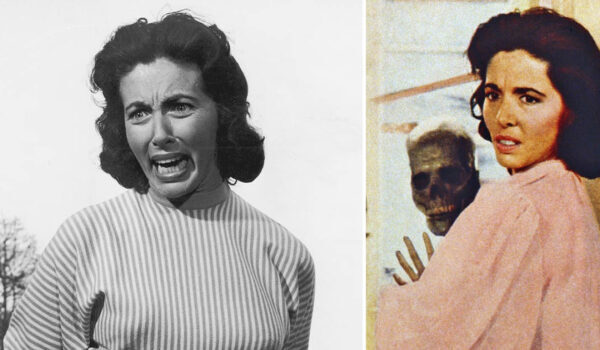
In 1958, she stepped into a very different cinematic world when she starred in the horror film The Screaming Skull. Webber played Jenni Whitlock, a newly married woman who begins experiencing disturbing and frightening events. The movie eventually developed a cult following among fans of classic horror and low-budget genre filmmaking. Because of the intensity of her performance, Webber has sometimes been described retrospectively as an early “scream queen.”
The Screaming Skull became one of her most recognizable screen credits, particularly among horror enthusiasts. However, focusing exclusively on that film would give an incomplete picture of her work. Webber was fundamentally a versatile character performer whose professional life extended across thousands of individual assignments. Her ability to move comfortably between Shakespeare, mystery programs, police dramas and supernatural horror was one of the qualities that made her career distinctive.
Television provided additional opportunities throughout the following decades. Webber appeared in various productions as a character actress and continued drawing on the adaptability she had developed during her radio years. Radio performers were often accustomed to learning scripts quickly and creating clearly defined characters without extensive preparation. Those skills transferred effectively to episodic television, where supporting actors frequently appeared as different characters across different series.
Despite her success on screen, Webber never abandoned the medium that had given her a professional beginning. Radio remained particularly important to her even after traditional network radio drama declined in popularity. Television had changed entertainment habits dramatically, but Webber continued to believe that stories told entirely through sound had unique artistic value.
That commitment eventually inspired one of the most important projects of her later career. In 1984, Webber founded California Artists Radio Theatre, commonly known as CART. The organization was dedicated to preserving and continuing the tradition of professional radio drama. Rather than treating old-time radio simply as something belonging to the past, CART created productions that allowed performers and listeners to continue experiencing dramatic storytelling through sound.
Through California Artists Radio Theatre, Webber expanded her role beyond acting. She became involved as a producer, director, writer and adapter, using decades of professional knowledge to shape new audio productions. The organization presented dramatic works, comedies and literary adaptations while bringing together experienced actors from radio, film, television and theater.
CART attracted a notable group of performers over the years. Actors associated with its productions included established names from different areas of the entertainment industry. This helped Webber create an environment in which experienced performers could continue practicing the craft of audio drama while younger listeners could discover a style of storytelling that had once been one of America’s dominant forms of entertainment.
Literature also became an important part of CART’s work. The organization produced adaptations of classic stories and material associated with respected authors. Webber was personally involved in adapting, directing and producing various projects, demonstrating that her dedication to radio extended far beyond appearing behind a microphone.
Her work with California Artists Radio Theatre was especially significant because it continued during decades when commercial radio drama no longer occupied the cultural position it once had. Webber could easily have treated her earlier radio career as a completed chapter and focused exclusively on memories of the golden age. Instead, she chose to keep the form alive through active production.
That dedication continued well into her later years. Even after reaching an age when most people would have retired from professional life, Webber remained connected with radio theater. In a 2015 interview with L.A. Weekly, when she was 90, she discussed the sense of dedication that had stayed with her since childhood. She described professional opportunities as responsibilities that deserved to be cared for rather than taken for granted.
Her comments offered an explanation for the extraordinary longevity of her career. For Webber, performing was not simply a way of achieving recognition. She viewed the opportunities she had received as something that carried an obligation to work seriously and responsibly. That philosophy remained with her for decades and helped sustain her involvement in creative projects long after the golden age of radio had ended.
Webber’s longevity also made her an increasingly rare living connection to early broadcasting history. When she first entered radio, audiences commonly gathered around household sets to hear dramas, comedies, mysteries and news programs. Television had not yet become the dominant entertainment medium it would later be. By the final decades of her life, audiences were streaming television, films, podcasts and digital audio through phones and computers.
She lived long enough to witness extraordinary changes in the way stories were produced and consumed. Yet the fundamental principle behind her favorite medium remained remarkably consistent. Audio drama relies on voices, sound effects, music and the imagination of the listener. Webber believed that combination remained powerful regardless of how technology changed.
In some ways, the modern popularity of podcasts and scripted audio productions has demonstrated the continuing relevance of the form Webber spent decades supporting. Today’s listeners may receive programs through smartphones rather than traditional radio receivers, but audio storytelling continues to create characters and environments without requiring a screen. Webber understood that potential long before the digital audio revival.
Her enormous body of work also demonstrates the often-underappreciated importance of supporting performers. Radio history frequently emphasizes famous leading actors and major stars, but productions depended equally on character actors who could convincingly portray many different people. Webber excelled at exactly that kind of work.
Her voice could change according to the needs of a particular production. She might play a dramatic adult character in one program and someone completely different in another. Such versatility allowed producers to use her repeatedly without every character sounding identical. It also helps explain how she accumulated such a remarkable number of radio appearances.
Historical accounts of her career have credited Webber with thousands of broadcasts over the decades. The scale of that output makes it difficult to select one performance that adequately represents her professional contribution. Her legacy was built not around one defining character but through consistency across an enormous number of roles.
She also contributed behind the scenes, which further expanded that legacy. Writing, directing, adapting and producing gave Webber the ability to shape entire productions rather than concentrating exclusively on her own performances. California Artists Radio Theatre became the clearest expression of that broader creative involvement.
Her professional relationships connected her with an extraordinary collection of entertainers. Basil Rathbone and Nigel Bruce were part of her Sherlock Holmes radio experience. Orson Welles directed her in Macbeth. Alfred Hitchcock directed a film in which she appeared. Jack Webb worked with her through Dragnet and related productions. Those connections place Webber within several important chapters of twentieth-century entertainment history.
Yet her career should not be understood merely as a collection of famous names. Webber’s own longevity, versatility and commitment were substantial achievements. She continued working because she valued the craft itself and believed that radio theater deserved to survive even after popular entertainment moved toward newer technologies.
In her later years, Webber remained closely associated with the preservation of audio drama. By continuing to produce and participate in radio theater, she helped ensure that the techniques developed during the medium’s golden age were not entirely lost. New generations of performers could work with artists who had firsthand experience of professional network radio.
That intergenerational connection became increasingly valuable as fewer performers from the original radio era remained alive. Webber carried practical knowledge that could not be learned solely by listening to archived recordings. She understood the rhythm of scripts, microphone technique and the ways performers used their voices to suggest actions audiences could not see.
Her personal life remained considerably more private than her professional history. When news of her death became public, her son Rob Sinskey provided confirmation. According to The Hollywood Reporter, Webber died of natural causes on August 15, 2026, at an independent-living facility in Napa, California.
Webber had reached her 100th birthday in September 2025. Living to a century was remarkable in itself, but it was particularly striking for someone whose professional memories extended back to the earliest years of modern mass entertainment. She had personally experienced changes that later generations know mainly through books, recordings and archives.
Before spending her final period in Napa, Webber had lived in the Los Angeles area. Reporting following her death noted that she relocated to Northern California after evacuating her home during the January 2025 Los Angeles wildfires. She ultimately settled in Napa, where she spent the closing chapter of her long life.
Her death came approximately one month before what would have been her 101st birthday. By then, Webber had already lived through more than a century of cultural and technological change while remaining connected to the art form she discovered as a child.
For admirers of classic radio, her passing carries particular historical significance. Webber belonged to a generation of performers who helped create entertainment using little more than scripts, microphones, music and carefully timed sound effects. Their performances depended heavily on the imagination of listeners.
Theater provides audiences with actors standing physically before them, while cinema and television provide visual images. Radio drama asks listeners to create much of the world themselves. Webber understood the unique relationship between performer and listener that this required, and she spent decades demonstrating its creative possibilities.
Her dedication also helped preserve recordings and performances that continue to offer insight into earlier styles of entertainment. Through her work and the productions associated with CART, audiences can still encounter examples of professionally produced audio theater.
Webber’s career therefore represents more than nostalgia for an earlier era. It demonstrates the continuity between traditional radio drama and the audio storytelling that remains popular today. Technology has changed, but the basic attraction of hearing a compelling story performed by skilled voices has not disappeared.
Her screen performances provide another part of that history. Fans of Orson Welles can encounter her in Macbeth, admirers of Hitchcock can find her in The Wrong Man, and classic horror audiences continue discovering The Screaming Skull. Each represents a different aspect of a performer who refused to remain confined to a single genre.
At the same time, listeners exploring surviving recordings of classic radio can hear the medium that Webber considered her professional home. Her appearances across numerous programs show how character actors could quietly become essential parts of broadcasting without necessarily becoming conventional celebrities.
That distinction is important when considering her legacy. Fame and professional influence are not always the same thing. Webber may not have achieved the international name recognition of Welles, Hitchcock or some of her other collaborators, but her contribution to radio was extensive and sustained.
She worked when radio drama was enormously popular, continued when television replaced it as the dominant home entertainment medium, and later helped preserve it when many considered the format outdated. That persistence transformed her from a participant in radio history into one of its advocates.
California Artists Radio Theatre became perhaps the strongest evidence of that commitment. By founding the organization, Webber helped create a place where dramatic audio performance could continue rather than exist exclusively in archives. The project allowed her to use everything she had learned during decades of professional work.
Her ability to remain creatively active into advanced age was another remarkable feature of her life. Rather than viewing her earliest accomplishments as the endpoint of her story, she continued participating in projects and discussing the importance of radio well into her nineties.
When she spoke about dedication at 90, she was describing a principle she had followed for most of her life. Opportunities, in her view, came with responsibilities. That attitude helps explain how a girl who discovered radio at an unusually young age eventually became a century-old veteran of American entertainment.
Peggy Webber leaves behind a professional history spanning radio, cinema, television and theatrical audio production. Her credits include famous programs, respected directors and memorable genre films, but her greatest contribution may have been her lifelong commitment to the art of storytelling through sound.
Her career began during an era when radio could turn an actor’s voice into something recognized by millions. It continued through the rise of television and the transformation of Hollywood, eventually reaching an age in which audio storytelling found new audiences through digital platforms.
Few performers had the opportunity to experience that entire evolution firsthand. Even fewer remained actively committed to preserving the medium that had given them their start.
Webber’s death at 100 closes an extraordinary personal journey, but it does not erase the work she created. Her radio performances, films, television appearances and California Artists Radio Theatre productions remain part of the historical record.
For classic radio enthusiasts, she will be remembered as one of the versatile performers who could become countless characters simply by changing her voice. Film audiences may recognize her from her collaborations with Welles and Hitchcock, while horror fans may remember the frightened heroine at the center of The Screaming Skull.
Together, those different parts of her career tell the story of an artist who never belonged to only one medium. She moved wherever storytelling offered an opportunity while maintaining a special loyalty to radio throughout her life.
Peggy Webber’s passing represents the loss of another direct connection to the golden age of broadcasting. Yet the medium she loved continues to survive in both preserved classic recordings and modern forms of audio entertainment.
Her long career demonstrated what could be achieved through adaptability, discipline and a genuine commitment to a craft. From a young radio performer in the 1930s and 1940s to a respected advocate for audio theater decades later, Webber remained connected to storytelling for almost her entire life.
She died peacefully of natural causes after reaching the age of 100, leaving behind an extraordinary record of performances and creative work. Her legacy is not simply that she worked with some of Hollywood’s greatest names, but that she spent decades helping preserve an art form that had shaped her life.
For audiences who remember Peggy Webber

