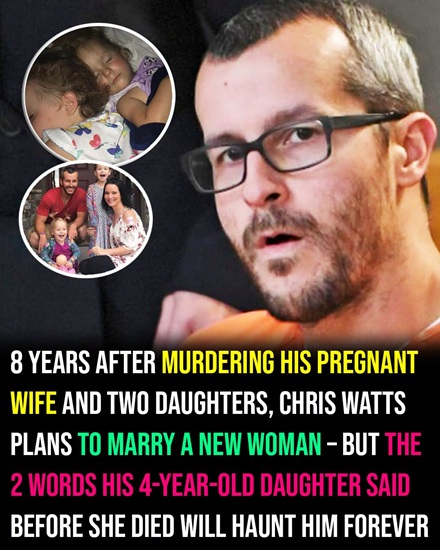
Chris Watts, the Colorado man who is serving multiple life sentences for murdering his pregnant wife and their two young daughters in 2018, has reportedly developed a serious relationship while incarcerated and is seeking permission to marry. The woman has been identified in recent reports as Lizzie Henderson, who has visited Watts repeatedly at Dodge Correctional Institution in Wisconsin. Their reported plans have attracted considerable attention because Watts is expected to spend the rest of his life behind bars.
Any marriage would require approval under Wisconsin correctional procedures, and it would have no effect on the convictions or sentences that keep Watts permanently incarcerated. The relationship represents another development in a case that has remained widely discussed for nearly eight years. Watts was convicted of killing his 34-year-old wife, Shanann Watts, who was 15 weeks pregnant, and their daughters, four-year-old Bella and three-year-old Celeste, known as Cece.
The killings occurred in August 2018 in Colorado and generated international attention. Watts initially denied knowing what had happened to his family, but investigators soon uncovered evidence that contradicted his account. He eventually admitted responsibility and pleaded guilty to the murders. Recent reports say Henderson has maintained regular contact with Watts and visited him numerous times in prison.
She has been described as a former real-estate professional who previously lived in Ohio and later relocated to Wisconsin. Reports have indicated that she visited Watts roughly 23 times during a period of about 15 months. That level of in-person contact distinguishes their relationship from the letters and messages Watts has reportedly received from other women during his years in custody.
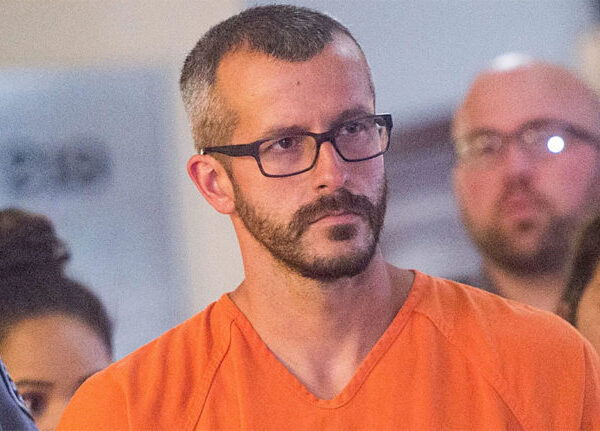
Henderson has publicly acknowledged being in a relationship with Watts while declining to explain every detail of how their connection developed. When questioned about the unusual circumstances, she indicated that she understood why people might view the relationship as strange. She has also referred to her religious beliefs when discussing the relationship and said that the full story of how it began was something she considered private.
Reports about a possible marriage intensified after information emerged that Watts and Henderson had taken steps through the Wisconsin prison system seeking authorization to marry. Prisoners can marry under certain circumstances, but incarceration means the process is subject to institutional requirements. Watts cannot simply arrange an ordinary wedding without prison approval.
Public records involving Henderson have generated additional curiosity. Reporting has noted that a woman named Lizzie Henderson filed for a confidential legal name change in 2025. However, those records alone do not establish the precise reason for the filing or prove that every aspect of it was connected to Watts. For accuracy, those details should therefore be treated separately from the more clearly reported fact that Henderson and Watts are in a relationship and have reportedly pursued permission to marry.
The possibility of Watts marrying again inevitably brings renewed attention to his first marriage and the crimes that resulted in his incarceration. Shanann returned home from a business trip in the early hours of August 13, 2018. Not long afterward, she and the couple’s daughters were reported missing. Watts initially presented himself publicly as a husband and father desperate for his family to return.
Television cameras recorded Watts speaking about Shanann, Bella and Celeste while investigators were already examining the circumstances surrounding their disappearance. He claimed that he did not know where they had gone and expressed hope that they would return safely. His behavior and statements would later become some of the most widely replayed footage associated with the case.
Investigators soon found inconsistencies. Evidence from the family home, interviews, surveillance footage and other investigative work increasingly focused attention on Watts. During questioning, his account changed. He initially provided investigators with a false version of events before eventually admitting responsibility.
The investigation established that Watts killed Shanann and their daughters and transported their bodies to an oil site associated with his employment. Shanann was buried in a shallow grave at the location, while Bella and Celeste were placed in separate oil tanks. Authorities recovered their bodies after Watts provided information about the site.
The discovery ended the search for the missing family but revealed the devastating reality of what had happened. Shanann had also been expecting the couple’s third child, a boy whom the family planned to name Nico. Her pregnancy resulted in an additional criminal charge involving the unlawful termination of a pregnancy.
Watts eventually chose to plead guilty rather than proceed to trial. In November 2018, he entered guilty pleas to multiple charges, including first-degree murder. The agreement meant prosecutors would not seek the death penalty. Shanann’s family supported avoiding a death sentence, and Watts subsequently received multiple life sentences without the possibility of parole, along with additional prison terms.
Those sentences ensure that his reported relationship with Henderson cannot result in an ordinary married life outside prison. Even if correctional authorities approve a marriage, Watts will remain incarcerated. He cannot establish a conventional household with a spouse, freely travel or live outside the restrictions of the prison system.
After his conviction, Watts was transferred from Colorado to Dodge Correctional Institution in Wisconsin. Authorities made the transfer partly because of security concerns associated with the intense publicity surrounding the case. His crimes had become nationally and internationally known, making his incarceration unusually high-profile.
Interest in the case continued long after sentencing. Documentaries, television programs, podcasts, books and extensive online discussions repeatedly revisited the investigation. The release of Netflix’s American Murder: The Family Next Door in 2020 introduced the case to another large audience by presenting archival footage, messages and material connected to Shanann and the investigation.
That continuing attention has also influenced Watts’ life in prison. Reports over the years have described women sending him letters and establishing correspondence with him. Some communications reportedly became romantic or flirtatious. Watts therefore received attention from female admirers even though the crimes for which he is imprisoned involved murdering his wife and children.
Henderson’s relationship appears to have become substantially more serious than ordinary correspondence. Repeated visits require considerable commitment, particularly because prison visits operate under strict schedules and security procedures. Her reported relocation to Wisconsin also placed her closer to Dodge Correctional Institution.
Henderson has been questioned publicly about how she reconciles the relationship with Watts’ crimes. She has said Watts knows her feelings and indicated that she wants to remain respectful toward the people affected by the murders. She has not attempted to deny that the crimes occurred or that Watts is responsible for them.
Her decision has nevertheless generated strong reactions. Some people have questioned how anyone could pursue a romantic relationship with a man convicted of murdering his pregnant wife and two young children. Others have focused on the psychological phenomenon of people developing romantic attachments to notorious prisoners.
Henderson’s motivations, however, should not be presented as established facts unless she has explained them herself. Public observers can speculate about why someone would enter such a relationship, but speculation cannot substitute for evidence. What can be accurately reported is that she has acknowledged the relationship and has repeatedly visited Watts.
Watts himself has increasingly spoken about religion during his years in prison. Reports and letters attributed to him describe his belief that he has undergone a spiritual transformation. He has portrayed himself as different from the person who committed the murders and has discussed forgiveness through his religious beliefs.
Those statements represent Watts’ personal interpretation of himself and should not be confused with a legal finding. His religious claims do not change his guilt, convictions or sentences. He pleaded guilty to the murders, and the judicial outcome remains unchanged regardless of how he describes himself today.
In February 2019, investigators traveled to Wisconsin to conduct a lengthy follow-up interview with Watts. During that conversation, he provided a more detailed account of the murders and discussed aspects of his prison life. The interview became an important source of additional information because Watts had not gone through a public criminal trial where evidence would have been presented over an extended period.
During that interview, Watts discussed keeping photographs of Shanann, Bella and Celeste in his cell. He said he spoke to their pictures and incorporated them into personal routines. Reports also described him reading from the Bible and engaging in religious practices.
News that Watts kept family photographs in his cell generated criticism. Some people questioned whether a person convicted of killing his family should be allowed to possess their pictures. A petition was subsequently created calling for the photographs to be removed.
Prison officials, however, operate according to institutional regulations rather than online petitions. The controversy became another example of the strong emotions that continue to surround the case years after Watts was sentenced.
One of the most painful parts of Watts’ later confession involved the deaths of Bella and Celeste. His account to investigators described the children’s final moments and indicated that Bella resisted. Details attributed to the four-year-old have been widely repeated in coverage of the case.
Those details remain deeply distressing and should be reported without unnecessary sensationalism. Bella and Celeste were very young children, and the significance of their deaths does not depend on repeatedly emphasizing graphic aspects of what happened. The established facts already demonstrate the seriousness of the crimes.
The same principle applies to Shanann. She was not simply “Chris Watts’ wife” within the story of his crimes. She was a 34-year-old woman, a mother and an expectant parent whose life ended because of Watts’ actions. Her family and friends have spent years living with that loss.
Shanann’s unborn son, Nico, is also part of the family’s story. She had publicly shared her pregnancy and was expecting another child when she was killed. The destruction of an entire young family is one reason the Watts case continues to generate such intense emotional reactions.
The reported possibility of a new marriage can therefore feel particularly striking to people familiar with the case. Watts destroyed his first family and is now reportedly attempting to enter another marriage while serving permanent prison sentences for those crimes.
Still, a prison marriage would not represent a new beginning in the ordinary meaning of the phrase. Watts remains under correctional control and has no possibility of parole under his current sentences. His daily life, communication and visits remain subject to prison rules.
Henderson would similarly have to accept those limitations. Marriage would not allow the couple to establish a normal household or share the freedoms available to spouses outside prison. Their relationship would continue through approved communication and visitation under correctional supervision.
The Wisconsin Department of Corrections has procedures governing inmate marriages. The existence of an application or request does not mean that a wedding has already occurred. Until approval is granted and a marriage actually takes place, it is more accurate to describe Watts and Henderson as reportedly seeking permission to marry rather than as husband and wife.
That distinction is important because sensational headlines can easily move ahead of established facts. Reports about the relationship have generated substantial interest, but developments should be described according to what has actually occurred.
Watts remains a convicted murderer serving multiple life sentences. Henderson is reportedly his romantic partner and has visited him repeatedly. The two are reportedly pursuing authorization for marriage. Those are the central facts of the current development.
The broader history remains equally important. Watts initially tried to conceal what he had done. He publicly appealed for his missing family before investigators uncovered the truth. He later pleaded guilty and received sentences that ensure he will remain incarcerated for life.
His relationship with Henderson does not reopen that criminal case. It does not change the evidence, his guilty pleas or the sentences imposed in 2018. It is instead a development concerning his personal life inside prison.
Likewise, Watts’ claims of remorse or spiritual transformation cannot undo the consequences of his actions. People can hold different beliefs about repentance and forgiveness, but those are moral or religious questions rather than changes to the legal record.
Reports have suggested that Watts spends significant time reflecting on his past and discussing religion. People who communicate with him have described him as expressing regret. Those accounts describe his current statements, but outsiders cannot independently determine the sincerity of another person’s private remorse.
What is objectively established is what happened in court. Watts accepted legal responsibility through guilty pleas and received multiple life sentences without parole. No expression of regret, new relationship or potential marriage changes that outcome.
For Henderson, the attention surrounding the relationship is likely unavoidable because Watts remains one of the most widely recognized convicted murderers associated with a major American true-crime case. A relationship that might otherwise remain private becomes a matter of public reporting because of his identity and criminal history.
That attention should still remain grounded in documented information. Henderson should not be assigned motives that she has not expressed, and rumors about her background should not be treated as facts simply because they circulate online.
The same standard applies to Watts. His crimes are extensively documented, making exaggeration unnecessary. Accurate reporting can explain the severity of what he did without adding unsupported claims or unnecessarily graphic descriptions.
Eight years after the murders, the Watts case continues to attract attention partly because so much of the family’s life had been documented before the killings. Social-media posts, text messages, home videos and television interviews created an unusually extensive public record.
That material has kept Shanann, Bella and Celeste visible in the public memory. It also means new developments involving Watts frequently lead people back to the original case and the family whose lives were lost.
The reported marriage request is one such development. For some observers, the idea that Watts could have another romantic relationship after murdering his family is difficult to understand. For others, it raises broader questions about prison relationships and why notorious inmates sometimes attract correspondents and romantic partners.
Those questions can be discussed without losing sight of the people at the center of the original tragedy. Shanann, Bella and Celeste were the victims of Watts’ crimes. Their relatives continue living with consequences that no later development can reverse.
Watts, meanwhile, remains incarcerated at Dodge Correctional Institution. His reported plans with Henderson may change aspects of his personal life within prison, but they do not offer a path back into society.
If prison officials approve the request and the couple ultimately marries, Watts would become a married man again while still serving the same life sentences. If the request is not approved or the relationship changes, his legal circumstances would likewise remain exactly the same.
That reality places the current story in perspective. The proposed marriage is notable because of Watts’ history, but it has no impact on the fundamental outcome of his criminal case.
He remains responsible for the murders to which he pleaded guilty. His victims remain gone. His sentences remain in force, and he has no possibility of parole under those sentences.
Henderson has chosen to maintain a relationship with him despite those circumstances. She has reportedly traveled to see him repeatedly and has acknowledged that outsiders may consider the relationship unusual. Beyond her own public comments and documented visits, assumptions about why she made that choice should remain clearly identified as speculation.
The possibility of marriage therefore represents an unusual new chapter in Watts’ prison life rather than a change in his legal story. It demonstrates that prisoners serving permanent sentences can still establish relationships through correspondence and visitation, subject to correctional regulations.
For Shanann’s family and others who loved Bella and Celeste, however, August 2018 created a loss that cannot be changed by anything Watts does now. A new relationship cannot rewrite the past, and a prison wedding cannot alter the circumstances that placed him behind bars.
As reports about Watts and Henderson continue, maintaining that context is important. Their relationship may be the newest development, but it should not overshadow the documented reason Watts is incarcerated.
Chris Watts is serving multiple life sentences without the possibility of parole after pleading guilty to murdering Shanann, Bella and Celeste. Nearly eight years later, he has reportedly formed a serious relationship with Lizzie Henderson, who has visited him repeatedly and is now seeking permission with him to marry.
Whether correctional authorities ultimately approve that request remains a separate question. Whatever the outcome, Watts will continue serving his sentences.
The reported relationship may generate curiosity because it seems difficult to reconcile with the crimes that made Watts notorious. Yet the most important facts remain straightforward and unchanged: his convictions stand, his freedom is permanently restricted under his sentences, and the lives lost in August 2018 cannot be restored.
For that reason, any discussion of a possible new marriage should preserve the larger context. The latest chapter concerns Watts’ life behind bars, but the lasting story remains the devastating loss of Shanann, Bella and Celeste and the permanent consequences of the crimes for which he was convicted.
