
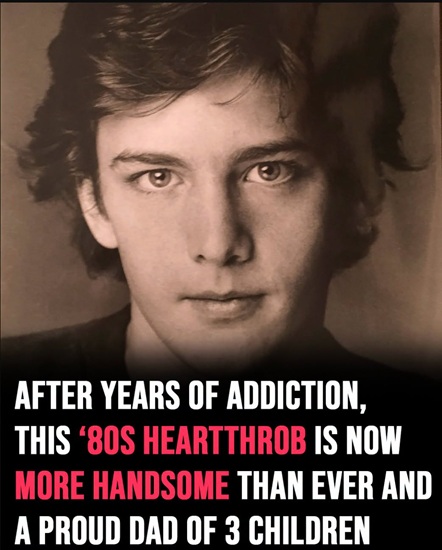
Andrew McCarthy became one of the most recognizable young actors of the 1980s, and for many viewers, his face remains permanently connected with that era. His quiet manner, dark hair, expressive eyes, and understated charm helped make him stand out in films that became defining titles for a generation. Movies such as St. Elmo’s Fire, Pretty in Pink, Mannequin, and Weekend at Bernie’s turned him into a familiar presence on movie screens and magazine pages.
Yet McCarthy has made it clear over the years that the reality behind the public image was far more complicated. Fame arrived quickly, and he was not emotionally prepared for everything that came with it. Andrew Thomas McCarthy was born on November 29, 1962, in Westfield, New Jersey. He grew up in a family that had little connection to the entertainment industry or the celebrity world he would later enter. His mother worked for a newspaper, while his father worked in investments and stocks.
McCarthy has described himself as someone who felt somewhat out of place during his school years. He has spoken about loneliness and about not always feeling that he belonged. Those experiences would later make his sudden entry into Hollywood seem even more dramatic.
After finishing high school, McCarthy enrolled at New York University to study acting. His time there did not go according to plan. He has acknowledged that he did not attend classes consistently, and his formal studies ended early. At the time, leaving NYU could easily have looked like a major setback for a young actor who was still trying to establish himself. Instead, an unexpected opportunity arrived almost immediately and changed the direction of his life. McCarthy saw an open casting notice for the film Class and decided to audition.

The audition process was highly competitive, with hundreds of young actors reportedly hoping to win a role. McCarthy waited alongside many others, with no reason to assume that he would be the person chosen. To his surprise, he was called back and eventually cast as Jonathan Ogner in the 1983 film. The movie starred Jacqueline Bisset and Rob Lowe and centered on a prep-school student who becomes involved with an older woman who turns out to be his roommate’s mother. For McCarthy, it was an enormous jump from acting school to a major film set.
He later looked back on the experience with humor, describing how quickly his circumstances had changed. One week he had essentially been a struggling student, and soon afterward he was acting opposite Jacqueline Bisset in a professional production. The experience gave him confidence that he might have a real future in acting. It also showed how unpredictable the entertainment industry could be. A career that had seemed uncertain only weeks earlier suddenly had momentum.
Class gave McCarthy his first major exposure, but his breakthrough as a recognizable young star came during the middle of the decade. In 1985, he joined a large ensemble cast in St. Elmo’s Fire. The movie also featured Emilio Estevez, Rob Lowe, Demi Moore, Judd Nelson, Ally Sheedy, and Mare Winningham. Although critics were not universally enthusiastic, audiences responded strongly to the film. Over time, it became one of the most recognizable movies associated with young Hollywood in the 1980s.
McCarthy played Kevin Dolenz, a journalist who appeared cynical and emotionally detached while privately carrying feelings he had difficulty expressing. The role fit McCarthy’s naturally understated screen style. He did not need to dominate scenes through loudness or exaggerated gestures. Instead, he often conveyed uncertainty and vulnerability through quieter performances. Those qualities would become especially important in the film that followed and helped establish him as a romantic figure for teenage audiences.
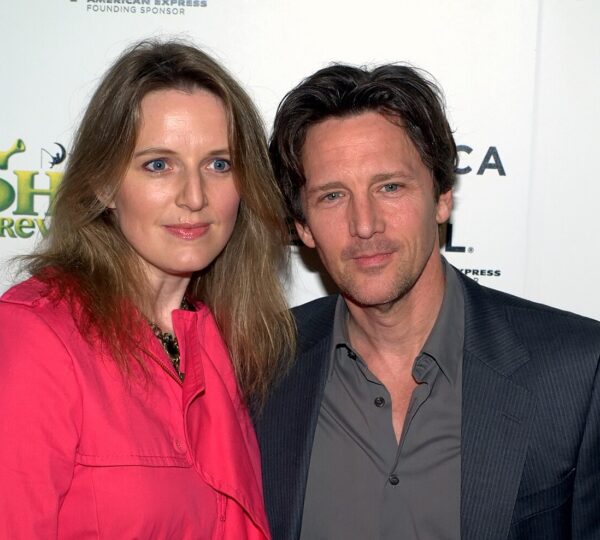
The success of St. Elmo’s Fire also connected McCarthy with the phrase “Brat Pack.” The label came from a 1985 New York magazine article and was applied to a number of young actors working in Hollywood at the time. The term quickly became part of popular culture, but McCarthy did not welcome it. He has said that he believed it reduced individual actors to a stereotype and damaged the way some people in the industry viewed them. What audiences later remembered nostalgically was something he experienced as limiting and dismissive.
In 1986, McCarthy appeared opposite Molly Ringwald in Pretty in Pink, one of the defining romantic dramas of the decade. He played Blane McDonough, a wealthy high-school student who becomes romantically involved with Ringwald’s character, Andie Walsh. The story explored relationships, class differences, friendship, social pressure, and insecurity. McCarthy’s reserved acting style gave Blane a vulnerability that made the character memorable. For many viewers, this became the performance most closely associated with his youthful image.
The movie strengthened his status as a teen heartthrob, but McCarthy has since revealed that his experience while making it was much less comfortable than audiences might imagine. He later said that he was drinking heavily during that period and often appeared on set while dealing with hangovers. Viewers interpreted his quiet performance as sensitive and romantic, while internally he was often thinking about how physically unwell he felt. His recollections show how completely a successful screen performance can hide private difficulties.
McCarthy has spoken openly about why alcohol became so important to him when he was younger. He was naturally anxious and often uncomfortable with attention, and drinking temporarily changed how he felt about himself. Alcohol could make him feel more confident, more in control, and less frightened. At first, that effect seemed useful. Over time, however, the substance he used to escape anxiety became a much more serious problem. What initially appeared to offer relief gradually created consequences that were increasingly difficult to manage.
It is important to describe this part of his life accurately rather than reducing it to a simple story about Hollywood excess. McCarthy has not claimed that fame alone caused his addiction. His struggles with alcohol were more complicated than that. Celebrity may have placed him in environments where drinking and parties were common, but he has described deeper personal insecurity and anxiety as part of the picture. His public success and private well-being were not developing at the same pace.
His career continued moving forward. In 1987, McCarthy starred in Mannequin opposite Kim Cattrall. The romantic fantasy comedy told the story of a struggling artist whose mannequin mysteriously comes to life. Critics were not uniformly enthusiastic about the film, but audiences embraced it, and it became another title strongly associated with 1980s popular culture. McCarthy’s ability to play a gentle, somewhat awkward romantic lead made him a good fit for the unusual story.
That same year, he took on a much darker role in Less Than Zero, appearing alongside Robert Downey Jr. and Jami Gertz. The film dealt with wealthy young people in Los Angeles and explored substance abuse, destructive behavior, and emotional emptiness. McCarthy played Clay, a character who returns home and finds people he once knew caught in increasingly dangerous circumstances. The subject matter was striking given what McCarthy was privately experiencing, although his fictional role should not be confused with his real life.
By 1989, McCarthy was still a familiar movie star and appeared in another major comedy, Weekend at Bernie’s. He played Larry Wilson opposite Jonathan Silverman. The film’s absurd premise involved two young employees trying to make people believe their deceased boss was still alive. The comedy became a popular hit and later received a sequel. Professionally, McCarthy had now built a collection of films that guaranteed he would remain associated with the decade.
Around this period, McCarthy attempted to stop drinking. He has described withdrawing socially and trying to maintain sobriety on his own. Because he has always considered himself comfortable with solitude, cutting himself off from parties was not necessarily as difficult for him as it might have been for someone who depended heavily on social contact. For a time, the approach worked. It did not, however, become his permanent recovery.
McCarthy eventually returned to alcohol. While working on Jours tranquilles à Clichy, he has recalled being offered a beer and recognizing how powerful the pull still was. The years that followed became increasingly difficult. He has described a period marked by drinking, physical distress, and a growing recognition that he was losing control. What looked from the outside like an established acting career was not enough to protect him from the effects of addiction.
He has also spoken openly about using cocaine during parts of the 1980s. McCarthy has said that if drugs were available, he sometimes participated, although he regarded alcohol as the larger problem. Cocaine often encouraged him to drink more rather than becoming his primary substance of choice. He has also said that he generally avoided using it while actively working because his natural anxiety was already strong enough. His descriptions of these years do not romanticize the behavior; they emphasize how destructive the pattern eventually became.
The true turning point came in 1992, when McCarthy was 29. By then, his attempts to control the situation alone had not succeeded. He entered treatment and went through a detoxification and rehabilitation process. That decision became one of the most important changes of his adult life. McCarthy has said that he has remained sober since that period. The distinction matters because some simplified versions of his story suggest that his permanent sobriety began in 1989, when in reality that earlier attempt was followed by a relapse.
Recovery did not suddenly transform every area of his life into something easy. It did, however, give McCarthy a chance to build a life that was no longer organized around drinking. As the years passed, he became less interested in being defined by the image that had made him famous in his twenties. He continued acting, but he also began expanding into other creative fields. What followed was not a disappearance from entertainment but a gradual reinvention.
Directing became one of the most important parts of his later career. McCarthy moved behind the camera and directed episodes of numerous television series. His credits eventually included shows such as Gossip Girl, White Collar, Orange Is the New Black, The Blacklist, Good Girls, and The Sinner. The work demonstrated that he had developed a detailed understanding of storytelling that extended beyond performing a single role. Over time, directing became a substantial second career rather than an occasional side project.
His work on Orange Is the New Black was particularly notable because the acclaimed Netflix series was very different from the movies that first made him famous. The show required him to manage complex ensemble performances, shifting tones, and stories involving many characters. For viewers who remembered him mainly as Blane from Pretty in Pink, his name appearing in directing credits could come as a surprise. Yet for McCarthy, directing was another way of doing what he had always been interested in: telling stories.
Writing also became central to his life. McCarthy developed a serious interest in travel journalism and began publishing pieces based on journeys around the world. He later explained that acting and travel writing did not feel completely different to him because both were forms of storytelling. One depended on performance, while the other depended on observation, description, and personal experience. In both cases, he was trying to communicate something meaningful to an audience.
McCarthy contributed to respected publications and became closely associated with National Geographic Traveler. His work earned professional recognition, including being named Travel Journalist of the Year in 2010 by the Society of American Travel Writers. This was significant because it demonstrated that he had earned credibility in a field that had nothing to do with being a former teen idol. He was not simply attaching a celebrity name to travel stories. He had developed a genuine second profession.
Travel also had a personal meaning for McCarthy. He has said that leaving familiar surroundings makes him feel more alert and present. When traveling, he becomes more vulnerable because he cannot rely on routines or complete control over his environment. That uncertainty forces him to notice people and situations more carefully. For someone who spent years uncomfortable with celebrity attention, travel provided a different kind of exposure—one based on curiosity rather than recognition.
His 2012 book The Longest Way Home combined travel with reflections on relationships and commitment. McCarthy examined his own tendency to seek solitude and movement while also considering what it meant to build a stable personal life. Instead of writing a straightforward celebrity memoir, he used travel as a way to explore emotional questions. The book helped confirm that writing had become an important and lasting part of his career.
In 2017, McCarthy published the young-adult novel Just Fly Away. The story centers on a teenage girl whose understanding of her family changes after she discovers the existence of a half-brother. The novel gave McCarthy another opportunity to work in a completely different creative form. By this point, his professional life could no longer be described accurately by referring only to his movies from the 1980s. He had become an actor, director, journalist, travel writer, novelist, and memoirist.
McCarthy returned directly to his youth in the 2021 memoir Brat: An ’80s Story. The book examined the sudden fame he experienced, the parties and celebrity culture surrounding him, his problems with alcohol, and his discomfort with the “Brat Pack” label. Rather than presenting the decade as one long glamorous adventure, McCarthy described a much more complicated period. The memoir made it clear that he often felt uncertain and overwhelmed even while audiences assumed he was enjoying everything that came with success.
Among his lighter memories was an encounter with Courteney Cox before she became internationally famous through Friends. McCarthy recalled noticing her at a party and trying to talk to her, only to realize she was not particularly interested. He told the story with humor rather than embarrassment. Moments like that help make his recollections of the 1980s feel more human. The young movie star who seemed confident on screen could still experience awkwardness and rejection like anyone else.
His relationship with the Brat Pack label remained unresolved for many years. McCarthy believed the phrase had affected how his career was perceived, and he spent much of his adult life distancing himself from it. Eventually, however, he decided to confront the subject directly. In 2024, he directed the documentary Brats, in which he revisited the phenomenon and spoke with several actors who had been associated with it.
The documentary included conversations with performers such as Emilio Estevez, Rob Lowe, Ally Sheedy, and Demi Moore. McCarthy explored how the label had affected each of them differently. Some had made peace with it more easily, while others remembered the experience less positively. The film also examined how one magazine article helped shape the public identity of a group that had never really existed as an organized club.
That point is important because popular culture often treats the Brat Pack as though the actors were constantly together. In reality, they appeared in overlapping films and moved within the same Hollywood environment, but they were not a formal group. The label itself helped create the impression that they were. McCarthy has said that the term even caused some actors to distance themselves professionally because they feared being repeatedly grouped together.
By creating Brats, McCarthy was able to revisit the label from a very different position. In the 1980s, somebody else had defined him with a phrase he disliked. Decades later, he was the filmmaker deciding how to investigate the history of that phrase. He did not need to convince everyone to agree with his interpretation. The act of examining it openly gave him a level of control over the narrative that he had not possessed when he was young.
His personal life also changed considerably over the years. In October 1999, McCarthy married Carol Schneider, someone he had known and dated much earlier in his life. He later explained that he reconnected with her after learning that she appeared happy in another relationship. The realization unexpectedly bothered him, and he contacted her. The two eventually married and welcomed a son, Sam, in 2002.
McCarthy and Schneider divorced in 2005. Sam later followed his father into acting and became known for roles including Charlie Harding in Netflix’s Dead to Me. Their relationship eventually became the subject of another one of McCarthy’s books. Father and son walked approximately 500 miles along the Camino de Santiago in Spain, spending weeks together while traveling on foot.
McCarthy described that experience in his 2023 book Walking with Sam. The long journey gave father and son time together without many of the ordinary distractions of daily life. Walking day after day created opportunities for conversations that might not have happened in a more conventional setting. The experience connected McCarthy’s love of travel with another major part of his life: fatherhood.
In August 2011, McCarthy married Irish writer and director Dolores Rice. They have two children together, Willow and Rowan. Together with Sam, McCarthy is the father of three children. Family life now forms a major part of his identity, a striking contrast with the young actor who once described himself as uncomfortable with closeness and fame.
McCarthy’s later career shows how dramatically a public identity can change over time. The actor who was once marketed largely through his appearance eventually built a body of work in which his face was sometimes completely absent. Directing allowed him to shape stories from behind the camera. Journalism allowed him to describe the world through words. Books allowed him to explore experiences at a slower and more reflective pace.
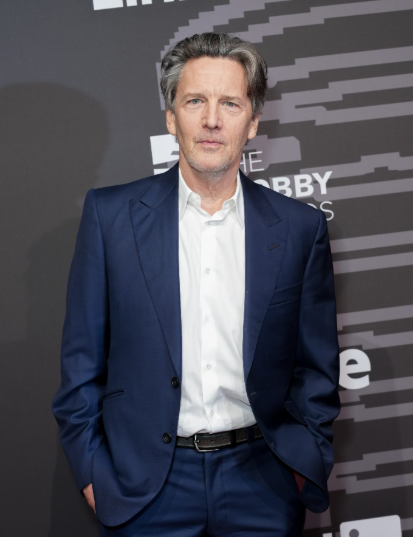
His physical appearance has naturally changed as well. The version of McCarthy remembered from Pretty in Pink was a man in his early twenties. Born in 1962, he is now in his sixties. Comparing photographs taken almost four decades apart will obviously reveal differences, just as it would with anyone. The more meaningful transformation lies in what happened during those decades.
The young actor once associated primarily with romance films has experienced addiction, recovery, marriage, divorce, fatherhood, travel, writing, directing, and major changes in his relationship with fame. Those experiences have naturally shaped the way he carries himself today. Describing him simply as looking more rugged or older misses the larger point. Aging is ordinary; rebuilding a life across several professions is what makes his later story more interesting.
McCarthy has said that he does not feel the same nostalgia for his early films that many fans do. That does not mean he dismisses their importance. He understands that movies such as Pretty in Pink may be tied to powerful memories for the people who watched them as teenagers. A particular film can remind someone of high school, a first relationship, a close friendship, or a period of life that now feels very far away.
For McCarthy, however, those movies were professional experiences he lived through rather than memories he watched from the outside. He remembers the work, the uncertainty, and the personal struggles surrounding them. Fans remember what those films meant during their own youth. Both perspectives are valid, even if they are very different.
That difference may explain why reunions and retrospective appearances are often more emotional for audiences than for the actors themselves. When viewers see McCarthy today, they are not only seeing how he has changed. They may also be reminded that decades have passed in their own lives. The actor becomes a visual reminder of time.
McCarthy’s recovery remains one of the most important chapters of his life, but it should not be used to define everything about him. He has spoken publicly about addiction because it was significant, not because he wants every discussion of his career to revolve around it. His decision to seek treatment gave him the opportunity to build the many other parts of his adult life.
His story also demonstrates that professional success does not automatically create emotional stability. During some of the years when he appeared most successful, McCarthy was privately struggling. His films were playing in theaters, audiences recognized him, and opportunities continued arriving, yet alcohol had become increasingly destructive. Public applause did not solve private problems.
At the same time, the difficult years should not erase the genuine opportunities he enjoyed. McCarthy experienced a remarkable acting career at a young age and worked with many talented performers. He became part of several movies that people still watch decades later. His recollections include humor and excitement alongside the anxiety and addiction. The truth does not require turning every memory into something tragic.
Recovery also did not mean that every future problem disappeared. McCarthy continued to experience normal personal and professional challenges. Sobriety did not make him permanently fearless or remove every insecurity. What changed was that he could deal with those challenges without depending on alcohol. That difference was enough to open new possibilities.
Travel became one of those possibilities. McCarthy discovered that unfamiliar places gave him a sense of awareness he did not always experience in familiar environments. Traveling required him to pay closer attention, communicate with strangers, accept uncertainty, and become comfortable with not knowing exactly what would happen next. These experiences became the raw material for his writing.
Directing provided another form of creative freedom. Instead of being evaluated primarily according to his own performance and appearance, he could guide an entire production. He could help other actors shape their performances, work with cinematographers, and determine how a story unfolded visually. The work demanded experience, patience, and collaboration rather than celebrity status.
Writing allowed him to step even farther away from the image that once defined him. Readers could engage with his observations without focusing on what he looked like. McCarthy had an opportunity to communicate through language rather than through a character somebody else had written. That freedom appears to have become increasingly important to him.
The documentary Brats brought these different parts of his career together. McCarthy was acting as a director, interviewer, writer, and participant in his own history. He was examining a cultural label associated with his younger self while using skills he had developed long after that period ended. In that sense, the project represented both a return and a transformation.
There is something fitting about McCarthy eventually becoming the person who documented the phenomenon that once made him uncomfortable. During his youth, the press had enormous power over the way audiences saw him. Decades later, he could investigate the same era using his own camera and questions. The young actor had become the storyteller.
Today, Andrew McCarthy can be remembered in several different ways depending on who is looking. Some viewers immediately think of Blane in Pretty in Pink. Others remember Kevin in St. Elmo’s Fire or Jonathan in Mannequin. Younger audiences may recognize his directing credits before they know much about his acting career. Readers may know him through travel writing or his books.
All of these identities belong to the same person. None completely replaces the others. His 1980s fame remains part of his story, but it no longer explains the entirety of who he is. McCarthy spent decades building a life beyond the version of himself captured on old posters and magazine covers.
The contrast between those old photographs and the man he became is therefore about far more than physical appearance. His youthful face represented someone who was still trying to understand success, anxiety, addiction, and his own identity. The older McCarthy has had years to examine those experiences, recover from addiction, raise children, travel, write, direct, and reconsider the culture that first made him famous.
His story is also a reminder that nostalgia can simplify the past. Audiences sometimes look at famous photographs and remember only the glamour. McCarthy’s own memories are more complicated. He can appreciate the films while remembering how uncomfortable he sometimes felt during their production. He can acknowledge success without pretending that success automatically made him happy.
That complexity is precisely what makes his life worth examining. He was not simply a teen idol who disappeared when the 1980s ended. Nor was he merely a young actor whose personal problems destroyed everything that followed. Neither description is accurate. His life continued evolving.
He sought treatment and maintained sobriety. He became an experienced television director. He earned recognition as a travel journalist. He published books. He raised a family. He returned to the Brat Pack story on his own terms.
More than four decades after his first important movie role, Andrew McCarthy remains connected to the films that made him famous, but they are no longer the entire story. The boyish heartthrob remembered by a generation grew into a man whose creative life expanded in directions few viewers could have predicted.
Perhaps that is the most interesting part of his journey. The young McCarthy became famous before he fully understood himself. The older McCarthy has spent years examining what that fame meant, what addiction cost him, and what kind of life he wanted after both.
The posters and movie stills preserve one version of him forever. Real life did not stop there. It moved forward through recovery, family, travel, writing, directing, and reflection.
Andrew McCarthy’s legacy is therefore not only about the movies that once made teenagers swoon. It is also about what came after the spotlight changed. It is about learning to live without alcohol, finding new creative identities, and refusing to let one decade define an entire lifetime.
The young actor on the screen will always remain part of popular culture. But the fuller story belongs to the person who kept growing after the credits rolled.

