
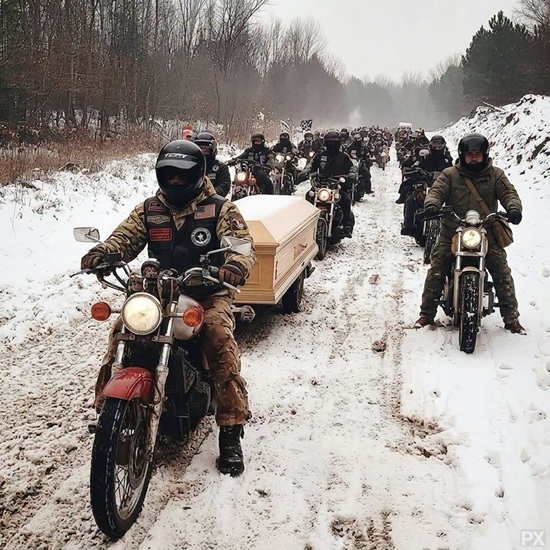
Winter had tightened its grip on the northern United States when Sarah received the news that would forever divide her life into a before and an after. In this fictional story, her son, Marine Corporal Danny Chen, had died while serving in Afghanistan. Danny had once told his family that if he did not return from military service, he wanted to be buried in Millfield, Montana, beside his father. It had seemed like a distant and almost impossible conversation when he first mentioned it.
Now those words had become one of the few final wishes Sarah could still fulfill for her son. The process of returning Danny home was complicated by an unusually severe stretch of winter weather. Snowstorms had disrupted transportation, visibility was poor across several routes, and dangerous road conditions created delays. Military personnel explained that ordinary transportation arrangements might take additional time because safety had to come first.
Nobody was deliberately keeping Danny from his family, and there was no suggestion that officials were indifferent to Sarah’s loss. The delay was the consequence of weather and logistics, yet that practical explanation could not make the waiting easier for a grieving mother. Sarah had hoped her son would be home before Christmas. Every decoration around the house seemed to remind her of previous holidays when Danny had been there.
She remembered the sound of his voice from another room, the familiar way he entered the kitchen looking for food, and the small arguments that once seemed important but now felt painfully insignificant. The possibility of waiting several more weeks felt overwhelming. She understood why transportation could not proceed recklessly, but grief made every additional day seem much longer.
One evening, Sarah wrote about what was happening in an online support group for families who had lost loved ones in military service. She was not demanding political action, criticizing a particular institution, or asking strangers to take dangerous risks. She simply explained that her son had wanted to rest beside his father and that she hoped there might be a way to bring him home sooner. Other parents responded with sympathy because many understood the particular loneliness of waiting for a fallen family member to return.
Someone eventually shared Sarah’s message with members of a veterans’ motorcycle organization. The group included former service members from different generations and branches of the military. Some had served decades earlier, while others had returned from more recent deployments. They came from different backgrounds and held different opinions about countless subjects. What united them in this story was something much simpler: they understood the importance of helping a military family honor the final wishes of someone they loved.
Calls began moving between chapters in several states. Riders discussed whether an escort could be organized once all necessary military procedures and permissions had been completed. Nobody believed enthusiasm alone was enough. Winter travel could become dangerous within minutes, particularly across exposed highways and mountainous areas. Any plan would therefore require support vehicles, emergency equipment, communication with authorities, and the willingness to stop whenever conditions became unsafe.
Leading the Montana group was a 67-year-old veteran everyone called Big Jake. His nickname came partly from his size and partly from the booming voice people could hear even over motorcycle engines. His beard had turned almost entirely gray, and decades of outdoor work had left deep lines across his face. Jake had participated in memorial escorts before, but he had never forgotten the responsibility that came with them. To him, honoring a fallen service member did not mean proving how much danger the riders could tolerate.
When Jake heard about Sarah, he wanted to help immediately. Yet his first conversation with the volunteers focused almost entirely on safety. Nobody would ride through a closed highway. Nobody would ignore instructions from police or transportation officials. If ice made motorcycles unsafe, they would be loaded or left behind while volunteers continued in enclosed vehicles. The objective was to bring Danny home respectfully without creating another family tragedy along the way.
Military officials in this fictional account initially expressed concern about the proposed journey. Weather forecasts remained unpredictable, and certain stretches of road could become dangerous during heavy snowfall. One commander reportedly reminded the group that good intentions did not make anyone immune to winter hazards. Jake agreed. He understood that the commander was not trying to prevent them from honoring Danny; he was responsible for ensuring that another emergency did not develop.
Jake explained that the riders were not asking for permission to behave recklessly. They wanted to create a carefully coordinated escort that could adapt to the conditions. Some participants would ride motorcycles when the weather allowed it, while others would drive trucks and support vehicles. Emergency supplies would be carried throughout the journey. If authorities determined that a section of highway was unsafe, the convoy would stop.
That approach eventually became the foundation of the plan. Volunteers studied weather forecasts and highway reports repeatedly. They identified fuel stations, hospitals, repair facilities, hotels, fire departments, and other potential shelters. Extra clothing, blankets, food, drinking water, flashlights, batteries, medical kits, tools, and communication equipment were loaded into support vehicles. Every motorcycle underwent inspection before departure.
The group also established a communication system. Drivers needed to know immediately if someone experienced mechanical trouble or if conditions deteriorated farther ahead. The convoy would maintain safe distances rather than remaining tightly grouped merely for visual effect. Speed would be determined by road conditions, not by the desire to reach Montana on a particular schedule. The riders understood that patience might ultimately be what allowed them to finish the mission.
When Sarah learned that veterans were organizing an escort, she initially struggled to understand why so many strangers were willing to become involved. Danny had never been famous. His photograph had not appeared on movie screens or magazine covers. Outside his family, friends, fellow Marines, and community, relatively few people knew his name. To Sarah, however, Danny had been an entire world.
She remembered him long before the uniform. She remembered scraped knees, school mornings, forgotten homework, birthday cakes, and the years when his shoes seemed to become too small almost as soon as she purchased them. She remembered teaching him ordinary lessons that parents rarely realize they will someday treasure. Military service had become one chapter of Danny’s life, but Sarah’s memories stretched back to the day he was born.
Many of the veterans understood that distinction. They did not view Danny merely as a uniform or a symbol. Behind every fallen service member was a family whose memories had begun long before military service. Some volunteers had lost friends overseas. Others had attended funerals for people with whom they had served. A few knew what it felt like to watch a military representative approach a family carrying news nobody wanted to receive.
The morning of the fictional journey arrived under a heavy gray sky. Cold air surrounded the staging area while volunteers performed final checks. Motorcycle engines started one after another, and support vehicles moved into position. The hearse carrying Danny remained at the center of everyone’s attention. Conversations became quieter as departure approached.
Jake gathered the group before they moved. His message was brief. They were not there to race the storm, challenge authorities, or prove their toughness. They were there to accompany Danny toward his family. Anyone who became tired would rest. Anyone who felt unsafe would speak up.
The convoy began moving slowly. During the first portion of the journey, road conditions were manageable. Snow remained light, and visibility was sufficient for motorcycles. Riders maintained generous distances and kept their attention on the road rather than the appearance of the procession. Every successful mile brought Danny closer to Montana.
Several hours later, conditions began changing. Wind pushed snow across the highway, and lane markings became increasingly difficult to see. The temperature dropped. Snow accumulated along the shoulders while patches of ice appeared on exposed sections of pavement.
Jake ordered the convoy to reduce speed. A support vehicle farther ahead communicated updated information about the road. The riders knew that the conditions could deteriorate faster than any forecast predicted. Nobody wanted to discover the limit of traction by accident.
Eventually, the motorcycles reached a section where continuing on two wheels no longer made sense. The convoy stopped at a predetermined location. Some riders transferred into support vehicles, while motorcycles were secured until safer conditions returned. There was no argument about the decision.
For Jake, that moment demonstrated the difference between courage and pride. Pride might have encouraged someone to continue simply because turning back or changing vehicles felt like weakness. Courage meant remembering why they were there and choosing the option most likely to bring everyone home safely.
Farther north, the storm intensified. Visibility sometimes fell dramatically as wind lifted loose snow from the ground. Vehicles moved at a fraction of ordinary highway speed. The convoy occasionally stopped completely while road crews worked ahead.
The delays were frustrating, but nobody treated them as failure. Weather did not respond to determination. The volunteers could only respect the conditions and continue when it was reasonable to do so.
Meanwhile, news of the journey began reaching towns along the route. A veteran heard about the escort and called a friend who owned a small restaurant. Someone else contacted a volunteer fire department. Within hours, people who had never met Sarah or Danny began asking what they could provide.
At one stop, volunteers found containers of hot coffee waiting for them. Residents brought sandwiches, soup, bottled water, and hand warmers. A local family arrived carrying extra blankets. The gestures were practical, inexpensive, and exactly what exhausted travelers needed.
A mechanic offered to inspect several motorcycles before the riders continued. Cold weather and long distances could expose mechanical problems that had not appeared during the initial checks. He worked outside in freezing temperatures, examining tires, cables, batteries, and other components. When someone offered payment, he declined.
At another town, firefighters opened their station so the convoy could rest. Riders removed frozen outer layers and sat wherever space was available. Some fell asleep almost immediately. Others stood around drinking coffee and talking quietly.
Those conversations revealed how different the volunteers were. One older rider had served during the Vietnam era. Another had served during the Gulf War. Several had experiences connected with Iraq or Afghanistan.
They did not pretend their wars had been the same. Technology, training, public attitudes, and military missions had changed enormously across generations. Yet certain experiences required little explanation between them. Missing home was one. Losing friends was another.
Danny’s journey gave these veterans a shared responsibility. They were not gathering to debate foreign policy or persuade anyone to adopt a political viewpoint. The escort was about one family and one final journey.
When road crews announced that conditions had improved enough for travel, the convoy resumed. The motorcycles remained secured until the roads became safer. Trucks and other vehicles moved carefully through the snow.
The journey took much longer than anyone had originally hoped. Still, every delay reinforced the wisdom of the safety plan. Nobody had promised Sarah a specific arrival time because doing so would have encouraged unnecessary pressure.
Sarah received periodic updates. Each telephone call brought a mixture of relief and anxiety. She wanted to know that Danny was getting closer, but she also wanted reassurance that the volunteers were safe.
She repeatedly told organizers not to risk their lives for a schedule. Danny’s return mattered deeply, but Sarah could not bear the idea of another mother receiving terrible news because someone had taken unnecessary chances on her behalf.
Jake assured her that they understood. Nobody would challenge a closed road. Nobody would ignore a dangerous forecast. The promise to bring Danny home included the responsibility to protect the living.
As the convoy traveled onward, residents began appearing beside the route. Sometimes there were only two or three people standing near an intersection. In other places, larger groups gathered.
Some carried flags. Others simply removed their hats as the procession passed. Veterans stood at attention and offered salutes.
Parents occasionally brought children, explaining why the vehicles were moving together. Most of the spectators remained quiet. There were no celebrations because this was not a triumphant homecoming.
The people lining the road represented themselves and their individual decision to show respect. They did not claim to speak for every resident of their town, state, or country. They did not need to.
At one rural intersection, an elderly man stood alone in the snow. His coat displayed an old military insignia. As Danny’s hearse approached, he raised his hand in salute and held it there until the final support vehicle disappeared.
One of the younger veterans saw him through the window. For several minutes afterward, nobody in the vehicle spoke.
The convoy stopped again after sunset when falling temperatures turned wet pavement into ice. Black ice was particularly dangerous because drivers could encounter it without seeing it. Jake decided that losing several hours was preferable to gambling with everyone’s safety.
A fire department farther ahead offered shelter. Volunteers arrived exhausted and grateful. Sleeping bags appeared, along with additional food donated by residents.
Some riders slept on floors. Others used folding chairs. A few remained awake, checking weather updates and communicating with officials.
Outside, snow continued falling.
Inside, strangers gradually became friends.
A Vietnam veteran told a younger Marine veteran about coming home decades earlier. The younger man listened before describing his own deployment. Their experiences were separated by generations but connected by memories of uncertainty and separation.
Nobody claimed that service automatically made someone heroic or morally superior. The veterans understood that military experiences were complex and deeply personal. Their respect for Danny did not require romanticizing war.
Morning brought clearer skies. Snowplows had worked through the night, and authorities reopened the route. The convoy prepared to move again.
Before leaving, Jake thanked the firefighters and residents who had helped them. One firefighter responded that no thanks were necessary. They had simply done what they could.
That phrase remained with Jake for the rest of the journey.
Everyone was simply doing what they could.
The veterans could provide an escort.
The firefighters could provide warmth.
The mechanics could keep vehicles operating.
Restaurants could provide food.
Police and transportation crews could help manage roads and traffic.
Residents could stand quietly beside the highway.
No single contribution was enough to complete the journey. Together, they created a chain of support stretching toward Montana.
As the convoy approached the fictional town of Millfield, word of its arrival moved quickly. Residents began gathering along the road despite the cold.
Local veterans put on service caps and jackets. Families stood together. Some people held small flags while others kept their hands inside pockets against the freezing air.
The town became unusually quiet as the procession approached.
Sarah waited with relatives. She had been awake for much of the previous night despite knowing she needed rest.
She kept imagining Danny at different ages.
The Marine uniform was only the final image.
She remembered a small boy first.
Then a teenager.
Then the young man who had hugged her before leaving home.
Eventually, someone told her that the convoy was only a few miles away.
Sarah’s hands began shaking.
The first escort vehicle appeared in the distance.
Behind it came others.
Veterans along the road straightened and saluted.
People removed their hats.
The hearse moved slowly through the center of town.
No one cheered.
The silence carried its own message.
Sarah watched until the vehicle reached her.
For the first time since receiving the devastating news, her son was home.
The journey had not changed what happened to Danny. Nothing could.
The volunteers had not defeated grief any more than they had defeated the winter storm.
They had simply helped Sarah fulfill one final promise.
Danny would be laid to rest beside his father.
During the fictional funeral, the family followed the traditions meaningful to them. Military honors accompanied the service, and the flag associated with Danny’s service was treated with solemn respect.
Sarah stood surrounded by relatives, friends, veterans, and people she had never met before the journey.
Some of the motorcycle volunteers remained toward the back.
They did not want attention.
The day belonged to Danny’s family.
After the burial, Sarah approached Jake.
She struggled to find words that felt large enough.
Jake told her that she did not owe them anything.
The riders had chosen to come.
For many of them, the journey had also provided an opportunity to remember people they had lost.
The convoy gradually dispersed.
Engines started, vehicles left, and visitors returned to their own homes.
Winter remained.
Grief remained too.
But the connection created during the journey did not disappear immediately.
Several riders remained in contact with Sarah in the months that followed.
Some called around holidays.
Others returned for memorial events.
Danny’s fictional name became part of remembrance ceremonies within the motorcycle organization.
Jake made sure new members understood the story accurately: not as a tale about veterans conquering a blizzard, but as an example of cooperation.
The storm had repeatedly forced them to stop.
Accepting those limits was part of why everyone survived the journey safely.
For Sarah, continued contact mattered more than she expected.
Funerals can bring enormous support for a short period. Then visitors return home and daily routines resume.
The family left behind must continue living with the empty chair.
The riders understood that remembrance did not have to end when the flag was folded.
Sometimes it meant a telephone call.
Sometimes it meant showing up on an anniversary.
Sometimes it meant saying Danny’s name when Sarah feared the rest of the world had moved on.
The fictional journey eventually became a story people repeated within the organization.
Over time, Jake corrected anyone who exaggerated it.
They had not ridden motorcycles recklessly through every mile of a deadly blizzard.
They had adapted.
They had used support vehicles.
They had waited when roads were unsafe.
They had listened to authorities.
Those facts did not make the journey less meaningful.
They made it more responsible.
The purpose had never been to demonstrate that veterans were tougher than winter.
It had been to bring a fallen Marine home without sacrificing anyone else.
That lesson became one of the most important parts of the story.
Compassion and caution did not have to oppose one another.
People could be determined without being reckless.
They could honor sacrifice without creating another sacrifice.
Sarah eventually returned to a quieter life.
There were days when memories made her smile and others when they were almost impossible to bear.
Nothing removed the grief completely.
But she remembered the frozen morning when strangers arrived with her son.
She remembered the veterans standing beside the road.
She remembered the firefighters, mechanics, cooks, drivers, police officers, transportation workers, and families who had contributed.
Most of them had never known Danny.
Yet for a few difficult winter days, his journey mattered to them.
That was what Sarah carried forward.
Not the idea that strangers had somehow repaired her loss.
They could never do that.
Instead, they had made sure she did not face one part of it alone.
The distinction was important.
Real compassion does not promise to erase another person’s pain.
Sometimes it simply stands beside that person while the pain is there.
The people involved in the fictional escort had different backgrounds and experiences.
They did not need to share political beliefs.
They did not need to agree about every war, government decision, or social issue.
They only needed to agree on one immediate purpose.
A grieving mother wanted her son home.
They had the ability to help.
So they did.
Years later, that remained the part of the story Sarah remembered most clearly.
A severe winter had made the distance seem almost impossible.
Strangers turned that distance into individual miles.
One mile followed another.
One town helped the next.
One veteran encouraged another.
One warm building offered shelter.
One mechanic kept a machine running.
One cup of coffee helped someone continue.
Eventually, those small contributions reached Millfield.
They reached Sarah.
And they brought Danny home.
The journey did not need exaggeration to carry meaning.
It was not about defeating a storm, challenging a government, or claiming to represent an entire community.
It was a fictional story about ordinary people choosing to help a

