
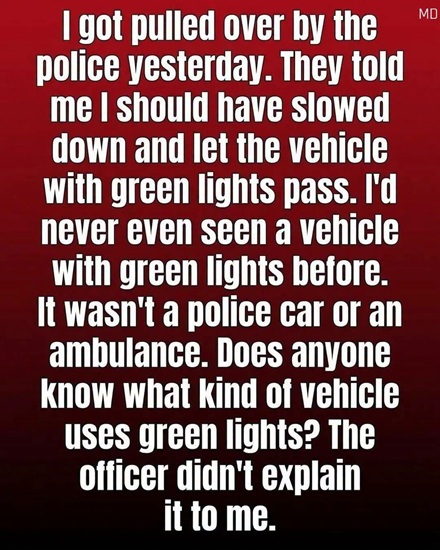
Noticing an unfamiliar flashing light on a vehicle can immediately attract attention, particularly when the color is different from the red, blue, or amber lights many motorists commonly recognize. Green lights are used on certain vehicles in some jurisdictions, but there is no single worldwide rule explaining what every green vehicle light means. Its purpose can depend on the country, state, province, municipality, and type of authorized vehicle involved.
For this reason, motorists should avoid assuming that something they read about green lights in one location automatically applies somewhere else. The relevant local traffic laws and official transportation guidance remain the most reliable sources. In some jurisdictions, green lights can be associated with volunteer firefighters or certain other authorized emergency-service personnel. A volunteer responder, for example, may be permitted under applicable rules to display a green light while traveling in connection with an emergency response
. Depending on the jurisdiction, the light may primarily identify the responder or request cooperation from other road users. This does not necessarily mean that a privately owned vehicle displaying a green light automatically has all the legal privileges given to an ambulance, police vehicle, or fire engine. The exact legal status of the signal must be determined from the rules governing the location where it is being used. This distinction matters because laws regulating emergency and warning lights can differ significantly from one place to another.
Governments and transportation authorities generally determine which vehicles may display specific colors, when those lights can be activated, and what responsibilities surrounding motorists have when they encounter them. Green may have a recognized emergency-service meaning in one jurisdiction while being used differently, restricted, or not recognized for the same purpose elsewhere. Even neighboring jurisdictions can have different requirements. Drivers should therefore treat broad online claims about vehicle-light colors cautiously unless the information clearly identifies the law and location being discussed.
When motorists see an unfamiliar green light, their first priority should remain safe and predictable driving. Reacting suddenly can create additional danger. Abrupt braking, unexpected lane changes, or swerving toward the side of the road may surprise nearby motorists, cyclists, or pedestrians. Instead, drivers should observe their surroundings, check mirrors, maintain appropriate control of their vehicle, and determine whether another vehicle is attempting to pass. Any maneuver made to provide space should be performed only when it can be completed safely and in accordance with applicable traffic laws.
It is equally important to distinguish an identification or courtesy light from legally recognized emergency signals. Authorized police vehicles, ambulances, fire apparatus, and other emergency vehicles may use combinations of flashing lights and audible warnings when responding to emergencies, although the permitted colors and procedures vary internationally. When an authorized emergency vehicle approaches with legally recognized emergency signals activated, motorists should follow the specific yielding requirements established by local law. Depending on the jurisdiction and road conditions, those requirements may involve slowing down, moving aside, stopping, or remaining clear of an intersection.
A green light can be especially noticeable when it appears on what otherwise looks like an ordinary privately owned vehicle. In jurisdictions where volunteer responders are permitted to use such lights, their personal car, SUV, or pickup may not have the appearance of a traditional emergency vehicle. The special light can help identify the driver’s role to surrounding motorists. However, recognizing the signal does not mean drivers should invent their own response. Whether yielding is legally mandatory, encouraged as a courtesy, or governed by another rule depends entirely on the applicable jurisdiction.
Drivers should also remember that making room for another vehicle should never require creating an unnecessary hazard. A motorist should not automatically enter an intersection against a traffic signal, make a dangerous turn, mount a sidewalk, or move into the path of another vehicle simply because an unusual flashing light appears behind them. Emergency-related traffic situations require awareness from everyone involved. A controlled and predictable response is generally safer than a rushed maneuver that could cause a collision or put pedestrians and other road users at risk.
Another unsafe reaction is attempting to follow closely behind an emergency or special-purpose vehicle after surrounding traffic has moved aside. The space created for a responding vehicle is not an opportunity for another motorist to bypass congestion. Conditions farther ahead may include stopped vehicles, emergency personnel, equipment, road closures, injured people, or additional responding units. Maintaining a safe distance helps preserve visibility and gives emergency workers and other drivers enough room to operate without unnecessary interference.
The uncertainty surrounding green lights also demonstrates why road-safety information shared on social media needs context. A post explaining what a green light means may be accurate for the jurisdiction discussed by its original source while being incorrect for readers living somewhere else. Once that information is reposted without geographic context, people may mistakenly interpret a regional regulation as a universal rule. Responsible information should therefore make clear that vehicle-light laws vary and encourage readers to consult official rules applicable to their own location.
This becomes particularly relevant for people traveling outside their usual area. Crossing a state, provincial, regional, or national boundary can introduce different traffic regulations. Rules concerning emergency vehicles, volunteer responders, school buses, roadside assistance vehicles, construction equipment, and warning lights are not necessarily identical everywhere. Drivers traveling somewhere unfamiliar can benefit from reviewing official road guidance before beginning their journey, particularly when significant differences in traffic regulations may exist.
Official government and public-safety sources are generally the best places to verify these rules. Transportation departments, motor-vehicle authorities, police agencies, fire services, and published traffic legislation may provide information explaining which lights certain vehicles are permitted to display. Consulting these sources is preferable to relying exclusively on a photograph, viral video, or social-media caption. A widely shared post can introduce an important topic, but popularity does not guarantee that the information applies to every reader or every jurisdiction.
There is a simple road-safety principle behind all of this: unfamiliar signals deserve attention without causing panic. Drivers may not immediately know what every special light means, particularly when traveling somewhere new. They can still respond responsibly by remaining attentive, reducing distractions, observing surrounding traffic, and avoiding sudden movements. These basic habits provide additional time to assess the situation and respond according to the applicable road rules.
Special warning and identification lights are designed to make particular vehicles more noticeable. Depending on their legal purpose, they can help other motorists recognize emergency responders, roadside operations, hazards, or other situations requiring additional awareness. Their effectiveness, however, depends partly on drivers understanding that different colors and flashing patterns can have different meanings. Assuming that every unusual light provides identical authority can create confusion just as easily as completely ignoring the signal.
For publishers and social-media pages, accurately presenting this distinction is particularly important. Instead of claiming that a green light always carries one universal meaning, an informational article should explain that its significance depends on jurisdiction. This keeps the information useful without presenting regional regulations as though they applied everywhere. It also allows readers to distinguish general road-safety advice from legal instructions that must be confirmed through the appropriate authorities.
The same principle applies when discussing what drivers are required to do. There is no responsible universal instruction that can replace the traffic laws of every country or region. In one location, motorists may have a specific legal obligation when encountering a particular signal. Somewhere else, the same color may provide identification without creating the same right-of-way requirement. A driver’s responsibility is therefore to understand and follow the laws that apply to the road on which they are traveling.
Ultimately, seeing a green light on a vehicle should encourage awareness rather than immediate assumptions. In certain jurisdictions, it can be connected with volunteer firefighters or other authorized personnel, while different rules may apply elsewhere. Drivers should maintain control of their vehicles, remain alert to surrounding traffic, avoid obstructing legitimate emergency operations, and follow applicable traffic regulations. When there is uncertainty about the meaning of a particular signal, official transportation or public-safety information can provide the appropriate clarification.
The broader message is straightforward: green vehicle lights do not carry one identical meaning throughout the world. Their purpose and the obligations they create, if any, depend on the laws of the relevant jurisdiction. Safe driving involves recognizing unusual signals, responding calmly, giving authorized emergency operations appropriate space, and avoiding dangerous assumptions. Verifying local regulations through authoritative sources remains the most dependable way to determine what a green light means and how a driver should respond.

