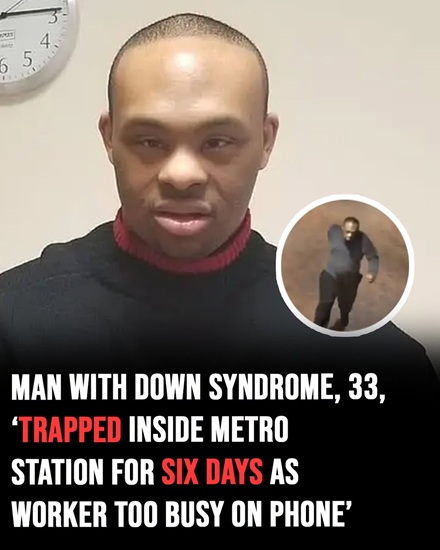
A Maryland family’s lawsuit is raising questions about how Rashawn Williams, a nonverbal man with Down syndrome, allegedly remained trapped inside part of the Glenmont Metro station for six days in October 2023. Williams was 31 years old when he disappeared after becoming separated from a caregiver in Montgomery County. His disappearance prompted a multi-day search involving relatives and authorities before police eventually located him alive inside the station. Because the legal case is ongoing, allegations concerning negligence and responsibility should not be treated as final findings of liability.
Williams disappeared on October 20, 2023, while staying at a hotel and receiving services through WeAchieve, a nonprofit organization serving people with disabilities. According to allegations in the family’s lawsuit, Williams indicated at around 6:20 p.m. that he needed to use the bathroom. His caregiver reportedly went to obtain a key, and Williams left the hotel lobby during that period. He then apparently made his way toward Glenmont Metro Station, which is operated as part of the Washington Metropolitan Area Transit Authority system.
His disappearance immediately presented serious concerns because Williams is nonverbal and requires significant supervision. His family feared that he might have difficulty telling strangers who he was, explaining that he was lost, or providing information that could help return him safely. His father, Jimmy Hall, spoke publicly during the search about those concerns. As the hours passed without Williams being located, the uncertainty became increasingly difficult for those searching for him.
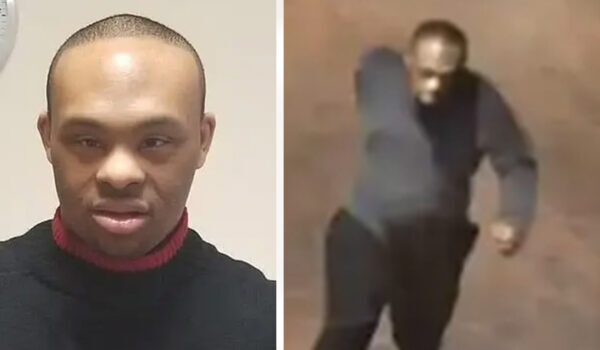
Hall told local media that his son could not verbally communicate or easily defend himself and expressed concern about whether he had access to basic necessities such as food and water. Family members continued searching while authorities attempted to determine where Williams might have gone. The lack of confirmed information became especially distressing as one day turned into several. According to later accounts, Hall eventually searched areas where he feared he might find evidence that his son had not survived.
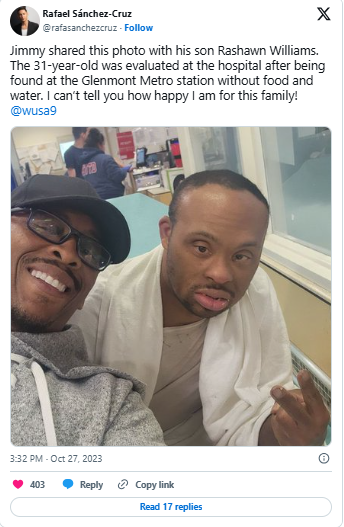
Williams was ultimately located alive on October 26, six days after he disappeared. Police found him inside the Glenmont Metro station. Initial reports focused on the relief surrounding his discovery, but a lawsuit filed afterward presented a much more detailed account of what Williams’s family alleges happened during the time he was missing. Those allegations now form the basis of litigation involving WMATA and WeAchieve.
According to the family’s complaint, Williams traveled within the Metro system on the night he disappeared. The lawsuit alleges that he remained aboard a train for approximately six hours before it reached Glenmont shortly after midnight and was taken out of service. A Metro employee allegedly directed Williams to leave the train. The complaint argues, however, that the employee did not ensure that a passenger who appeared confused and had a visible disability was able to leave the station safely.
The lawsuit alleges that Williams subsequently approached a station kiosk, apparently seeking assistance. According to the complaint, a station employee was engaged in a personal telephone conversation and did not provide Williams with the help he needed. Court filings cited in reporting allege that Williams remained near the kiosk while waiting for assistance before eventually showing signs of frustration and moving farther into the station.
This portion of the allegations is particularly important because Williams could not simply explain his circumstances verbally. A passenger who can speak might tell an employee that they are lost, provide a relative’s telephone number, or ask how to leave the station. Williams’s disability reportedly limited his ability to communicate in those conventional ways. The lawsuit therefore argues that his visible confusion and behavior should have prompted employees to provide additional assistance.
According to the complaint, Williams eventually passed through an emergency exit and entered an area identified as an Area of Refuge, often abbreviated as AOR. The family’s lawsuit alleges that the door then locked behind him, preventing him from returning to the station’s main passenger areas. It was reportedly inside this space that Williams remained while his relatives and police continued searching for him elsewhere.
Areas of Refuge are associated with emergency procedures and can provide protected locations for individuals who may need assistance during an evacuation. The lawsuit’s allegations focus heavily on what happened after Williams entered the Glenmont station area. His family contends that routine procedures should have resulted in the space being checked and Williams being discovered much sooner.
According to a federal court ruling discussing the allegations, Metro personnel allegedly did not inspect the area on the night Williams became trapped or during the following days. The lawsuit argues that established procedures included station inspections and monitoring practices that, if properly followed, could have led employees to discover Williams. Whether specific failures ultimately amount to legal negligence remains an issue for the judicial process to determine.
When authorities finally reached Williams six days after his disappearance, he was alive and was taken for medical evaluation. His father initially described him as hungry and thirsty. Later court documents cited in news reports described more serious alleged conditions, including dehydration and inadequate nutrition. The documents also stated that the area allegedly lacked normal access to food, drinking water and toilet facilities.
Court descriptions cited in reporting further stated that Williams was found in severely unsanitary conditions after spending days inside the space. These details are understandably disturbing, but accuracy requires keeping their legal context clear. Some descriptions come from allegations and evidence discussed during ongoing litigation rather than from a completed trial establishing responsibility against every defendant.
For Williams’s family, his discovery brought enormous relief after nearly a week of uncertainty. Finding him alive meant that the immediate search was finally over. Yet his relatives have alleged that the consequences continued long afterward. According to the lawsuit, Williams experienced behavioral and emotional changes following the incident that his family believes are connected to what he endured while missing.
The complaint reportedly describes changes to Williams’s sleeping patterns, episodes of panic, rocking behavior and occasional screaming. His family has also alleged that complete darkness became especially distressing for him following the experience. According to their account, dark environments can cause him to panic and seek help. These reported effects form part of the family’s claims regarding the harm Williams allegedly suffered.
Those claims should also be described carefully. Behavioral changes reported by his relatives are allegations relevant to the lawsuit and should not be independently diagnosed or assigned a medical cause without appropriate professional evidence. The family’s account nevertheless helps explain why the litigation concerns more than the six days Williams was missing. They contend that the incident had consequences continuing after he returned home.
WMATA sought dismissal of claims against the transit authority and raised several legal defenses. According to reporting on the case, those arguments included questions about governmental immunity and Williams’s legal status within the station after normal service had ended. One issue involved whether he could be regarded as a trespasser after entering a location that was not ordinarily accessible to passengers.
U.S. District Judge Paula Xinis rejected WMATA’s attempt to dismiss relevant portions of the case at that stage. The ruling allowed the family’s claims to continue through the legal process. However, a denial of a motion to dismiss is not the same as a final verdict finding a defendant negligent. It means the claims can proceed and be examined further as the parties present evidence and legal arguments.
In addressing the allegations, the judge reportedly considered whether basic communication and assistance from Metro employees could have helped Williams safely leave the station. The court also examined allegations involving WMATA’s own procedures, including policies concerning passenger assistance and inspections of station areas. These issues were relevant to whether the family’s claims could legally move forward.
The lawsuit also names WeAchieve, the organization providing services to Williams when he initially became separated from his caregiver. According to court reporting, WeAchieve has denied allegations that it engaged in negligence or intentional misconduct. The organization has also argued that WMATA bears responsibility for injuries Williams allegedly experienced after entering the Metro system.
Those competing positions demonstrate why the case should not be described as though responsibility has already been conclusively determined. Williams’s family has presented allegations against the organizations involved, while the defendants have the opportunity to challenge those allegations and offer their own evidence. Unless the litigation results in a final judgment or settlement establishing particular facts, assigning definitive legal blame would be premature.
There are nevertheless important events that are documented independently of the disputed negligence claims. Williams disappeared on October 20, 2023. His family and authorities searched for him for several days. He was eventually found alive inside Glenmont Metro station on October 26 and was taken for medical evaluation. The later lawsuit concerns how he came to remain inside the station for that period and whether organizations or employees failed in responsibilities owed to him.
The incident also highlights broader practical questions about accessibility in public transportation. People who are nonverbal or have intellectual and developmental disabilities may communicate distress differently from other passengers. Someone who appears confused may not be capable of clearly explaining where they need to go or whom employees should contact. Accessible procedures and appropriate staff training can therefore be particularly important when assisting vulnerable passengers.
Routine station inspections can be important for similar reasons. Most inspections will reveal nothing unusual, but established safety procedures are designed to account for unexpected circumstances. The Williams family’s lawsuit argues that appropriate inspections could have resulted in his discovery much earlier. Whether that argument ultimately establishes legal liability is for the court to determine based on the applicable law and evidence.
The case is also a reminder of why careful language matters when reporting lawsuits. A complaint contains allegations made by plaintiffs; it is not itself proof that every allegation occurred exactly as described. Likewise, a defendant’s denial does not establish that the allegations are false. Courts examine evidence, legal duties, testimony and competing arguments before reaching final decisions.
For readers following this case, separating those categories helps prevent misinformation. Williams being missing for six days and being found inside the Glenmont station can be distinguished from disputed questions about precisely what individual employees did, whether established procedures were violated, and which organization may ultimately bear legal responsibility. Those latter questions remain part of the judicial process.
At the center of the case is Williams himself and the experience his family says fundamentally affected him. For six days, his relatives did not know where he was or whether he was safe. Their search ended when authorities discovered him alive inside a Metro station, but their effort to understand how he remained there for so long continued afterward through litigation.
The family’s lawsuit now seeks legal accountability for what they allege occurred during those six days and for the consequences they say followed. WMATA and WeAchieve are entitled to present their respective defenses, and the continuing court process will determine which claims can ultimately be established. Until that happens, the most responsible account is one that clearly distinguishes documented events, allegations, judicial rulings and disputed questions rather than presenting any party’s version as settled fact.
