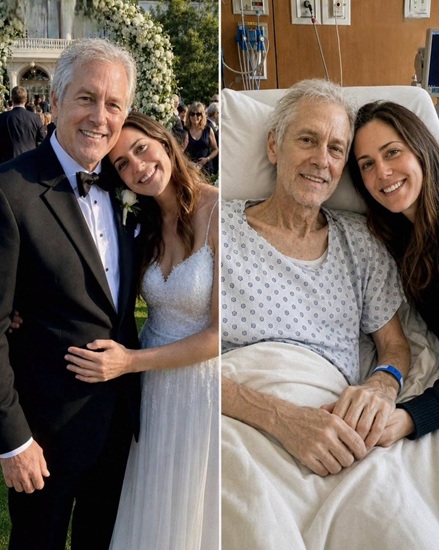
Before Russell entered my life, financial security felt like something that belonged to other people. My apartment was small, inexpensive, and permanently affected by a window that never completely sealed. Whenever heavy rain arrived, moisture gathered around the frame, and I kept an old towel nearby to catch the occasional drip. Most evenings, I returned from work exhausted, removed my aching shoes, and sat on the edge of my bed dividing my tips between rent, utilities, transportation, and groceries.
At 32, I worked constantly but still seemed to live one unexpected expense away from serious trouble. Food was usually the easiest place to reduce spending, which meant my kitchen contained more instant noodles than I would ever willingly admit. I worked restaurant shifts whenever they were available and accepted catering assignments whenever I needed additional income. Twelve hours on my feet could leave me completely exhausted, but saying no to work was a luxury I rarely felt able to afford.
I was not waiting for someone wealthy to rescue me. Most of my attention was focused on surviving the current month and hoping the next one would be slightly easier. Everything began changing when I accepted a last-minute catering shift at an elegant charity gala. The ballroom looked almost unreal compared with the places where I normally worked. Crystal chandeliers reflected light across polished floors, musicians played near the entrance, and guests arrived wearing clothes that probably cost more than several months of my rent. I wore black trousers and a white catering shirt while carrying trays between groups of people who rarely noticed the servers moving around them.
I had skipped lunch and eaten almost nothing before arriving, so halfway through the evening I felt increasingly lightheaded. While balancing a tray of champagne glasses, I noticed an older man approaching. He had silver at his temples, a calm expression, and a perfectly fitted dark suit. I expected him to take a glass and continue walking. Instead, he paused and asked my name.
After I answered, he asked whether my feet were hurting. The question surprised me enough that I laughed. Most guests barely made eye contact with the catering staff, yet this stranger had somehow noticed how uncomfortable I was. When I admitted that I had been standing for hours, he quietly spoke with the catering captain and arranged for me to sit for several minutes somewhere discreet.
His name was Russell. During that brief break, we talked about surprisingly ordinary things. He mentioned the garden his late wife had loved, and I told him about the battered paperback novel I carried in my bag to read during breaks. Russell joked that his kitchen was larger than my apartment probably was, yet he had not enjoyed a proper home-cooked dinner in years. Nothing about the conversation felt like the beginning of a romance. It simply felt unusually easy.
The next morning, Russell called. He asked whether I would meet him for coffee. I initially hesitated because the difference between our lives seemed enormous. He was a successful businessman accustomed to financial security, while I was still calculating whether groceries could wait until my next paycheck. Nevertheless, I agreed.
Coffee became lunch, and lunch eventually became regular conversations. Russell called consistently and remembered details I had mentioned days earlier. If I worked late, he asked whether I had arrived home safely. If I recommended a book, he actually read it. He never seemed interested in impressing me with his money, which was probably one reason I gradually stopped thinking about it whenever we were together.
Approximately three months after we met, Russell invited me to dinner at a quiet restaurant. Near the end of the evening, he placed a small ring on the table. His proposal was not dramatic. He simply told me that he wanted us to build a life together and asked whether I was willing to try.
I told him something I had been afraid to admit. Part of me could not completely separate my feelings for him from the security his life represented. After years of worrying about rent and food, the possibility of never having those fears again was enormously powerful. Russell did not become angry. Instead, he appreciated that I had been honest.
I eventually said yes because I cared about him and wanted to discover what our relationship could become. At the time, I still wondered whether accepting his proposal was partly practical. I had spent years feeling as though I were barely keeping my head above water, and Russell represented stability. What I did not yet understand was that the practical reasons would eventually become far less important than the emotional ones.
His adult children were immediately suspicious of me. They saw a younger woman with very little money marrying their wealthy father and reached the most obvious conclusion. His daughter Marlene was particularly hostile. At our engagement gathering, she looked at me as though I had entered the family with an elaborate financial plan.
At one point, she sarcastically referred to me as Russell’s newest “project.” I wanted to defend myself, but I also understood that arguing would probably reinforce everything she already believed. Russell eventually intervened and asked his children to treat me respectfully, even if they were uncomfortable with his decision to remarry.
Our wedding was deliberately small. Russell did not want an enormous society event, and neither did I. Afterward, I moved into his house, a beautiful property with tall windows, polished floors, and a sweeping staircase that initially made me feel like a visitor rather than its resident.
For the first few weeks, I moved through the rooms carefully. I had spent so long worrying about damaging things I could not afford to replace that living somewhere filled with expensive furniture felt strange. Russell noticed and repeatedly reminded me that I was not a guest. The house was now my home too.
Marlene did not share that view. During one visit, she confronted me near the staircase and said I should not expect to inherit her father’s property. In her mind, the house and everything connected with it ultimately belonged to Russell’s children. Before I could answer, Russell appeared.
He calmly told his daughter that his financial affairs were his responsibility. Everyone, he said, would eventually receive what he believed was appropriate. There was no shouting, but the message was clear. Marlene left angry, and the tension between us remained.
What his children did not witness were the quiet parts of our marriage. Russell made peppermint tea when I came home exhausted. He remembered that I disliked sleeping in complete darkness and always left the curtains slightly open. He listened to stories about my work even though the problems seemed insignificant compared with the business decisions he handled every day.
He never used money as leverage. If anything, he encouraged me to maintain independence and make my own decisions. The more secure I felt emotionally, the less important his wealth became. Somewhere between ordinary breakfasts, grocery shopping, quiet drives, and evenings spent reading beside each other, I realized that I had fallen deeply in love with him.
That realization frightened me because Russell was considerably older. I had always understood intellectually that our time together might be limited, but understanding something abstractly is different from confronting it directly. Unfortunately, that moment arrived much sooner than either of us expected.
In November, Russell began experiencing health problems that could no longer be dismissed as ordinary exhaustion. Medical examinations followed, and eventually we received devastating news. In this fictional story, Russell was diagnosed with an advanced terminal illness, and his doctors believed he might have only weeks remaining.
Suddenly, the house, investments, and financial security that had once seemed so significant became almost meaningless. None of those things could purchase another year together. I would have traded every expensive object in the house for another ordinary Tuesday morning with Russell drinking coffee beside me.
His health declined quickly. Hospital rooms replaced our kitchen, and medical conversations replaced plans for the future. Russell’s children spent more time around him as his condition worsened, which also meant the existing tension between us became harder to avoid.
Marlene occasionally behaved as though my presence beside her father competed with her own grief. One day, she attempted to keep me outside his hospital room because she wanted time alone with him. I understood that she was losing her father, but I was also losing my husband. When I finally entered, Russell looked exhausted. His hand trembled when he reached for mine. I told him that the conflict with his children was becoming increasingly difficult. He asked me not to fight them.
Then he told me something simple: “Trust me.” I did not know exactly what he meant. I assumed he was asking me to avoid allowing anger to consume whatever time remained. The following day, he asked me to bring his favorite blue blanket from home. I did, and I spent hours sitting beside him with the blanket covering his legs. Not long afterward, Russell died.
The house became painfully quiet. I had once lived alone in a tiny apartment, yet I had never experienced loneliness quite like the silence that followed his death. Every room contained evidence that he had recently been there. His books remained beside his chair, his coffee cup was still in the cabinet, and his jacket hung exactly where he had left it.
At the funeral, Russell’s children stood together. I remained nearby but separate. People offered condolences, although some clearly did not know how to approach me. The rumors surrounding our marriage had followed us for years, and I knew some people probably wondered what would happen to Russell’s fortune. After most mourners had gone, Russell’s attorney approached me. He asked me to come to his office the following morning because Russell had left specific instructions concerning his estate and several personal items.
I barely slept. When I arrived the next morning, Marlene and her brothers were already sitting around the conference table. Marlene immediately asked when I planned to leave their father’s house. The attorney stopped her before the conversation became an argument. He explained that nobody should make assumptions until Russell’s documents had been reviewed. He then placed a small wooden box on the desk and pushed it toward me.
Inside was a photograph. It had been taken at the charity gala where Russell and I first met. I was standing with my serving tray, laughing at something outside the frame. I had never known anyone had photographed that moment. Beneath the picture was a folded letter in Russell’s handwriting. Before I read it, the attorney began explaining Russell’s estate arrangements. Because this is a fictional story rather than a real legal case, the inheritance provisions should not be interpreted as legal advice. Actual inheritance rights, trusts, probate procedures, spousal rights, business succession, and will contests vary according to jurisdiction and individual circumstances.
Within the story, Russell had prepared his estate plan while legally competent and with independent professional advice. He left substantial assets to me as his surviving spouse and created separate trusts for his adult children. His business interests were also handled through detailed succession arrangements rather than simply being transferred without oversight. His children had not been disinherited. They would receive significant financial support through their trusts, but the structure was not the unrestricted inheritance they had expected. Russell had designed the arrangements according to what he believed each person needed.
Marlene reacted angrily. She accused me of influencing her father. The attorney reminded everyone that Russell had made and documented his decisions independently. There was no dramatic declaration that instantly eliminated anyone’s rights. There were simply carefully prepared estate documents reflecting Russell’s wishes. I did not feel victorious. Watching his children become angry did not bring Russell back. They had lost their father, and I understood that grief could make existing resentments much stronger.
Then I opened his letter. Russell wrote first about the night we met. He explained that the photograph in the box had been taken by someone working at the gala. He had kept it because it reminded him of the moment he first noticed me. He remembered how exhausted I had been and how surprised I looked when he asked whether my feet hurt. He wrote about our first coffee, our early conversations, and the months after our marriage.
What mattered to him were not the expensive moments. He remembered me cooking when he felt sick, sitting beside him when he could not sleep, and insisting on attending medical appointments even before either of us understood how serious his condition would become.
Then the letter changed. Russell wrote that shortly before his health deteriorated, he had begun wondering whether I might be pregnant. He had noticed that I occasionally became nauseated in the mornings and that I was more tired than usual. I had blamed everything on stress. He encouraged me in the letter to see my doctor. I stared at the page for several seconds. Until that moment, I had not seriously considered the possibility. Grief had overwhelmed almost every other thought.
The attorney explained that Russell’s estate planning had anticipated the possibility of another child. Again, this was part of the fictional arrangement rather than a statement about universal inheritance law. In real situations, the rights of surviving spouses, existing children, and children conceived before a parent’s death depend on applicable law and valid estate documents.
I scheduled an appointment. The pregnancy was confirmed. I did not know whether to laugh or cry. I was grieving Russell while simultaneously discovering that our family was not ending in the way I had believed. The future suddenly looked completely different. When Russell’s children learned about the pregnancy, their reactions were complicated. Marlene was initially stunned, but there was no magical legal transformation in which the pregnancy erased everyone else’s rights. Russell had already created provisions for his spouse, his adult children, and the possibility of another child.
The legal matters took time to resolve, but the feared courtroom war never became the center of my life. Attorneys handled the estate while I tried to process grief and prepare for motherhood. Eventually, even the hostility with Russell’s children became quieter. We did not suddenly become a perfect family. Some wounds required time, and some disagreements never completely disappeared. But everyone gradually understood that fighting endlessly over property would not restore the person we had lost.
I remained in the house Russell and I had shared. At first, living there without him felt unbearable. Every object seemed to contain a memory. His favorite chair remained near the window. The blue blanket from the hospital stayed folded in our bedroom. His books still contained scraps of paper marking pages he would never finish. As my pregnancy progressed, I began making small changes. One bedroom became a nursery. The kitchen that Russell once joked was too large for one person finally started smelling like actual meals again.
I planted herbs outside because Russell had once told me how much he missed having a garden near the house. It felt like a small way of connecting the future with the life we had shared. One afternoon, rain began tapping against the windows. I sat at the kitchen table with Russell’s letter beside me and one hand resting on my growing belly. The sound carried me back to my old apartment. Years earlier, rain had meant checking whether water was leaking through the window frame and wondering whether another repair would destroy my budget. Now I was sitting in a safe home knowing my child would never experience that particular fear.
For a moment, I thought about how easily someone could look at my life from the outside and misunderstand everything. A struggling waitress had married a wealthy older man and eventually inherited significant assets. That description was technically part of the story, but it missed nearly everything that mattered. It did not include the peppermint tea. It did not include the curtains left slightly open because Russell remembered I disliked complete darkness.
It did not include quiet mornings, unfinished books, hospital rooms, or the way he squeezed my hand during ordinary car rides.
Money had changed the practical circumstances of my life, but Russell had changed something deeper.
Before meeting him, I believed security meant having enough money to stop worrying. After loving him, I understood that security could also mean knowing someone respected your boundaries, listened to your fears, and never required you to prove that you deserved kindness.
I had initially worried that accepting Russell’s proposal partly because I wanted stability made our marriage less authentic. Eventually, I understood that relationships do not always begin with perfect motivations or cinematic romance.
People meet while carrying needs, fears, histories, and uncertainty.
What matters is what they create afterward.
Our marriage began with two people from completely different worlds sitting behind a marble column because one of them noticed the other needed to rest.
It became a life built from ordinary gestures.
Russell’s estate provided financial stability for me and our child. I would never pretend that such security was insignificant. After years of struggling, knowing that rent, food, medical care, and education would not constantly depend on the next paycheck was an extraordinary gift.
But that was not the inheritance I thought about most often.
The real inheritance was learning what it felt like to be treated gently without having to earn every ounce of kindness.
It was learning that love could be quiet.
It could look like peppermint tea after work.
It could look like remembering someone’s fear of darkness.
It could be a photograph of an exhausted catering server laughing at a party, kept for years because another person understood that the ordinary moment had changed both of their lives.
Russell’s children had once believed our marriage was entirely about what I might receive when he died. For a while, even I had worried that money was too large a part of why I initially said yes.
But by the time I lost him, I would have surrendered every asset for more time. That was how I finally understood the difference. The wealth had rescued me from poverty. Russell had given me something else entirely. He had given me a place where I felt safe enough to stop surviving and begin living. And years after that rainy apartment and those carefully divided piles of tips, I finally understood what his last request had meant. I did not need to fight everyone to prove that our marriage had been real.
I only needed to remember the life we had actually lived. The legal documents could explain who inherited the property. Russell’s letter explained everything that mattered beyond it. And whenever rain touched the windows of the house we had shared, I would sit quietly for a moment and remember the man who first noticed me carrying a tray across a crowded ballroom. He had not simply left me a fortune. He had left me a home, a future for our child, and the knowledge that genuine love is measured by far more than what someone leaves behind.
