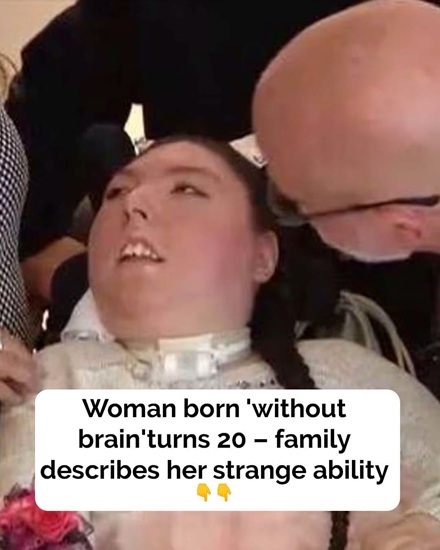
Alex Simpson’s family has spent two decades celebrating milestones they once feared they might never see. Born in Nebraska, Alex was diagnosed during infancy with hydranencephaly, a rare and severe neurological condition affecting development of the brain’s cerebral hemispheres. Her parents, Shawn and Lorena Simpson, have said doctors gave them an extremely limited prognosis when Alex was a baby. Despite those expectations, she celebrated her 20th birthday in November 2025.
Alex reportedly appeared healthy when she was born, and her condition was not immediately apparent to her family. When she was approximately two months old, however, doctors diagnosed her with hydranencephaly. The news fundamentally changed what Shawn and Lorena expected their daughter’s childhood to look like. According to their later interviews, they were told that Alex was unlikely to survive beyond early childhood.
Hydranencephaly is sometimes described in headlines as being “born without a brain,” but that phrase is medically imprecise. According to Cleveland Clinic, babies with hydranencephaly are missing most or all of the cerebral hemispheres—the large areas of the brain normally responsible for many functions including movement, cognition, vision and sensory processing. The spaces where this brain tissue would normally develop are largely filled with cerebrospinal fluid.
Other neurological structures can still be present, which is why saying that someone literally has “no brain” gives an inaccurate impression. Alex’s father has publicly described the amount of remaining brain tissue in his daughter’s case as extraordinarily small. His description emphasizes the severity of her condition, but medical terminology provides a more accurate way of explaining what hydranencephaly actually involves.
The condition is extremely rare. Estimates cited by Cleveland Clinic suggest that hydranencephaly may occur in approximately one out of every 5,000 to 10,000 pregnancies. The condition develops before birth, although it may not always be immediately recognized because some affected babies can initially appear relatively typical.
As an infant grows, signs of serious neurological impairment may become more apparent. Depending on the individual, hydranencephaly can be associated with seizures, abnormal muscle tone, difficulties with feeding, impaired vision or hearing, breathing difficulties and problems with growth and development. The severity can differ between patients, although the condition generally carries a very poor prognosis.
For Shawn and Lorena, the uncertainty surrounding Alex’s early years was particularly difficult. Lorena previously recalled being afraid that her daughter might not survive through the night. During Alex’s childhood, she spent long periods closely watching her breathing and movement because the prognosis the family had received remained constantly in her thoughts.
Years later, reaching Alex’s tenth birthday was already a major milestone for the family. By that point, she had survived substantially longer than her parents had initially expected. Her 20th birthday added another decade to a story her family once believed might end during early childhood.
When the family spoke publicly around that milestone, they attributed much of their ability to continue through the uncertainty to love, caregiving and their personal faith. Shawn recalled how frightened they had been when Alex was first diagnosed and said faith helped them emotionally cope with the years that followed.
Those statements reflect the family’s personal beliefs and experiences. They should not be interpreted as a medical explanation for why Alex has survived for so long. Hydranencephaly remains an extremely serious condition, and there is currently no evidence that love or faith can medically alter the neurological abnormalities that define it. Family support can nevertheless be enormously important for caregiving and quality of life.
Alex’s survival into adulthood is unusual given the typical prognosis. Cleveland Clinic explains that many babies with hydranencephaly die before birth or within their first year. Some children, however, have survived for years with intensive supportive care. Alex’s experience therefore represents an exceptionally long survival, but it would be inappropriate to declare her the longest-surviving person with the condition without comprehensive medical evidence establishing that record.
Hydranencephaly currently has no cure. Medical treatment generally focuses on supportive care and management of complications. Depending on a patient’s needs, this may involve nutritional support, medications for seizures, respiratory assistance, physical therapy or procedures addressing problems related to cerebrospinal fluid.
The precise medical needs of each patient can differ considerably. Families caring for children with profound neurological conditions frequently work with multiple healthcare professionals to manage feeding, breathing, seizures, mobility and other concerns. Treatment decisions need to be individualized rather than based on another patient’s experience.
Alex’s condition has profoundly affected her ability to interact with the world in conventional ways. Her parents have said she cannot see or hear as most people do. Nevertheless, family members believe she recognizes or senses their presence through responses they have observed over many years.
Shawn has described approaching Alex and interpreting some of her movements as indications that she knows he is nearby. Her younger brother, SJ, has expressed similar beliefs, saying that he feels Alex can recognize emotional changes among the people around her.
These observations are meaningful to Alex’s family, but they should be presented as their interpretations rather than scientifically established conclusions about exactly what she perceives. With profound neurological abnormalities, determining subjective awareness can be extremely complicated, and outside observers cannot reliably establish Alex’s internal experiences from family descriptions alone.
For SJ, however, Alex has always simply been his older sister. He has spoken publicly about growing up alongside her and learning about her disability. His comments demonstrate how a serious medical condition affects an entire family, including siblings whose understanding develops alongside the person receiving care.
Shawn has also used attention surrounding Alex’s story to challenge disrespectful attitudes toward people with profound disabilities. He has previously discussed receiving hurtful comments about his daughter and has argued that significant disability does not remove someone’s right to dignity, affection or appropriate care.
That message is important because descriptions of severe neurological conditions can sometimes unintentionally reduce a person to a list of medical limitations. Alex requires extensive support and has profound disabilities, but those medical realities exist alongside the relationships her family has built with her during two decades of caregiving.
It is equally important to avoid romanticizing the difficulties involved. Caring for someone with a complex, life-limiting neurological condition can involve considerable physical, emotional and financial demands. Alex’s longevity does not mean hydranencephaly has become less serious, nor does it establish what another child diagnosed with the same condition will experience.
Medical statistics describe patterns across groups of patients rather than guaranteeing an exact outcome for an individual. When Alex’s parents were given a poor prognosis during infancy, physicians were communicating the seriousness of a condition associated with very high early mortality. Alex ultimately surviving much longer does not make that general prognosis inaccurate; it makes her individual course unusual.
Hydranencephaly should also not be confused with hydrocephalus. Although both conditions involve cerebrospinal fluid, they are fundamentally different. In hydrocephalus, excessive cerebrospinal fluid accumulates and can place pressure on brain structures. In hydranencephaly, large portions of the cerebral hemispheres themselves are absent and the resulting spaces contain fluid.
Doctors can use imaging examinations to identify these abnormalities. Hydranencephaly may sometimes be detected during pregnancy through prenatal imaging. In other circumstances, ultrasound, CT or MRI examinations after birth can help doctors establish the diagnosis and distinguish it from other neurological conditions.
The exact cause is not always known. Medical sources describe hydranencephaly as resulting from severe disruption to development of the cerebral hemispheres during pregnancy, potentially involving interruption of blood supply to developing brain tissue. Parents should not assume that the diagnosis means they caused the condition through something they did or failed to do.
Alex’s 20th birthday therefore carries significance without needing exaggerated claims about making medical history. What is documented is already remarkable: she has lived into adulthood with a rare condition for which survival is commonly much shorter, according to established medical descriptions of hydranencephaly.
For her parents, each birthday has represented more than another number. Shawn and Lorena began their journey expecting that their time with their daughter might be extremely limited. Instead, their lives have included twenty years of caring for Alex, learning about her needs and adapting to circumstances they could never have predicted when she was born.
Her story also demonstrates why language matters when discussing disability. Sensational phrases such as “woman with no brain” may attract attention, but they oversimplify both the medical condition and the person living with it. Describing Alex accurately as someone with severe hydranencephaly provides the necessary context without reducing her identity to a provocative headline.
There is also no need to exaggerate her family’s observations. They believe Alex responds to their presence, and those experiences clearly carry emotional significance for them. Presenting those observations honestly as family accounts respects both the Simpsons’ experiences and the limits of what can be medically confirmed.
Two decades after receiving a diagnosis that filled them with uncertainty, Shawn and Lorena Simpson were able to celebrate their daughter’s 20th birthday. Alex’s future remains shaped by a profound neurological condition requiring substantial care, but reaching adulthood represents a milestone her family once had little reason to expect.
Ultimately, Alex Simpson’s story is not proof that medical prognoses should be ignored, nor is it evidence of a universal outcome for people with hydranencephaly. It is the story of one individual whose survival has extended far beyond what her family says doctors initially anticipated.
For the Simpson family, the most meaningful part of that story is not a record or dramatic headline. It is the fact that Alex is still part of their lives twenty years after they were first confronted with an extraordinarily difficult diagnosis. Her case remains unusual, her condition remains serious, and her family’s experience offers a reminder that every person living with a profound disability deserves to be discussed with accuracy, dignity and respect.
