
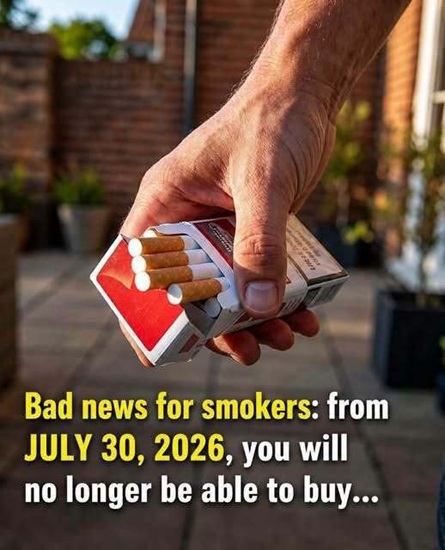
Cigarette prices in France have increased considerably over the years, making smoking a progressively more expensive habit. However, the reasons behind those increases are more straightforward than some dramatic online claims suggest. There is no evidence of a secret arrangement between tobacco companies and the French government designed to financially punish individual smokers. Instead, France operates a tightly regulated tobacco market in which manufacturer pricing, government approval, excise duties and value-added tax all contribute to the amount consumers ultimately pay.
Unlike many ordinary consumer products, cigarettes in France are not sold at whatever price an individual retailer decides to charge. Tobacco manufacturers and approved suppliers submit proposed retail prices through a formal process, and those prices must be officially approved before they can take effect. Once a particular product has an approved retail price, ordinary tobacconists generally cannot independently discount or increase it in the same way shops might adjust the price of clothing, food or household products.
This regulated structure explains why the same tobacco product generally has a standardized retail price within the territory covered by the rules. Someone purchasing a particular cigarette brand in central Paris would not normally expect the dramatic store-to-store price differences seen with many other products. The system creates consistency for consumers while also allowing the government to administer tobacco taxation through a highly controlled retail framework.
It is important, however, to distinguish between the government approving a tobacco price and the government independently choosing every brand’s final price. Manufacturers remain involved in determining the prices they propose for their products. The state then regulates and approves those prices while imposing the taxes that represent a substantial portion of what consumers ultimately pay. Both commercial decisions and taxation can therefore influence changes at the checkout.
Another common misunderstanding is that every pack of cigarettes in France costs exactly the same amount. That is not the case. Individual brands, varieties and pack formats can have different approved prices. French Customs publishes detailed lists identifying tobacco products and their authorized retail prices, and those lists are periodically updated. Consequently, headline figures such as €12, €12.50 or €13 should not automatically be interpreted as the exact current price of every cigarette pack.
Taxes Explain a Large Part of the Price
Taxation is one of the biggest reasons cigarettes cost considerably more than their underlying production expense. Tobacco products are subject to excise duties, which are special taxes applied to certain categories of goods. The tax system is structured so that a substantial share of the retail price ultimately goes toward taxes rather than remaining entirely with the tobacco manufacturer or retailer.
France is far from the only country using this approach. Tobacco taxation is an established public-health policy across much of Europe and many other parts of the world. The World Health Organization supports substantial tobacco taxes because research indicates that increasing prices can reduce overall tobacco consumption and discourage some people, particularly younger consumers, from beginning to smoke.
France has incorporated that principle into its national tobacco-control policies for years. Successive price increases have been introduced alongside other measures, including standardized packaging, restrictions on tobacco advertising, health warnings, smoke-free rules and smoking-cessation programs. Higher prices are therefore one part of a broader strategy rather than a policy operating entirely on its own.
French authorities have also publicly discussed future price objectives. Government policy has included a trajectory toward a reference price of approximately €13 for a pack by 2027. Because that objective has been publicly announced, describing the increase as a hidden strategy would be misleading. Making tobacco progressively less affordable is explicitly part of the public-health rationale.
Why Governments Use Higher Prices
The economic logic behind tobacco taxation is relatively simple. When the price of something increases substantially, at least some consumers reduce how much they buy, switch their behavior or stop purchasing it altogether. Tobacco is more complicated because nicotine can create dependence, but price still influences consumption at the population level.
Research reviewed by international public-health organizations has repeatedly found an association between higher tobacco prices and reduced cigarette consumption. The effect does not mean that every smoker immediately quits after a price increase. Some reduce consumption, some attempt to quit, some continue buying the same amount, and others may seek less expensive alternatives.
Young people are particularly important within this policy framework. Someone who has never smoked regularly does not yet have the same level of nicotine dependence as a long-term smoker. Making cigarettes expensive can therefore increase the financial barrier to beginning and maintaining regular smoking.
Existing smokers present a more complicated situation. For someone already dependent on nicotine, a higher price can create significant financial pressure without automatically producing immediate cessation. This is one reason public-health strategies generally work best when taxation is accompanied by accessible support for people who want to quit.
The Financial Impact Can Become Significant
Even relatively small price increases can add up quickly for someone purchasing cigarettes every day. Consider a hypothetical example of a person buying one €13 pack per day. Over 365 days, that would amount to approximately €4,745.
Someone smoking half that amount would spend considerably less, while someone purchasing more than one pack per day would spend more. Actual expenditure also depends on the specific brand and current approved price.
The example demonstrates why repeated increases can become noticeable in a household budget. An additional €1 per pack would represent another €365 annually for someone buying one pack every day, assuming their consumption remained unchanged.
Over several years, those increases can become substantial.
That financial pressure is not entirely an unintended consequence. Reducing tobacco affordability is part of the mechanism through which taxation is expected to affect consumption.
The Impact Is Not Identical for Everyone
The same cigarette price can affect households very differently.
For someone with a high income, an additional euro per pack may have relatively little impact on the overall household budget. For someone with limited disposable income, the same increase can be much more significant.
This creates an important debate surrounding tobacco taxes. Critics sometimes describe them as financially regressive because lower-income smokers can spend a larger percentage of their income on tobacco.
Public-health researchers, however, also point out that lower-income populations often experience a disproportionate burden of smoking-related disease. If higher prices encourage people to quit or discourage younger people from starting, the resulting health benefits can also be substantial within those communities.
Both considerations are relevant when evaluating tobacco policy.
Nicotine Dependence Complicates the Picture
It would be inaccurate to describe every cigarette purchase simply as an ordinary consumer choice.
Nicotine is addictive, and long-term smokers may find quitting extremely difficult even when they strongly want to stop.
Some people successfully quit on their first serious attempt.
Others make several attempts.
For that reason, increasing cigarette prices without providing cessation support can place considerable financial pressure on people who continue smoking.
Public-health programs therefore often combine taxation with information, counseling, nicotine-replacement options and other forms of smoking-cessation assistance.
Higher prices are intended to create an incentive to reduce or stop smoking, but support can help people translate that incentive into an achievable change.
Tobacco Companies Still Influence Prices
Although taxes are central to cigarette pricing, manufacturers should not be removed from the equation.
Tobacco companies determine proposed prices within the regulatory system. Changes in production costs, distribution, company strategy and desired profit margins can therefore influence what manufacturers submit.
This means a retail price increase should not automatically be described as a new government tax.
Sometimes fiscal policy changes.
Sometimes manufacturers change their pricing.
Sometimes both factors contribute.
Looking at official approved-price information provides a more accurate explanation than assuming every increase comes from exactly the same source.
Retailers Do Not Keep the Entire Difference
Another misconception involves tobacconists.
When a customer pays a relatively high price for cigarettes, the retailer does not simply keep most of that money as profit.
The retail price is distributed across several components, including taxes, manufacturer and distribution revenue, and retailer remuneration.
France’s tobacconists operate within a regulated system and are subject to specific rules regarding tobacco sales.
That structure helps explain why comparing cigarette retail margins with ordinary consumer products can be misleading.
A €13 cigarette pack does not represent €13 of revenue going directly into the retailer’s pocket.
Cross-Border Shopping Creates Another Challenge
France’s relatively high tobacco prices also create incentives for some consumers to purchase cigarettes in neighboring countries where prices may be lower.
This is particularly relevant because France shares land borders with several countries and participates in the European Union’s single market.
EU rules allow travelers to transport tobacco purchased in another member state for their own personal use, although authorities can investigate when quantities suggest possible commercial resale.
French official guidance provides indicative quantities used when assessing whether tobacco is genuinely intended for personal consumption.
Cross-border purchasing creates a policy challenge because national tobacco taxes operate within an interconnected European market.
If neighboring countries maintain substantially different prices, consumers living close to borders may have more opportunities to avoid higher domestic prices legally.
Illegal Tobacco Markets Also Matter
High tobacco prices can also create incentives for illicit sales.
Smuggling and counterfeit cigarettes exist in many countries regardless of tobacco tax policy, but large price differences can make illegal trade more financially attractive.
This does not automatically mean that increasing taxes causes an equivalent increase in illegal tobacco consumption. The relationship depends on law enforcement, geography, consumer behavior and the availability of illicit products.
Governments therefore have to balance public-health pricing strategies with measures intended to prevent smuggling and unauthorized resale.
Effective tobacco control involves more than simply raising one tax.
Standardized Packaging Is a Separate Policy
France has also implemented standardized or plain cigarette packaging.
That policy should not be confused with cigarette taxation.
Standardized packaging reduces the ability of tobacco companies to use package design as a marketing tool, while health warnings remain prominently displayed.
Price increases address affordability.
Packaging rules address product presentation and attractiveness.
Advertising restrictions limit promotion.
Smoke-free laws reduce exposure in certain public environments.
Together, these measures form a broader tobacco-control framework.
France’s Long-Term Goal
French public-health policy has increasingly focused on reducing smoking among future generations.
Government strategies have discussed the ambition of creating what officials describe as a tobacco-free generation, generally meaning an extremely low smoking prevalence among younger generations.
That goal cannot be achieved through price alone.
Education, prevention, cessation assistance, regulation and changes in social attitudes all play roles.
Nevertheless, price remains one of the most powerful tools available to policymakers because it directly changes the affordability of cigarettes.
This is why further increases have been discussed publicly rather than introduced as unexpected or secret measures.
Is Smoking Becoming a Luxury?
Calling cigarettes a “luxury product” can be rhetorically powerful, but it is not a precise economic description.
A more accurate statement is that smoking has deliberately become less affordable in France.
For a person smoking every day, the annual cost can now represent several thousand euros.
That naturally creates comparisons with expenses such as travel, household bills, savings or other discretionary purchases.
However, nicotine dependence means cigarettes do not behave exactly like ordinary luxury goods.
A person dependent on nicotine may continue purchasing tobacco despite financial hardship.
That difference matters when discussing the social impact of price increases.
There Is No Need for a Conspiracy Explanation
Claims that the French government and tobacco corporations have secretly conspired to make smokers poorer are not supported by the documented structure of the market.
The system is highly regulated, but its major components are public.
Manufacturers propose prices.
The state approves prices according to the regulatory framework.
Taxes represent a substantial portion of the retail amount.
Public-health authorities openly support higher tobacco prices because they expect reduced affordability to discourage smoking.
People can reasonably disagree about whether the policy is fair or effective without describing a publicly documented system as a secret operation.
A Policy With Benefits and Trade-Offs
Supporters of higher tobacco taxes emphasize the evidence linking price increases with lower consumption.
They also point toward the enormous health burden associated with smoking.
Critics may emphasize the financial pressure placed on people who remain dependent on nicotine, particularly those with lower incomes.
Others focus on cross-border shopping and illegal tobacco markets.
These perspectives do not necessarily cancel one another.
A policy can produce public-health benefits while also creating economic and enforcement challenges.
Evaluating those trade-offs is more useful than portraying the issue as a simple battle between smokers and government.
What Smokers Actually Experience
For individual consumers, the experience is much simpler than the policy debate.
They walk into a tobacconist and see that the same product costs more than it did several years earlier.
The reasons behind the increase may involve taxation, manufacturer pricing or both.
But the effect on the household budget is immediate.
Someone maintaining the same smoking pattern will generally spend more as prices rise.
That is precisely why policymakers consider price such an influential tobacco-control tool.
Why Official Price Lists Matter
Because different tobacco products can have different prices, anyone wanting accurate information about a specific cigarette brand should consult the official French Customs price lists.
These documents identify individual products and their approved retail prices.
They are considerably more reliable than viral social-media posts announcing that “all cigarettes now cost €13” or similar claims.
Prices can change at different times.
Pack formats can differ.
Brands can respond differently to changes in taxation.
Using official information avoids turning a general price trend into an inaccurate universal claim.
The Bigger Picture
France’s tobacco-pricing system ultimately reflects a deliberate public-health strategy operating within a regulated commercial market.
Cigarettes are expensive partly because the government applies substantial tobacco taxation.
Manufacturers also participate in determining proposed retail prices.
Those prices undergo formal approval.
Retailers then sell the products according to the regulated price structure.
The result is a market where cigarette prices are more standardized than those of many ordinary consumer goods.
At the same time, repeated tax and price increases are intended to make smoking progressively less affordable.
The Bottom Line
Cigarette prices in France have risen significantly, and further increases have been part of publicly announced tobacco-control objectives.
The high price of a pack is not evidence of a hidden conspiracy.
It reflects a combination of manufacturer pricing, government regulation and substantial taxation.
The public-health reasoning is that higher prices can reduce consumption and discourage people from beginning to smoke, particularly younger consumers.
For existing smokers, however, those same increases can create significant financial pressure, especially when nicotine dependence makes quitting difficult.
That is why price policy, cessation support, prevention and enforcement all matter.
The most accurate description is therefore neither that smokers are being secretly targeted nor that rising prices have no financial consequences.
France has deliberately chosen to make tobacco increasingly expensive as part of its strategy to reduce smoking.
Whether someone agrees with that approach is a matter of policy debate.
But understanding how the system actually works makes it possible to discuss that debate without exaggeration, conspiracy claims or misleading information.

