
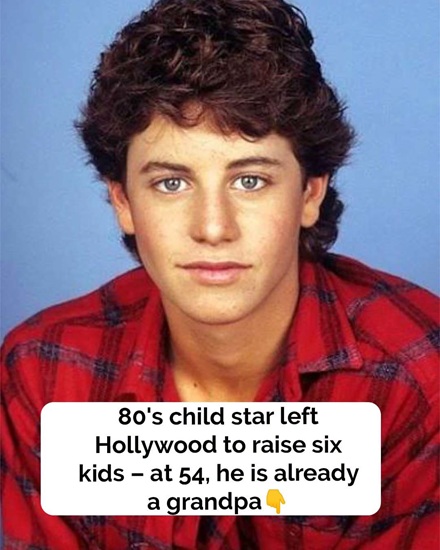
Kirk Cameron became one of the most recognizable young television actors of the 1980s after taking on the role of Mike Seaver in the ABC sitcom Growing Pains. Born in California in 1970, Cameron began working professionally while still a child and eventually found himself surrounded by the attention that accompanied a successful network television series. His photographs regularly appeared in teen magazines, and his popularity made him one of the best-known young performers of his generation. From the outside, it looked like the beginning of a conventional Hollywood career.
Cameron, however, would eventually choose a significantly different direction. Interestingly, becoming an actor was not originally Cameron’s main ambition. He has recalled that acting auditions could feel more like an obligation than an exciting opportunity when he was young. His introduction to the entertainment business came after his mother received encouragement to take him to auditions. That decision resulted in commercial work and increasingly substantial acting opportunities. One of his early advertisements was for McDonald’s, and television roles followed as casting professionals continued showing interest in him.
Everything changed when Cameron was cast as Mike Seaver on Growing Pains, which premiered in 1985. Mike was the mischievous eldest son of psychiatrist Jason Seaver and journalist Maggie Seaver, played by Alan Thicke and Joanna Kerns. Cameron’s comic timing and screen presence quickly made his character particularly popular with younger viewers. As the series became successful, his celebrity expanded beyond television. He received Golden Globe nominations and became a regular presence on the covers and pages of publications aimed at teenage audiences.

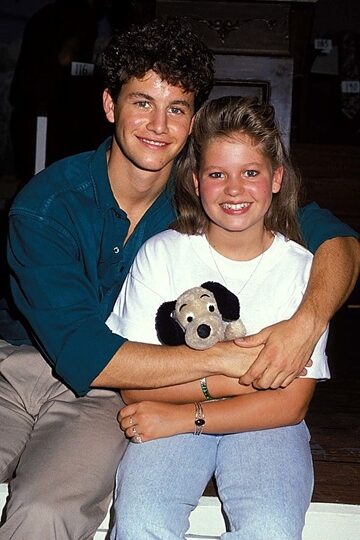
His younger sister, Candace Cameron Bure, also became a successful child performer. She later gained widespread recognition as D.J. Tanner on Full House, another major family sitcom of the era. The siblings therefore experienced Hollywood from an unusually young age, although their careers eventually developed in different ways. Both would later become publicly associated with Christianity, something that was not a major part of Kirk Cameron’s worldview during his earliest years.
A Major Change During His Teenage Years
Cameron has explained that his family was not regularly attending church while he was growing up. As a teenager, he considered himself an atheist and did not initially have much interest in Christianity. That changed gradually after he accepted an invitation to attend church with a girl and her family. Cameron has openly joked that his original motivation was his interest in the girl rather than a sudden desire to explore religion.
The experience nevertheless prompted questions that he continued thinking about afterward. Cameron eventually embraced Christianity while he was still a teenager and appearing on Growing Pains. Because the change happened during some of the most successful years of the series, his developing religious convictions became intertwined with his professional life.
Cameron began evaluating scripts differently. Material that he previously might have accepted without much concern could now conflict with his beliefs. He has said that he sincerely wanted his decisions to reflect his developing faith, although his approach sometimes created disagreements with people working on the show.
Producers and colleagues noticed the change. Cameron has acknowledged that some people worried his increasingly strong religious beliefs might affect the series. He later described the situation as one in which his desire to take what he considered a moral position could sometimes be misunderstood.
The behind-the-scenes tensions surrounding this period have been discussed for years. Cameron himself has expressed regret about aspects of how he handled relationships during that stage of his life. That context is important because his religious conversion was happening while he was still extremely young, professionally successful and learning how to balance personal convictions with the collaborative demands of television production.
He Did Not Completely Abandon Acting
It is sometimes said that Cameron simply walked away from Hollywood after becoming religious. That description is not entirely accurate. His priorities changed substantially, but his acting career did not completely end.
Growing Pains concluded in 1992 after seven seasons. Cameron subsequently continued appearing in television and film projects, although he increasingly selected work connected with Christianity, family and subjects that aligned with his personal beliefs.
His later career included the Left Behind movies, based on the popular Christian novels, as well as the 2008 drama Fireproof. The latter film featured Cameron as a firefighter attempting to repair his troubled marriage and became particularly well known among faith-based audiences.
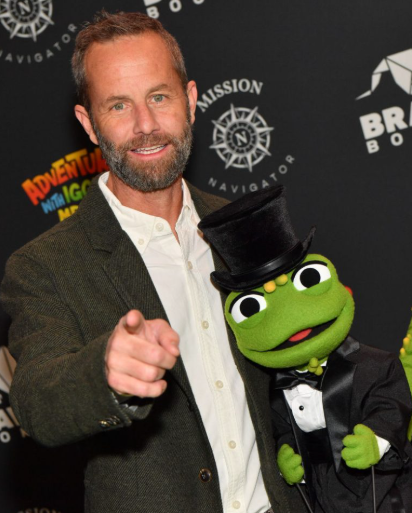
Cameron also became involved in Christian ministry, speaking events, documentaries, publishing and other forms of religious media. Instead of pursuing the mainstream Hollywood trajectory that might have been expected after Growing Pains, he built a career around a considerably narrower set of personal and creative priorities.
That distinction is important. Cameron did not disappear from entertainment.
He redirected his career toward projects he personally wanted to support.
Looking Back at the Entertainment Industry
Cameron has become increasingly critical of parts of Hollywood culture as he has grown older. Those criticisms represent his personal assessment of the entertainment industry rather than an objective description of everyone working within it.
More recently, he has discussed his experiences as a young actor in the context of concerns surrounding the treatment of children in entertainment.
One subject that received renewed attention was Brian Peck, who had professional connections to productions involving young performers and later became notorious after being convicted in connection with the sexual abuse of actor Drake Bell when Bell was a teenager.
The documentary series Quiet on Set: The Dark Side of Kids TV brought substantial new attention to Bell’s account and Peck’s criminal history.
Cameron subsequently reflected on having encountered Peck during his own years working on Growing Pains. The revelations caused him to reconsider what it meant for young performers to work around adults whose private behavior might not be known to colleagues at the time.
It is important to distinguish those reflections from Bell’s experience. Cameron has not claimed that Peck abused him. His comments concerned his realization that someone later convicted of abusing a minor had worked around young performers in the entertainment industry.
That distinction prevents one person’s documented experience from being incorrectly attributed to another.
Meeting Chelsea Noble
One of the most important relationships in Cameron’s life also developed through Growing Pains.
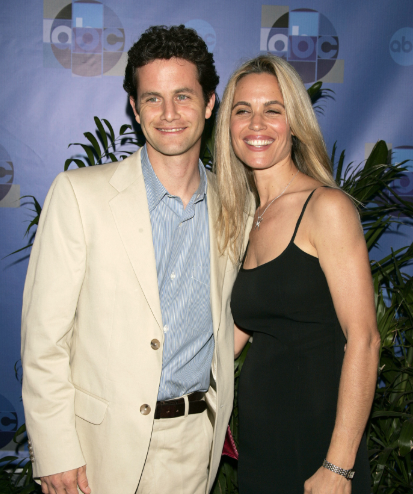
Chelsea Noble joined the sitcom as Kate MacDonald, who became Mike Seaver’s romantic interest. The relationship between the characters eventually developed alongside a real-life relationship between Cameron and Noble.
The couple married in 1991.
Their marriage became central to the life Cameron was building away from his teen-idol image. Together, Cameron and Noble eventually became parents to six children.
Four of their children joined the family through adoption, while two are biological.
Adoption consequently became an especially meaningful subject for the couple. Noble herself has a personal connection to adoption, and the family has spoken publicly about the importance of adopted children understanding their histories.
For Cameron, becoming a husband and father also changed how he viewed professional success. Fame had been a major part of his teenage life, but family increasingly became the priority around which he organized his decisions.
Six Children and a Different Definition of Success
Cameron has spoken about trying to ensure that his children experienced family life without being defined by whether they were adopted or biological.
His experience as an adoptive father later influenced some of his professional choices.
Rather than separating his family experiences from his public work, Cameron increasingly pursued projects that reflected subjects meaningful to him personally.
That connection became particularly visible with Lifemark.
Released in 2022, the film tells a story centered on adoption, biological family connections and relationships between parents and children. Cameron portrayed an adoptive father in the movie.
The project had obvious personal significance because adoption was already a major part of his own family.
The movie also demonstrated once again that Cameron had not completely retired from acting. Decades after Growing Pains, he remained willing to appear on screen when a project aligned with the subjects and values he wanted to promote.
From California to Tennessee
Another major change came when Cameron decided to leave California.
He had been born and raised in Southern California and spent much of his professional life connected to the state. Eventually, however, he began considering relocation.
Cameron publicly asked followers which states they would recommend for someone considering a move from California. Tennessee, Florida and Texas were among the suggestions he discussed.
He ultimately moved to Tennessee.
Family was an important factor. Several of his children were already living there, and relocating allowed Cameron and Noble to remain closer to them.
He has also said publicly that he preferred aspects of Tennessee’s culture, pace of life and religious community. Cameron has described the state as increasingly important for Christian entertainment projects and has spoken positively about the creative opportunities he sees there.
Those comments should be presented as Cameron’s personal views. Statements about one state having better values or greater freedom than another are subjective judgments rather than universally established facts.
What can be stated clearly is that family proximity and Cameron’s cultural preferences influenced his decision to relocate.
Becoming a Grandfather
The move became especially meaningful as the Cameron family entered another generation.
In 2024, Cameron announced that he had become a grandfather.
He shared photographs celebrating the arrival of granddaughter Maya Jeanne Noble Bower and described the family’s excitement about welcoming her.
For someone who had become famous while barely older than a child himself, becoming a grandfather represented a striking new chapter.
The teenager once photographed for magazine covers was now publicly celebrating his children becoming parents themselves.
That transition also reflected how dramatically Cameron’s priorities had evolved since the height of Growing Pains.
His public identity was no longer primarily built around being Mike Seaver.
It increasingly centered on marriage, children, grandchildren, religion and projects connected with those subjects.
His Relationship With Hollywood Is More Complicated Than Simply Leaving
Cameron’s story is sometimes framed as though he became a teenage superstar, rejected Hollywood completely and never looked back.
The actual history is more nuanced.
He remained an actor.
He continued making movies.
He participated in television programs, documentaries and other productions.
What changed most dramatically was the type of work he wanted to pursue.
His religious beliefs became a central factor in deciding which projects he supported. His marriage and children also made the traditional cycle of Hollywood auditions and productions less appealing.
As a result, Cameron moved toward faith-based entertainment rather than leaving entertainment entirely.
That path inevitably reduced his presence in mainstream Hollywood productions, but it also allowed him to maintain a public career built around subjects he considered important.
The Complicated Legacy of Growing Pains
Despite everything that happened afterward, Growing Pains remains an essential part of Cameron’s career.
The series made him famous.
It introduced him to Chelsea Noble.
It placed him among the most recognizable teenage actors of his generation.
And it coincided with the period when his religious worldview changed dramatically.
Those experiences make the show both a professional breakthrough and a turning point in his personal life.
His relationship with some former colleagues was not always easy following the series. Cameron has acknowledged tensions connected with his behavior during his religious conversion and has reflected on mistakes he believes he made while trying to navigate his beliefs.
That acknowledgment adds important context to a story that can otherwise become oversimplified into a conflict between one religious teenager and Hollywood.
People working together on a television series can experience the same events very differently.
A Career Built Around Different Priorities
Today, Cameron’s professional identity looks dramatically different from what audiences might have predicted during his teenage years.
At the height of Growing Pains, he appeared positioned for a conventional Hollywood career.
Instead, he increasingly prioritized Christianity and family.
That decision shaped the projects he accepted and the audiences he sought to reach.
Films such as Fireproof and Lifemark illustrate that direction particularly clearly.
His work now exists largely within the faith-based entertainment world rather than mainstream studio productions.
Whether someone agrees with Cameron’s religious views is separate from understanding the choices he made.
His career demonstrates that success in entertainment does not always follow a single path.
From Mike Seaver to Family Life
Kirk Cameron’s journey ultimately cannot be summarized simply as a celebrity who abandoned fame.
He became famous extremely young.
He experienced a major religious conversion while still working on one of television’s most successful family sitcoms.
His changing beliefs created both personal direction and professional tensions.
He married his Growing Pains co-star Chelsea Noble and became the father of six children.
He continued acting but increasingly concentrated on Christian and family-oriented productions.
Decades later, he relocated from California to Tennessee, partly to live closer to members of his family.
And in 2024, another milestone arrived when he became a grandfather.
The life Cameron built therefore looks substantially different from the future people might have imagined when his photograph appeared across teen magazines in the 1980s.
But he never completely abandoned the profession that made him famous.
Instead, he chose to participate in entertainment on different terms.
From Growing Pains to Lifemark, his career reflects a gradual shift from mainstream teen celebrity toward projects shaped by his religious convictions and family experiences.
For Cameron, Hollywood fame ultimately became one chapter rather than the destination.
And more than four decades after his career began, he continues working publicly while defining success according to priorities very different from those surrounding the teenage star who once played Mike Seaver.

